“`html
Opuntia abjecta, Keys Spanish Lady
Original; Citation; Herbarium; Herbarium; Herbarium


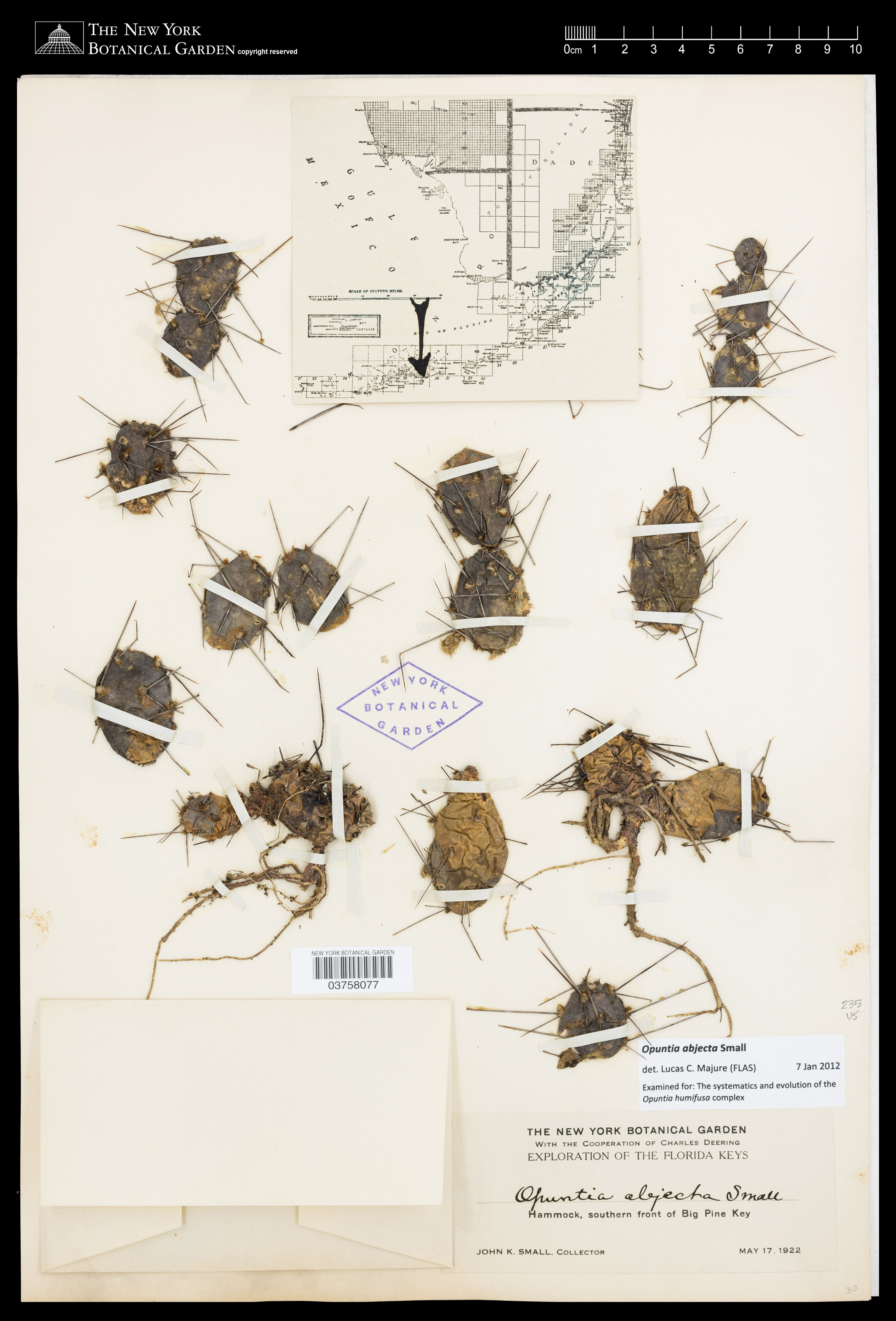

Small ex Britton and Rose, The Cactaceae 4: 257, 1923
Original Description
What is Opuntia abjecta?
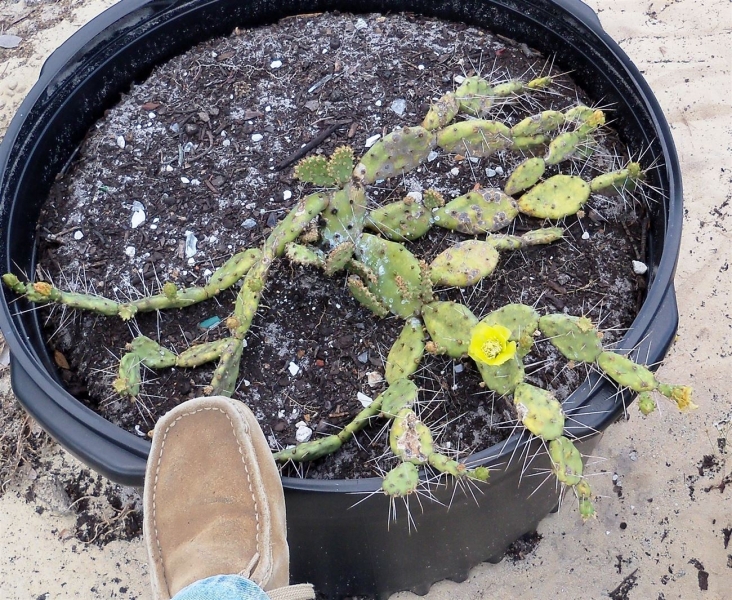
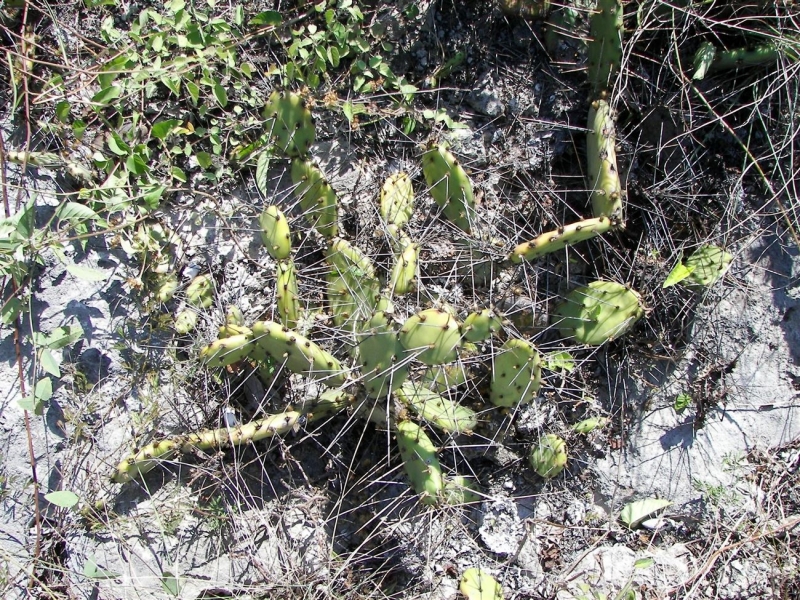
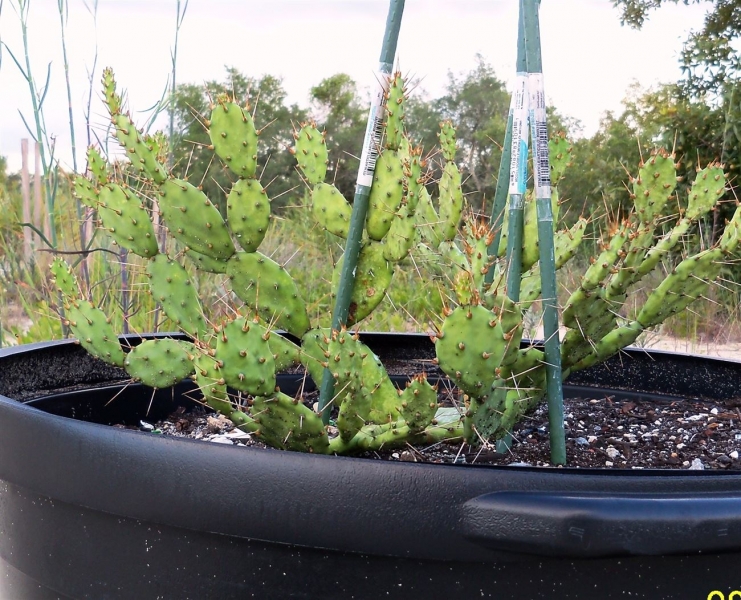
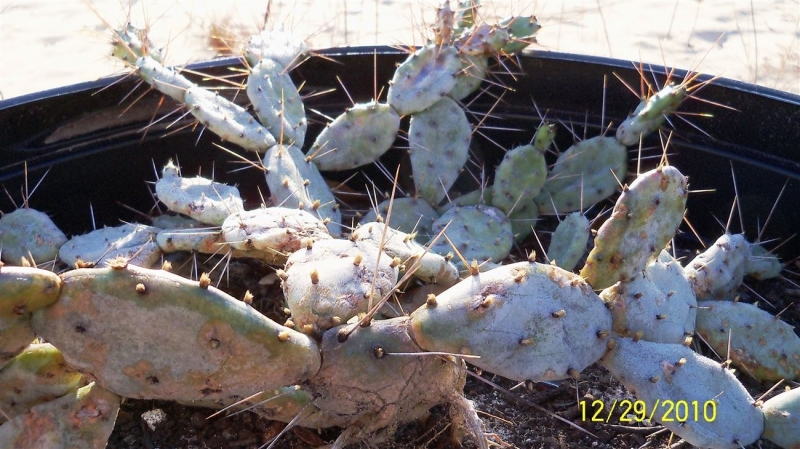
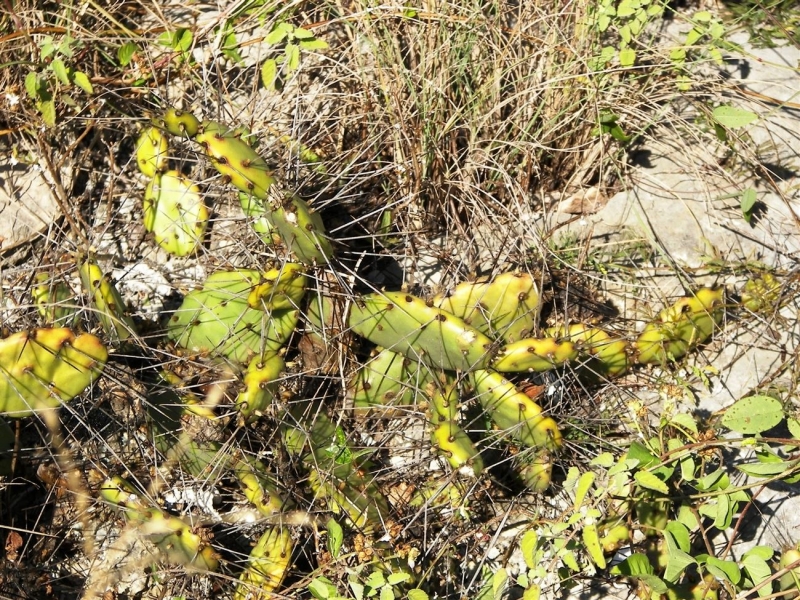
Opuntia abjecta is a diminutive, mat-forming prickly pear endemic to the lower Florida Keys, typically on bare oolitic limestone or in tiny pockets of sand or humus. Plants form low, multibranched clusters. This species was long treated as conspecific with Caribbean O. triacantha, but modern work recognizes O. abjecta as distinct; some Florida material formerly placed in that synonymy was reinterpreted, and the hybrid taxon O. ochrocentra is now treated separately (see Majure et al., 2013).
Details
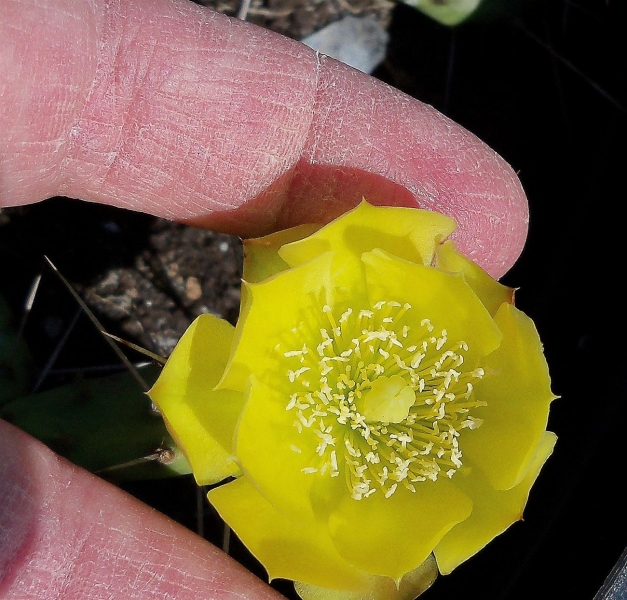
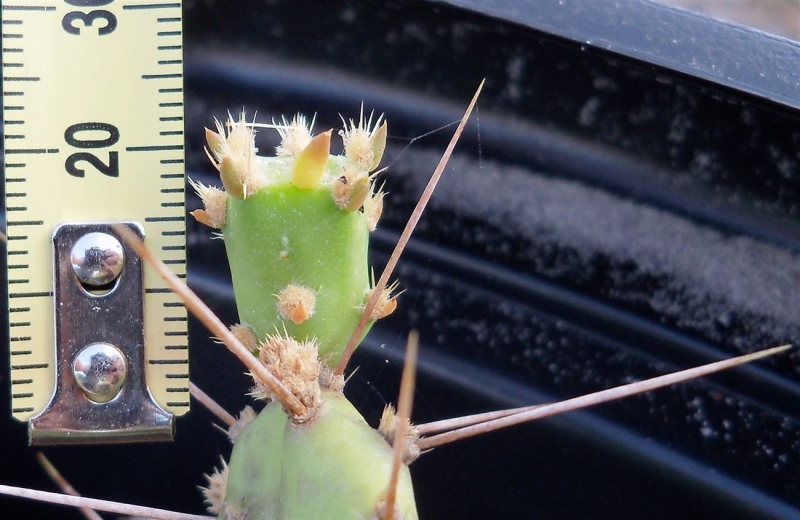
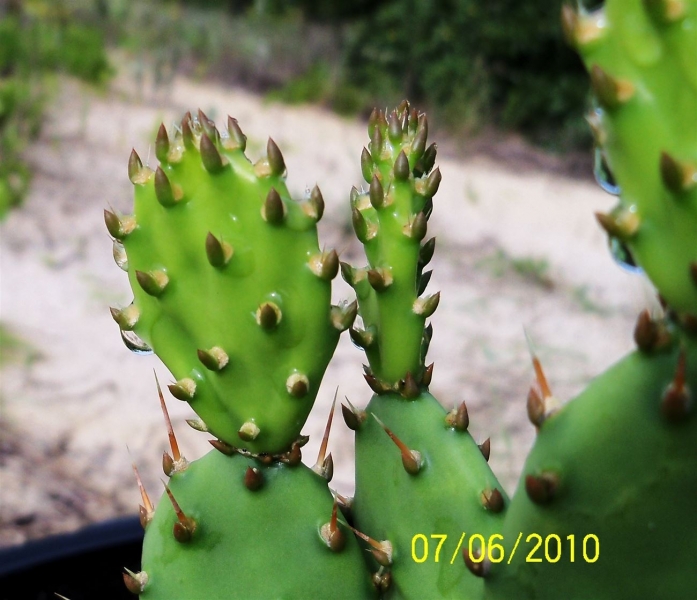
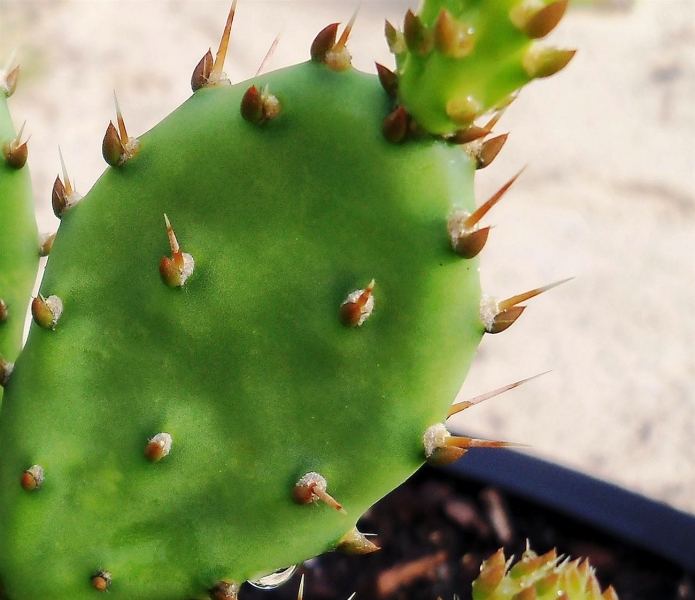
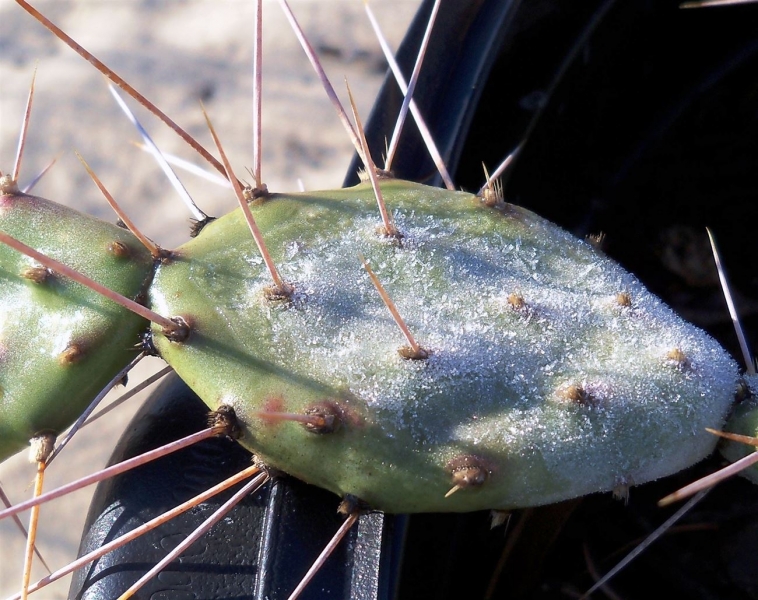
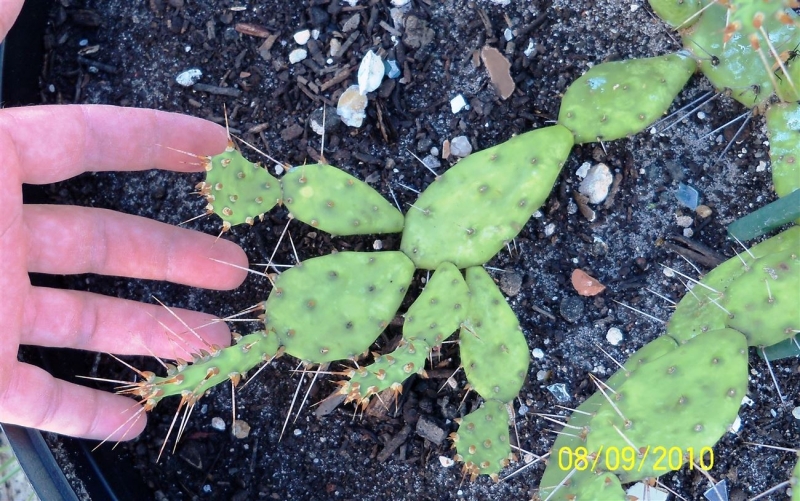
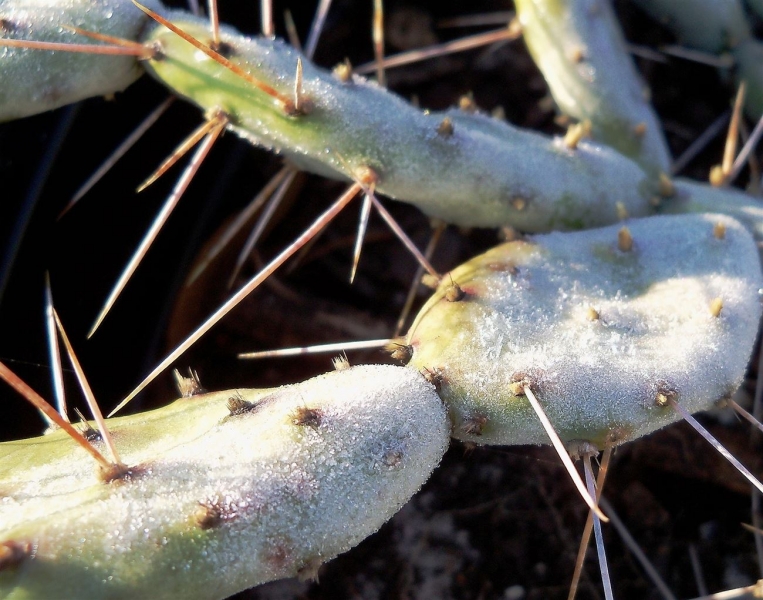
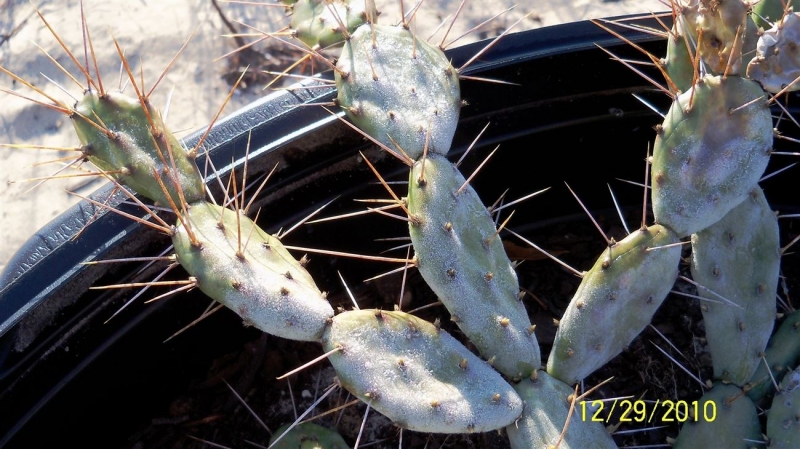
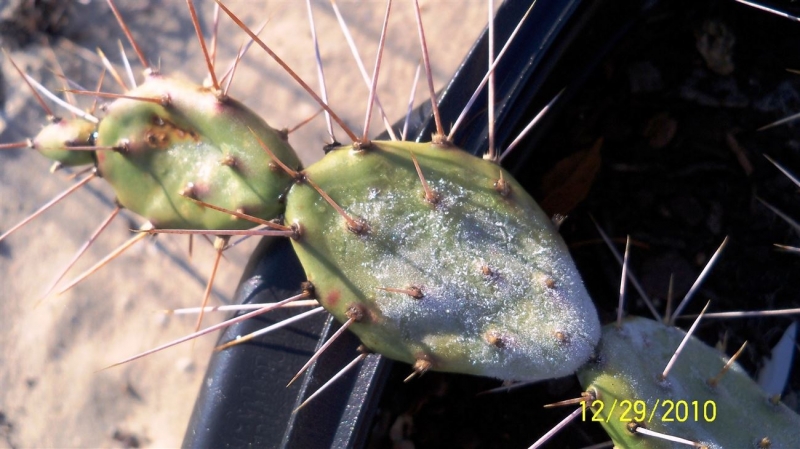
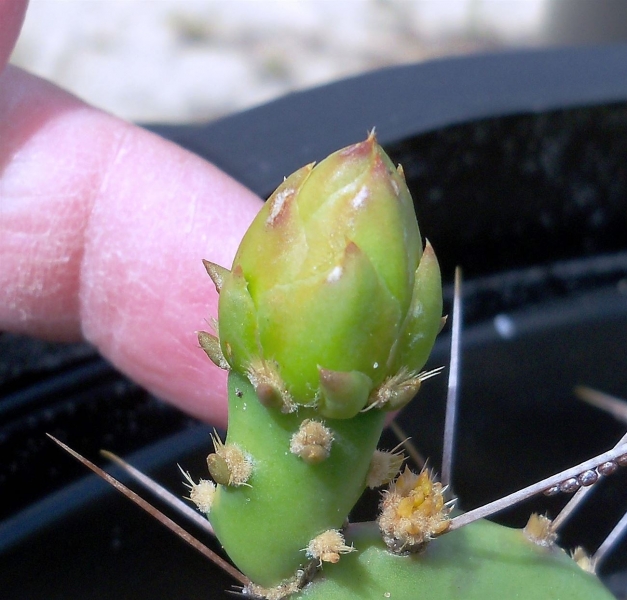
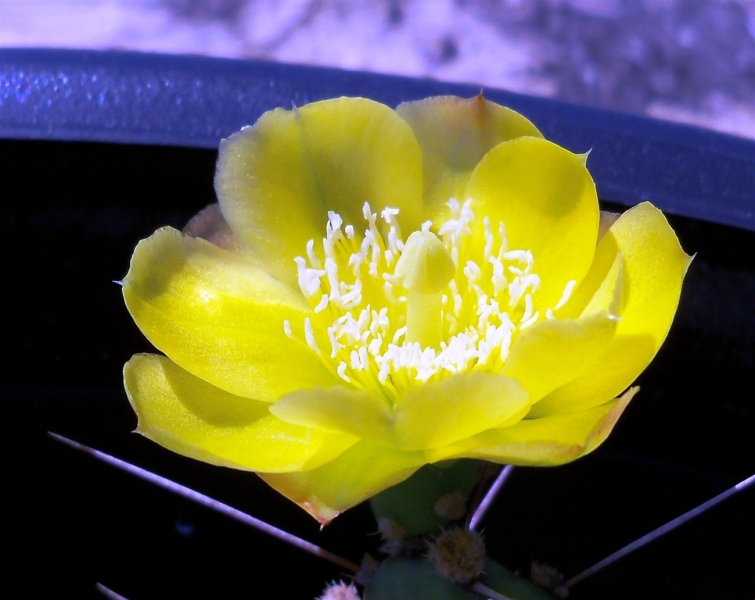
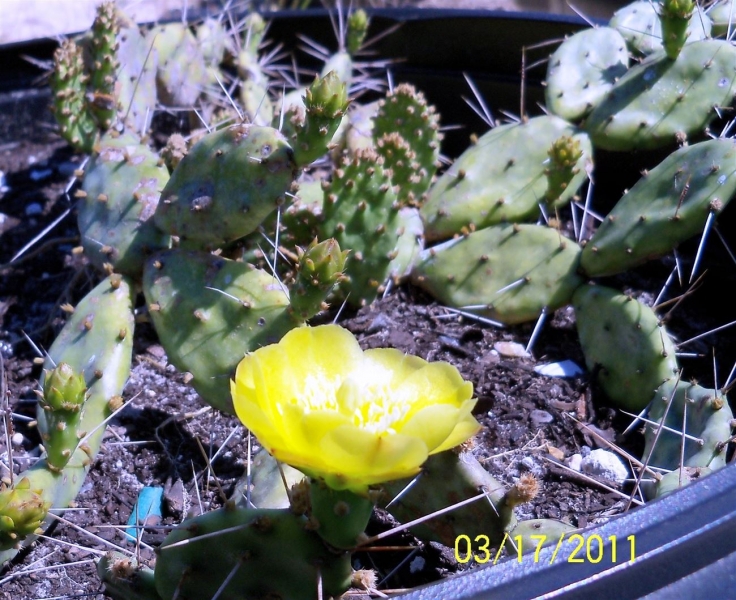
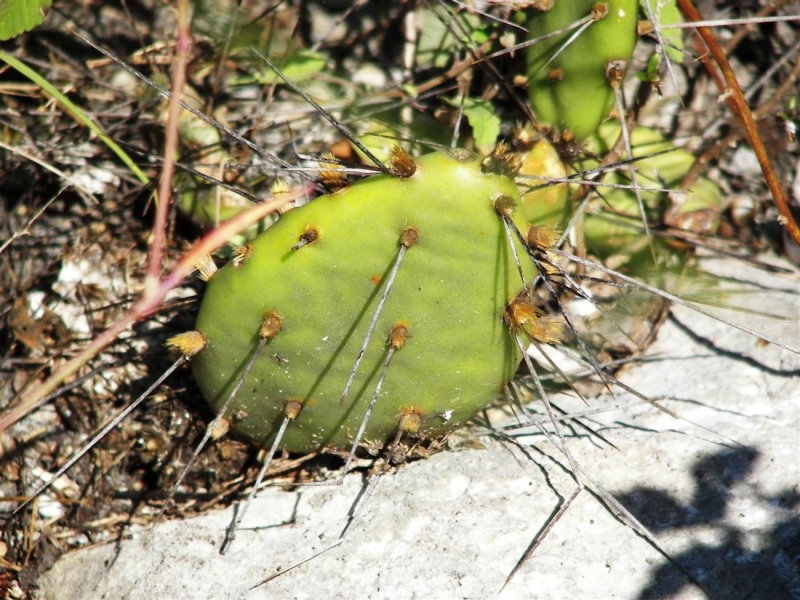
Shrubs: very low, spreading clumps usually to about 10–15 cm tall; Cladodes: small and relatively thick (≈2–8 cm), loosely attached in short chains and not notably fragile; Areoles: small to moderate, with evident glochids (especially on upper joints); Spines: few to several, slender, the longest to about 4–5 cm, overall armament lighter and more delicate than in O. triacantha; Leaves: small, teardrop-shaped (reminiscent of O. zebrina), not the more conical form typical of O. pusilla; Flowers: typically one per pad, yellow, with yellow-to-green filaments, a pale style, and yellow stigma; Fruits: urn-shaped to short-pyriform, gently tuberculate, rounded at the base, with a shallow to moderate umbilicus; Seeds: about 4 mm across, otherwise typical for the genus.
Cytology
Unknown; Keys plants are suspected to be diploid, but cytological confirmation is lacking.
Range & Habitat
Lower Florida Keys—type locality Big Pine Key. Plants occur on exposed limestone and adjacent coastal scrub where thin soils accumulate, in very sunny, salt-tolerant microsites.
Similar or Sympatric Species
O. keyensis — pads typically thinner and often nearly spineless; habit more open. O. stricta — larger plants with heavier, more rigid armament; fruits commonly longer and pulpier; usually hexaploid. O. ochrocentra — hybrid derivative in the Keys; armament and pad proportions often intermediate, with variable ploidy.
For more information
GenBank locus JF787598. In the past, some botanists accepted this name as a synonym of O. triacantha, but it is now accepted as a distinct species (see Majure et al., 2013).

“`