
Herbarium; Herbarium; Herbarium; Herbarium; Herbarium; Herbarium; Herbarium; Herbarium; Herbarium


Original Description
What is Opuntia chlorotica var. santa-rita?
O. chlorotica var. santa-rita, the Santa-Rita purple prickly pear, is one of three varieties in the O. chlorotica complex—together with var. chlorotica and var. gosseliniana. It was clarified and united with O. chlorotica by Ferguson 1988, and is reported to be closely related by other studies. Plants are noted for vivid purplish pads in cool or drought seasons, robust clumping shrubs, and bright yellow spring flowers; the taxon is iconic in the Tucson area and widely cultivated.
Details
Shrubs: Usually 1–1.5 m tall, forming dense, upright clumps with short trunks and ascending branches. Cladodes: Broadly circular to suborbicular (rarely obovate), mostly 12–18 cm across; glaucous blue-green that turns violet to magenta with cold or stress; margins slightly scalloped. Areoles: Distinct and slightly raised, bearing tan to brown glochids; spination variable by areole position. Glochids: Fine, barbed, tan to rusty; persistent. Spines: Often absent on lower areoles; when present, typically 1–4 per areole, longer on upper pads, straight to slightly curved, white to yellowish or pale brown, c. 2–3 cm (occasionally longer). Flowers: Bright yellow, c. 6–9 cm across, sometimes with faint reddish basal suffusion; filaments and style pale; stigma lobes pale green to whitish. Fruits: Ovoid, depressed at the apex, purplish outside with greenish pulp; areoles concentrated toward the apex. Seeds: Pale, lenticular, typical for the complex. Cytology: Diploid (2n = 22).
Range & Habitat
Common in south-central Arizona and northern Sonora, especially around Tucson, the Santa Rita and Sierrita mountains, and westward toward Ajo; on rocky slopes, bajadas, and desert scrub, roughly 800–1500 m elevation, often with Larrea and Ambrosia on well-drained soils.
Similar or Sympatric Species
Opuntia chlorotica var. chlorotica — greener pads, larger fruit.
Opuntia chlorotica var. gosseliniana — smaller pads, slender fruits.
Opuntia macrocentra — red-centered flowers, darker pads.
Opuntia engelmannii — taller shrubs, broader joints.
Opuntia phaeacantha — low, variable, stout spines.
Opuntia setispina — gray pads, usually white spines.
Other Notes
Long grown in cultivation for its winter color; stress deepens the purple hue. Historical notes place type material in the Santa Rita Mountains, and “All gradations of spine characters may be found between this and the typical, very spiny Opuntia chlorotica.” GenBank locus JF787617.1.
For more information, see:
Ferguson, Opuntia macrocentra Eng. and Opuntia chlorotica Eng. & Big.; Shaw & Ferguson (2019), Tucson area Opuntia, the prickly pears; Majure et al. (2012), Phylogeny of Opuntia s.s.
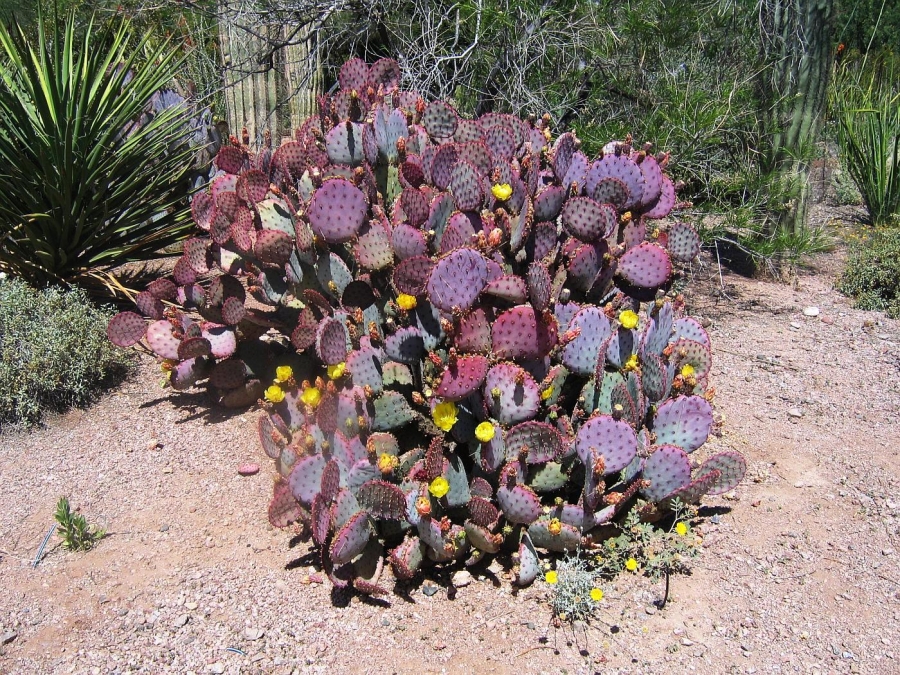 Desert Botanical Garden, Phoenix, AZ
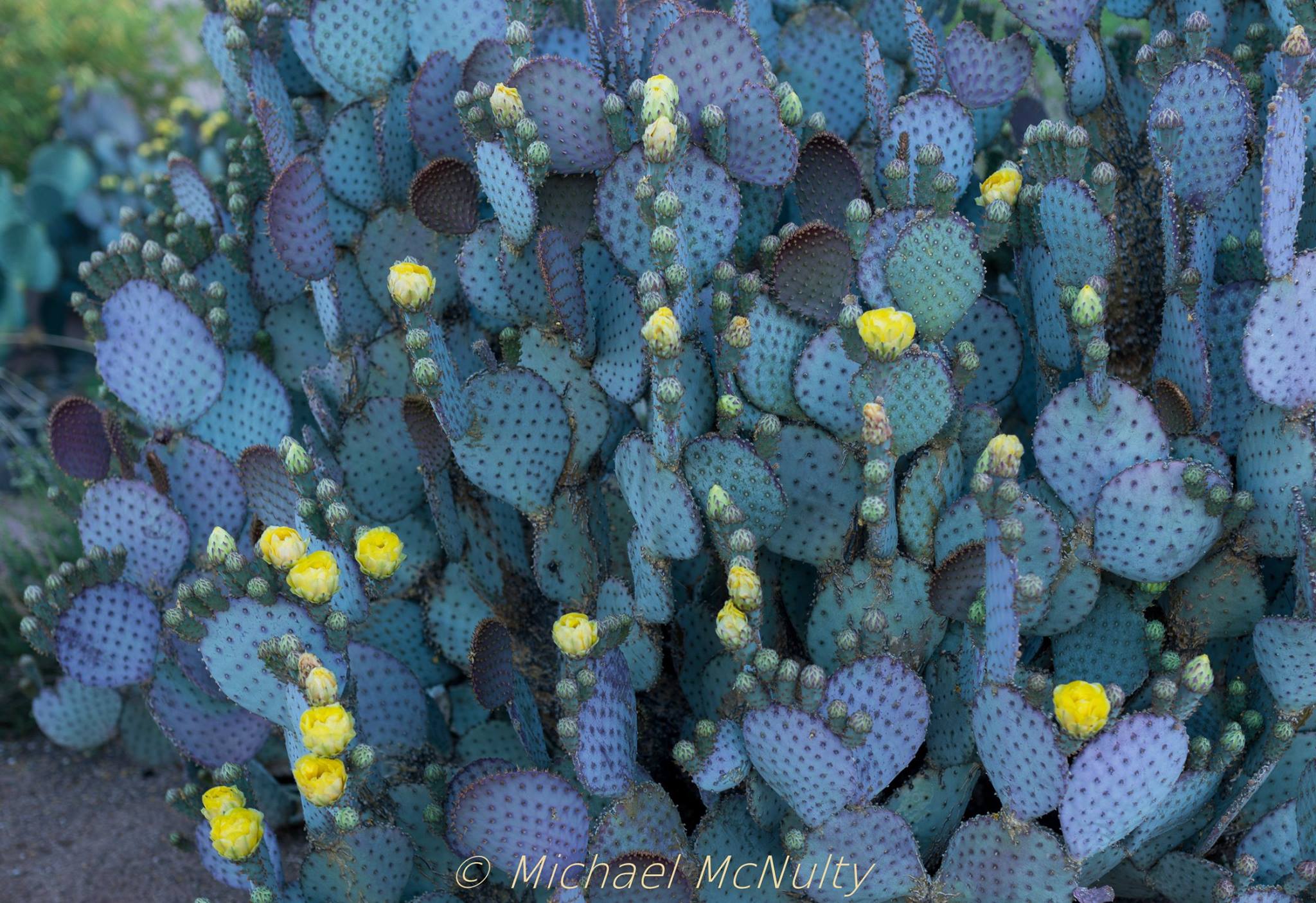 Opuntia chlorotica santa-rita flowers, Michael McNulty
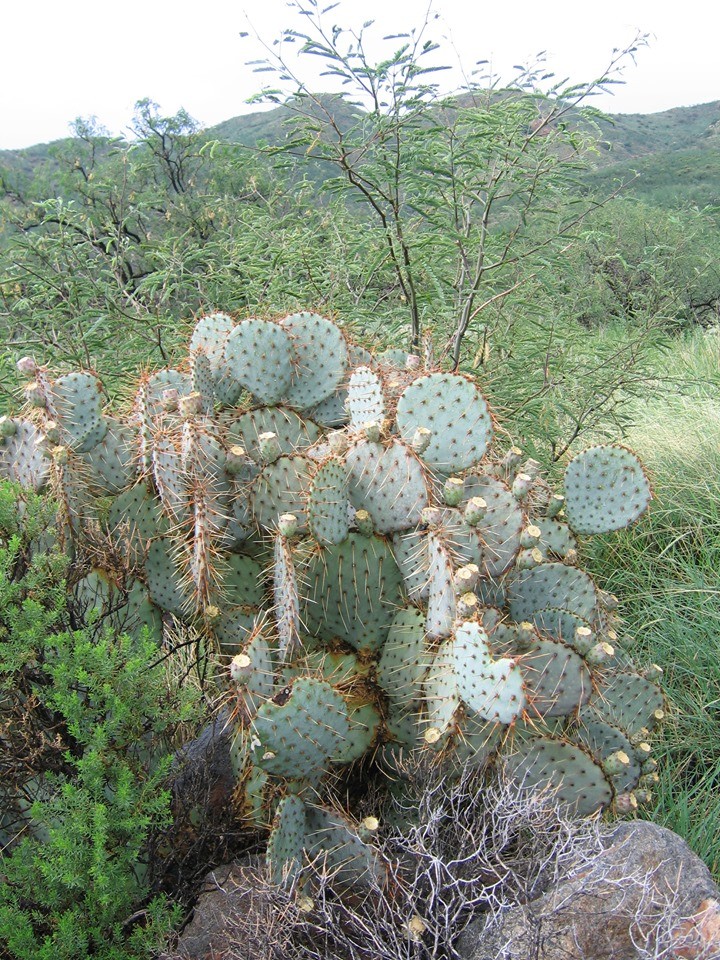 Opuntia chlorotica chloritica blend with var santa-rita
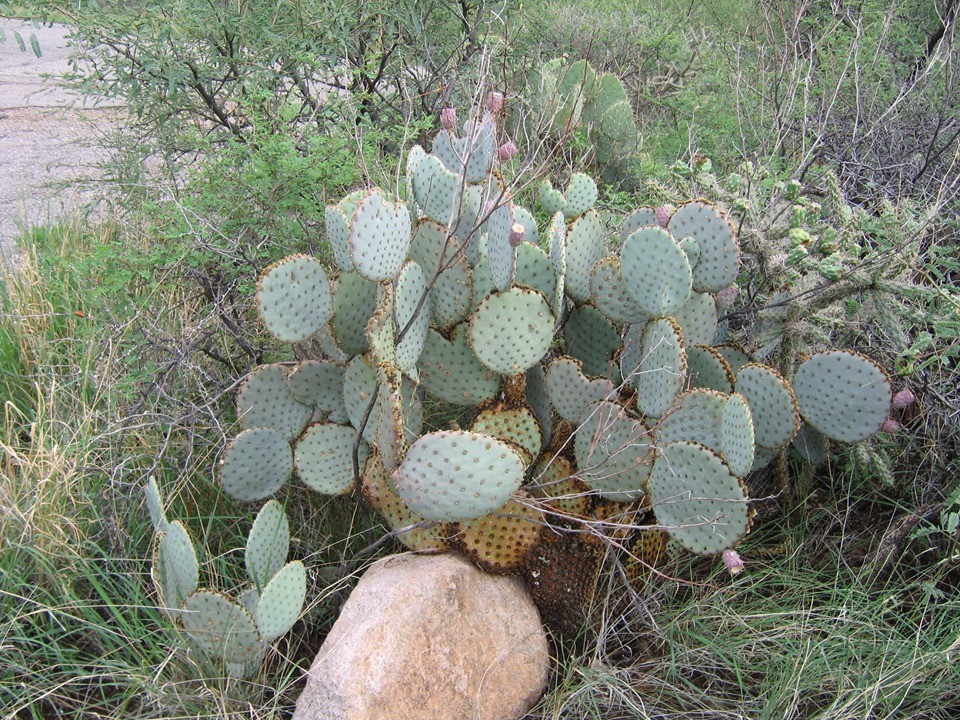 Opuntia chlorotica chloritica blend with var santa-rita
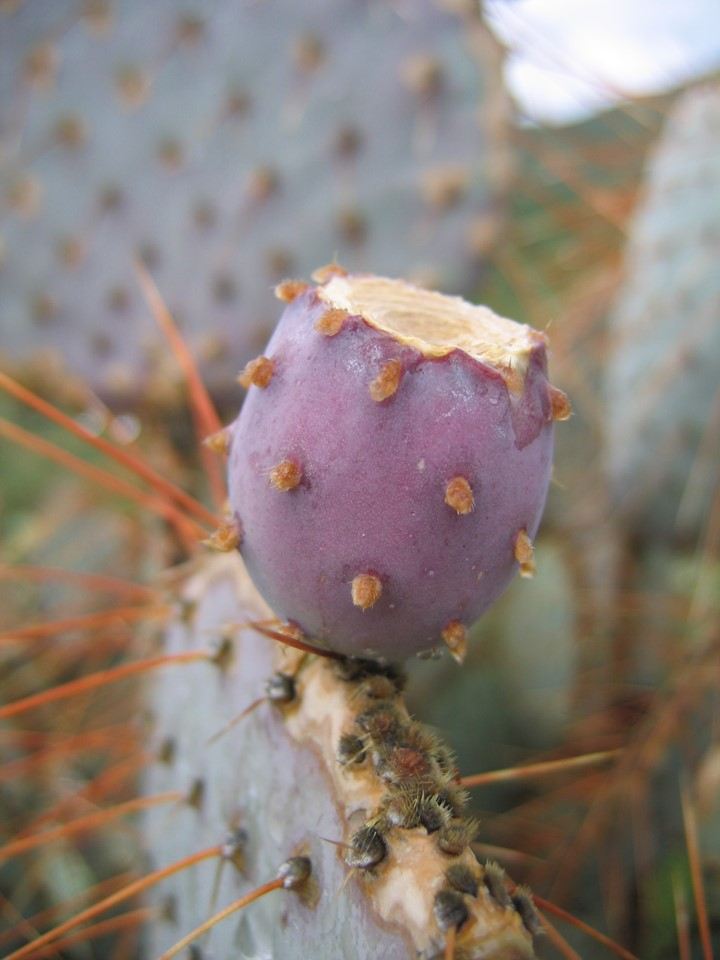 Opuntia chlorotica chloritica blend with var santa-rita
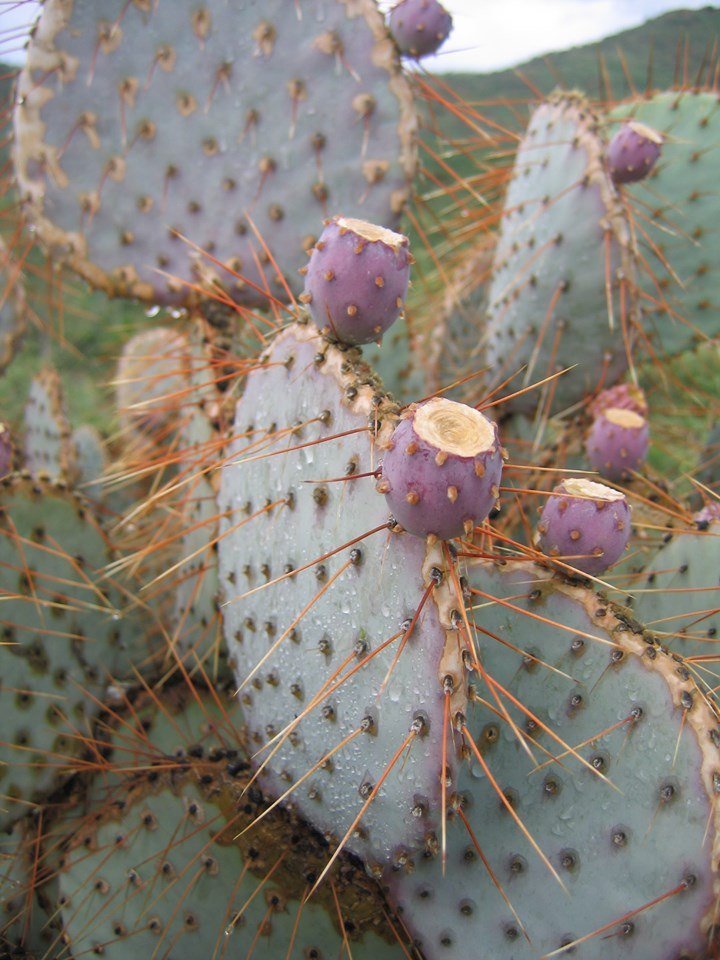 Opuntia chlorotica chloritica blend with var santa-rita
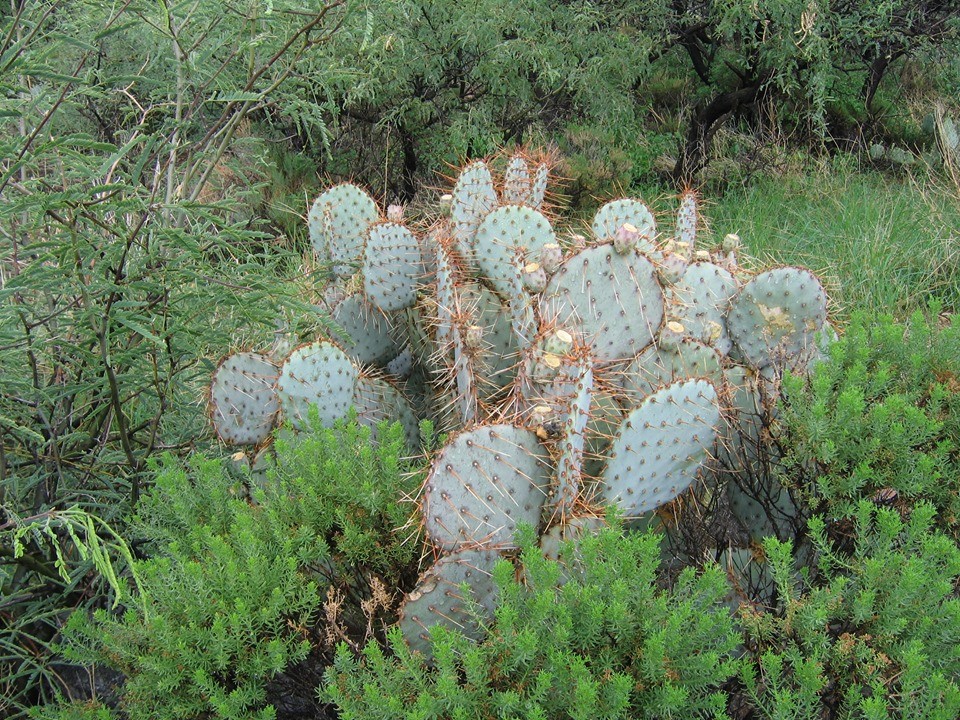 Opuntia chlorotica chloritica blend with var santa-rita
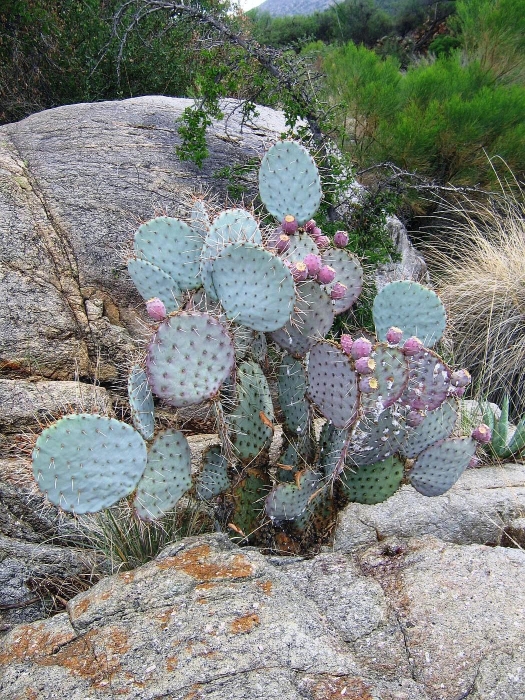 Opuntia chlorotica santa-rita
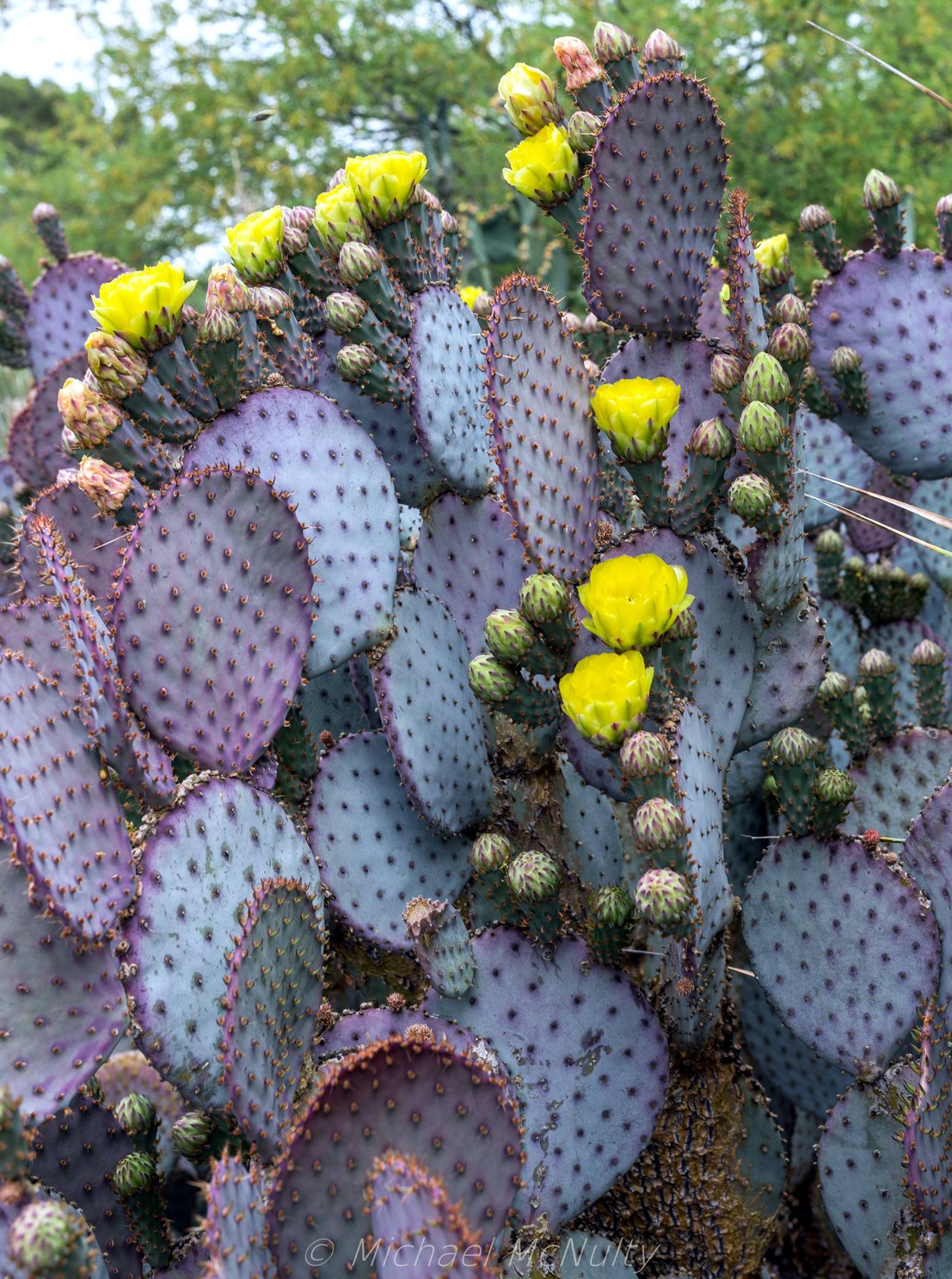 Opuntia chlorotica santa-rita flowers, Michael McNulty
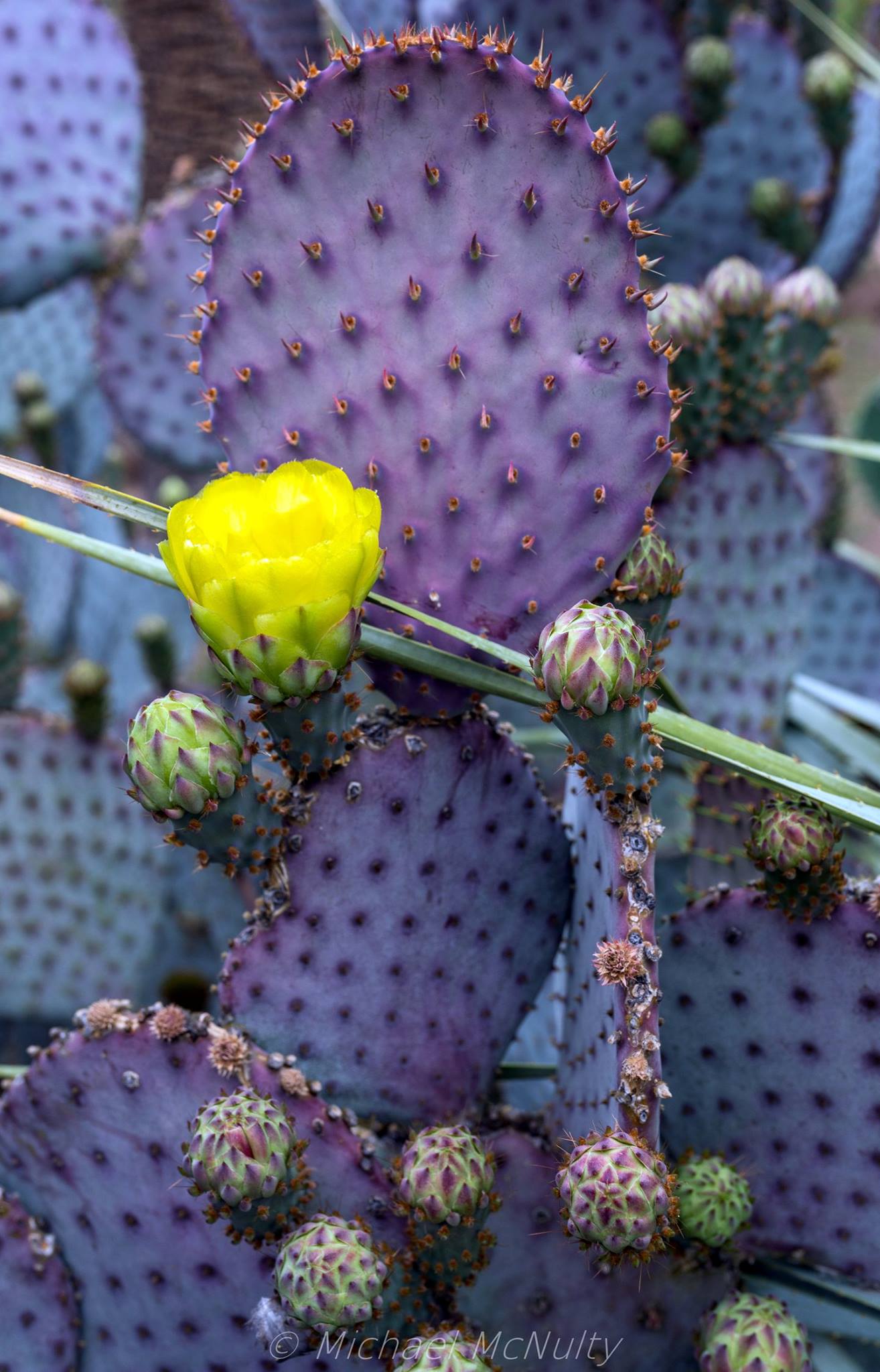 Opuntia chlorotica santa-rita flowers, Michael McNulty
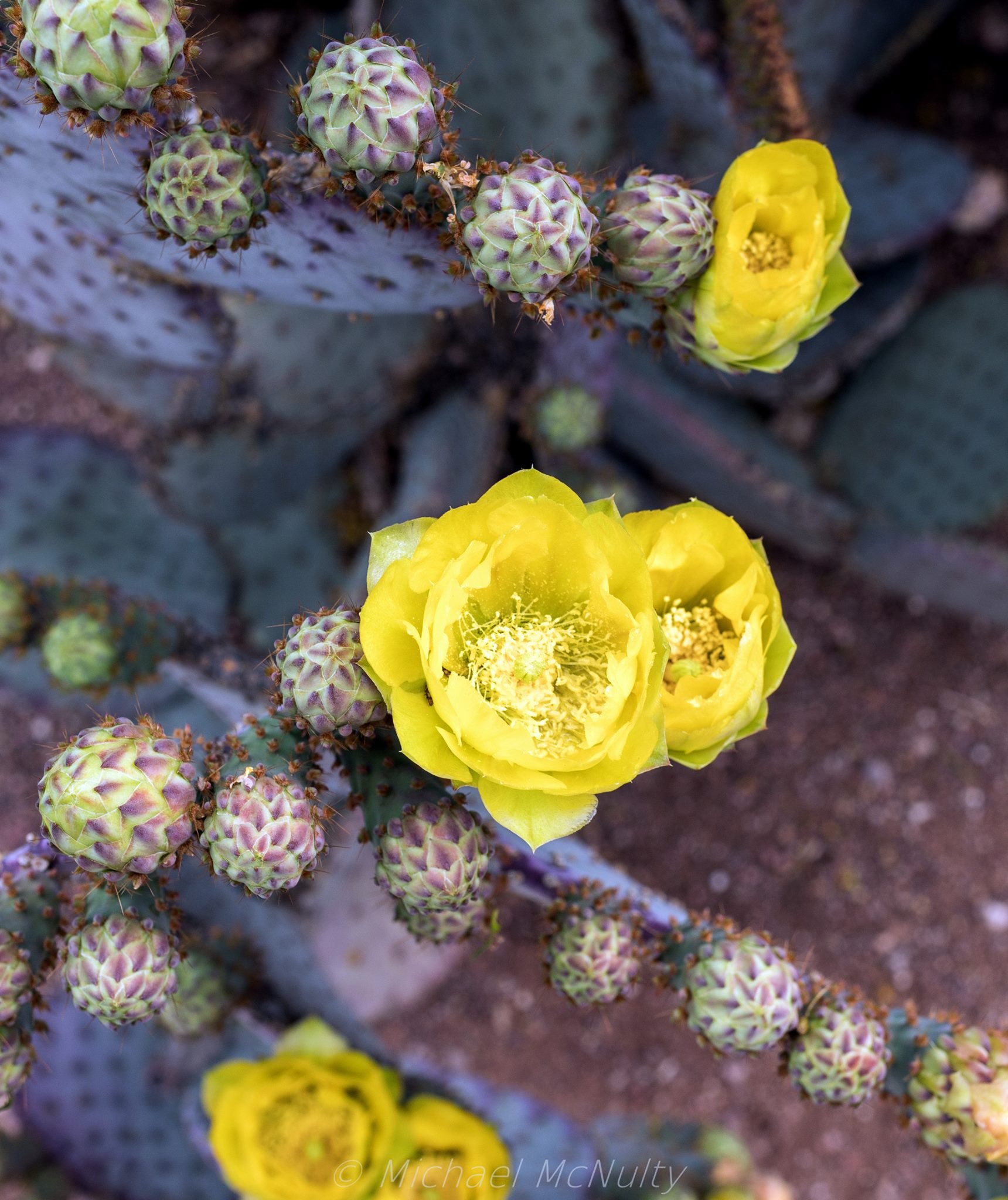 Opuntia chlorotica santa-rita flowers, Michael McNulty
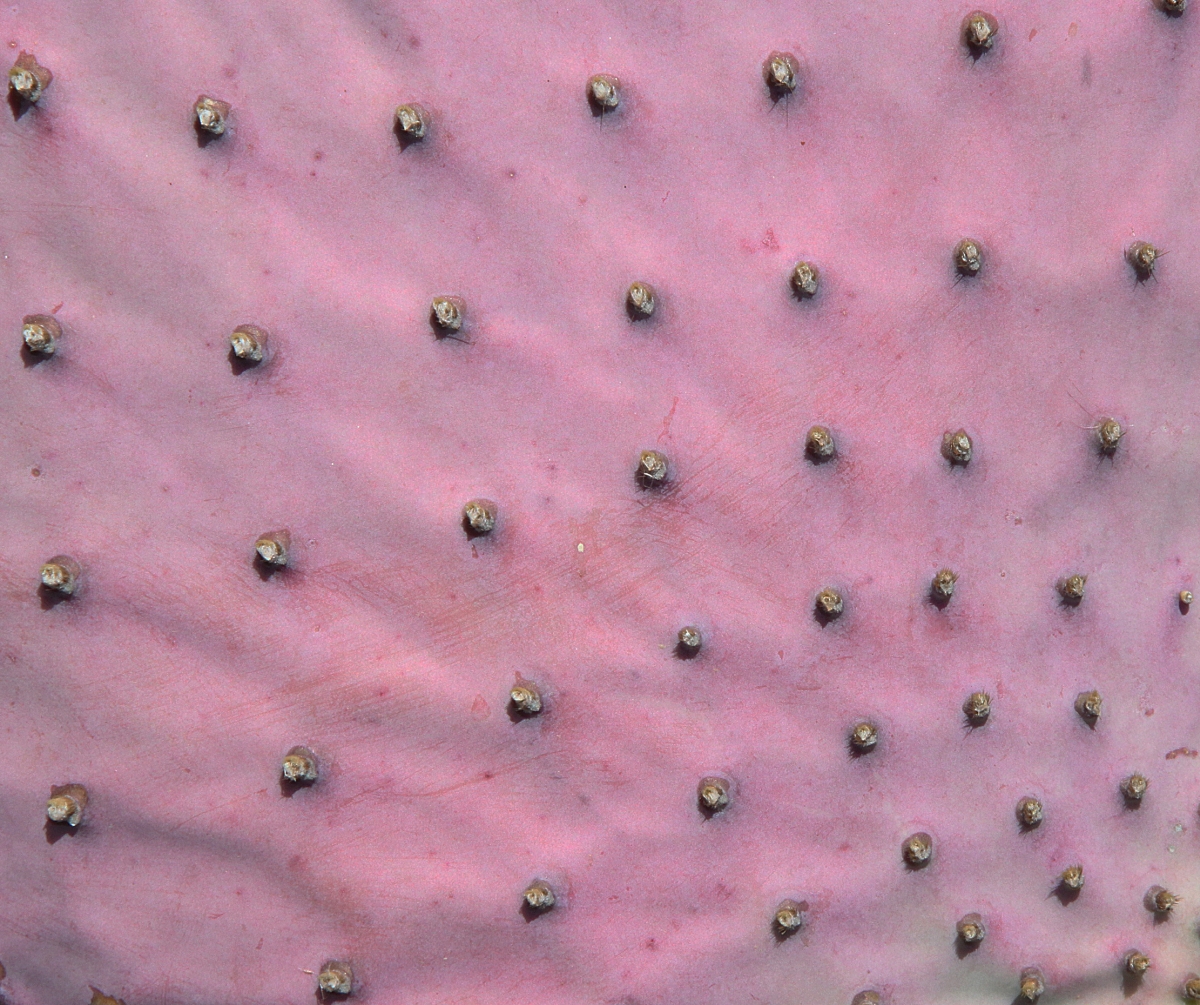 Opuntia chlorotica santa-rita, Alan Schmierer
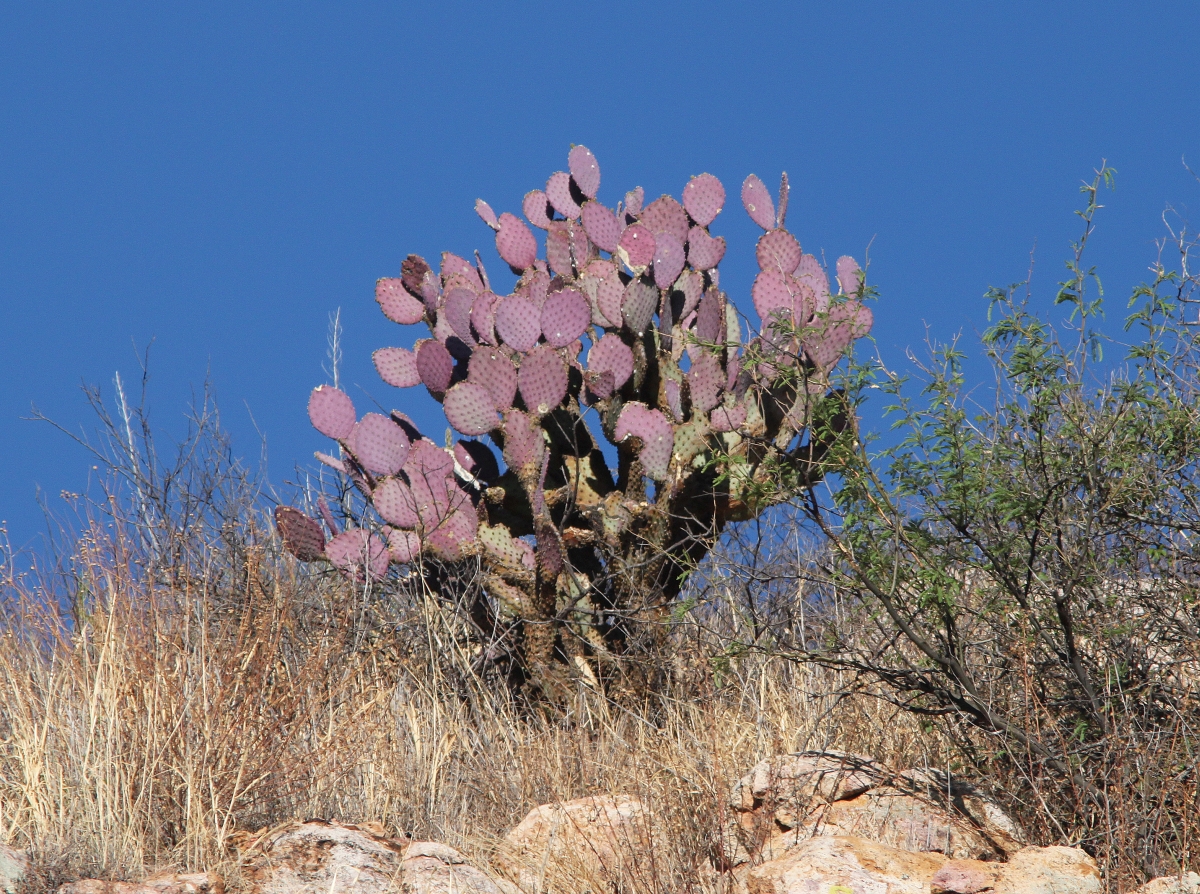 Opuntia chlorotica santa-rita, Alan Schmierer
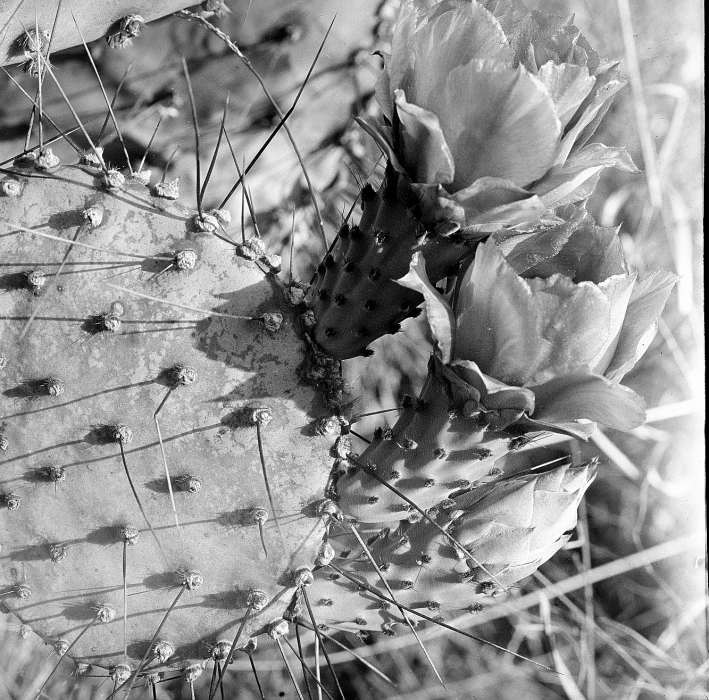 Opuntia chlorotica santa-rita, D Griffiths, ca. 1910
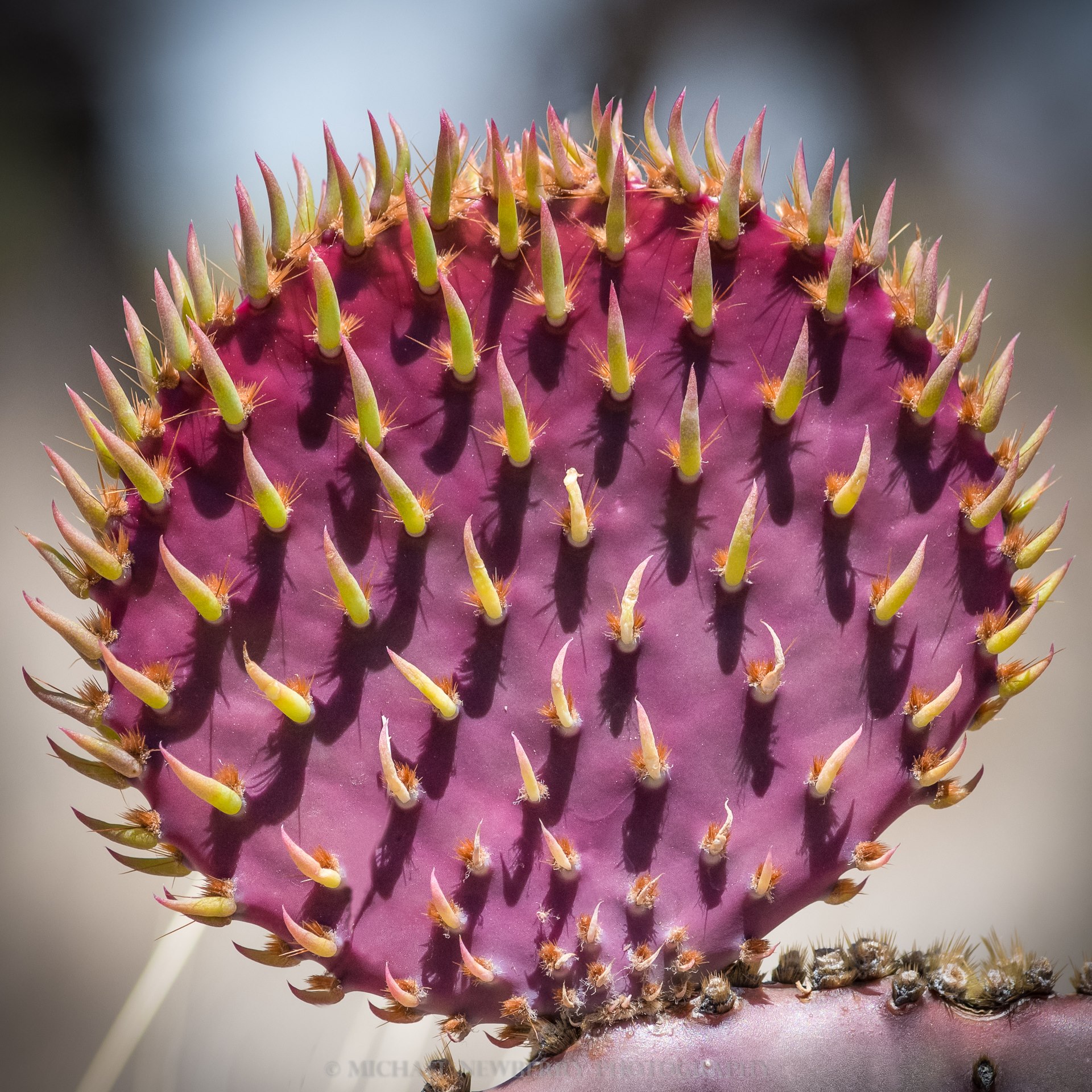 Opuntia chlorotica santa-rita, exceptional close-up of new cladode, Michael Newberry
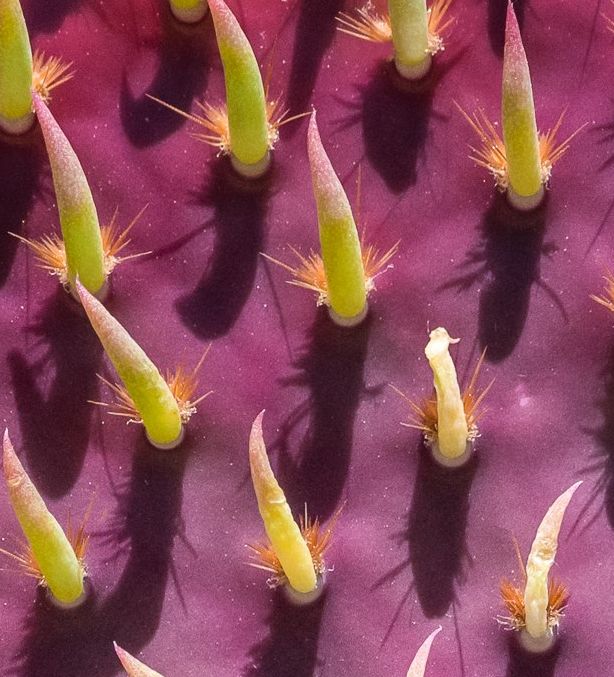 Opuntia chlorotica santa-rita, exceptional close-up of new cladode, Michael Newberry
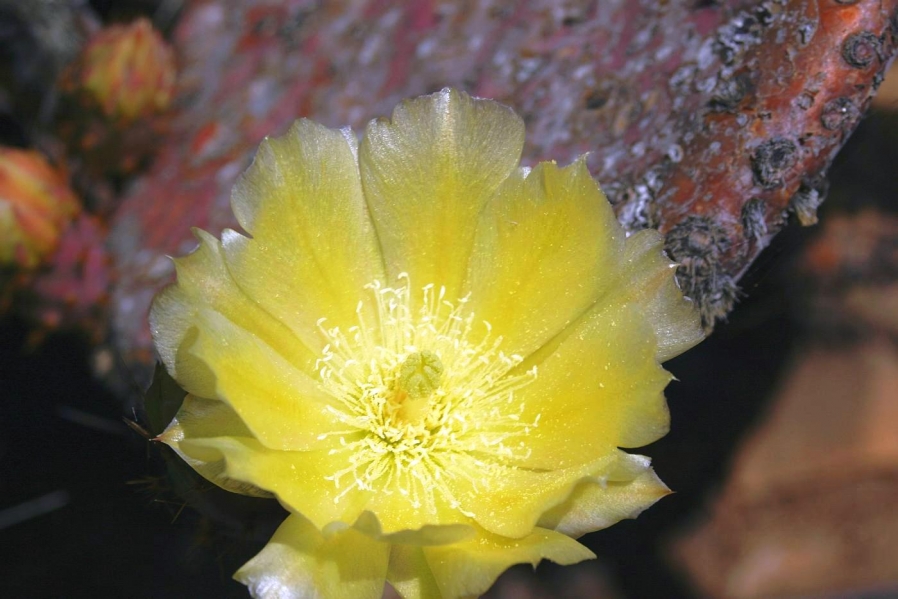 Opuntia chlorotica santa-rita, flower, garden plant
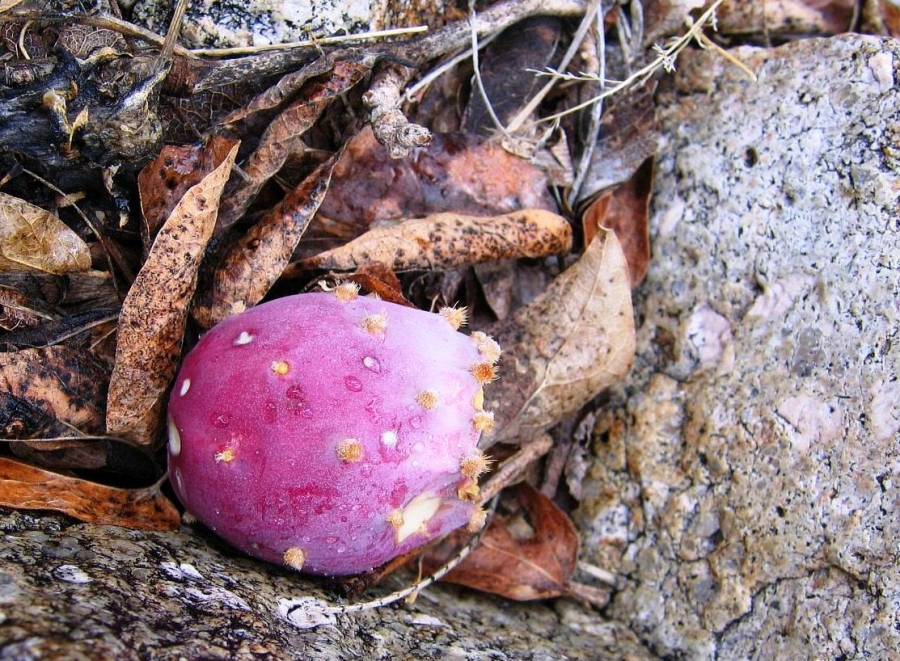 Opuntia chlorotica santa-rita, fruit
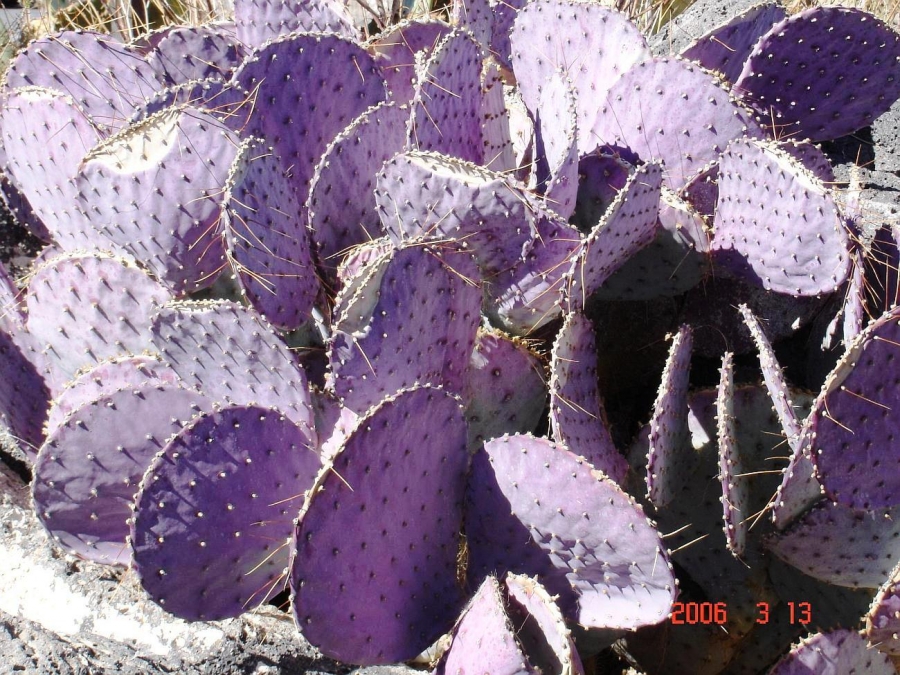 Opuntia chlorotica santa-rita, garden plant
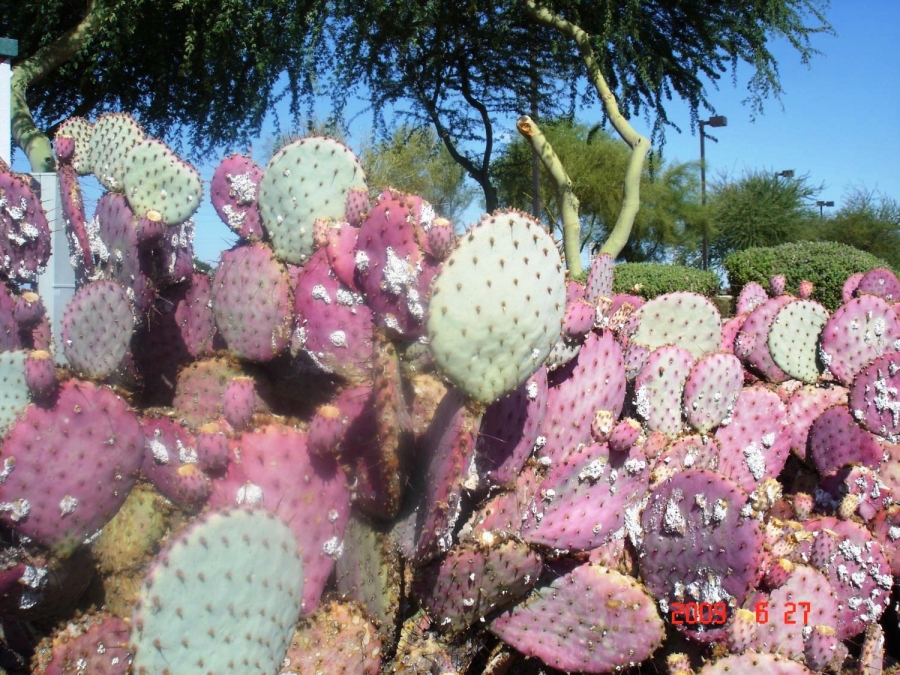 Opuntia chlorotica santa-rita, garden plant
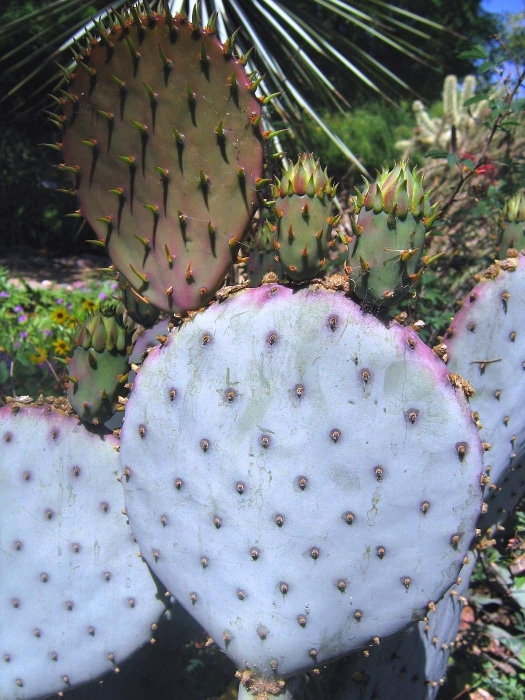 Opuntia chlorotica santa-rita, garden plant
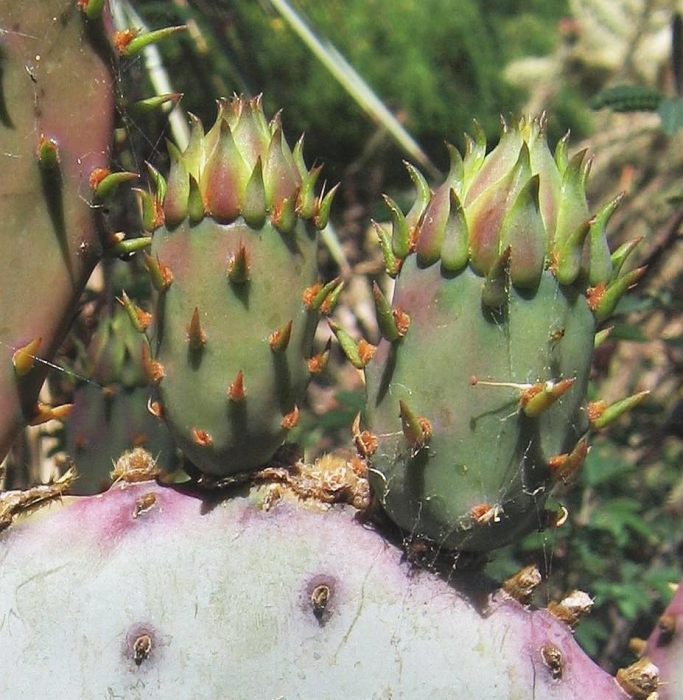 Opuntia chlorotica santa-rita, garden plant
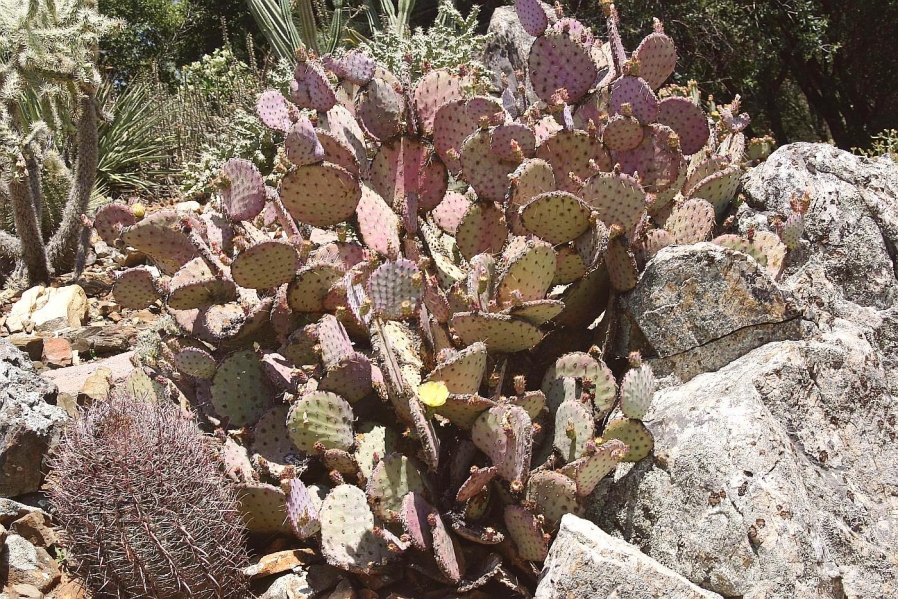 Opuntia chlorotica santa-rita, garden plant
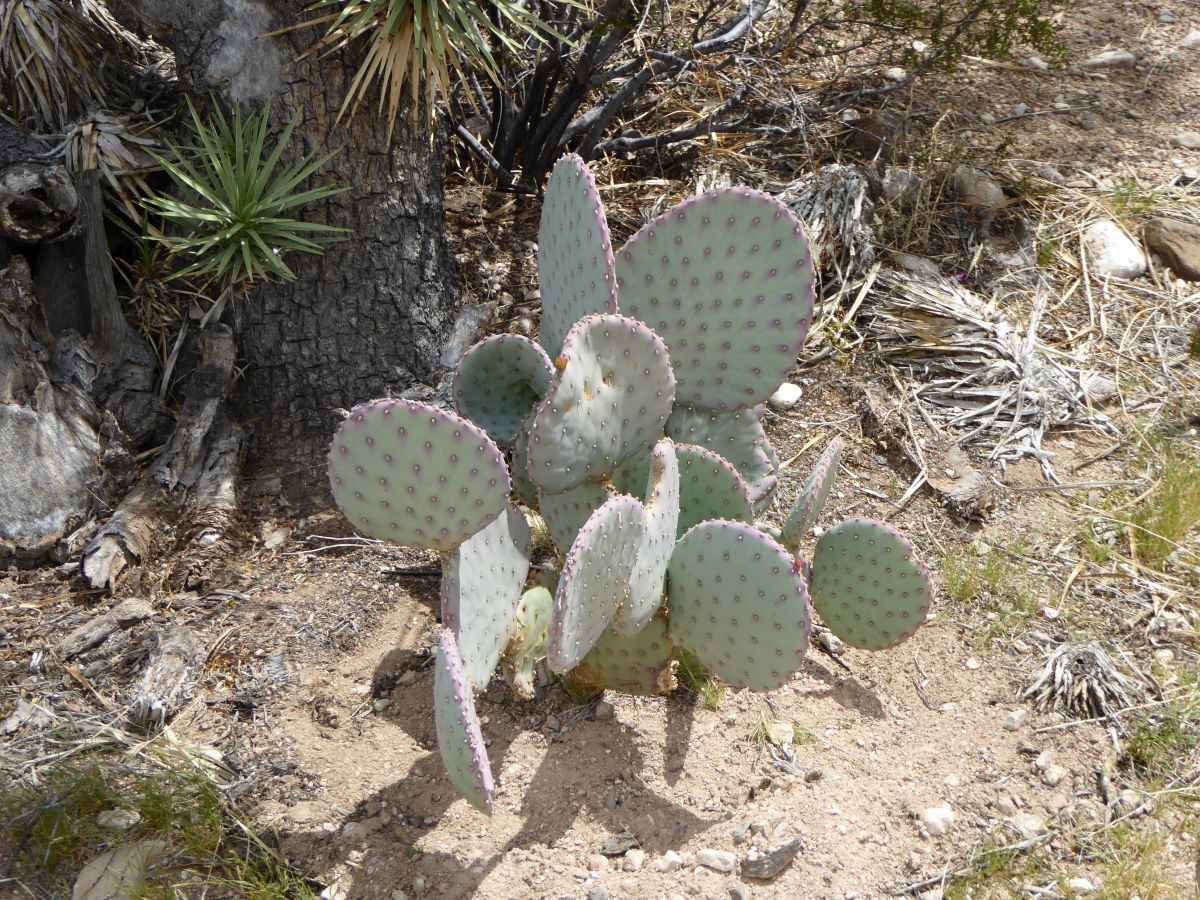 Opuntia chlorotica santa-rita, garden plant, Nancy Hussey
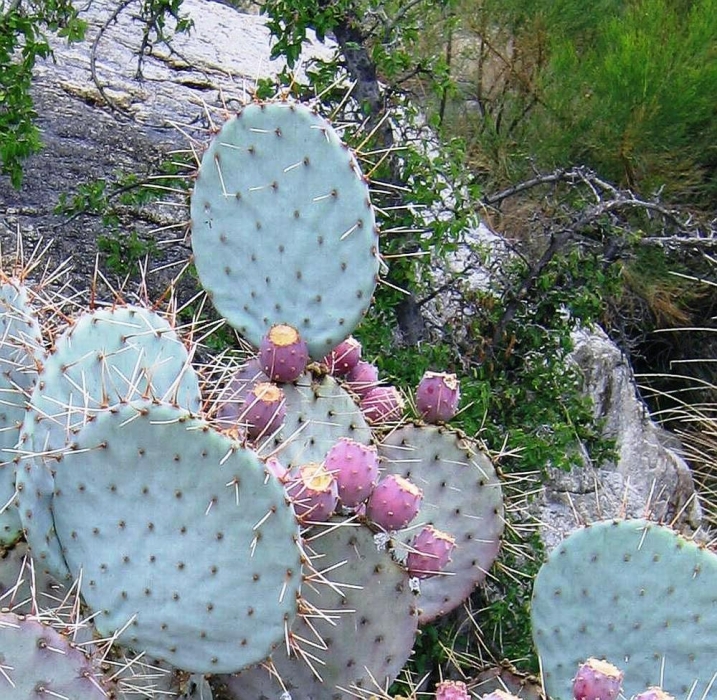 Opuntia chlorotica santa-rita, in habitat
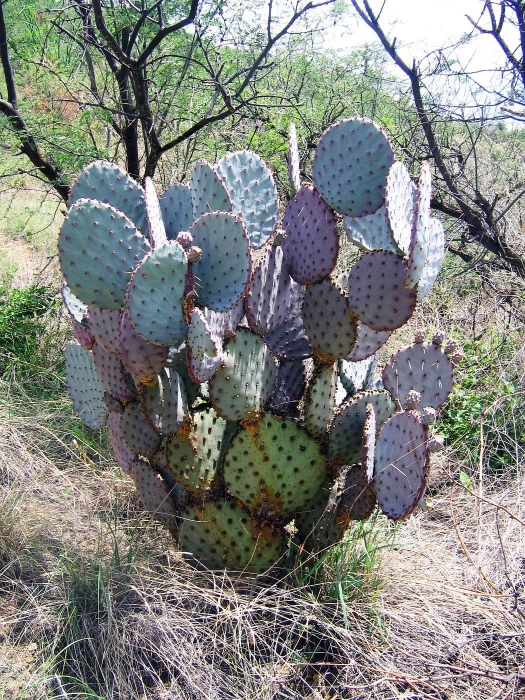 Opuntia chlorotica santa-rita, in habitat
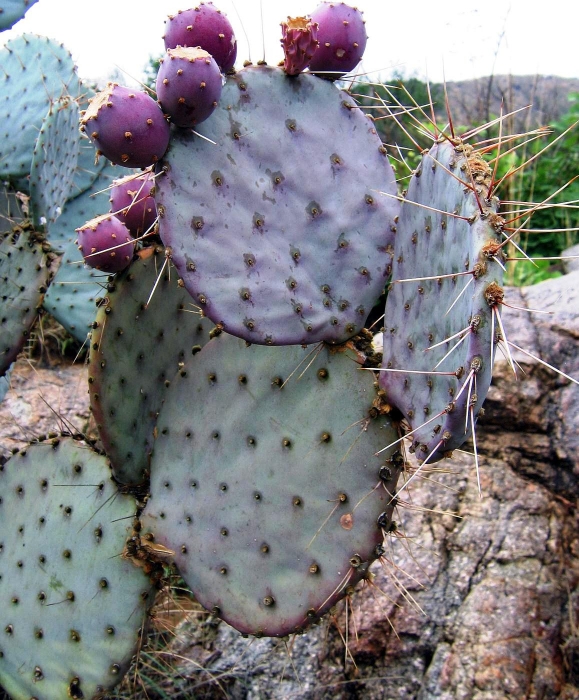 Opuntia chlorotica santa-rita, in habitat
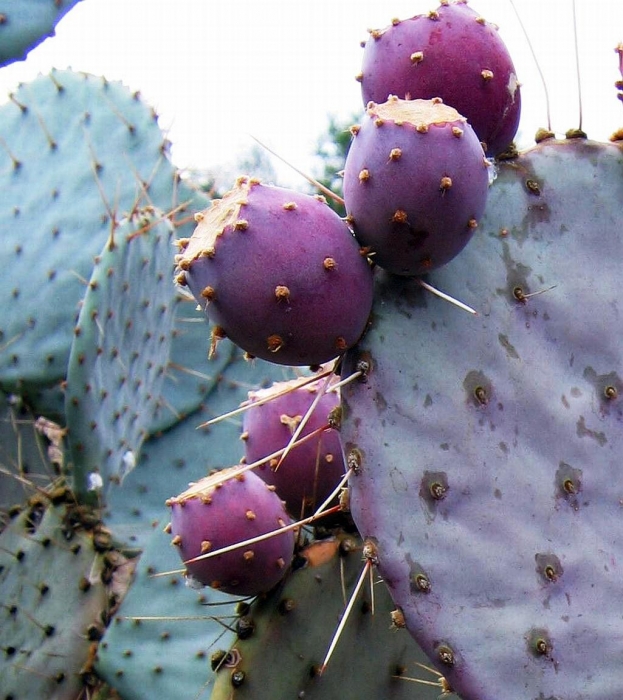 Opuntia chlorotica santa-rita, in habitat
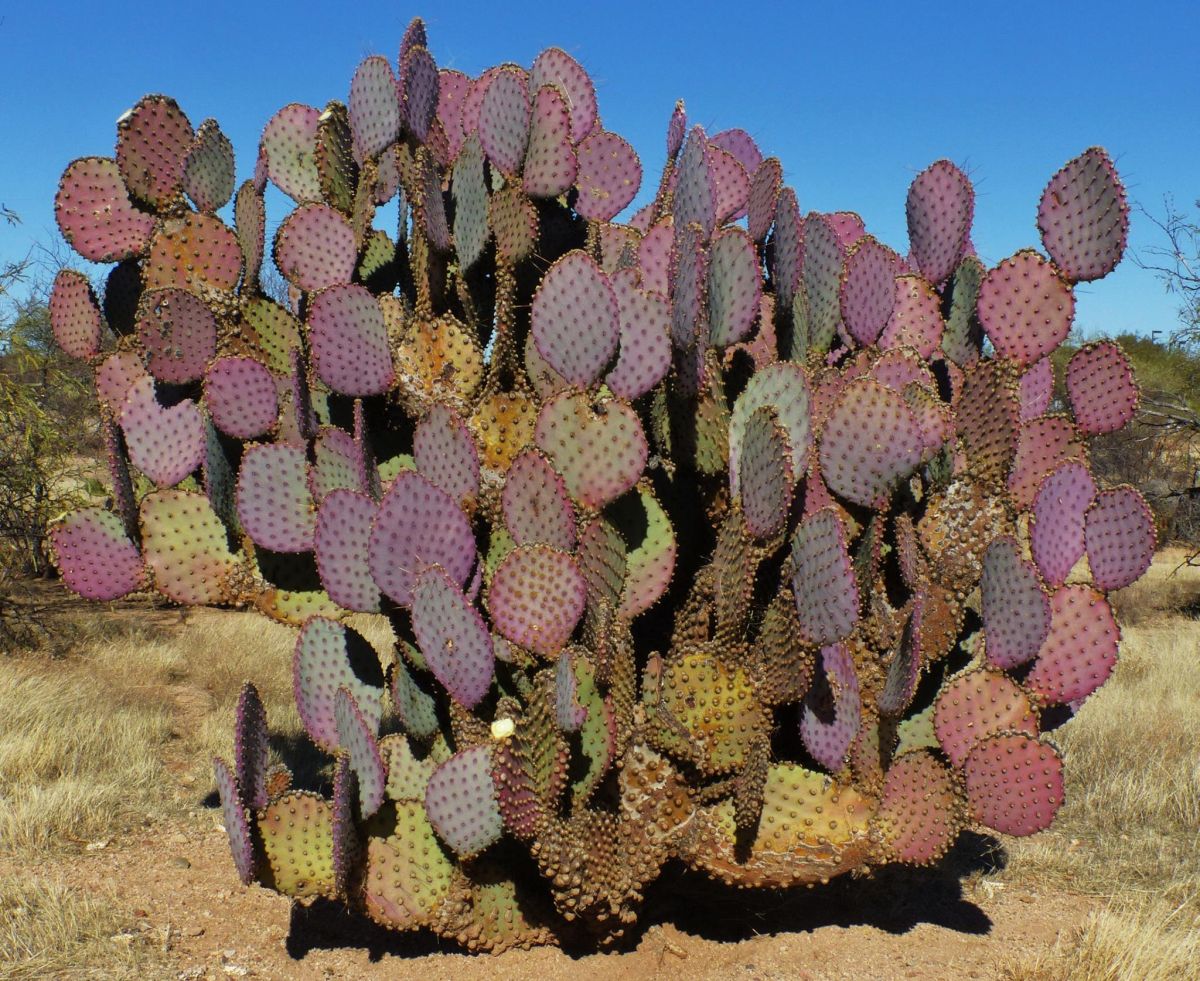 Opuntia chlorotica santa-rita, Jan Emming
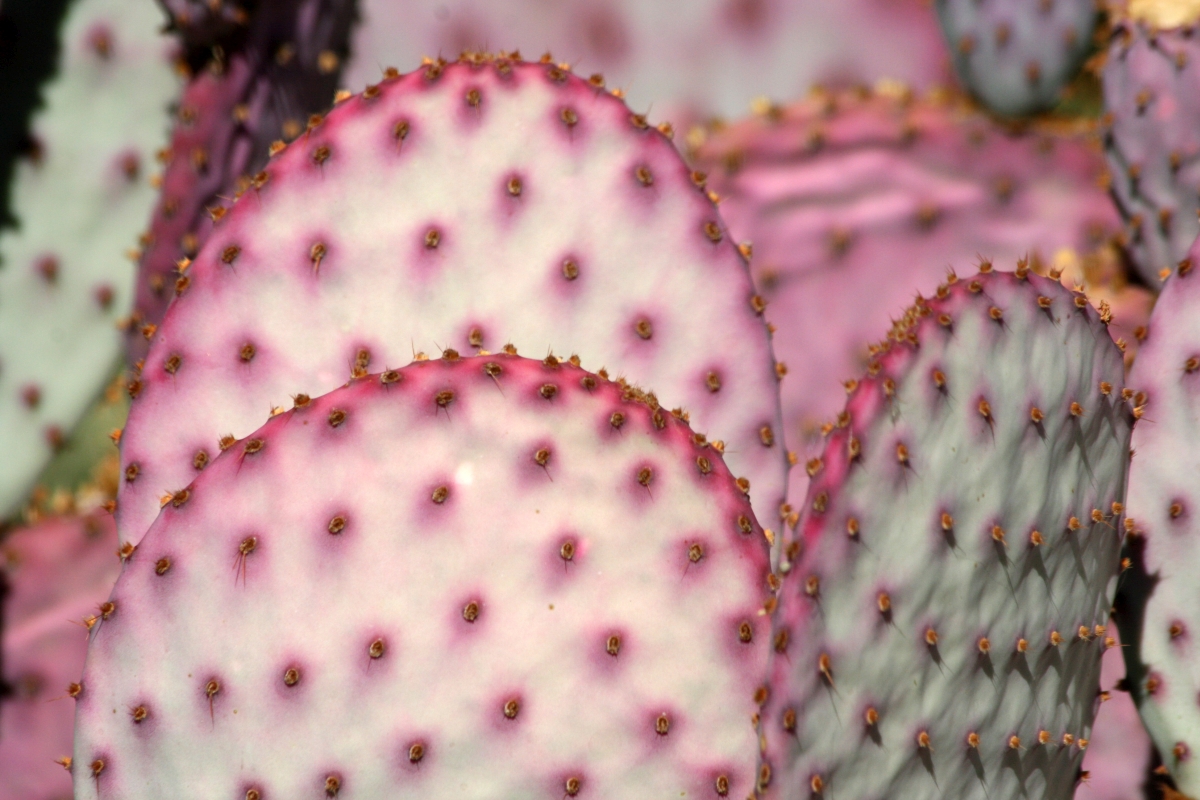 Opuntia chlorotica santa-rita, Quinn Dombrowski
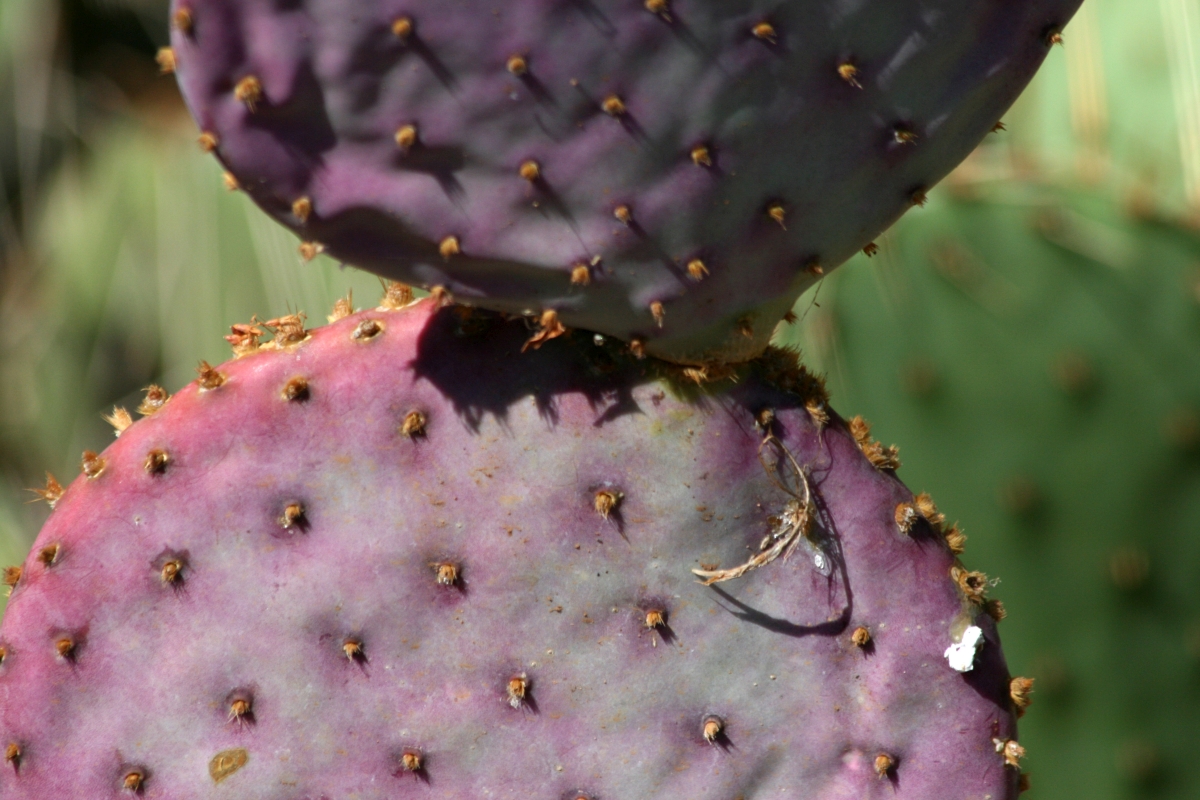 Opuntia chlorotica santa-rita, Quinn Dombrowski
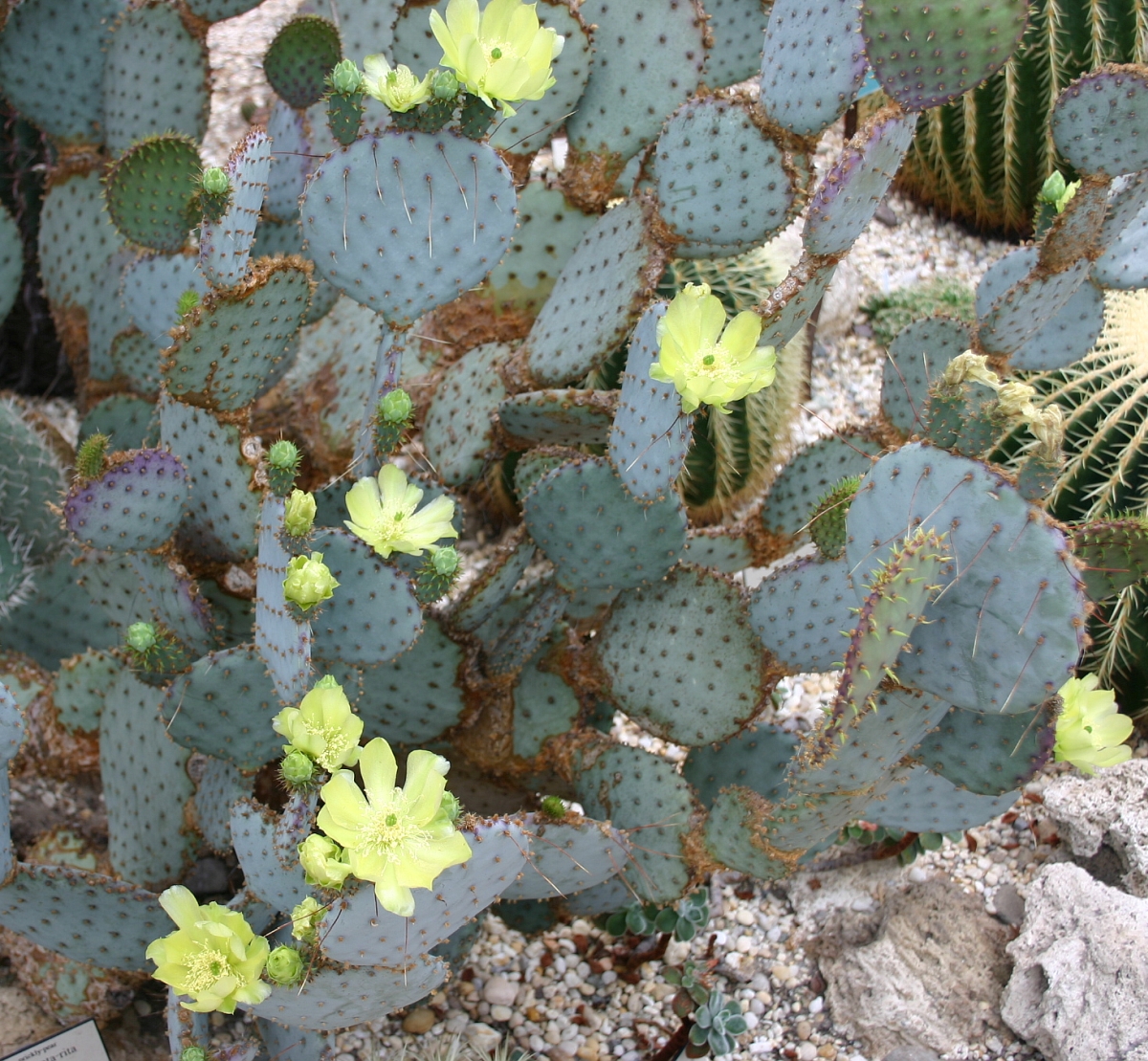 Opuntia chlorotica santa-rita, Ryan Soma
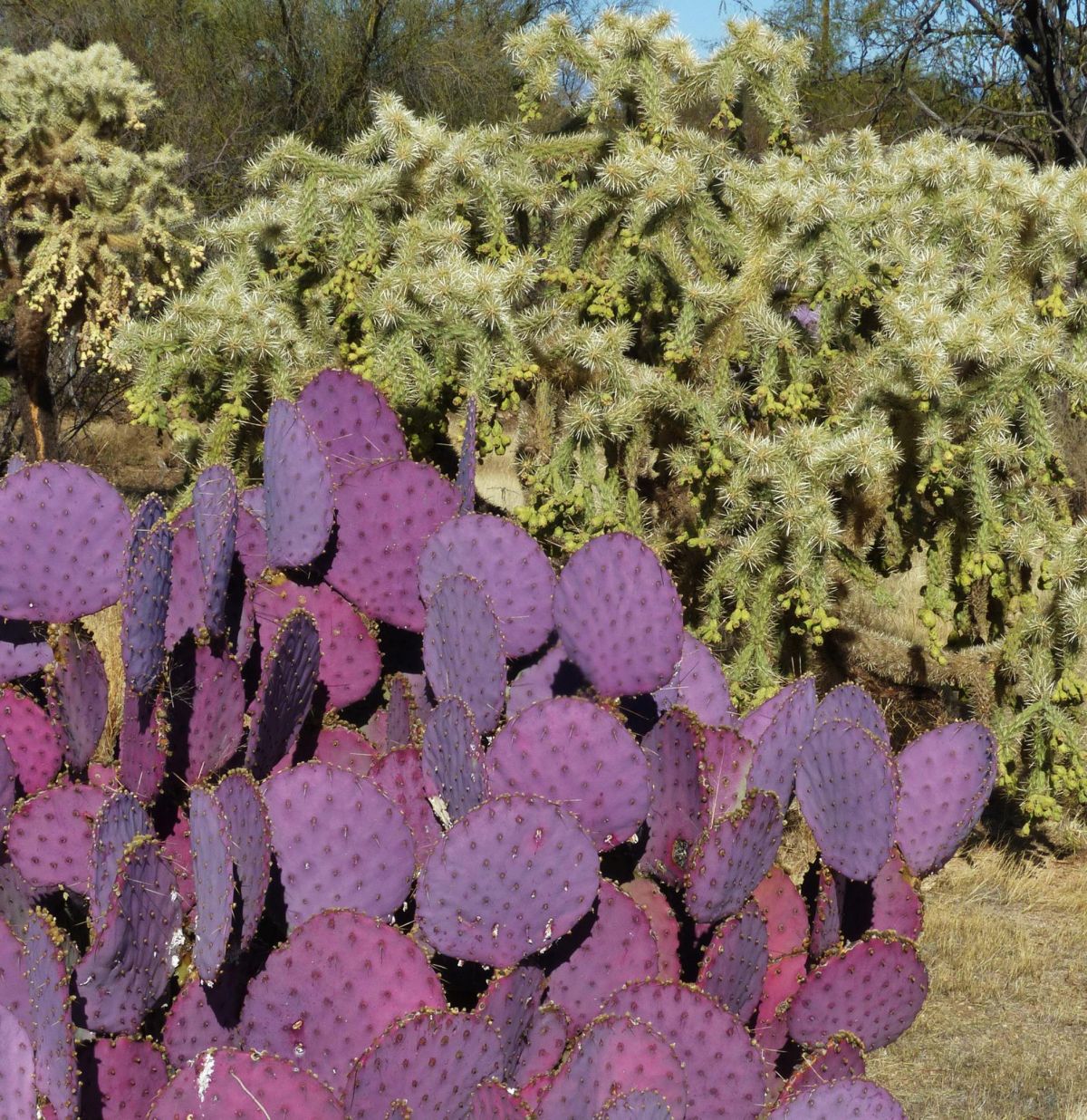 Opuntia chlorotica santa-rita, with C. fulgida, Jan Emming
One of my favorites.
Hi!
I am obsessed with finding an O. Santa Rita with perfectly round cladodes. Do you have any suggestions? They seem rather more rare than subjects with slightly ovoid ones.
Absolutely gorgeous, and I do love variations .
I live in the UK, but will love to get my hands on a few of these pads. Any ideas ?
I collected mine from a small paddle in Palm Springs CA. It now lives In Nacogdoches Texas and is very cold hardy. It has gone through 4 years of extreme weather from 115 to teens including snow. I’ve shared paddles so it’s small but bloomed for the first time this year.
I am selling these pads and would like to use some of your photos for my listing. Okay with you?
Yes. You can use the photos. If the photos have a photographer listed, please note that when you use the phto. Most photos do not have anyone listed and you are free to use them.