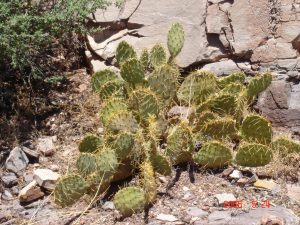
(Engelmann&J.M.Bigelow) Rose, Contributions from the United States National Herbarium 13(9): 309, 1911
Lectotype (deposited as O. engelmannii var cyclodes); Drawing (Bigelow, J.M., The Botany of the Expedition, 1856, plate VIII No. 1 [identified as O. engelmannii cyclodes])
Original Citation
What is Opuntia cyclodes?
Opuntia cyclodes is a little-studied yet visually appealing prickly pear cactus native to New Mexico. It has previously been treated as a variety or subspecies under the names Opuntia lindheimeri var. cyclodes and Opuntia engelmannii var. cyclodes. However, current evidence supports its recognition as a distinct, standalone species.
Details
In Opuntia cyclodes, the cladodes are typically circular and measure 15–20 cm in diameter. Plants are sprawling in habit and generally reach 30–60 cm in height, occasionally up to 100 cm. More than half—and often nearly all—of the areoles bear spines. Characteristically, a single long spine sweeps downward from each areole, often accompanied by one or two much smaller spines. Some cladodes may have multiple spines per areole. The current year’s spines are consistently yellow to straw-colored, sometimes darkening toward the base. These yellow spines are a distinguishing feature and may give the plant an overall yellow-green appearance.
Flowers are yellow. The fruit is globose to subglobose, measuring 1.5–3 cm in diameter.
Ploidy is unknown.
Other Notes
Opuntia cyclodes was originally described as a variety of O. engelmannii. However, the two taxa are visually distinct, and no intermediate forms have been observed. O. cyclodes is generally a low-growing plant, occurring sporadically across much of eastern New Mexico and extending into the El Paso region of western Texas. Early reports also documented its presence as far west as Stein’s Pass (Steins) in southwestern New Mexico.
The species has been observed in a range of habitats, from rocky, mountainous terrain (e.g., Villanueva State Park, New Mexico) to flat, sandy environments (e.g., Conchas Lake State Park, New Mexico). The type locality is recorded as “the upper Pecos” region of New Mexico.
 Opuntia cyclodes, Conchas Lake, NM
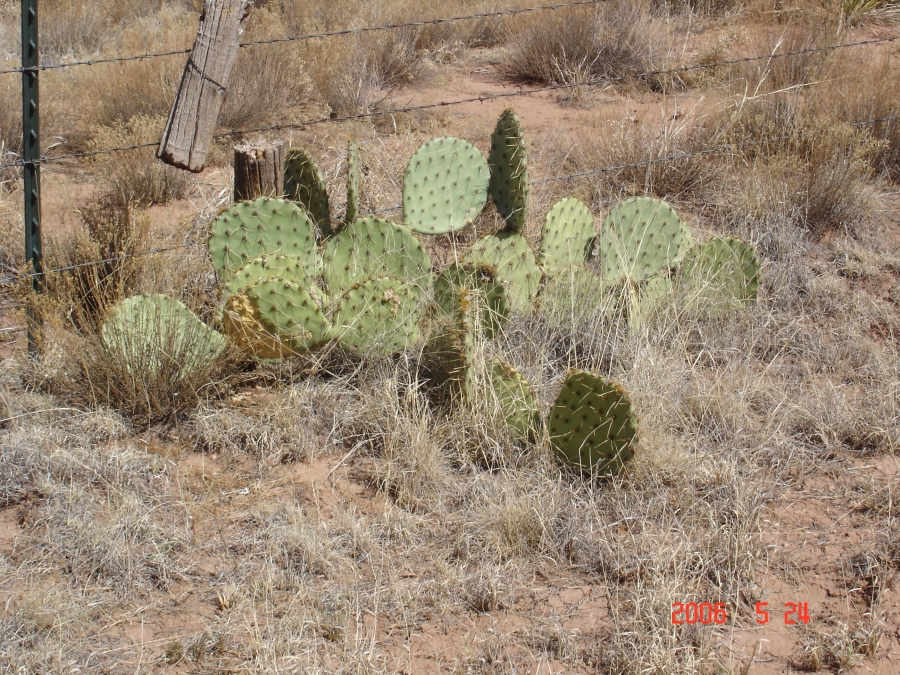 Opuntia cyclodes, Conchas Lake, NM
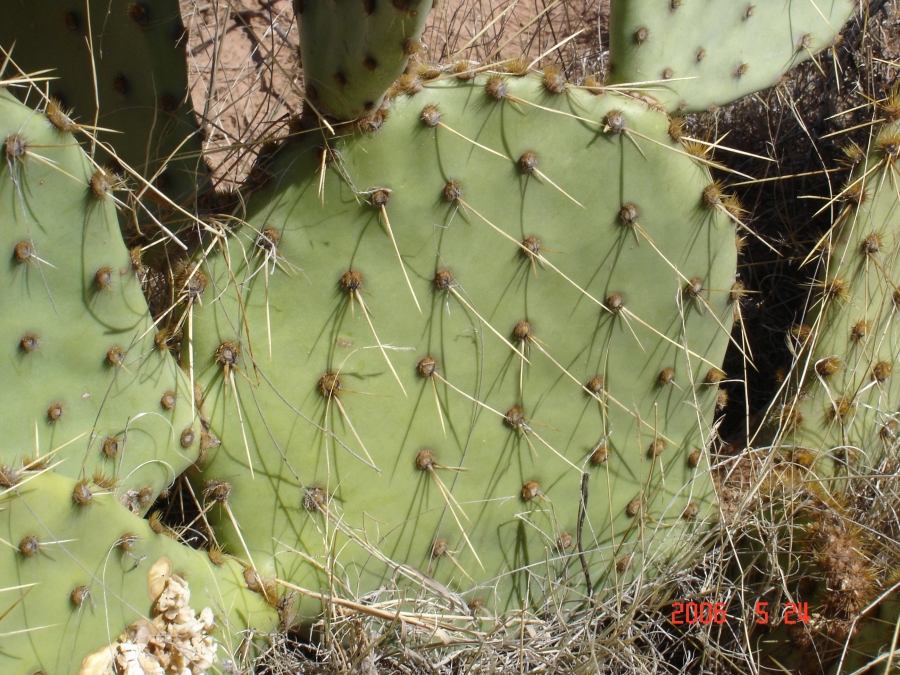 Opuntia cyclodes, Conchas Lake, NM
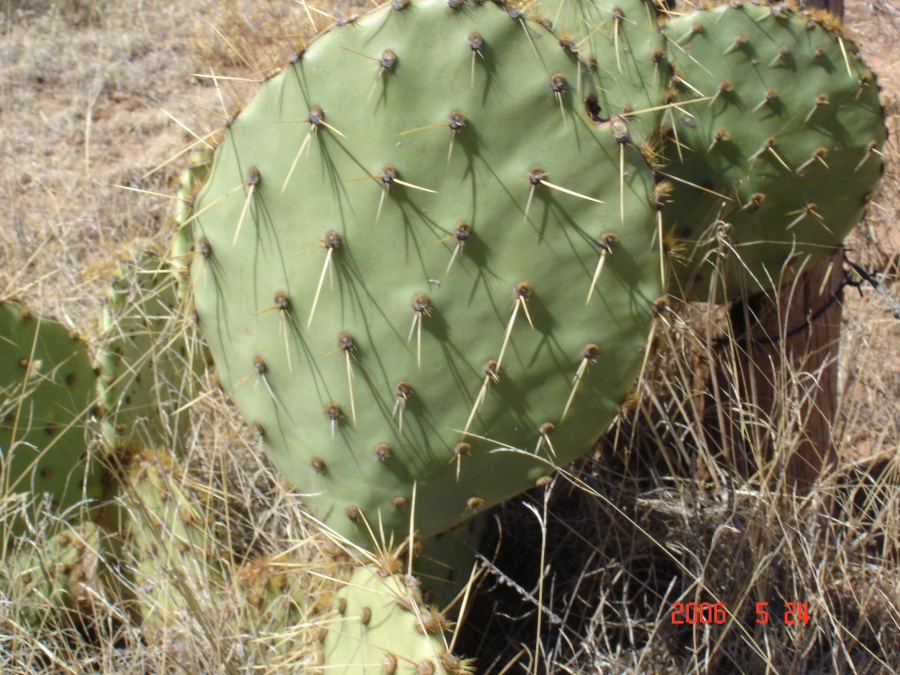 Opuntia cyclodes, Conchas Lake, NM
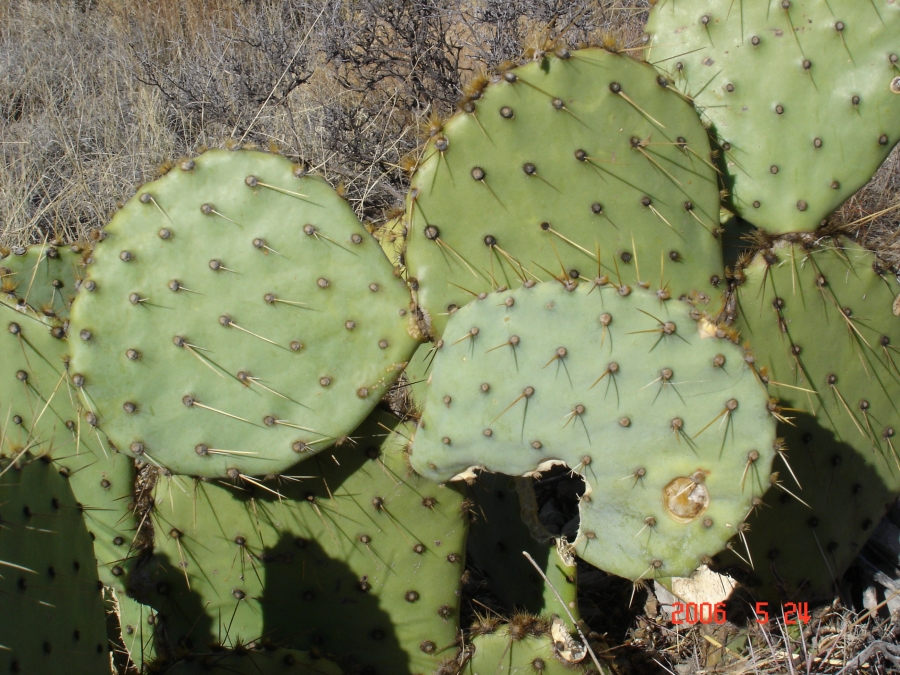 Opuntia cyclodes, Conchas Lake, NM
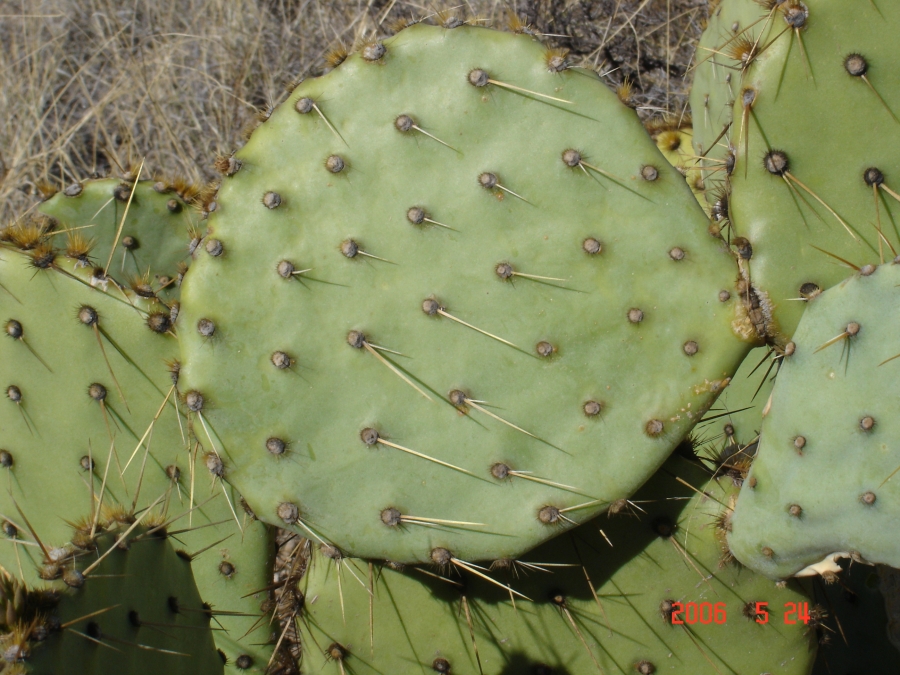 Opuntia cyclodes, Conchas Lake, NM
 Opuntia cyclodes, Conchas Lake, NM
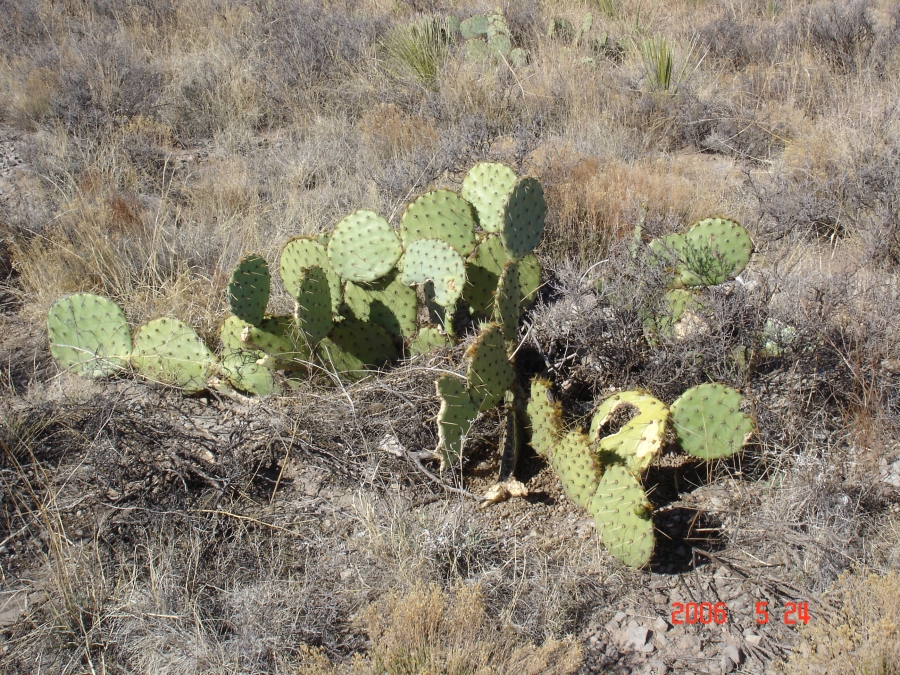 Opuntia cyclodes, Conchas Lake, NM
 Opuntia cyclodes, garden plant
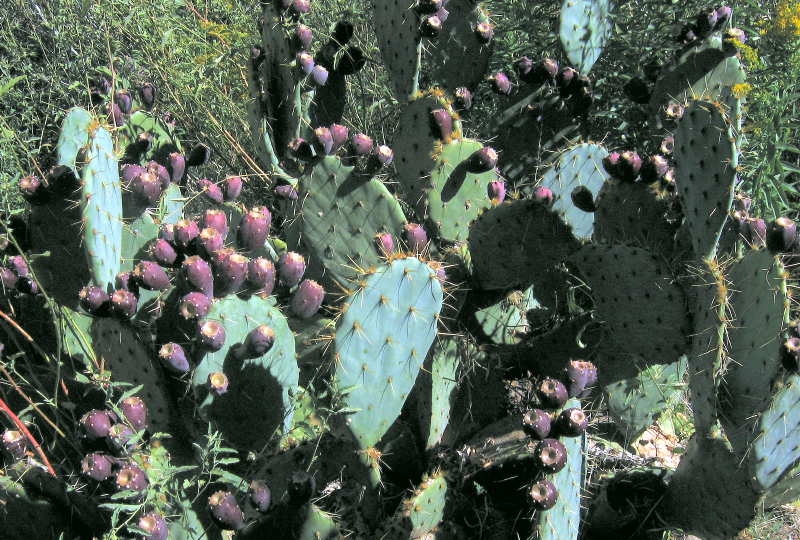 Opuntia cyclodes, garden plant
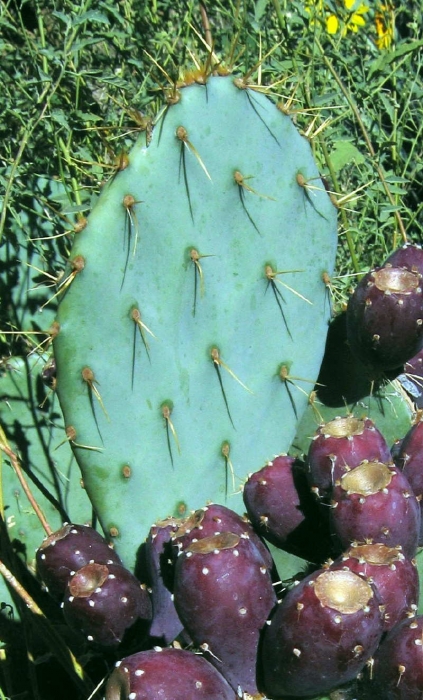 Opuntia cyclodes, garden plant
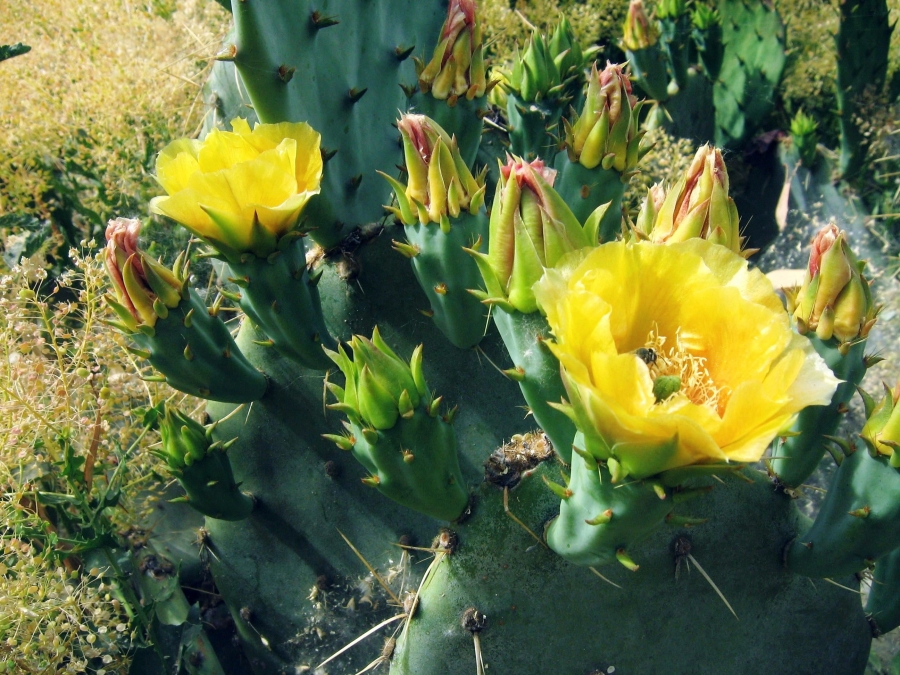 Opuntia cyclodes, garden plant
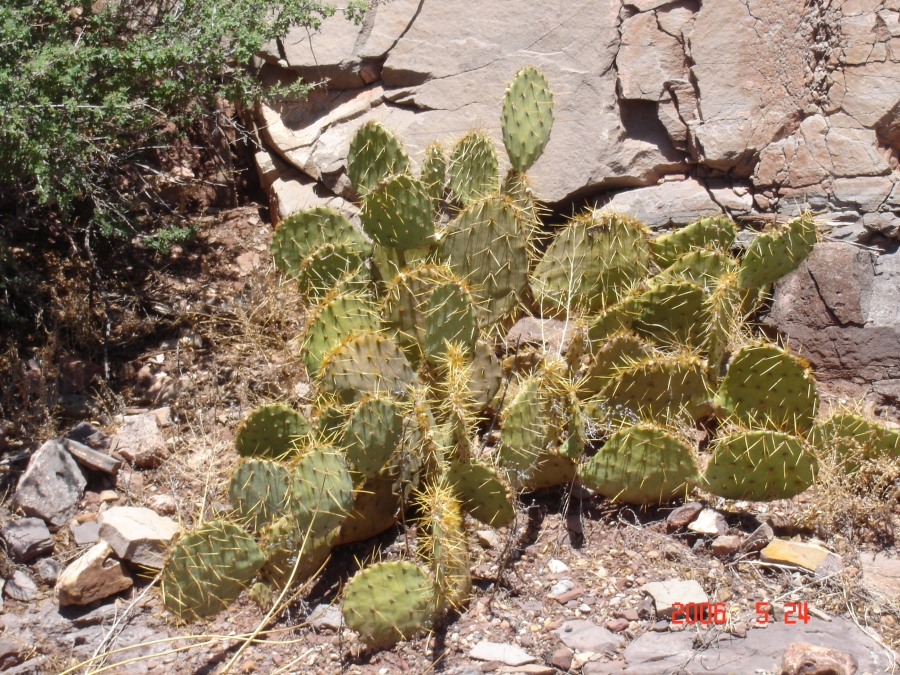 Opuntia cyclodes, Tremontina, NM
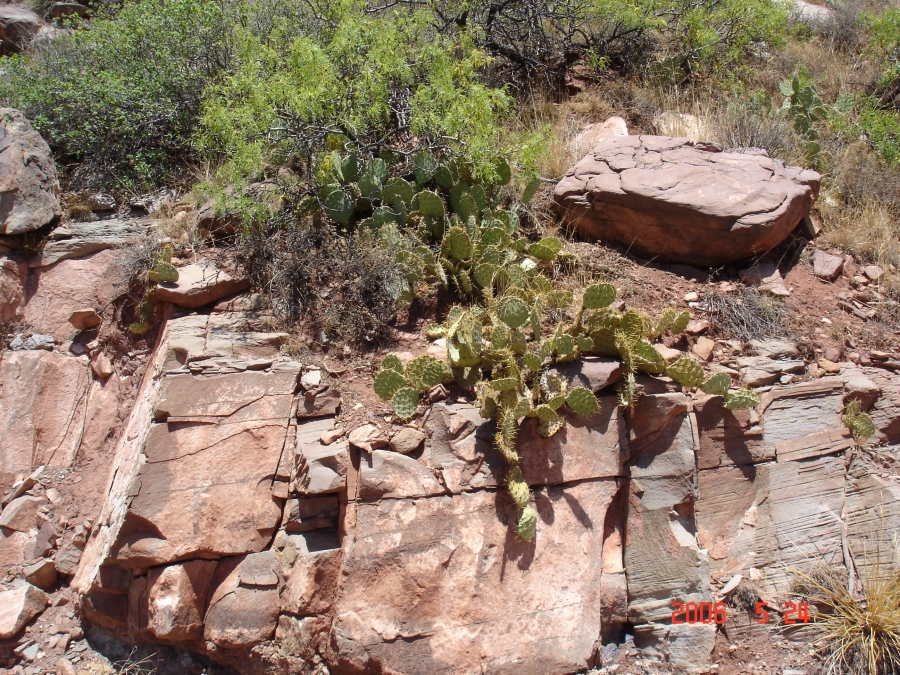 Opuntia cyclodes, Tremontina, NM
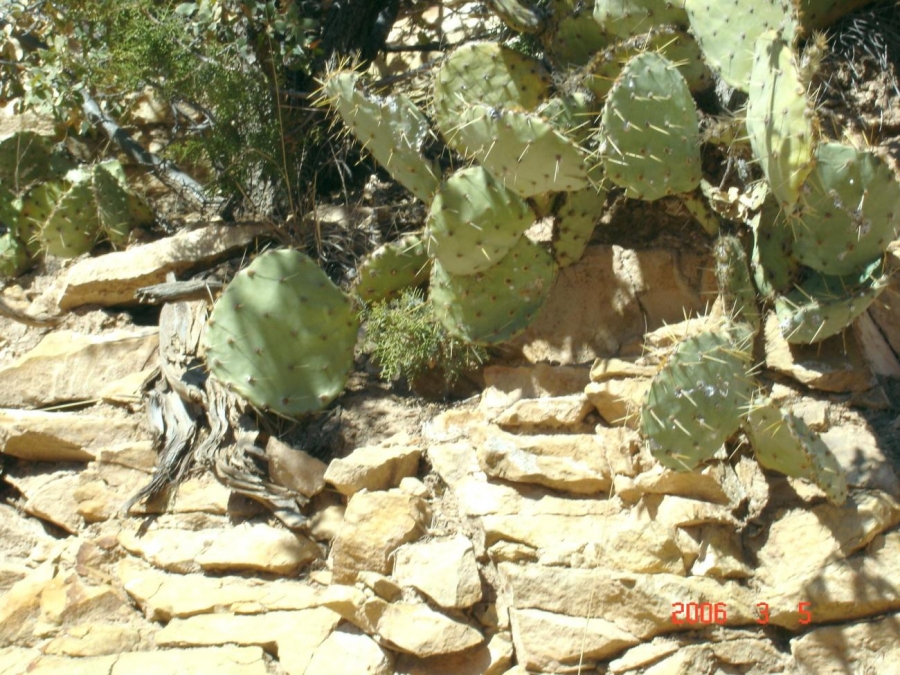 Opuntia cyclodes, Villanueva, NM
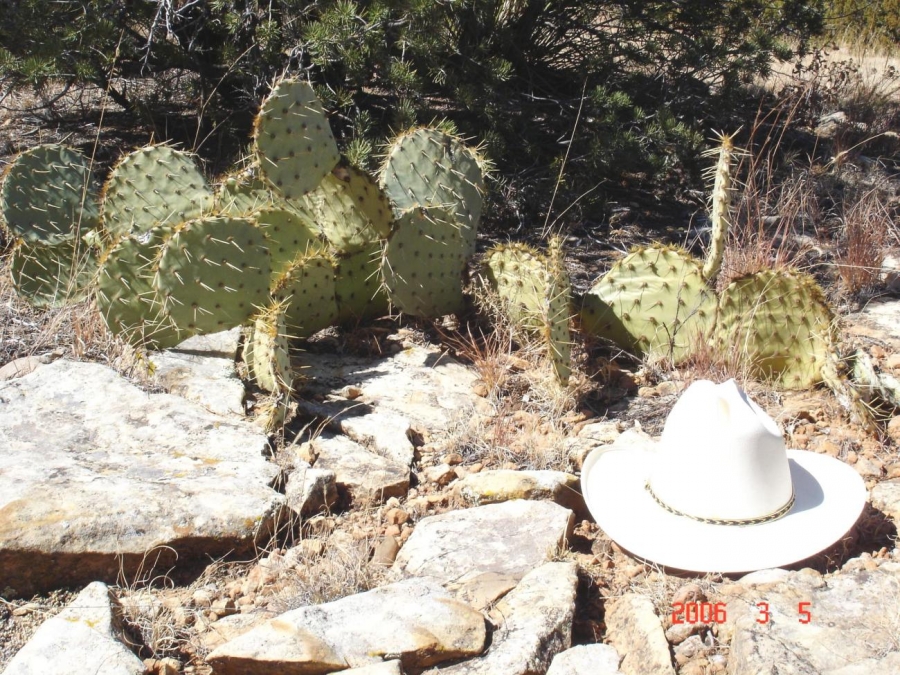 Opuntia cyclodes, Villanueva, NM
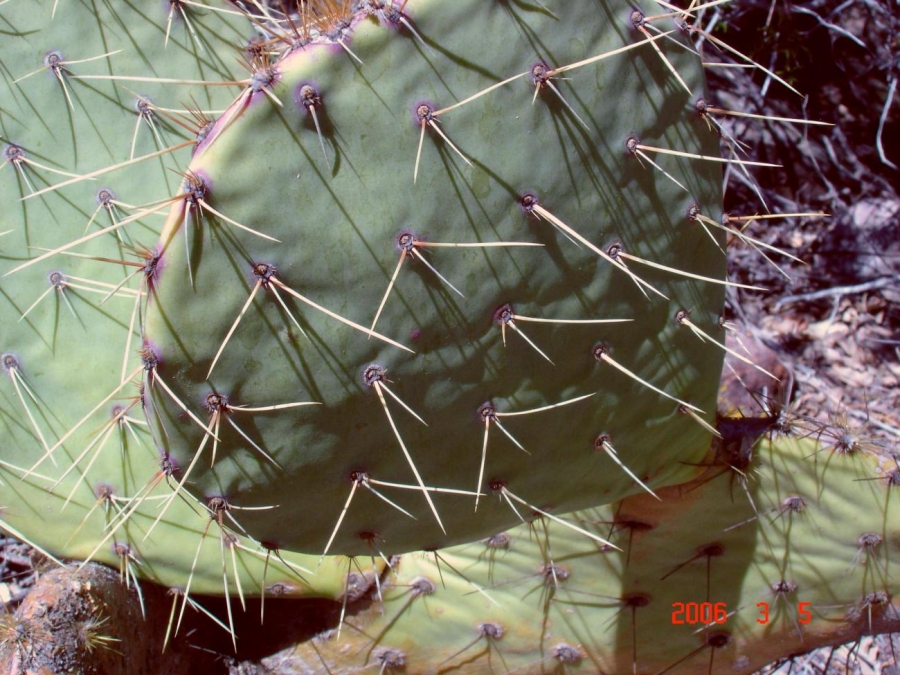 Opuntia cyclodes-like, Villanueva, NM