W.H. Earle, Saguaroland Bulletin, XXXIV:15 1980.
Original Description
What is Opuntia woodburyi?
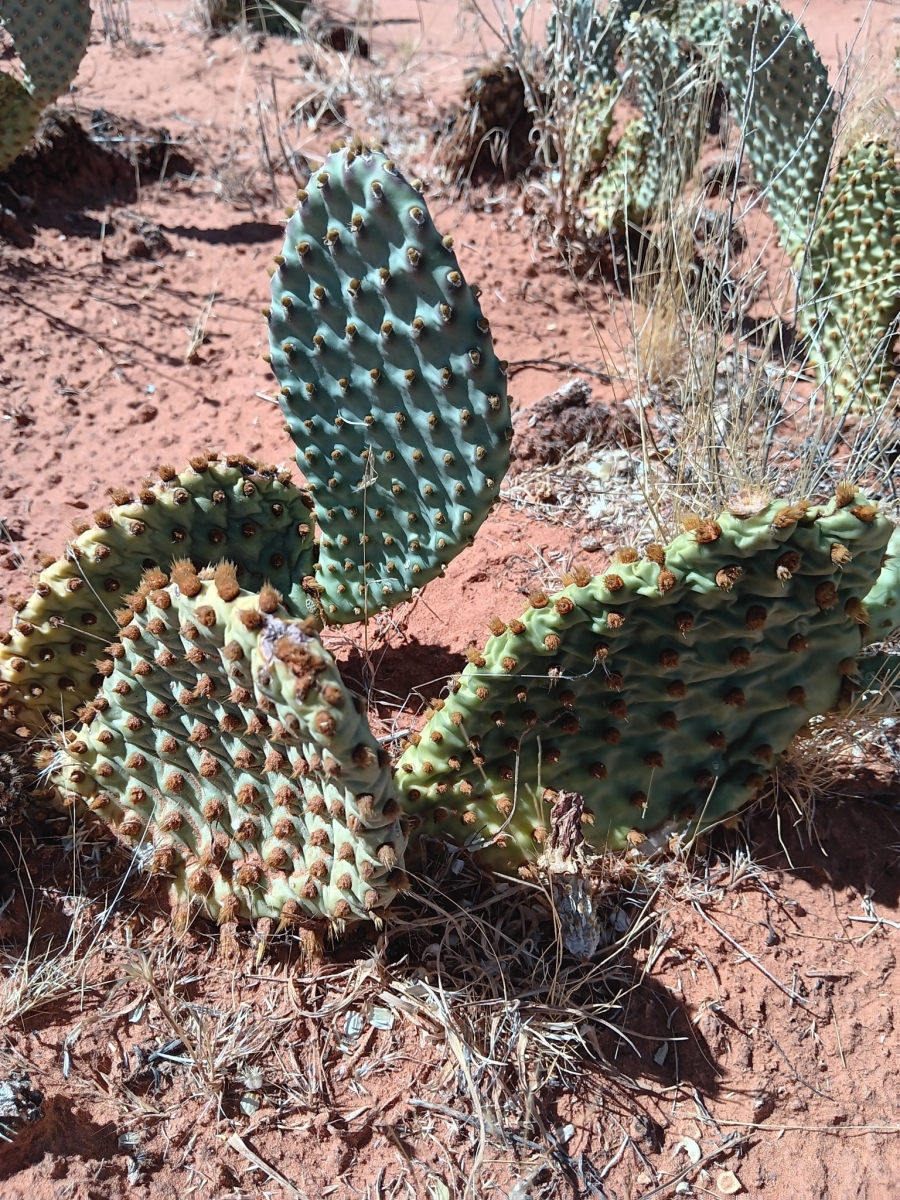
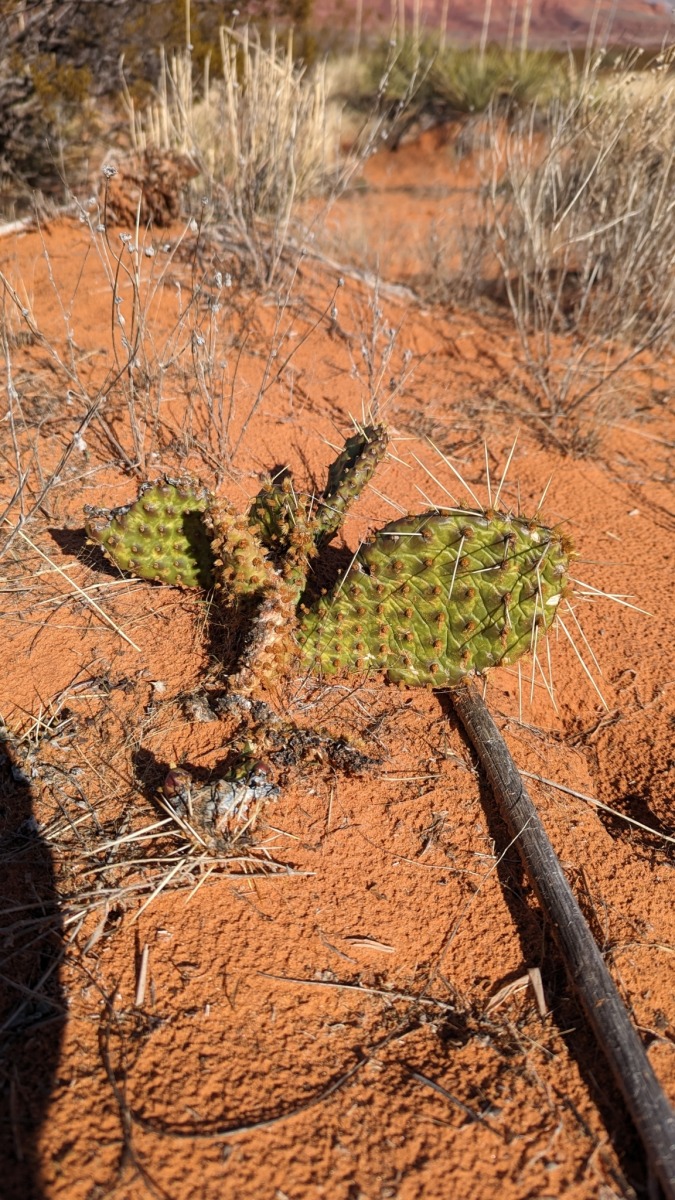
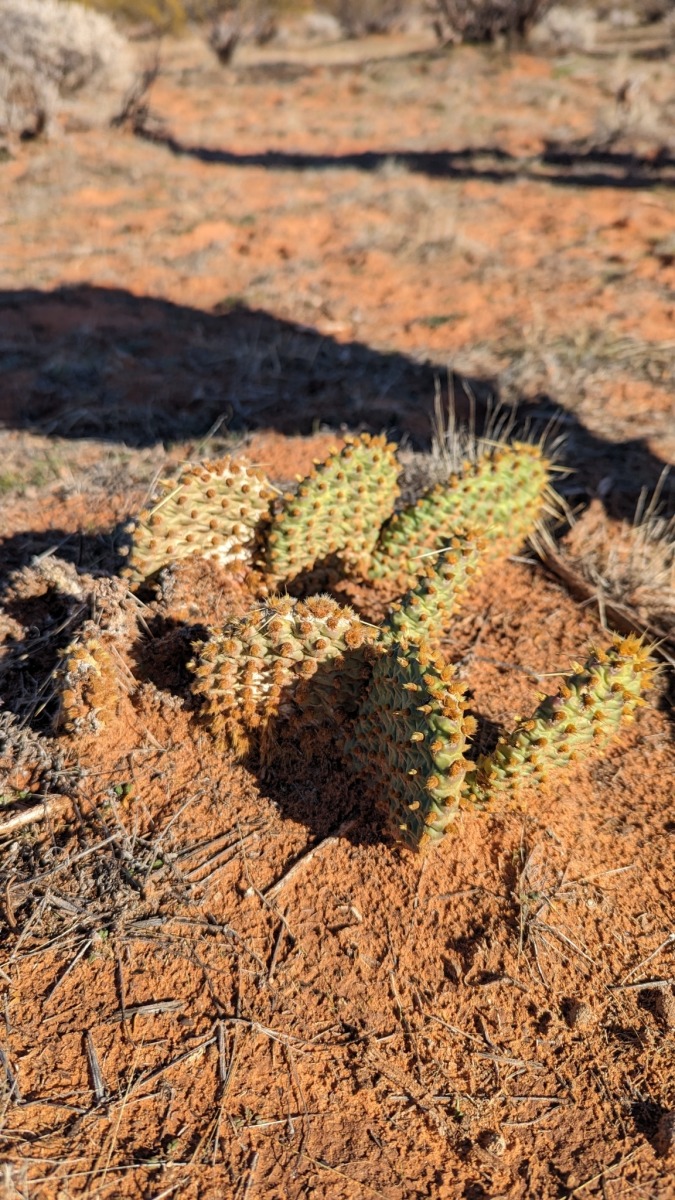
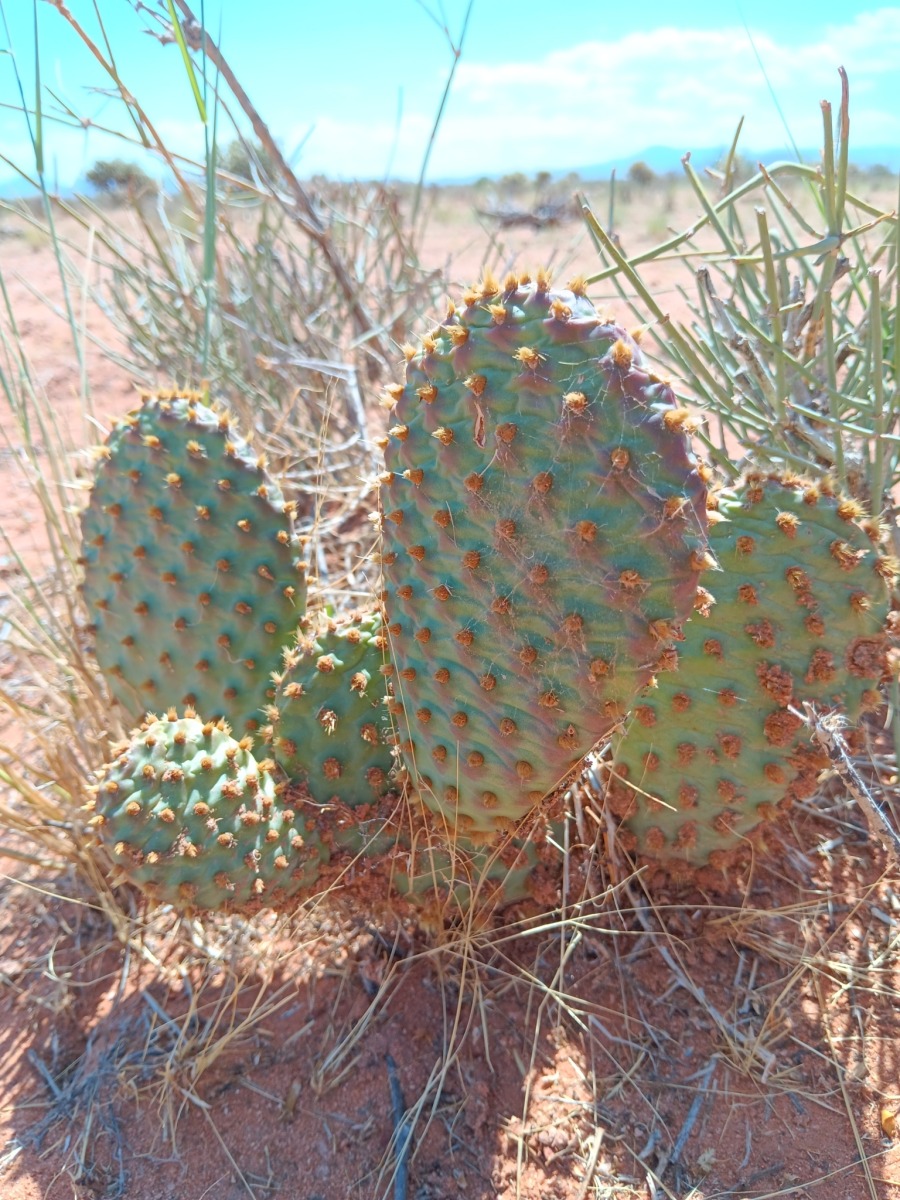
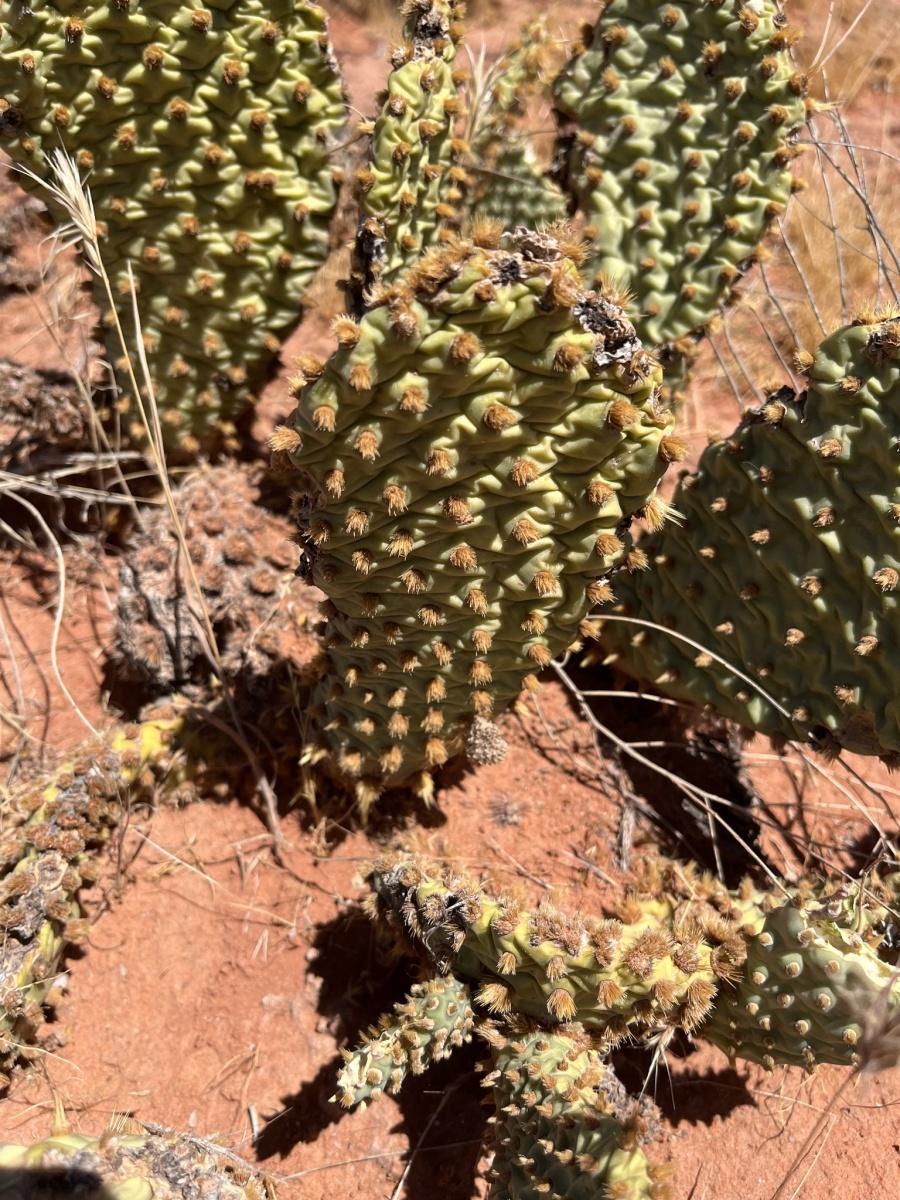
Opuntia woodburyi was originally considered to be a variety of O. basilaris due to the shape and contour of its cladodes, as well as the general lack of spines. It is a prostrate, creeping prickly pear which grows in chains on red sandy soils in southern Utah and northern Arizona.
O. woodburyi is octaploid.
Details
O. woodburyi has brown glochids and long spines 2.5-5 cm on the upper end of pads. Sand accumulates from wind, sometimes causing the plants to form mounds. The claddes are bright, light-green in color, glabrous, and obovate to rhomboid in shape. Flowers are light to dark pink, about 6 cm in diameter. The fruit is dry and about 3.1 cm long and 2.2 cm wide. The seeds are lumpy but flat, and about 0.9 cm wide.
Opuntia woodburyi is treated as a variety of O. basilaris by some botanists or even a hybrid (O. xwoodburyi). O. woodburyi is only reliably distinguishable from O. aurea by chromosome count. More sampling is needed of both.
A photograph is included in the original description (link above).
See Majure et al., 2015, Phytoneuron, 2015, 41.