Griffiths, Annual Report of the Missouri Botanical Garden 22: 29, 1911.
Holotype; Herbarium; Herbarium (as O. occidentalis)
Original Citation
What is Opuntia demissa?
What is Opuntia demissa?
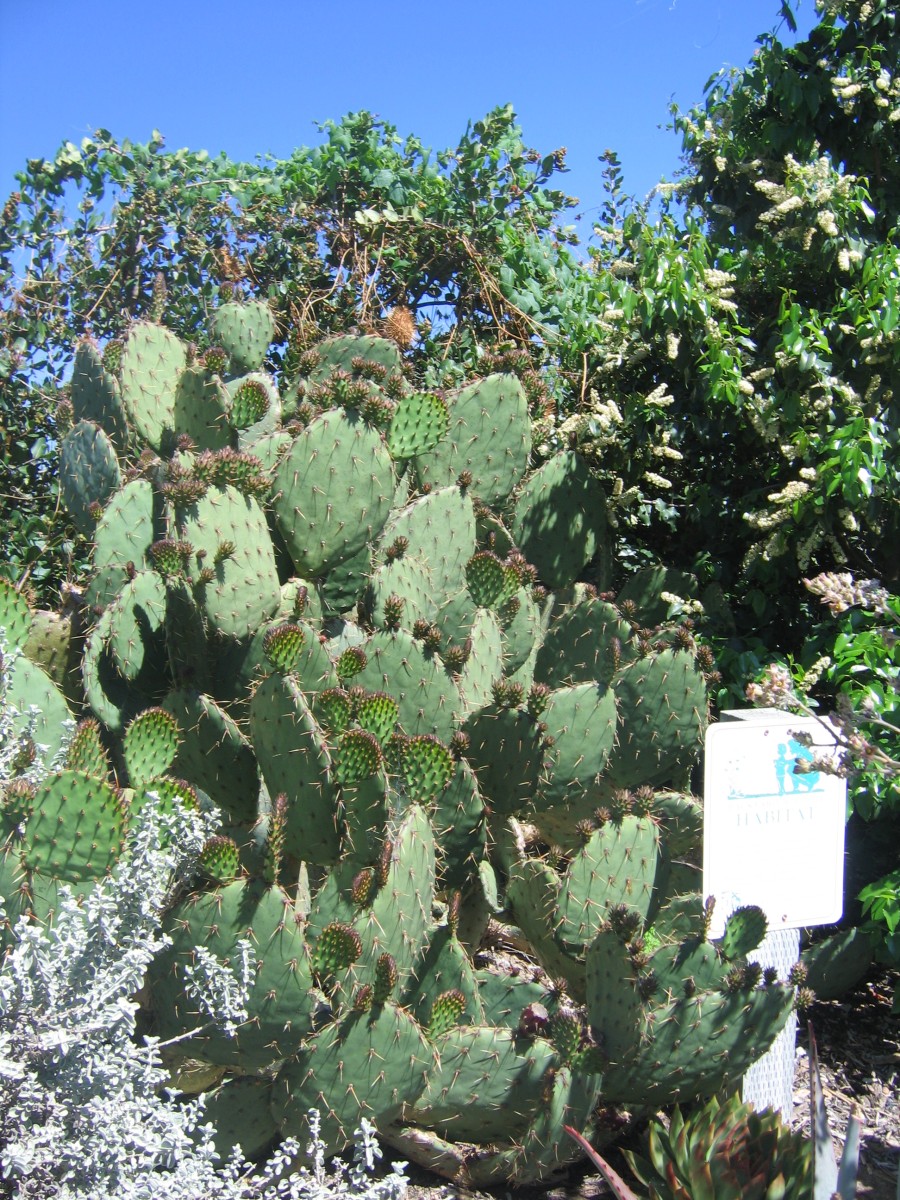
Opuntia demissa is a coastal California prickly pear that grows low and prostrate to half-ascending, with main branches resting on edge along the ground and short secondaries rising from them, rarely more than two cladodes high. It bears yellow flowers, often red-tinged externally, and red, dry fruits. Plants occur near the coast and in adjacent inland foothills from the San Diego area north toward Santa Barbara. In the field it is often mistaken for taller, coarser coastal taxa, but its consistently dwarf, creeping habit is distinctive.
Details
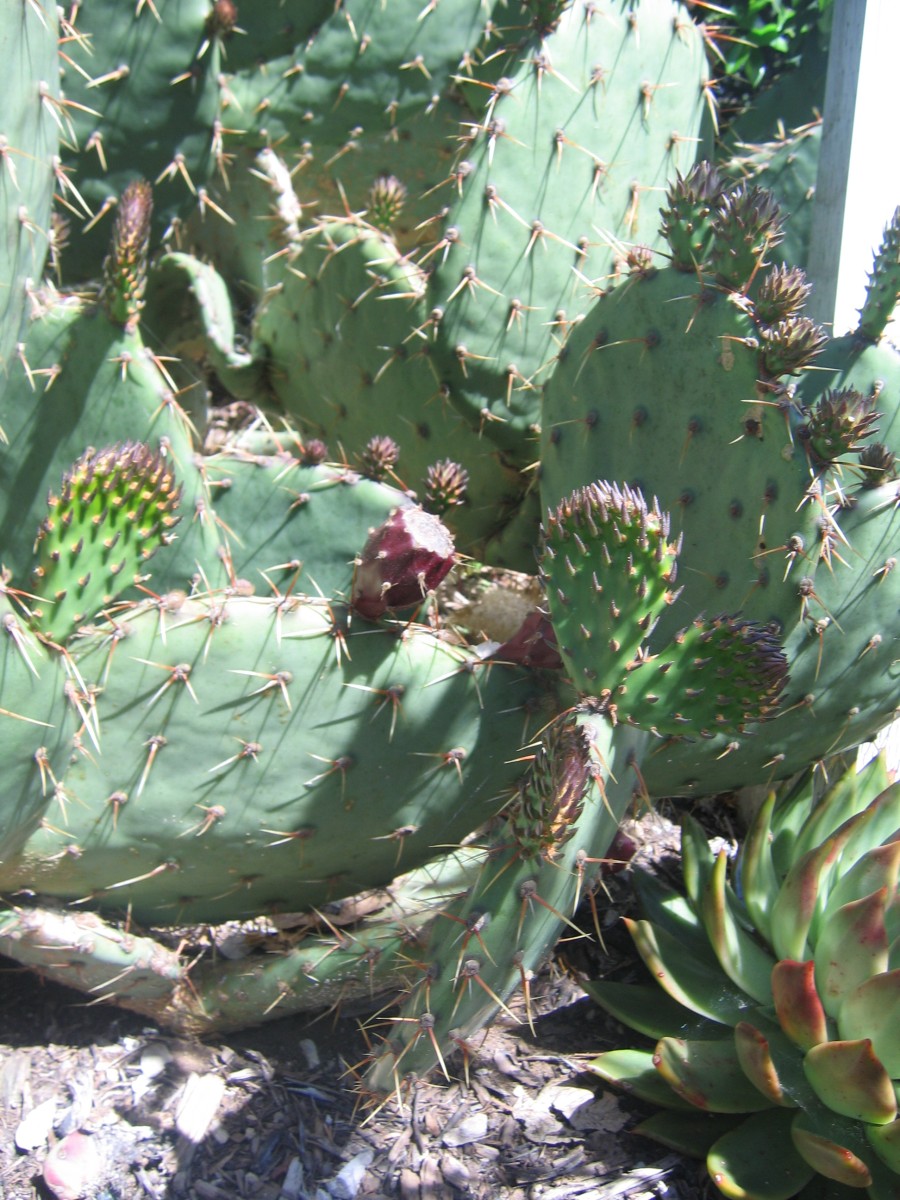
Cladodes are subcircular, oval, or obovate, commonly around 15 cm long, and up to about 18 × 18 cm. The surface is yellowish green with a faint glaucous bloom, sometimes flushed coppery when young. Leaves are relatively large for the genus, somewhat flattened, subulate, about 4 × 12 mm, and soon deciduous. Areoles are small to about 6–7 mm across, with tawny wool aging gray, and conspicuous glochids set at close intervals on faces and margins.
Spines are mostly white, sometimes brownish at the base, usually erect to spreading, and occasionally slightly twisted. They are few per areole, commonly 2–3 cm long, sometimes to 4–5 cm, and tend to be slender and not strongly barbed. The combination of sparse, pale spines and a very low stature helps separate O. demissa from nearby coastal prickly pears.
Flowers open yellow, with outer tepals often tinged red, a red style, and a green, lobed stigma. Buds are conical, and closed flowers can appear reddish from the outside. Fruits mature red, subglobose to obovate, and are typically dry at maturity. Seeds are pale, lens-shaped, and enclosed by a firm, thickened testa.
O. demissa forms broad, creeping patches on coastal benches, stabilized dunes, and adjacent inland slopes in coastal sage scrub and chaparral. It tolerates wind, salt spray, seasonal drought, and cool, foggy summers, and flowers reliably where light is strong and soils are well drained. It differs from O. littoralis, which forms taller multi-tiered clumps with heavier spination, and from O. occidentalis, which is larger, more erect, and more robustly spined. Careful attention to habit, pad size, spine number, and fruit texture, across multiple plants in a population, yields the most reliable identifications.
They type location is east of San Diego, California.
Other notes
The original description described O. demissa as a variable plant.
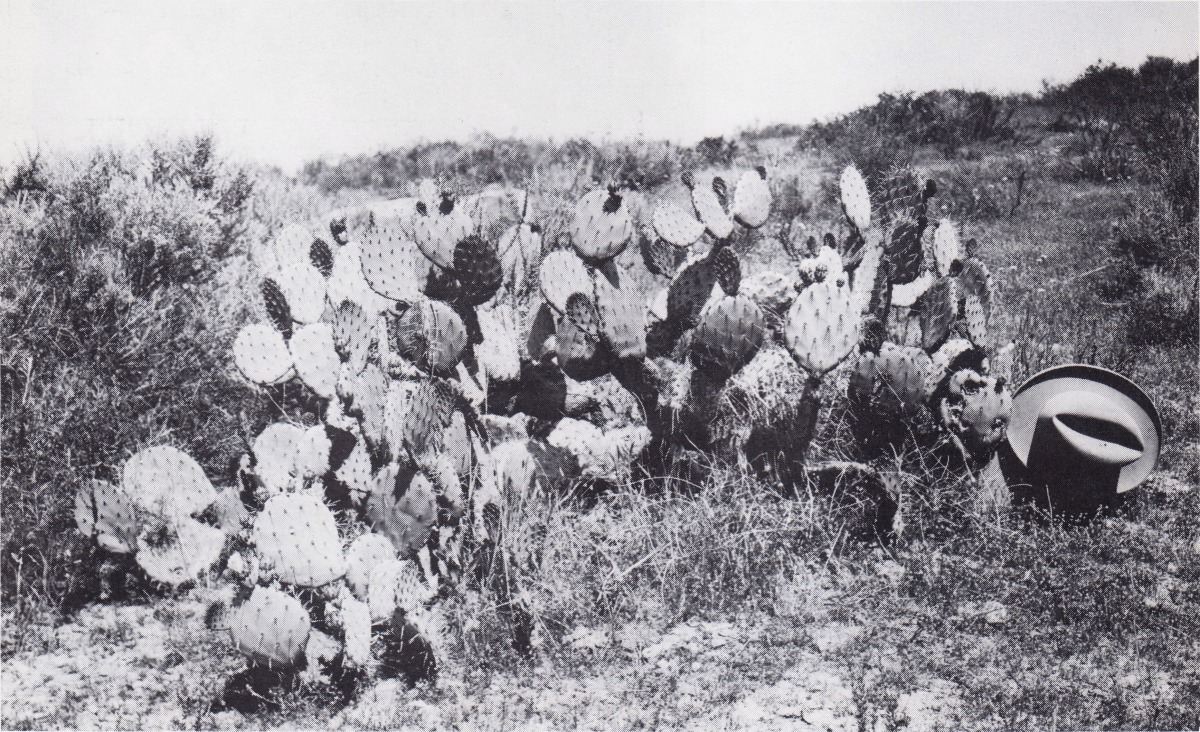
Opuntia demissa black and white photo