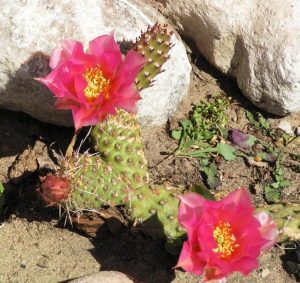
Opuntia debreczyi, Potato Cactus

Opuntia debreczyi

Szutorisz, Kaktusz-Világ 26: 115, 2002

(Also see Szutorisz, Succulentes 4: 17, 2005)

Original Description

Herbarium; Herbarium; Herbarium; Herbarium; Herbarium; Herbarium; Herbarium; Herbarium

See O. fragilis 

See O. polyacantha

What is Opuntia debreczyi

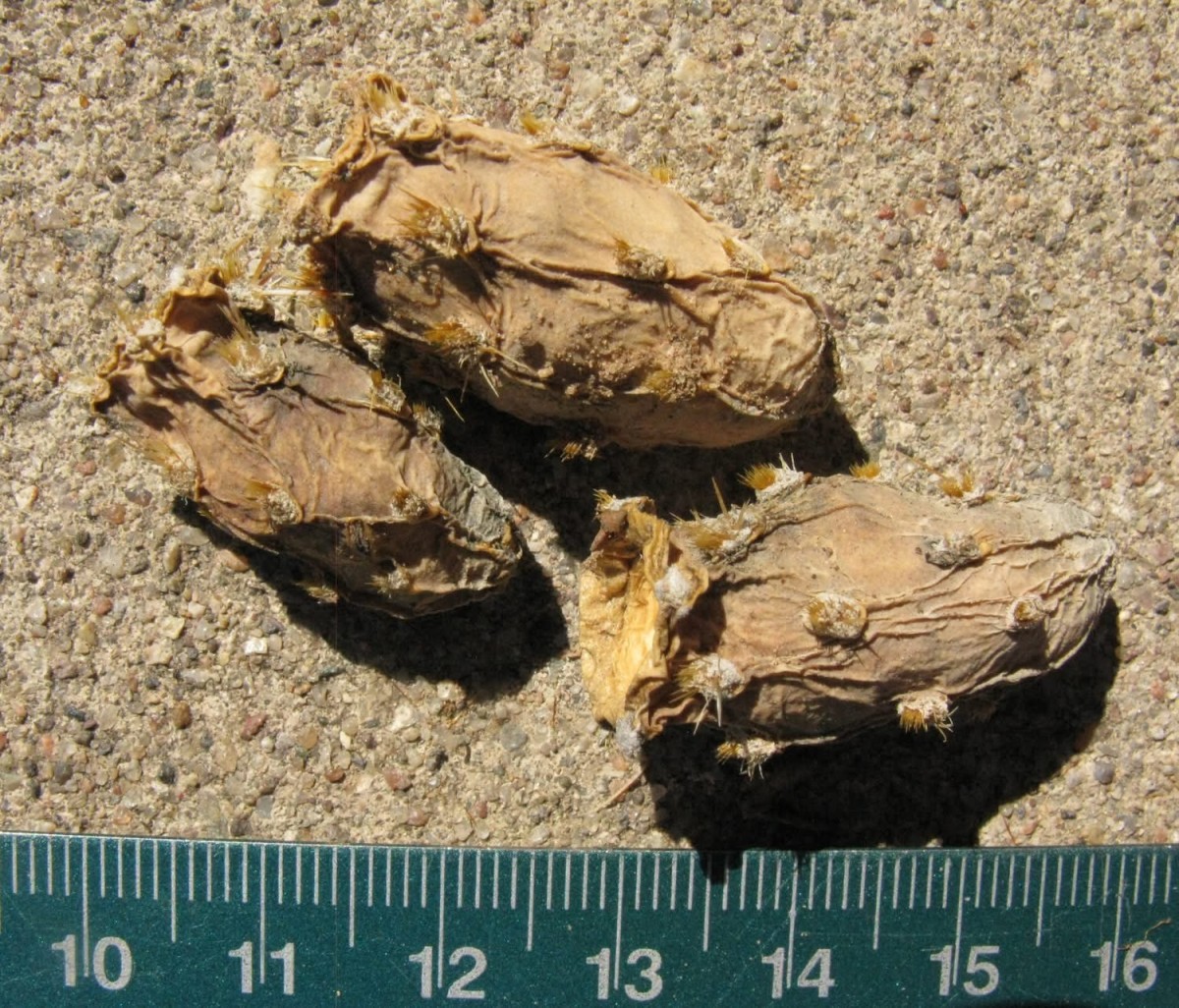
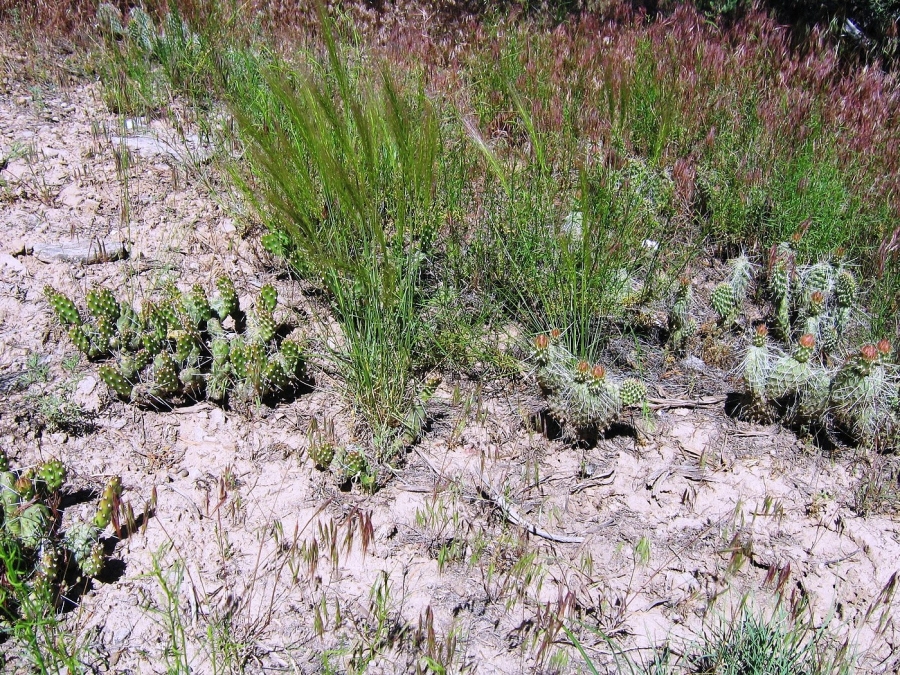
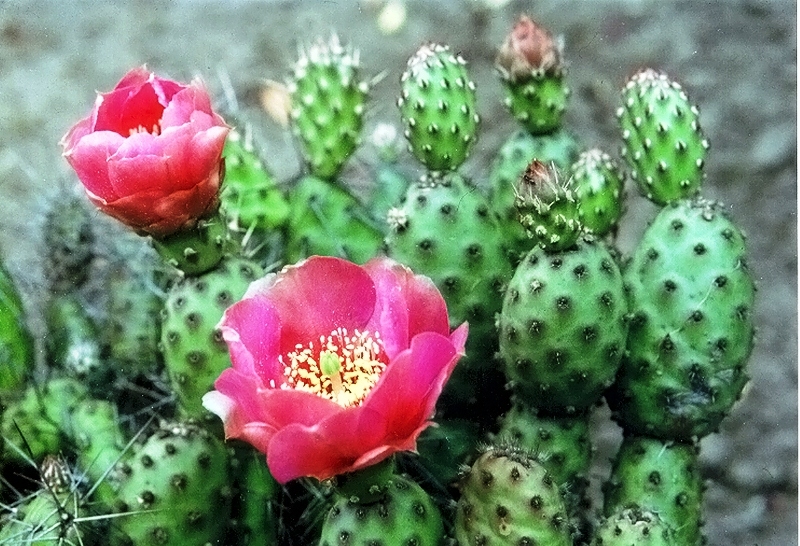
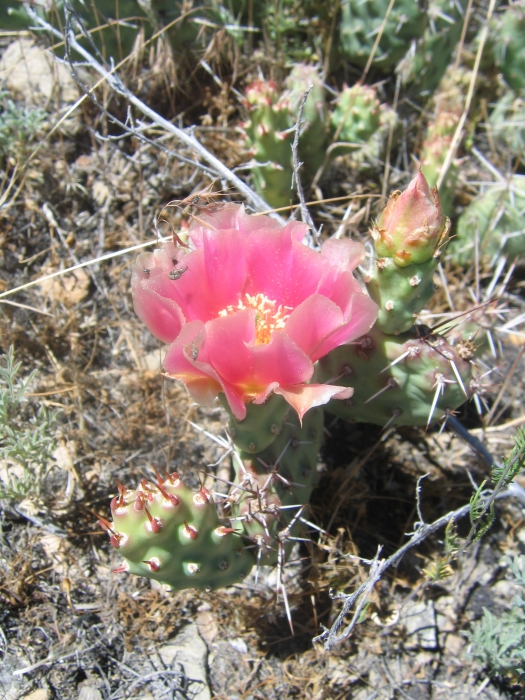
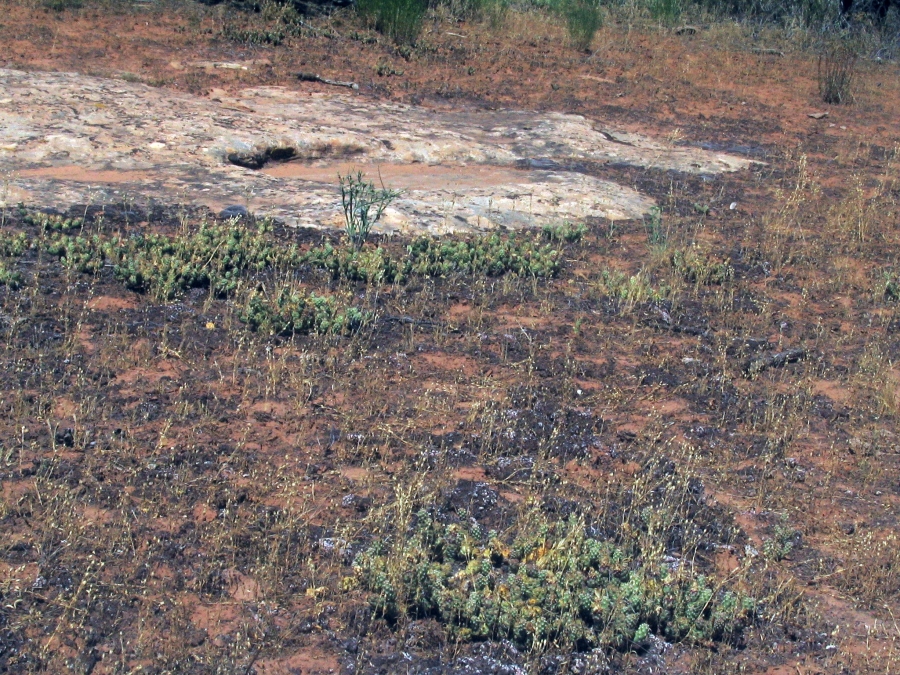
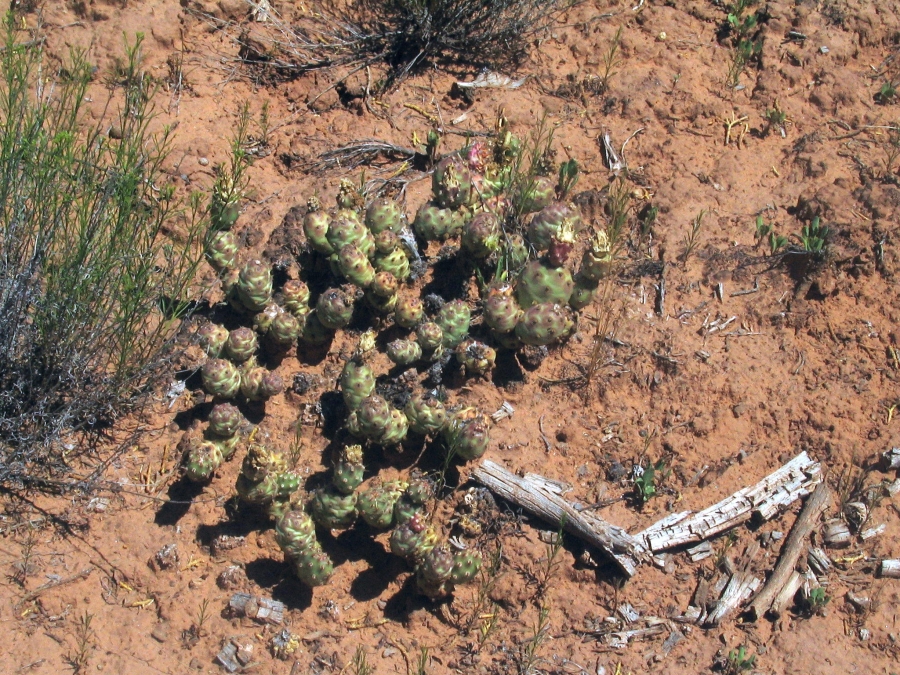
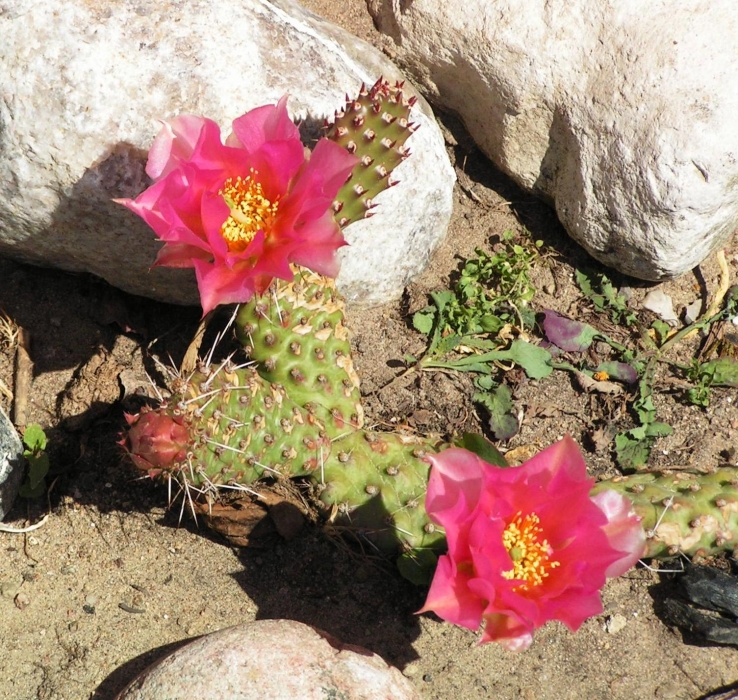
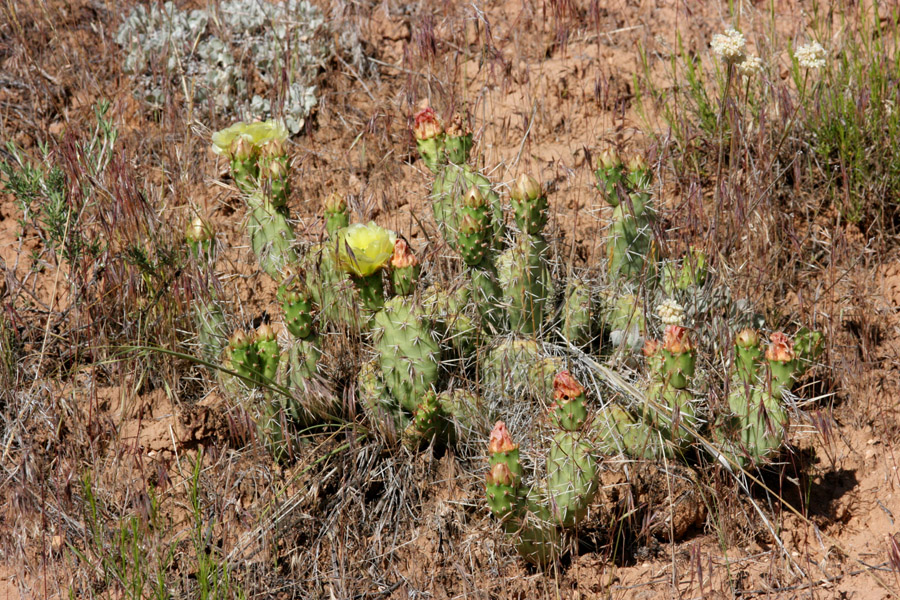
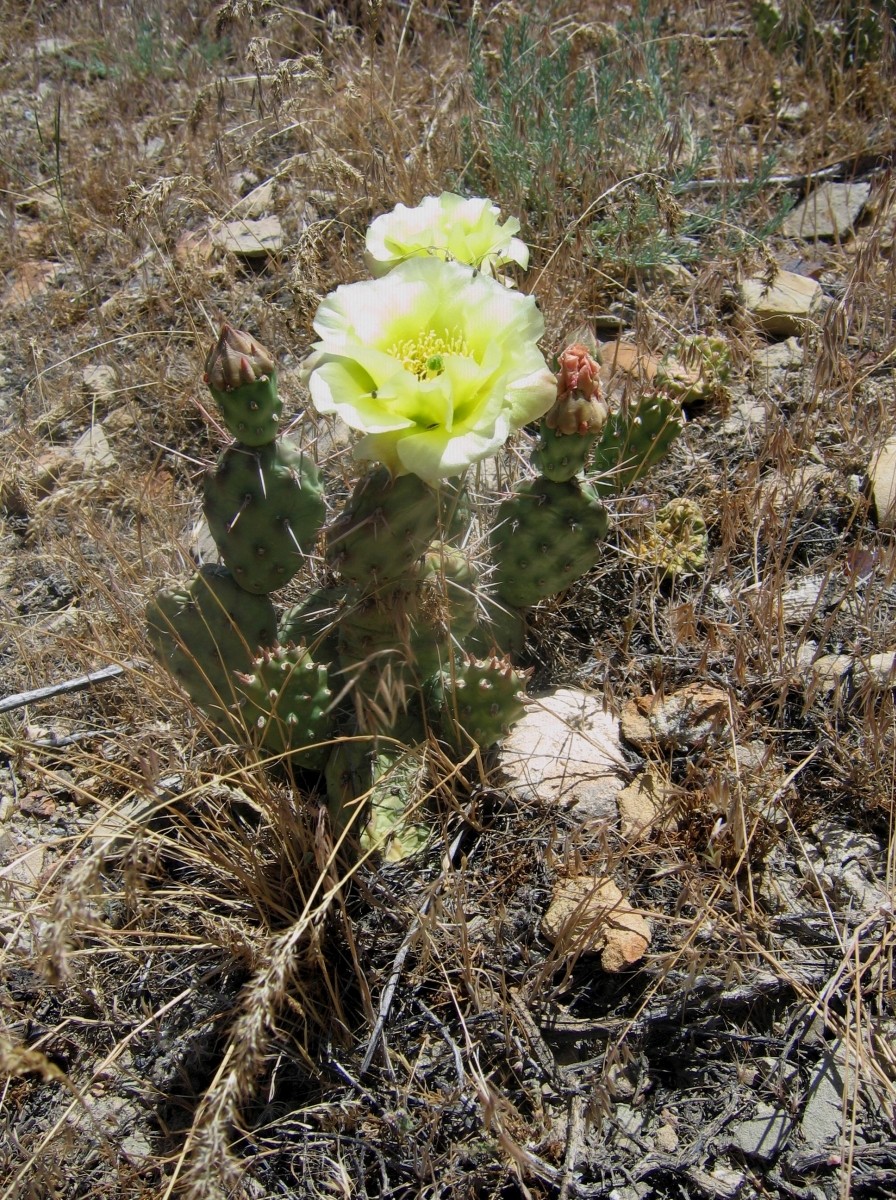
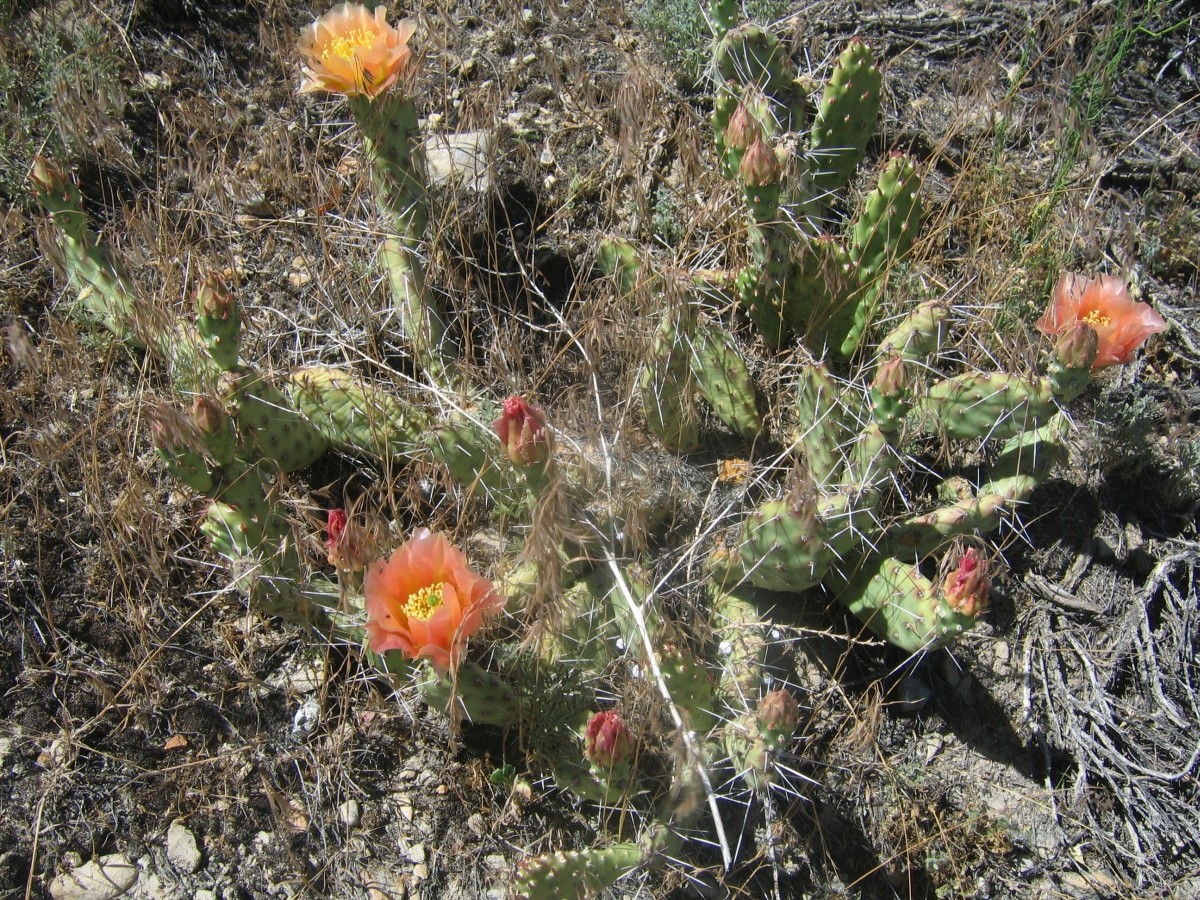
Opuntia debreczyi is a very low, cold-hardy prickly pear of the interior western United States, centered in the central Rockies and nearby plateaus. It forms compact cushions that endure long freezes, intense sun, and episodic drought. Joints are small and firm, more persistent than in readily disarticulating forms, and usually less armed than typical O. polyacantha around it. Flowers are most often pink to carmine, and fruits are small and dry at maturity. For practical purposes, this account focuses on field characters, flowering and fruiting, and the most defensible inferences about ploidy.

Details

General morphology
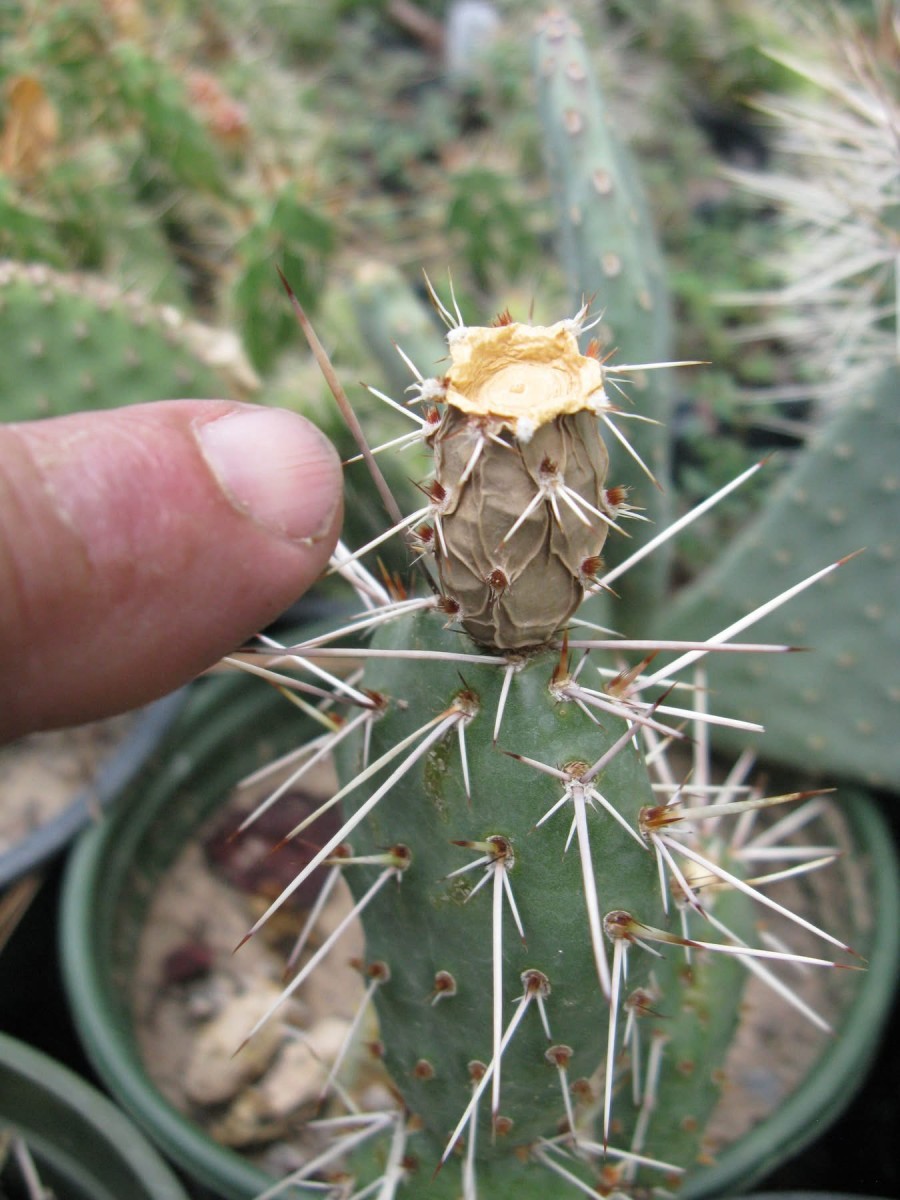
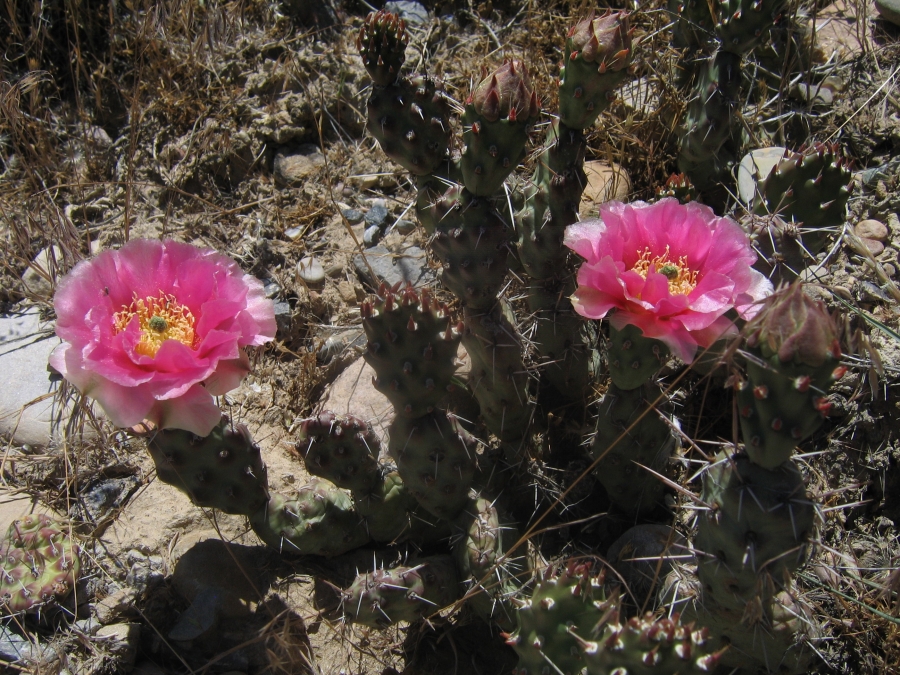
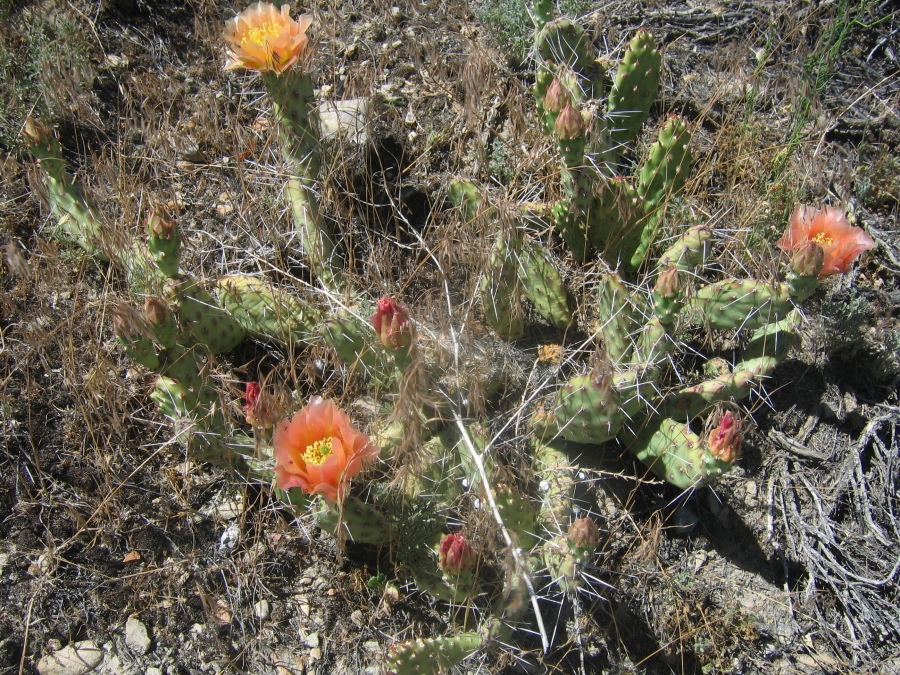
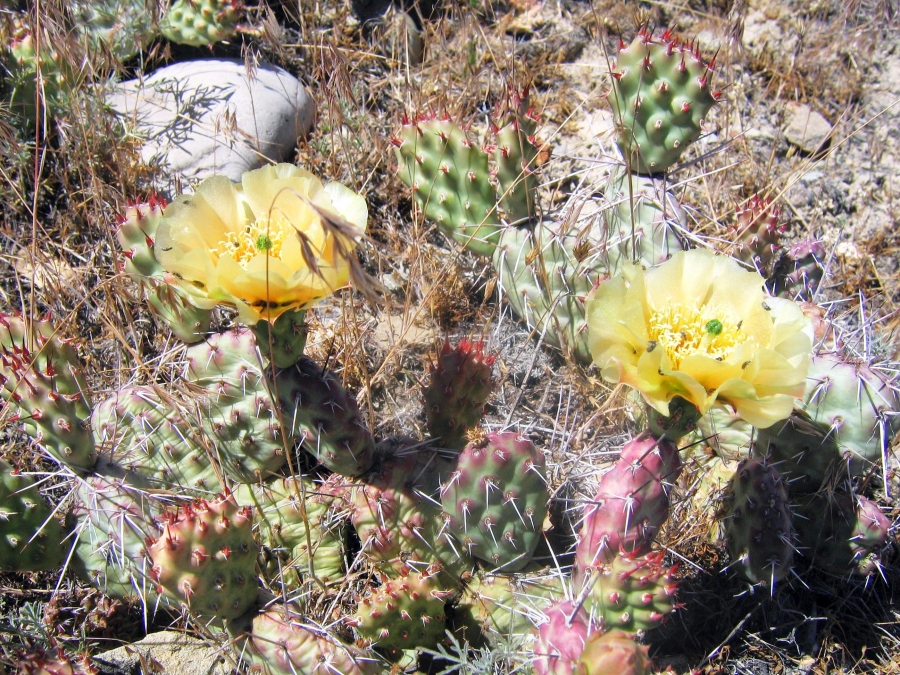
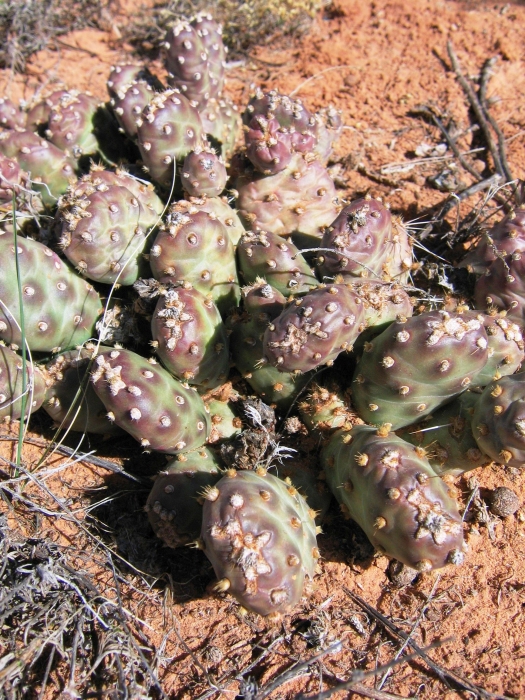
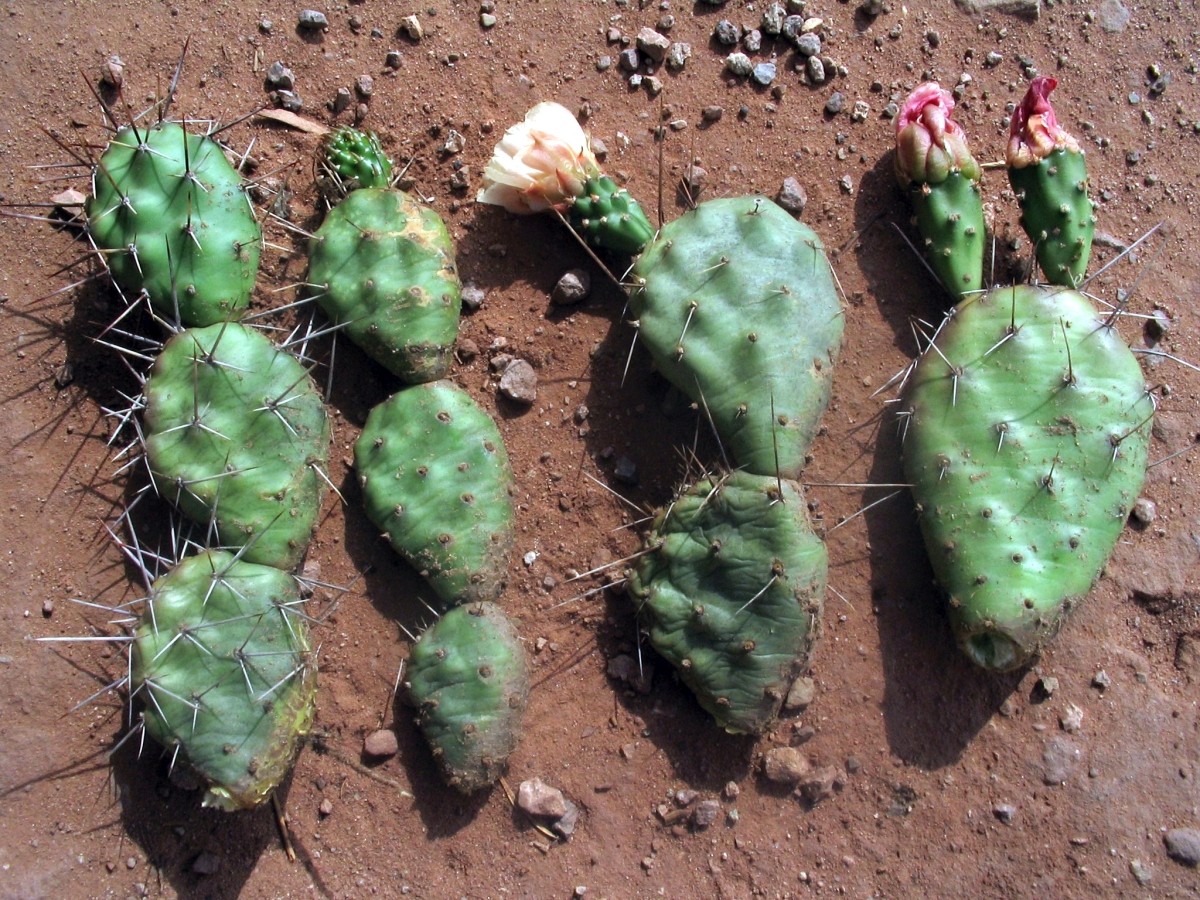
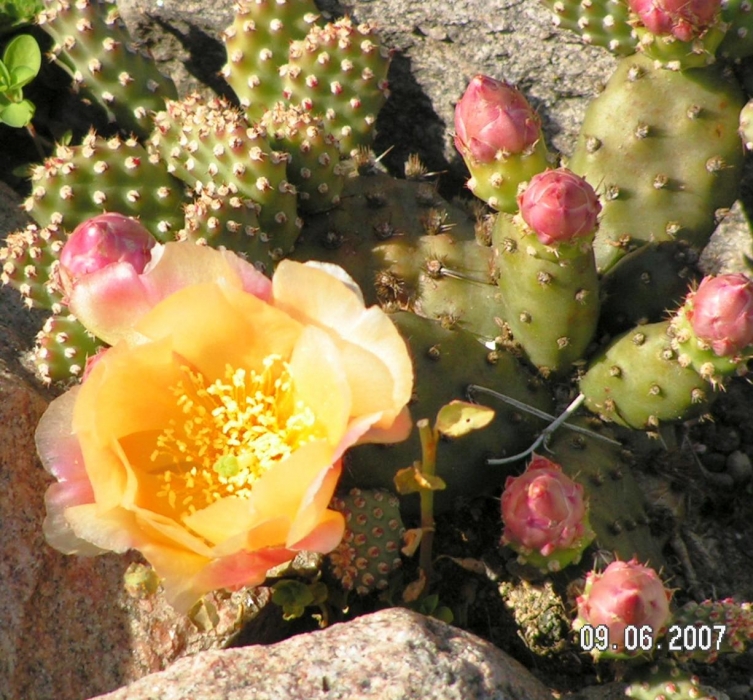
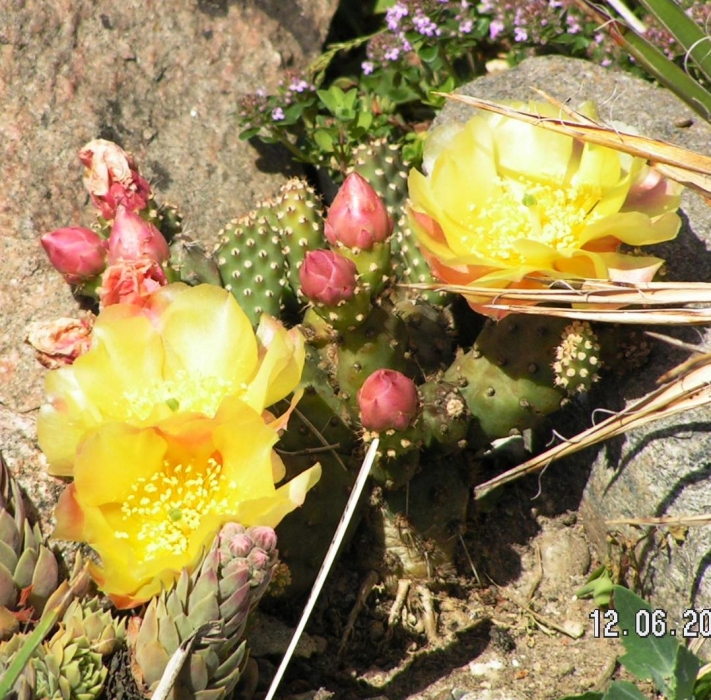
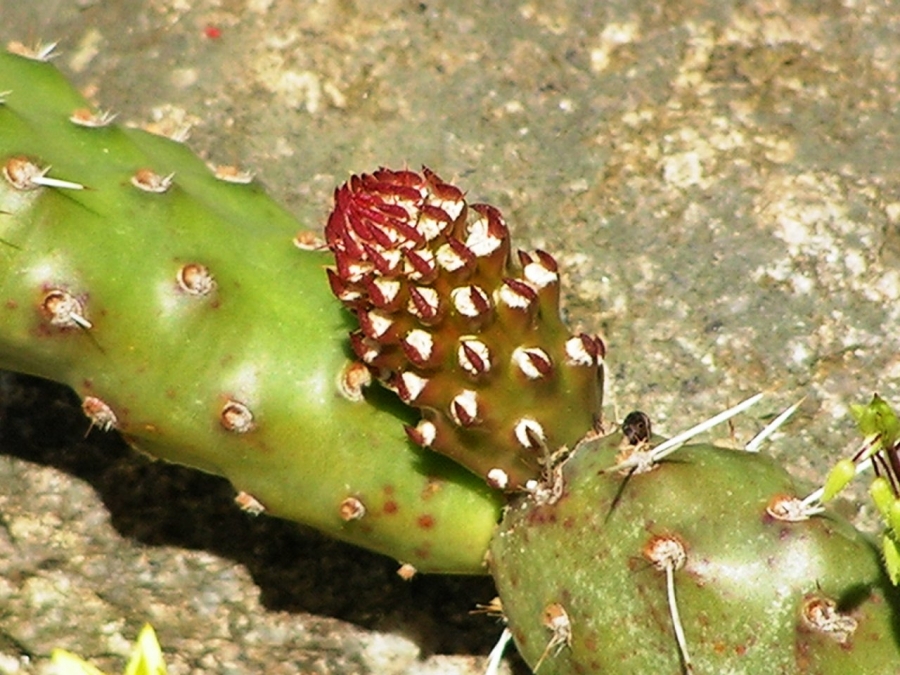
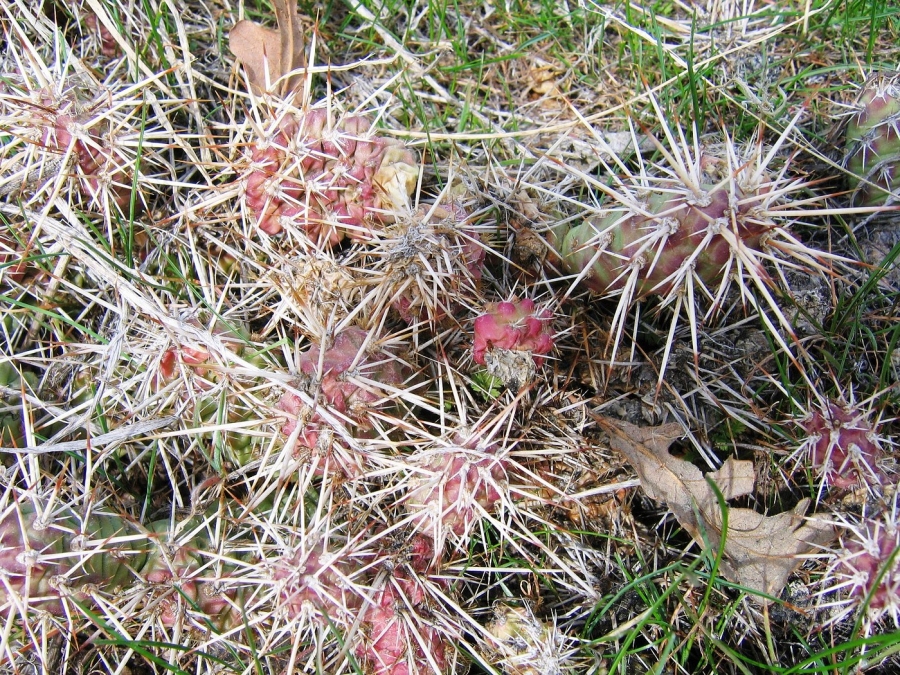
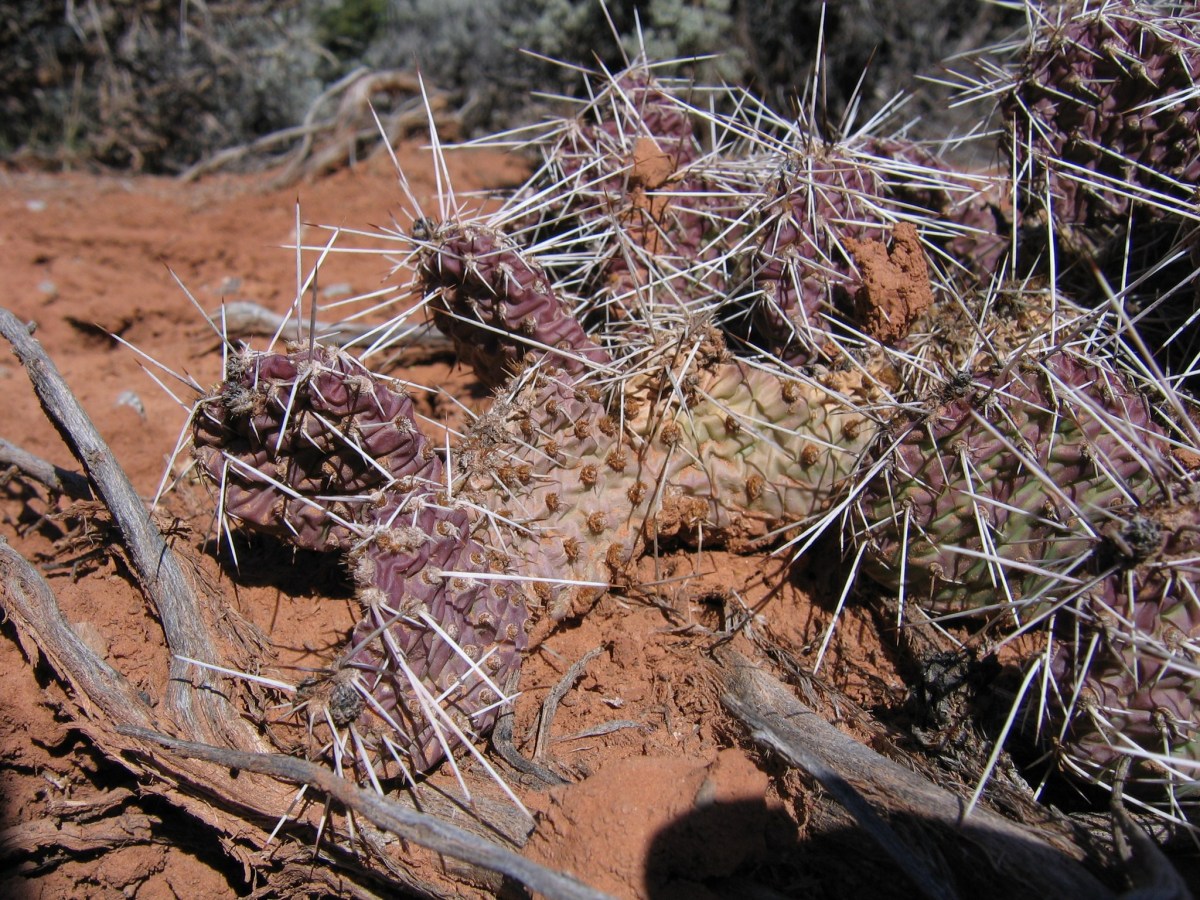
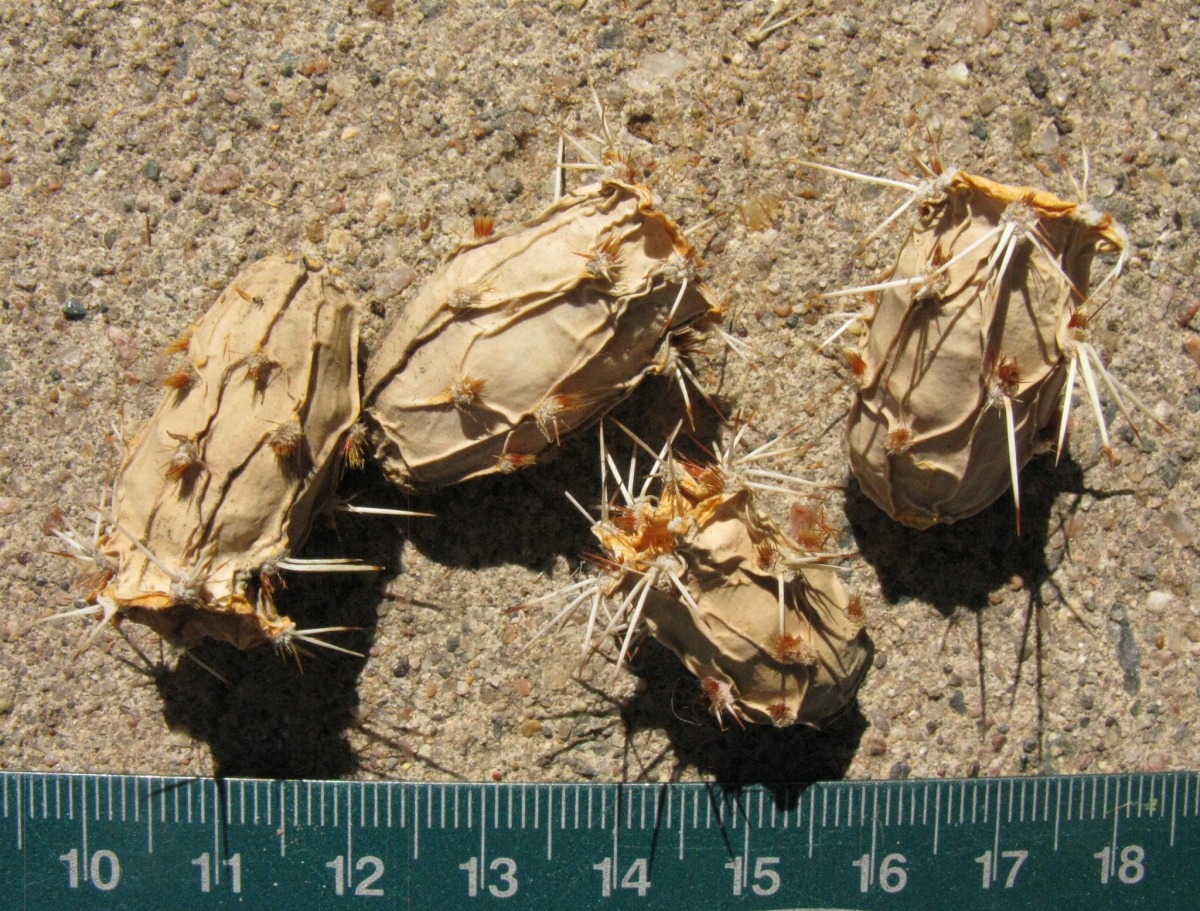
Clumps are commonly 5–10 cm tall and 10–30 cm across, expanding slowly by short, low branches. Joints are oblong to narrowly obovate, about 2–5 cm long and 1–2.5 cm wide, with a firm feel and a tendency to remain attached. The epidermis is gray- to bluish-green, often purpling in winter or drought, especially around areoles. Areoles are small, close-set, and slightly raised, with short white wool and evident glochids. Young joints are often unarmed or carry one to a few fine, pale spines near the upper areoles; older joints may bear several slender spines to roughly a centimeter, usually appressed or slightly spreading, and only weakly barbed. The surface is subtly tuberculate between areoles, giving a compact, “lumpy” look. In mixed mats, the combination of very low stature, small persistent joints, sparse armature, and closely spaced areoles is diagnostic.

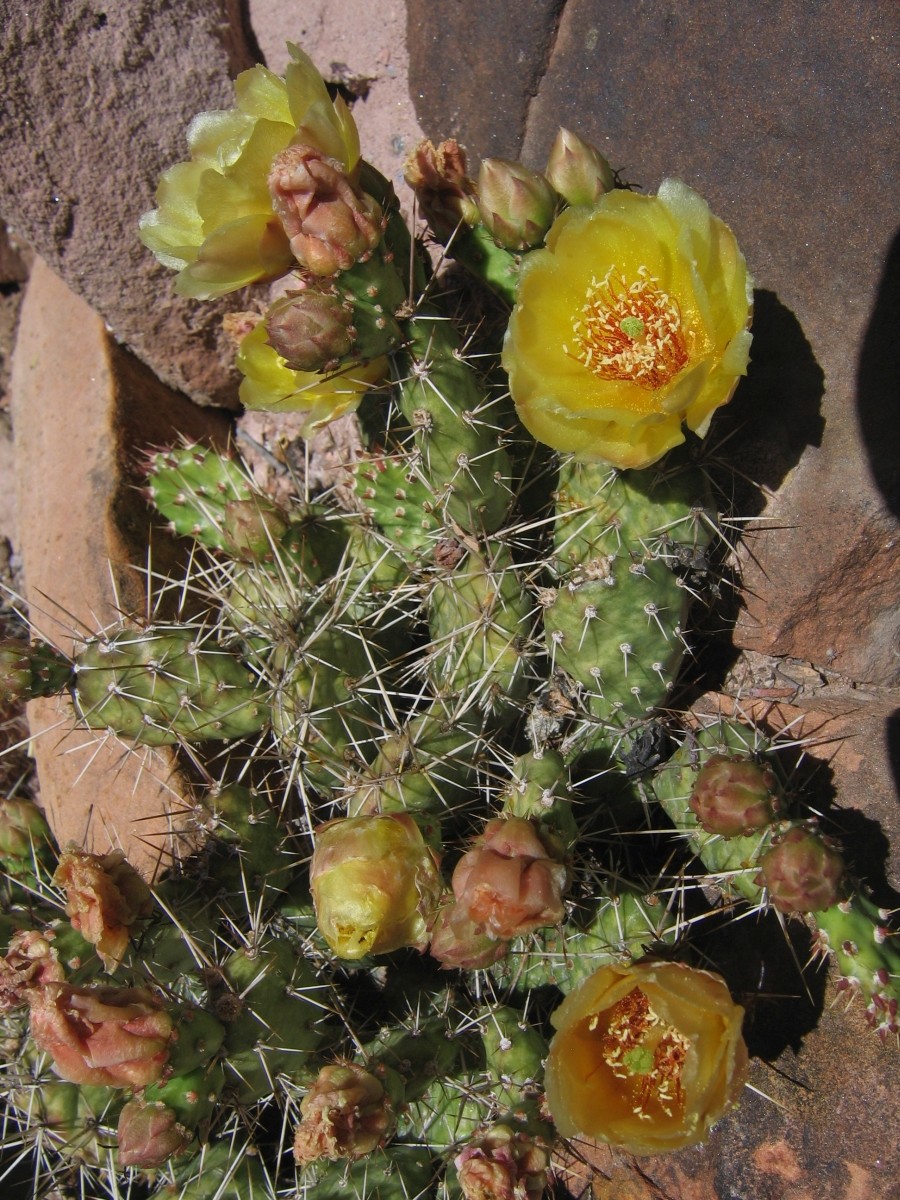
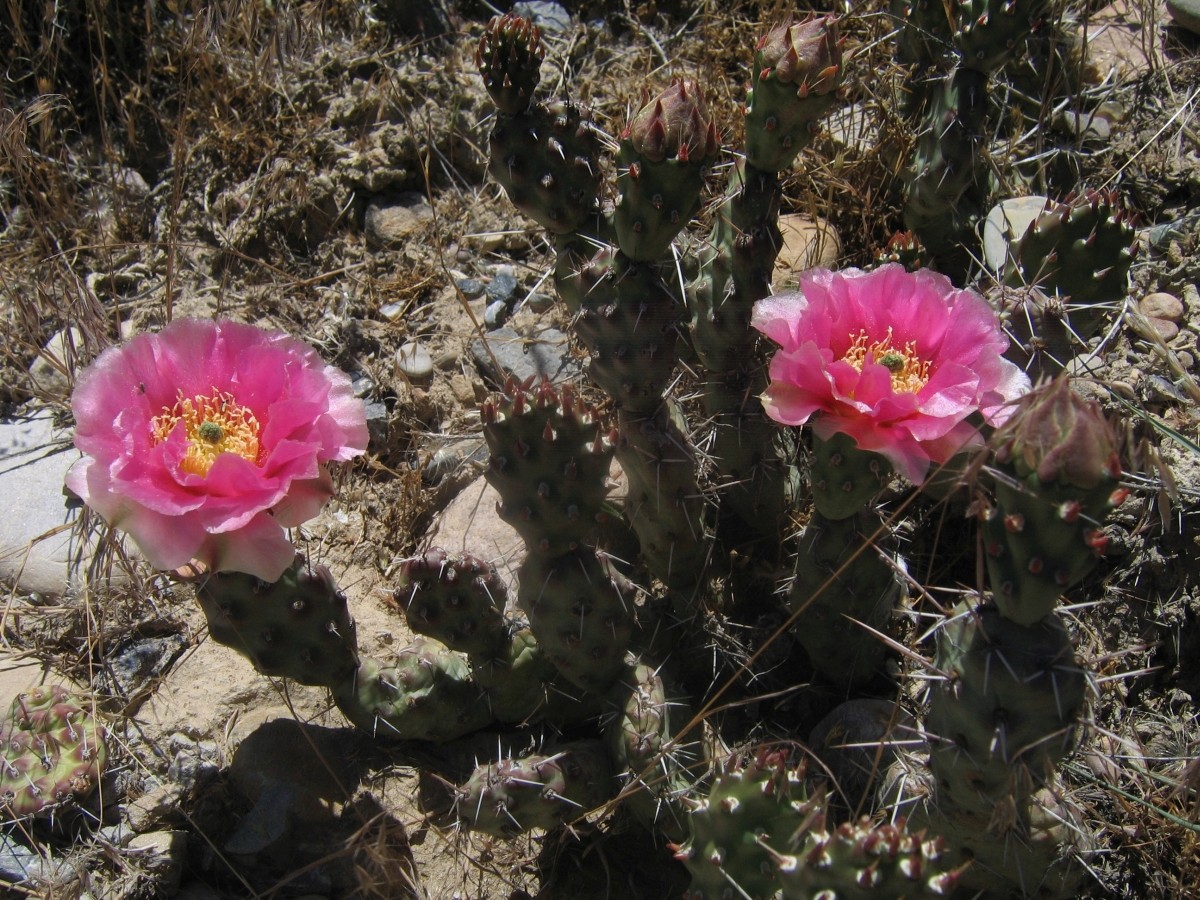
Flowers and fruit
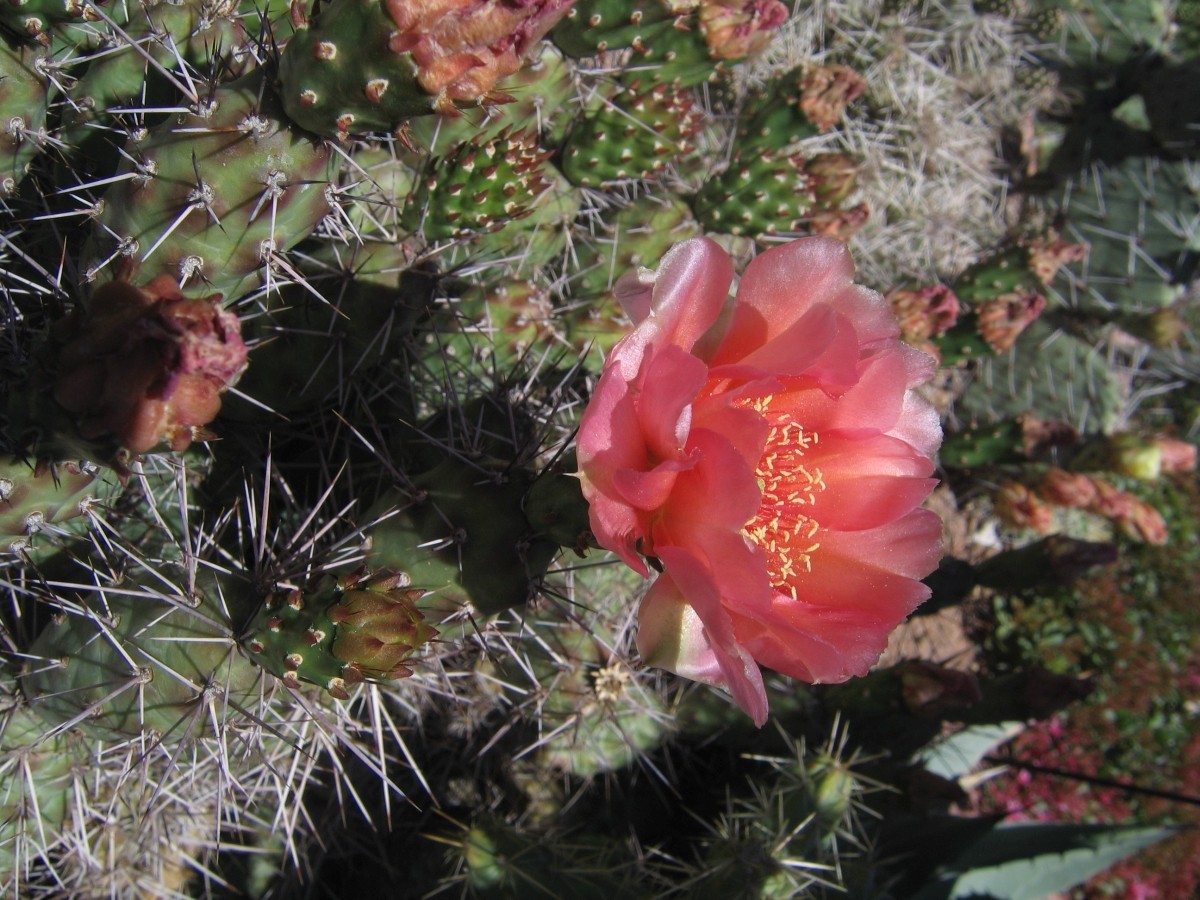
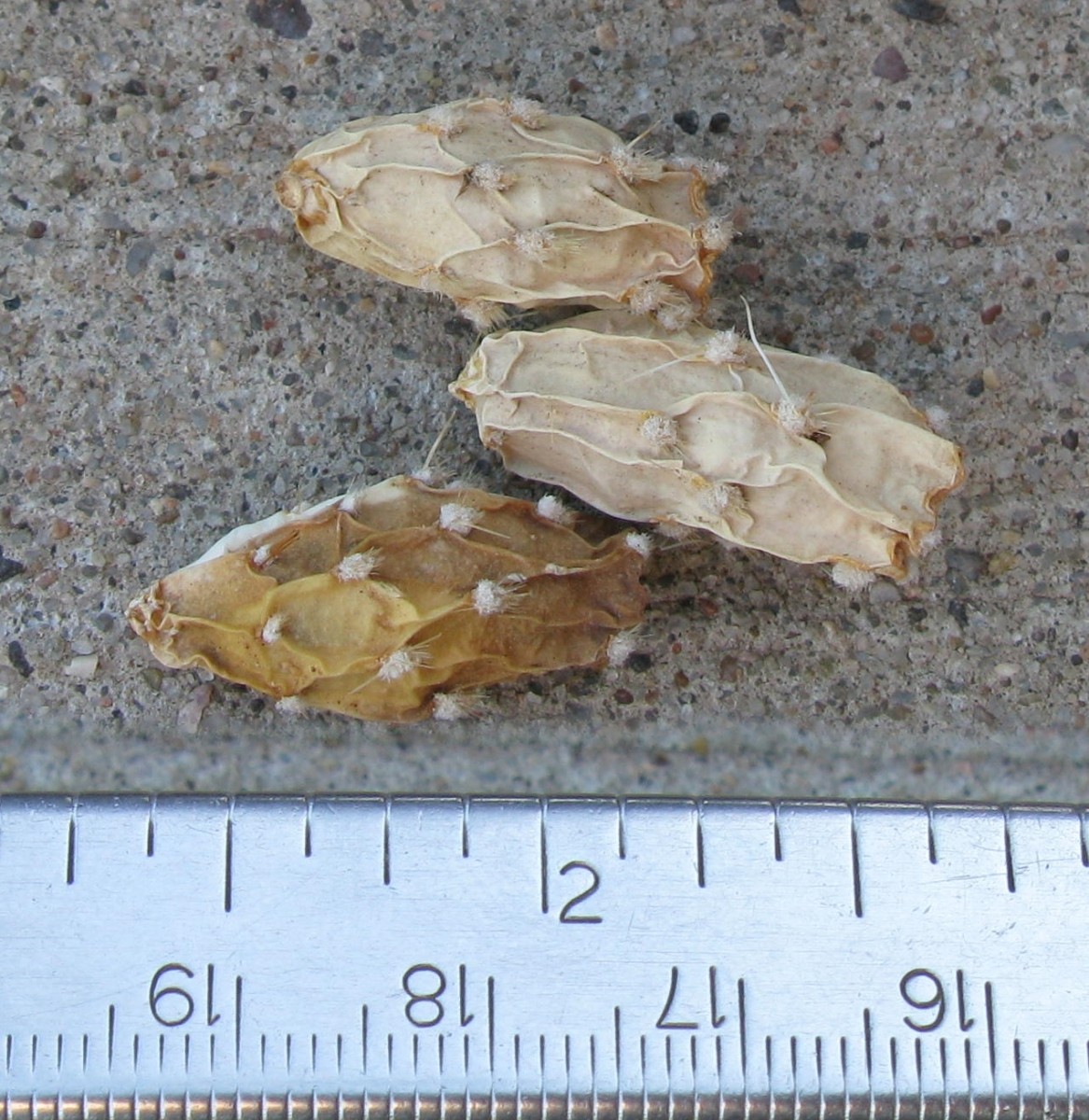
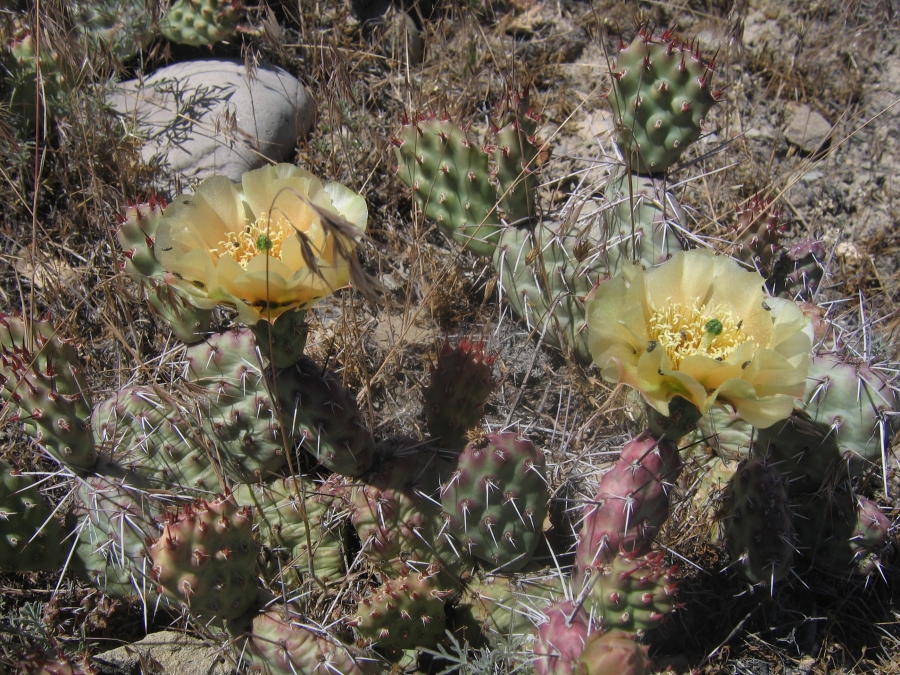
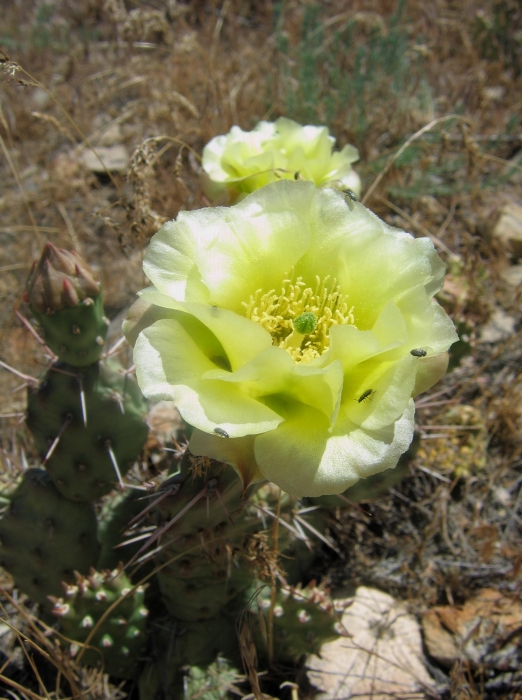
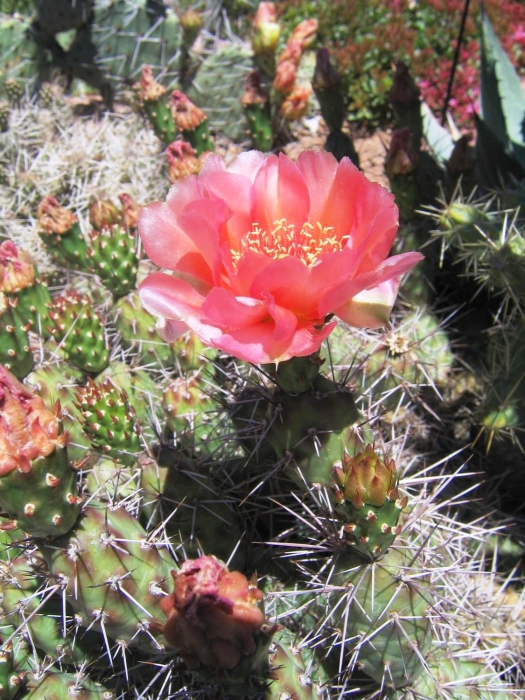
Flowering is in late spring to early summer following bright days and cool nights. Buds are pointed to conical and may show tiny, short-lived bracteoles on the upper ovary. Open flowers are modest, usually 3–5 cm across, borne singly near the ends of short seasonal shoots. Inner perianth segments range from pink to carmine; paler pink or salmon occurs, while clear yellow is uncommon in the core range. Filaments are often pinkish, anthers pale yellow, and the style white to cream with a green, lobed stigma. Native bees and occasional syrphid flies visit the flowers. The ovary is short and light green, bristly near the apex, maturing to a small, dry, subglobose to broadly obovoid fruit with scattered glochids near the top. Fruits persist briefly, then weather. Seeds are pale, lens-shaped, relatively large for plant size, with a firm, thickened testa that favors delayed germination.

Ploidy
Voucher-anchored counts under this exact name are limited, but regional patterns in the fragilispolyacantha complex are clear. Tetraploid and hexaploid cytotypes both occur in the contact zone, sometimes together. The stable, dwarf habit, reduced armature, and reliable flowering under short seasons fit a polyploid lineage adapted to cold basins, rocky benches, and pinyon–juniper margins. Hexaploidy is a plausible prevailing level, while local mosaics may exist. A practical working view treats O. debreczyi as a polyploid microtaxon within this continuum, likely dominated by hexaploid plants, with occasional introgression along ecotones and disturbance corridors. Focused modern counts on georeferenced vouchers would refine this picture.


For more information, see:

Szutorisz, Opuntia debreczyi species novum, (translated title) Kaktusz-Világ 26: 115, 2002
4 thoughts on “Opuntia debreczyi, Potato Cactus”

  1. Zoltán Lukoczki

    Hi, First description data of Opuntia debreczyi are false. The taxa was described by Szutorisz in Kaktusz-Világ 26(4): 115-117, 2002.
    Kaktusz-Világ is a periodical of Hungarian Cactus Society.
    Best wishes
    Zoltán Lukoczki, former chief editor of Kaktusz-Világ

Leave a Reply

Your email address will not be published. Required fields are marked *