
Engelmann & Bigelow, Proceedings of the American Academy of Arts and Sciences 3: 291, 1856
Holotype; Lectotype; Herbarium; Herbarium; Herbarium; Herbarium; Herbarium; Herbarium; Herbarium; Herbarium; Herbarium; Herbarium; Herbarium; Herbarium; Drawing (Botany of the Expedition, 1856, plate VI)


Original Description
What is Opuntia chlorotica var. chlorotica?
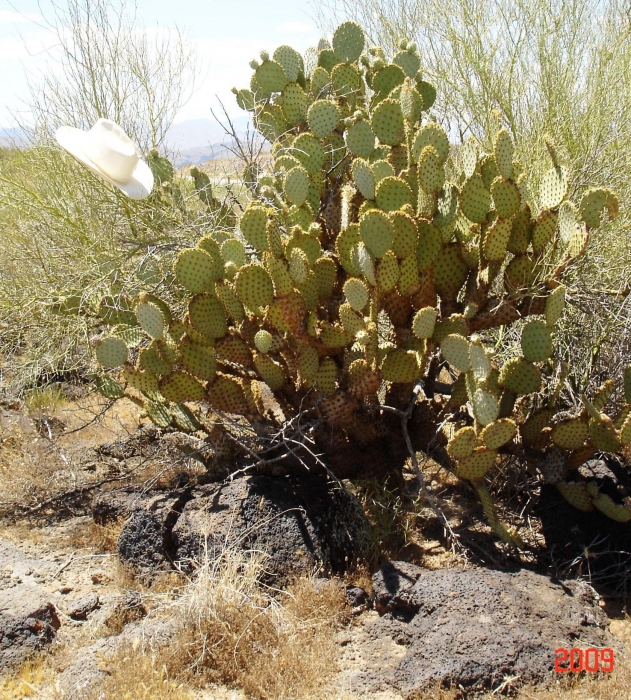
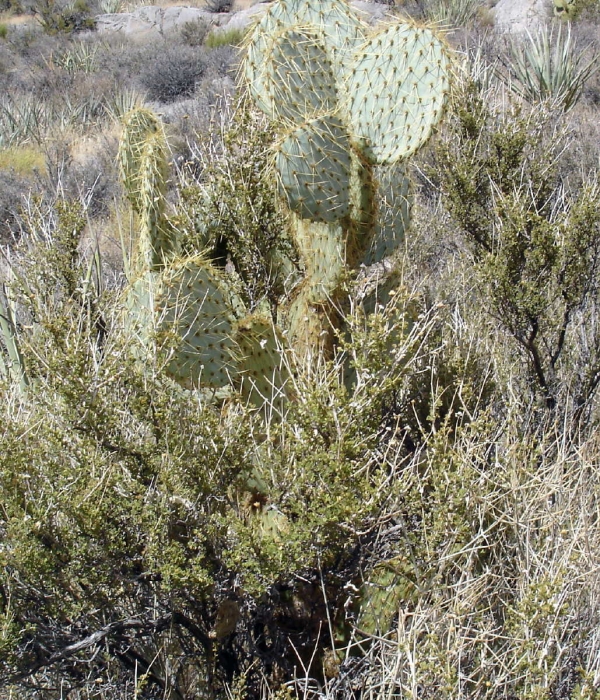
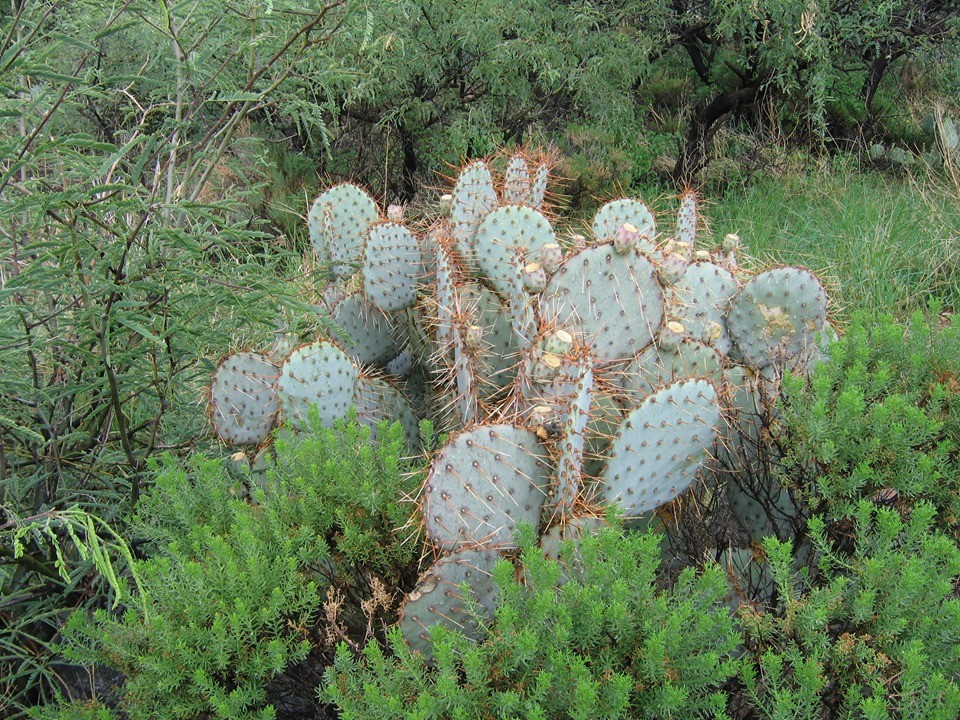
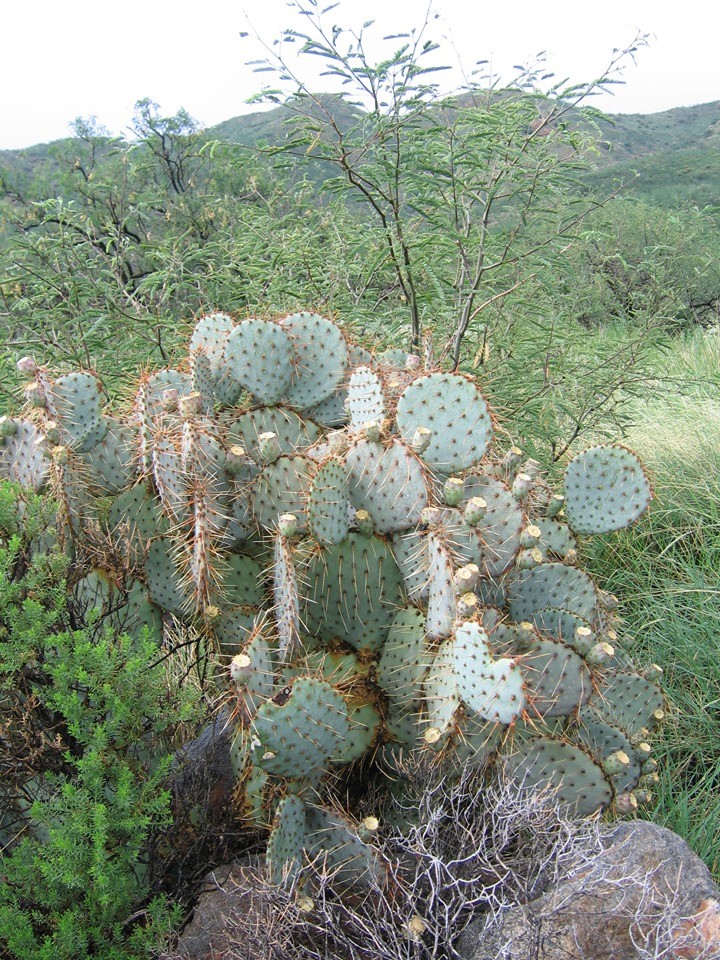
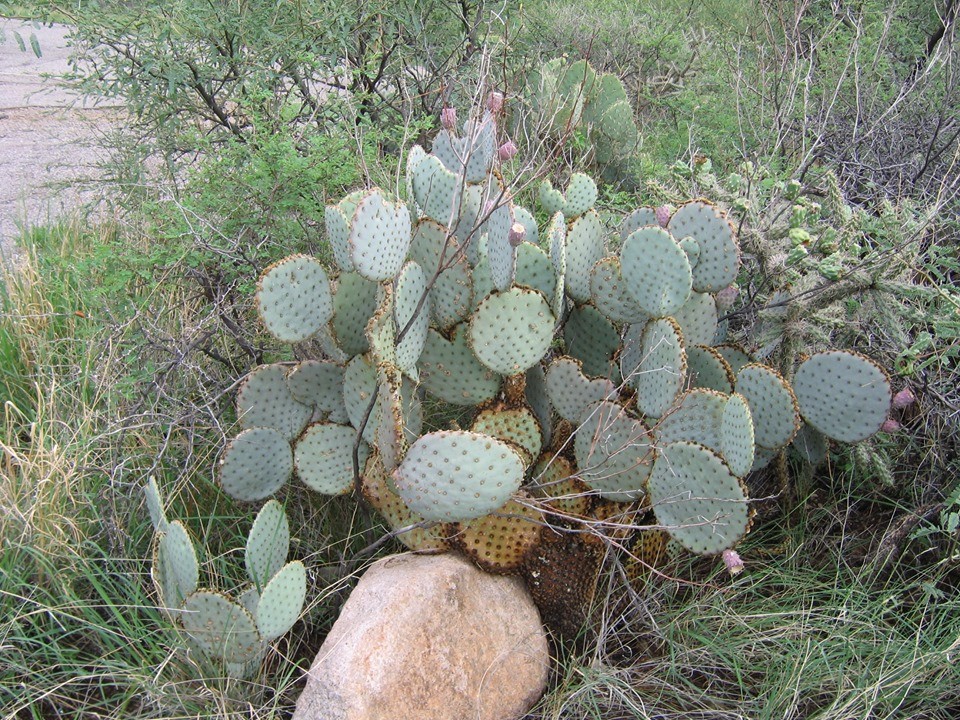
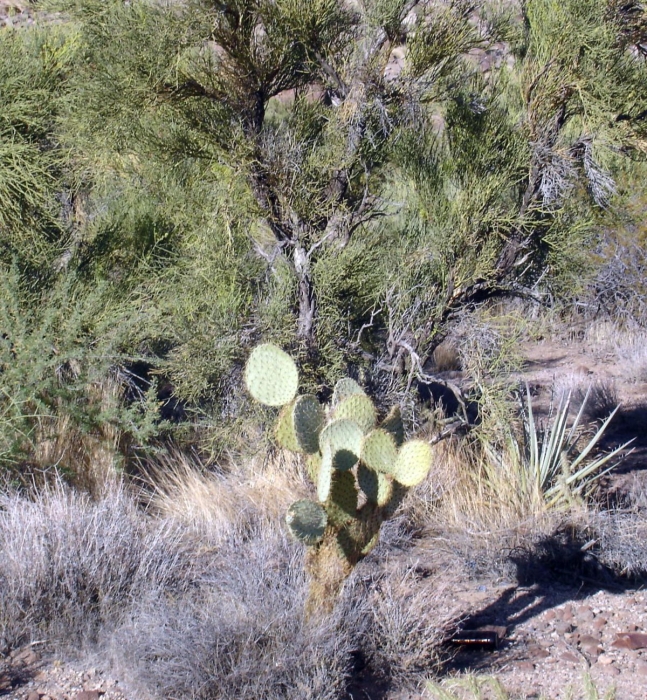
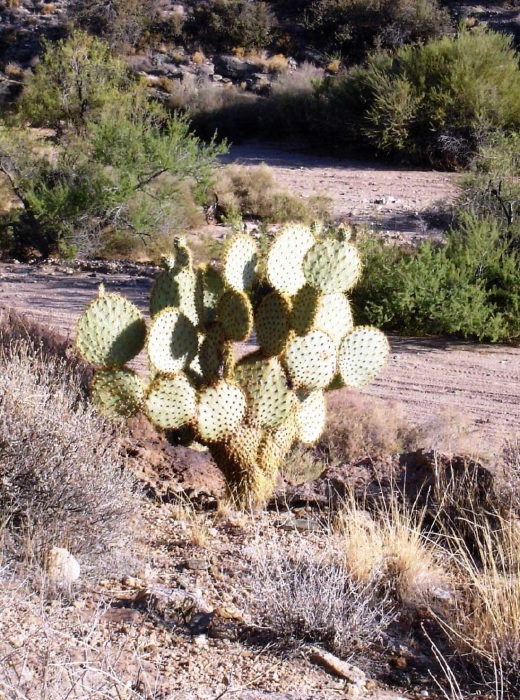
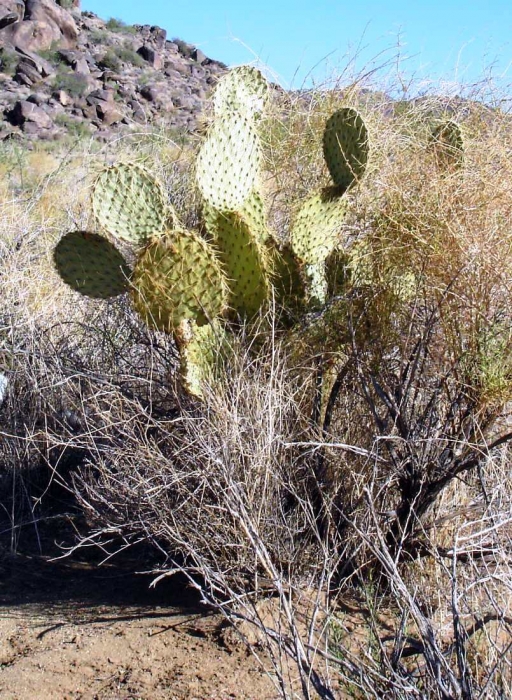
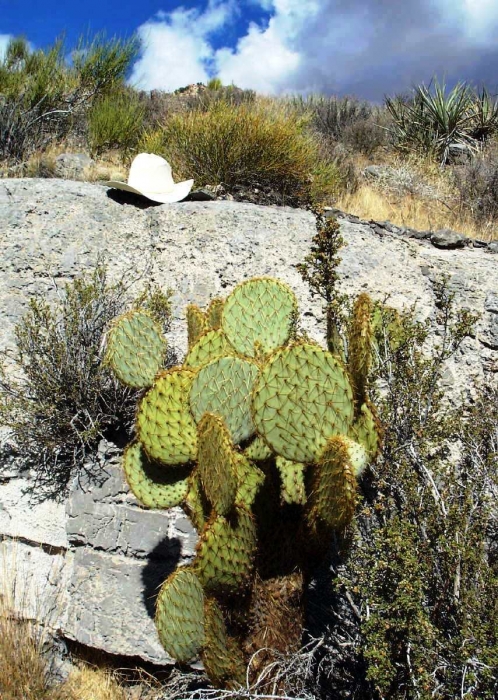
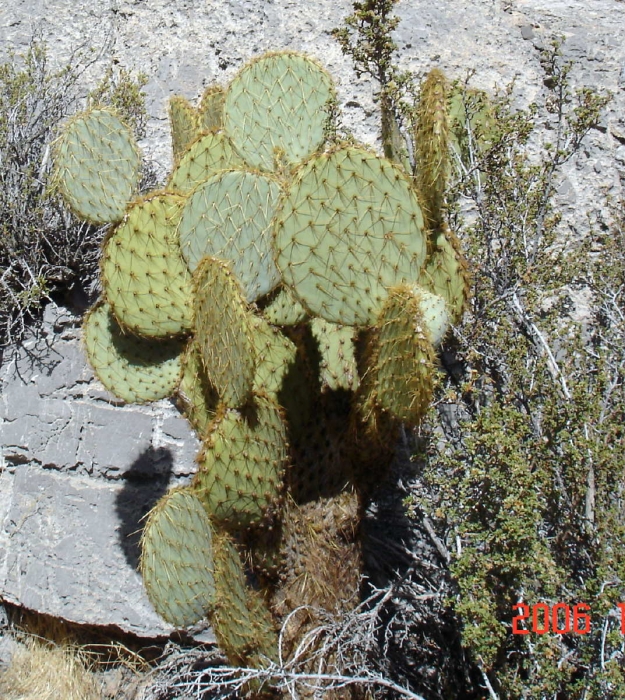
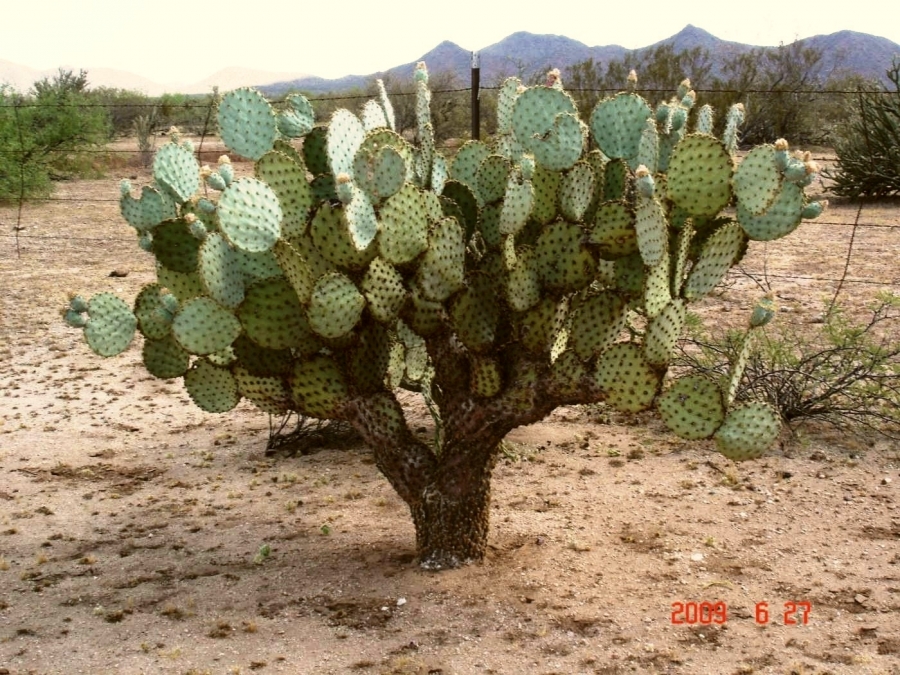
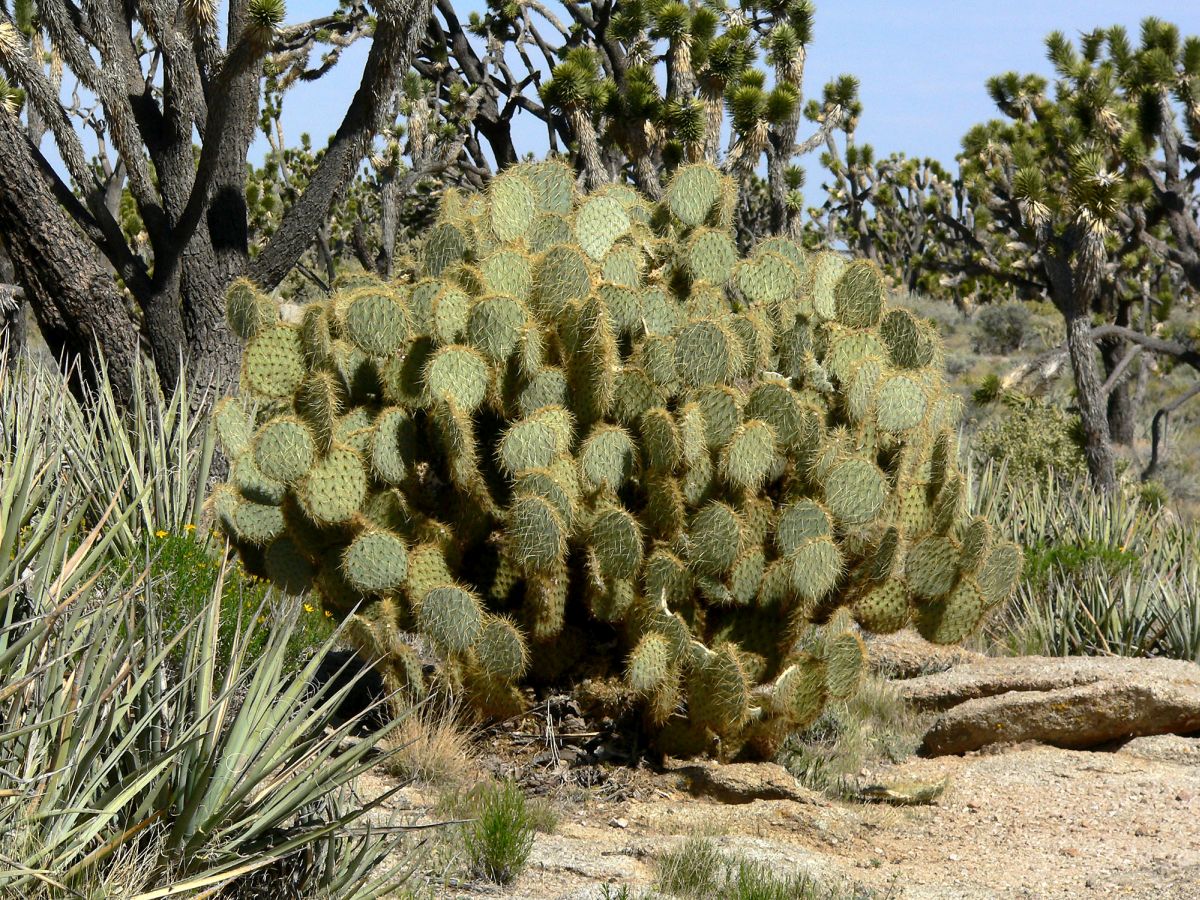
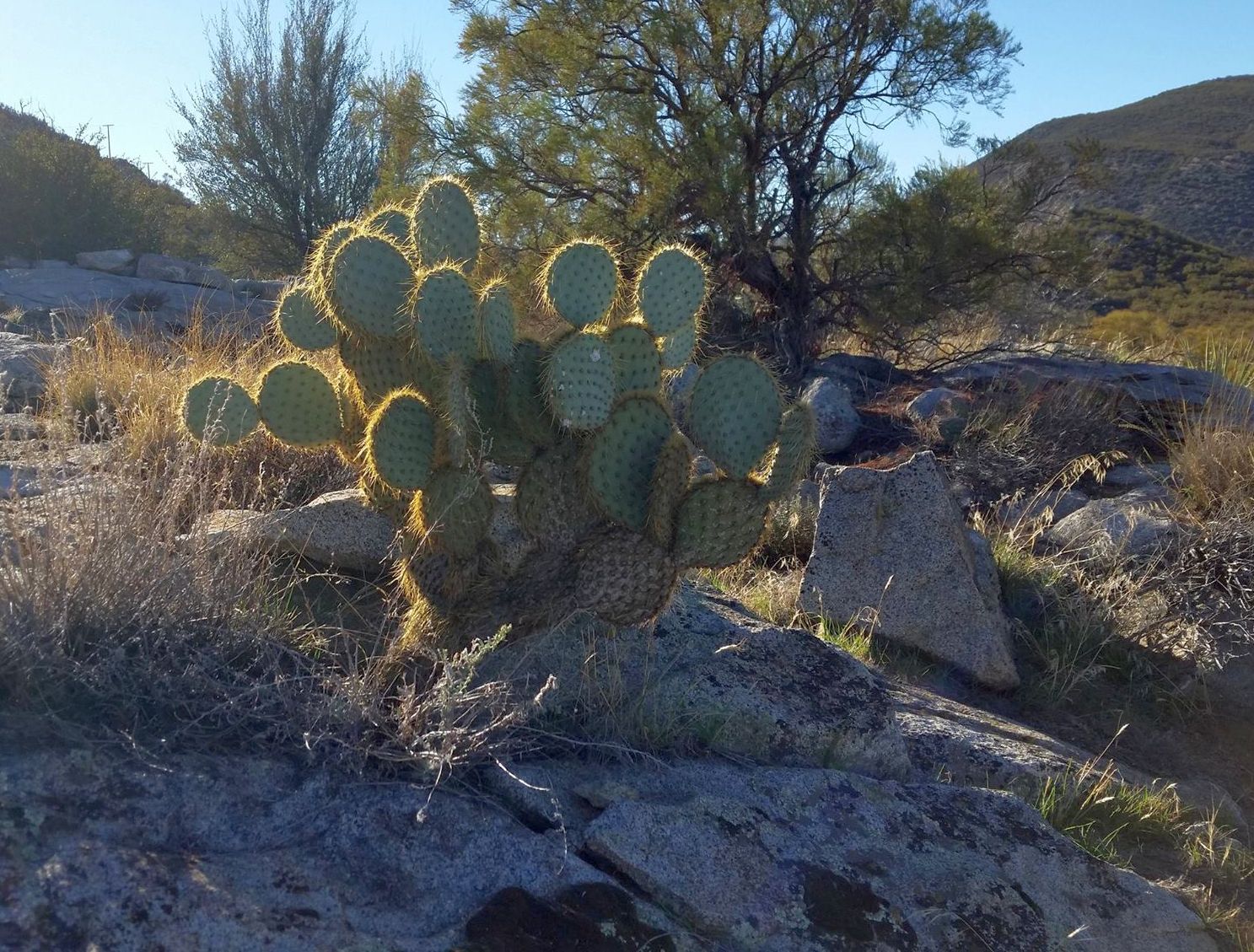
O. chlorotica var. chlorotica is the robust western “pancake” prickly pear, often developing a stout, single trunk and broad, nearly circular pads. It belongs to a three-variety complex (with the purple-pruinose forms commonly called “santa-rita” and “gosseliniana”) as treated by Ferguson (1988); close relationships are also discussed in other studies.
Details
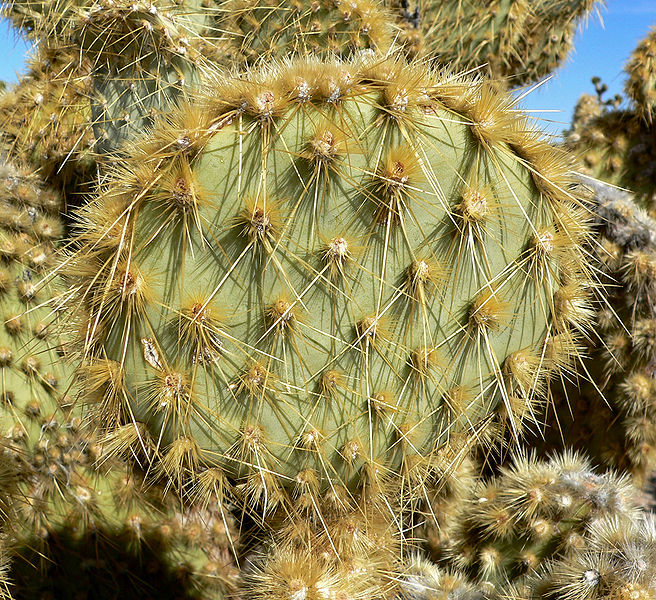
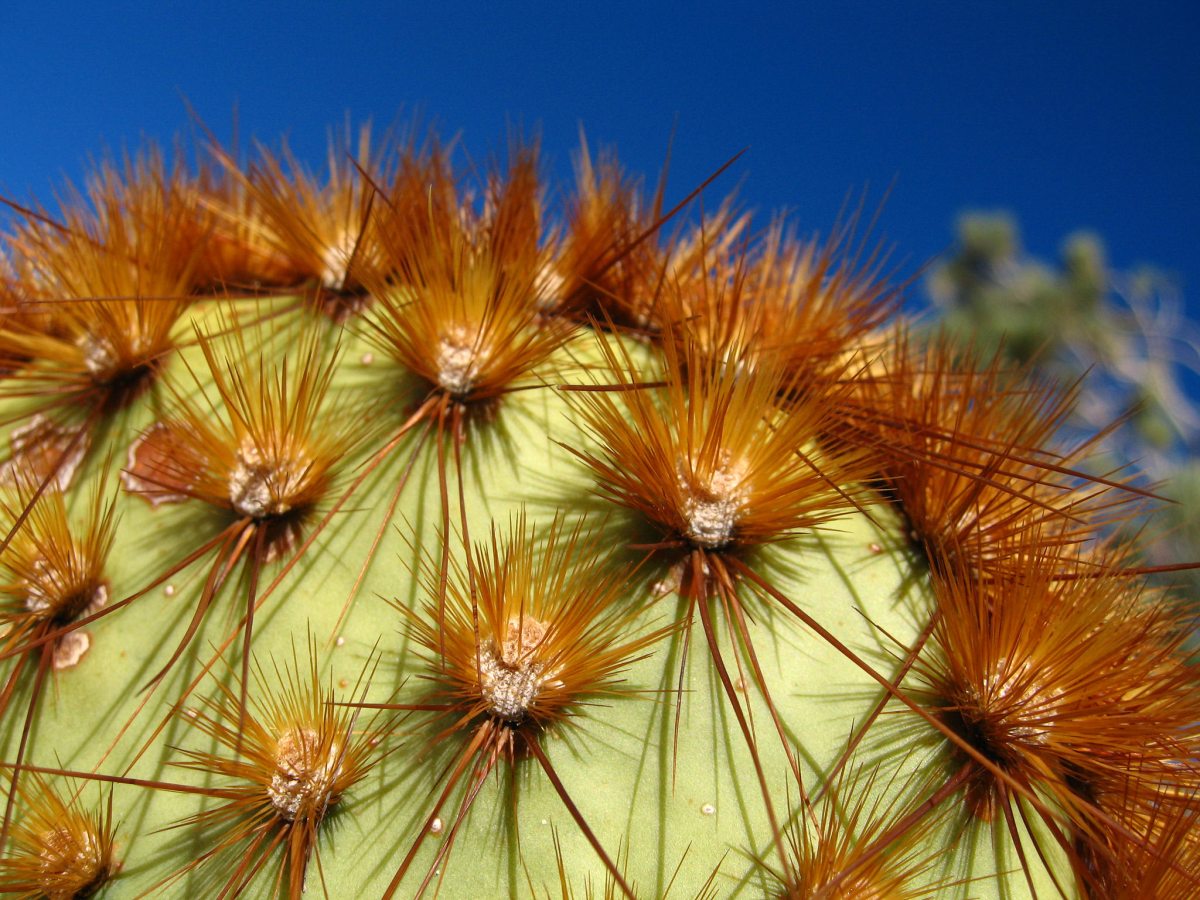
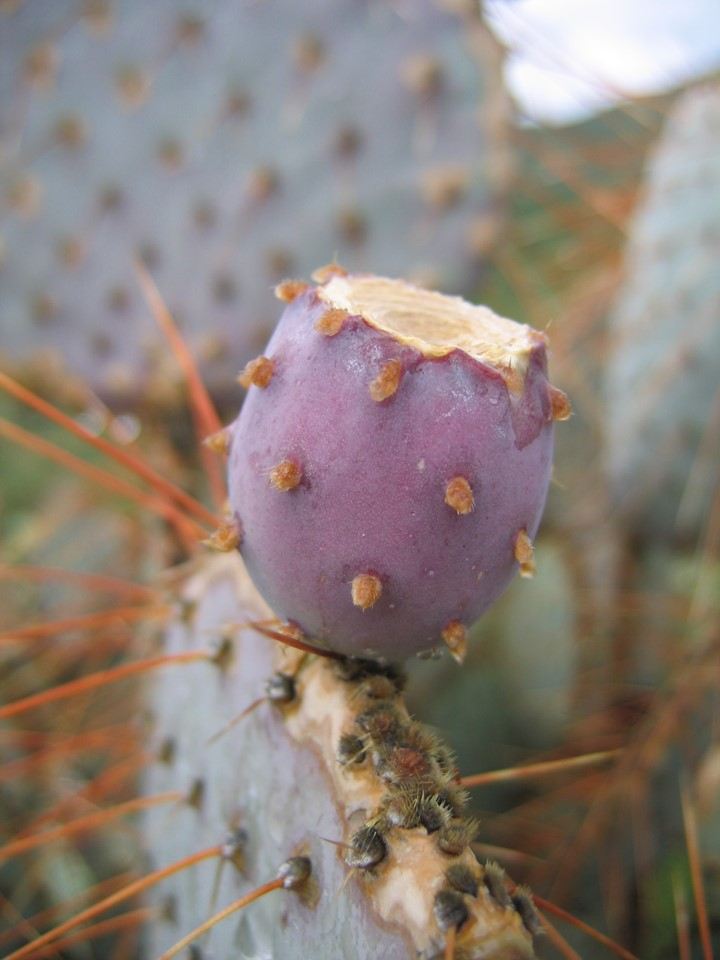
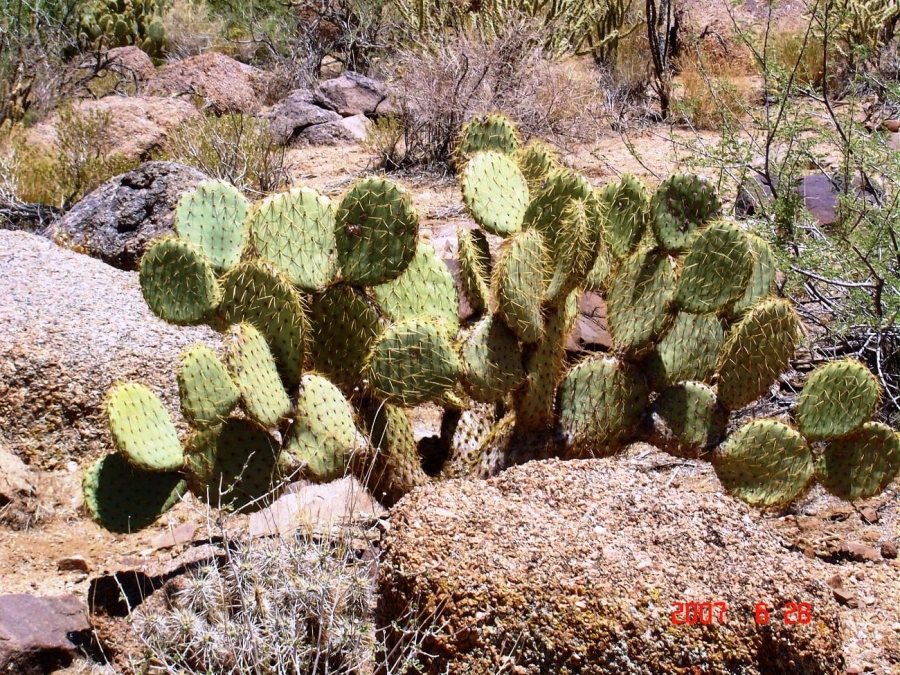
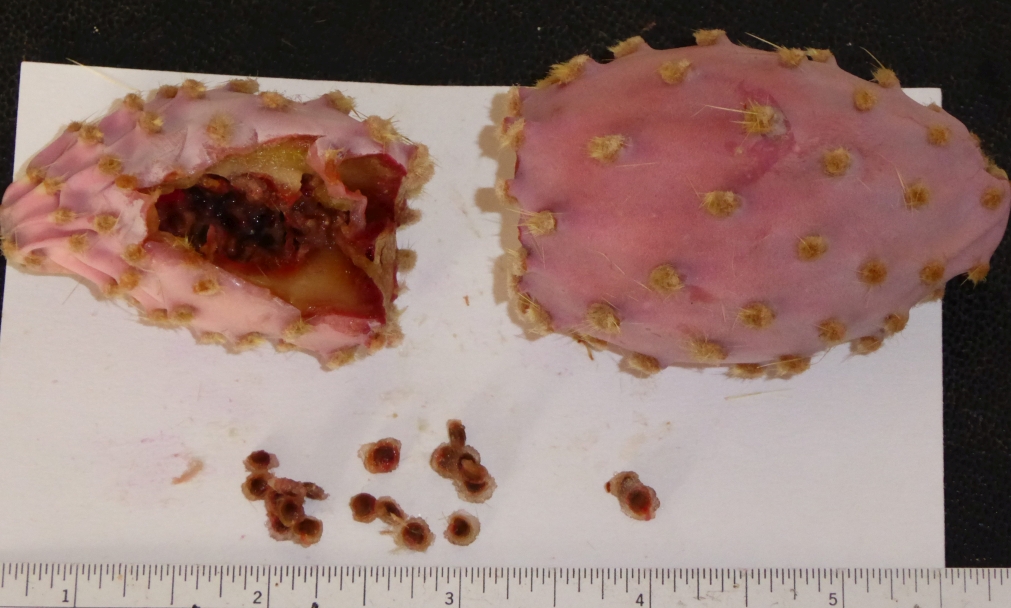
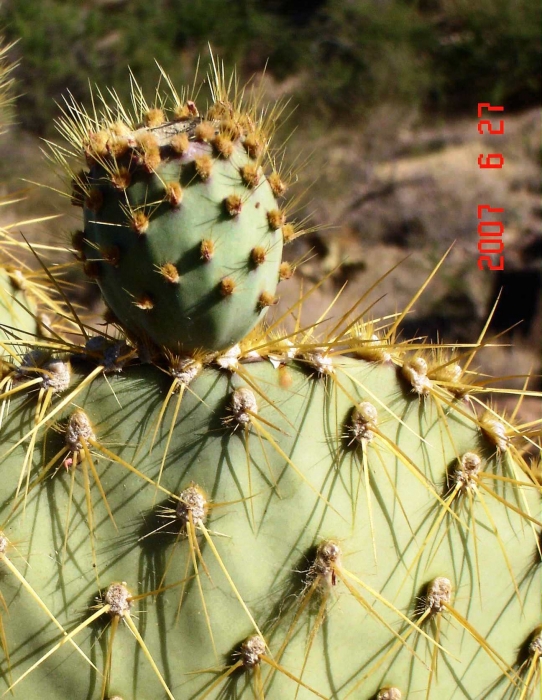
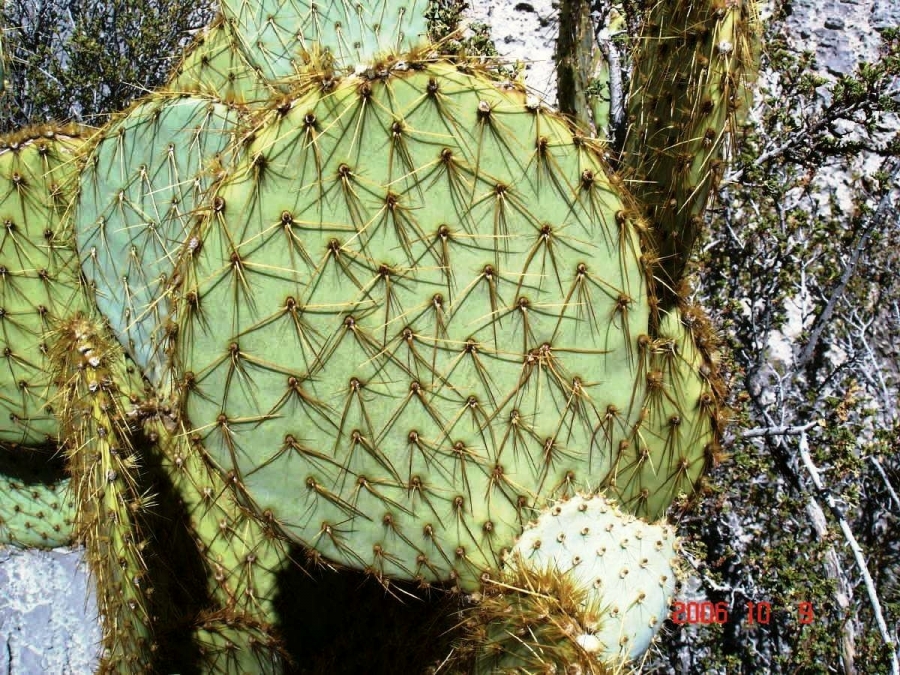
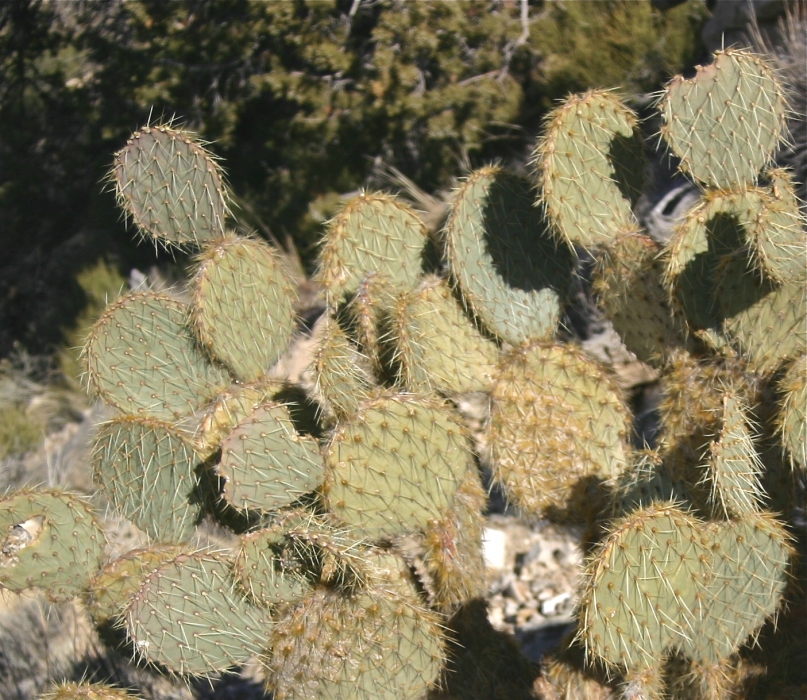
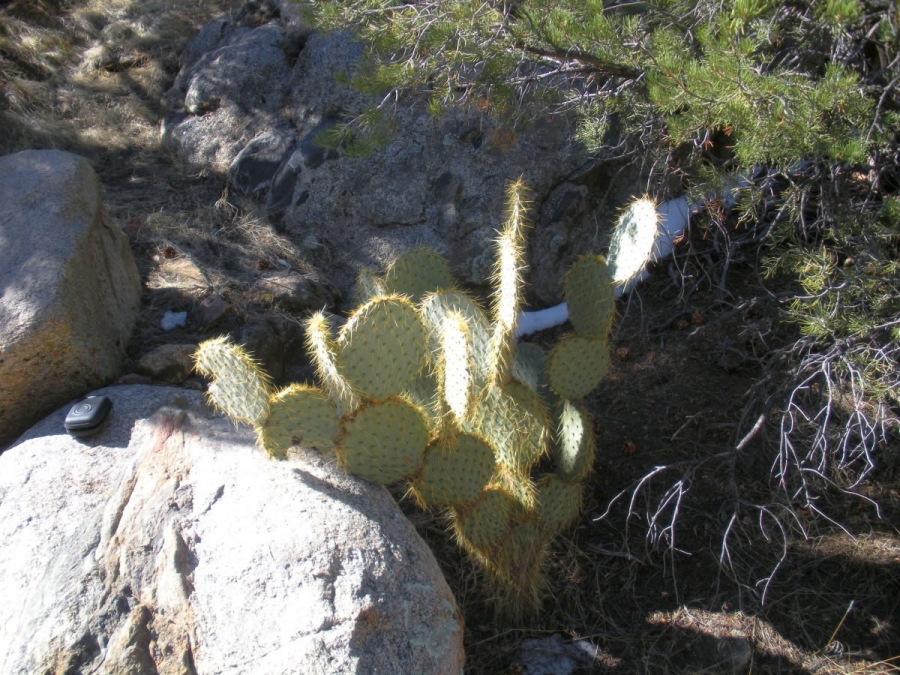
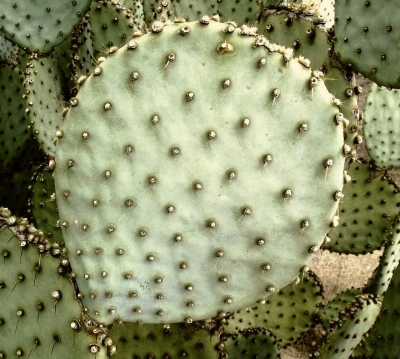
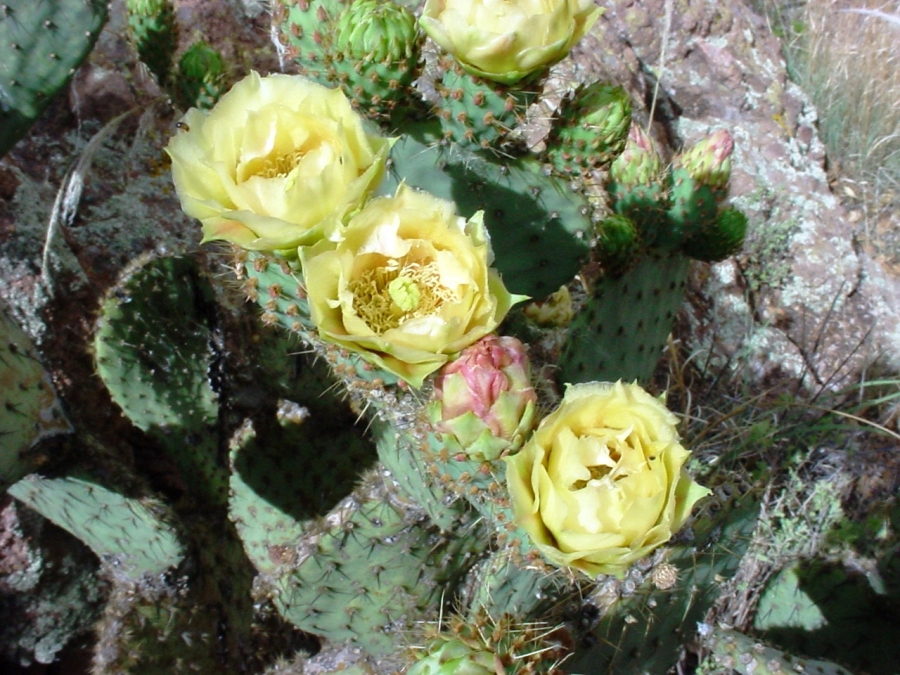
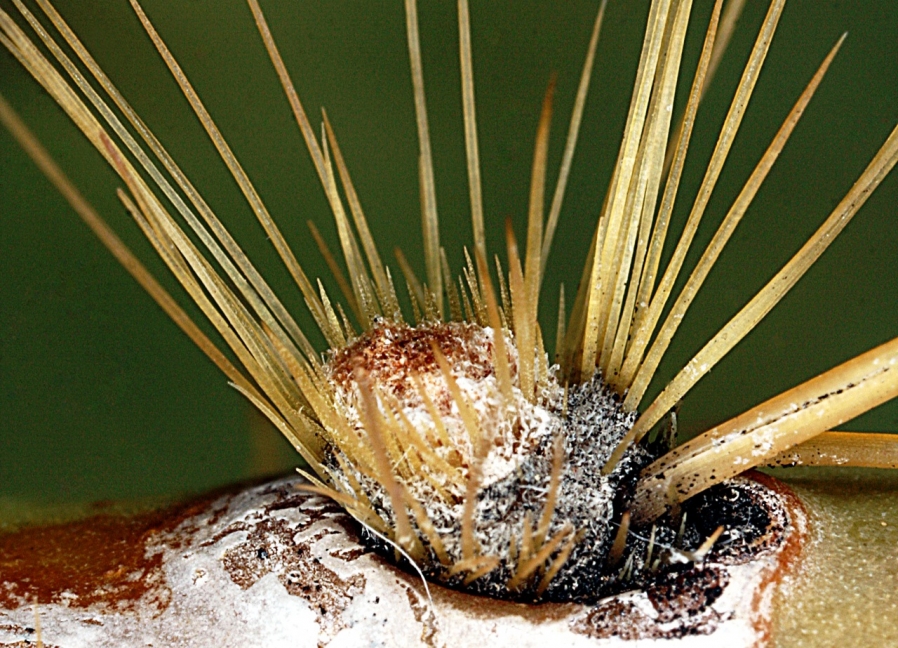
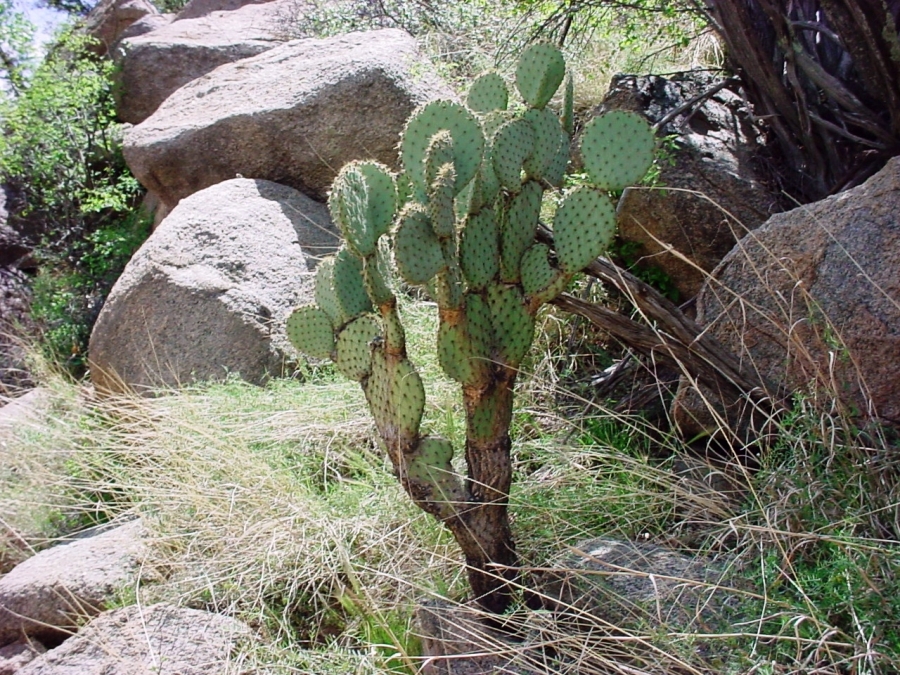
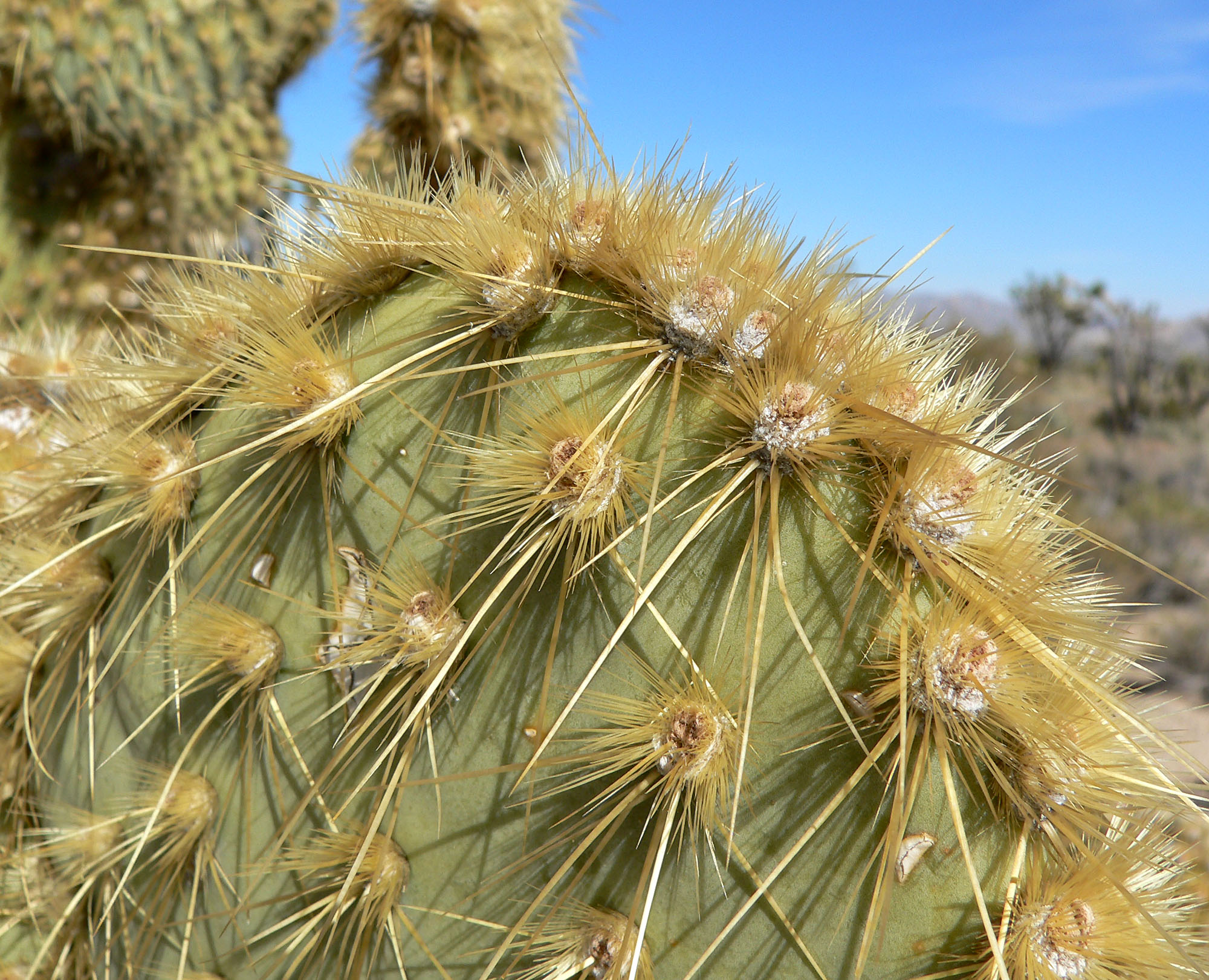
Shrubs: upright, typically single-trunked (trunks ca. 20–30 cm diameter), mature plants commonly 2–2.5 m tall. Cladodes: suborbicular to orbicular, usually 12–20 cm across, pale green to lightly glaucous; surfaces even with moderately spaced areoles. Areoles: bearing abundant tan to yellow glochids that persist and coarsen with age. Spines: generally 2–6 per areole on upper pads (some populations nearly spineless), yellowish, often deflexed, about 1–3 cm; trunk spines stouter, to ~5 cm. Flowers: yellow, ~5 cm across; inner tepals sometimes faintly reddish at the base; filaments white to yellow; style and stigma white to pale green. Fruits: ovoid to short-barrel-shaped, ~30–60 mm × 18–40 mm, maturing dull reddish-purple; pulp typically colorless and mild. Seeds: pale yellowish, ~3.5–4 mm, reniform to subcircular, slightly flattened with a narrow funicular girdle.
Cytology
Known: diploid.
Range & Habitat
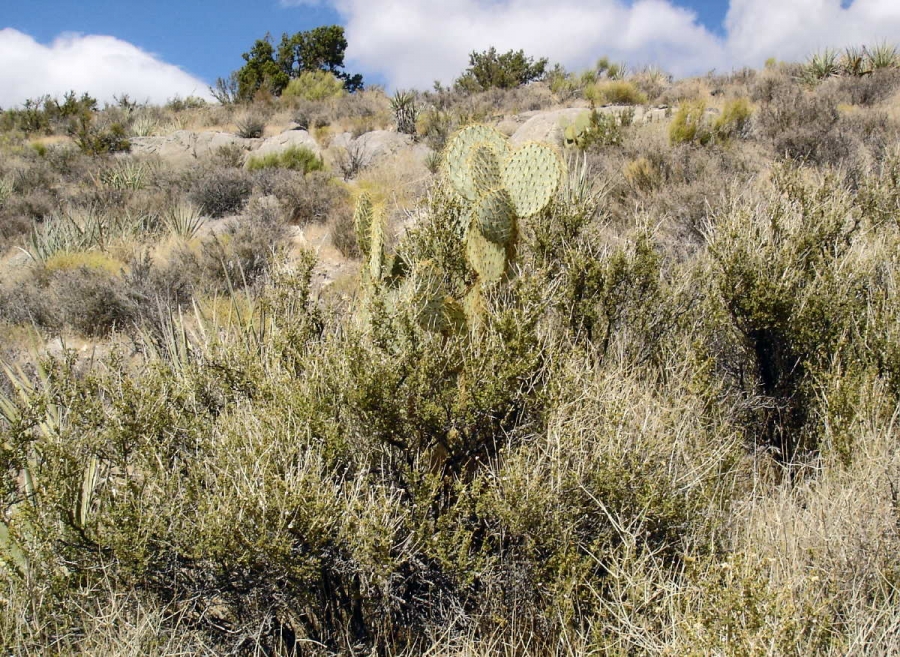
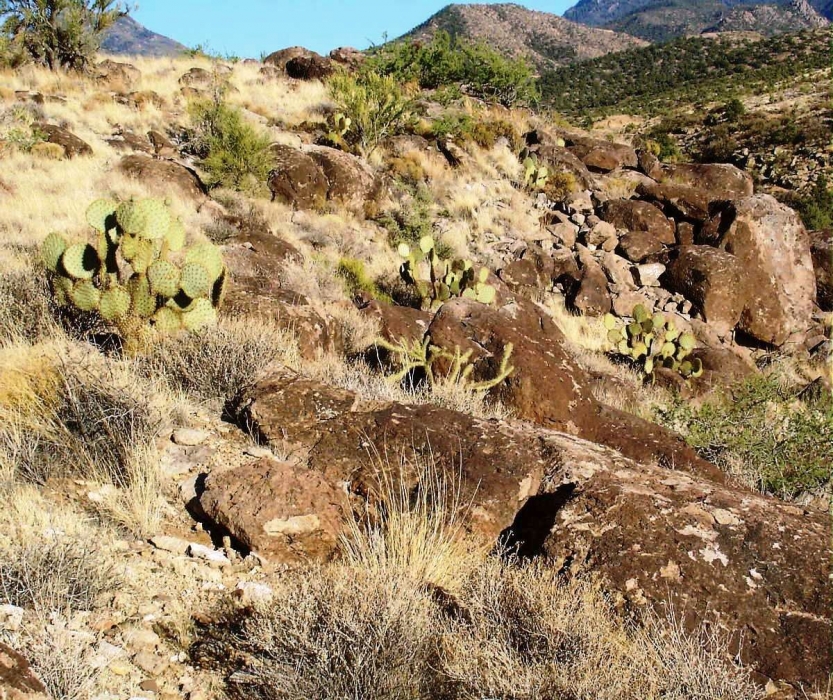
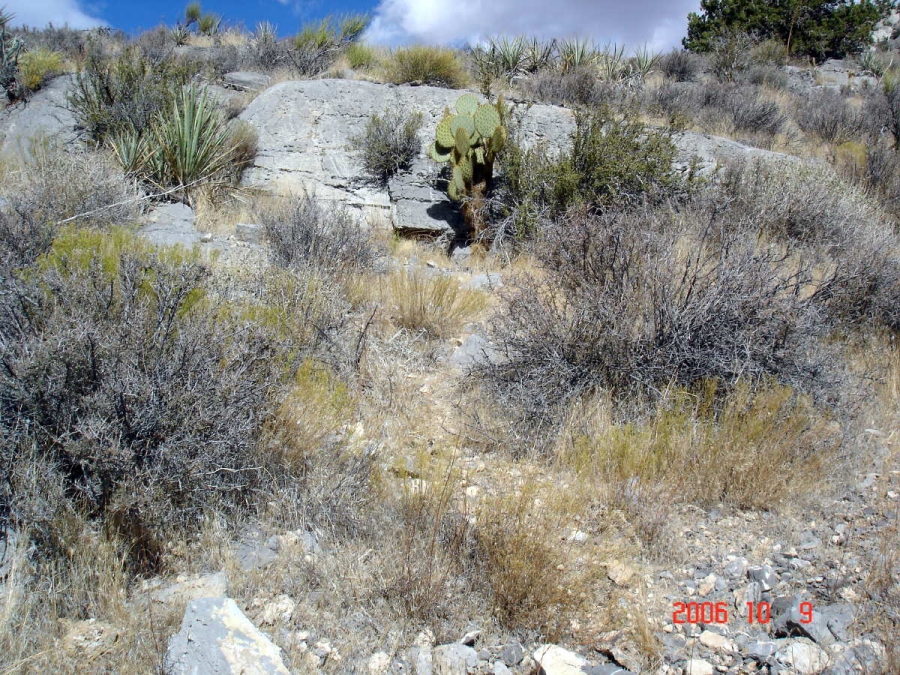
Far southern Nevada and southeastern California; much of central and north-central Arizona; barely into southwestern Utah; extreme southwestern New Mexico. Usually on rocky, well-drained sites—from bouldery slopes and benches to cliff pockets—but locally on deep sands (e.g., near Wickenburg, Arizona).
Similar or Sympatric Species
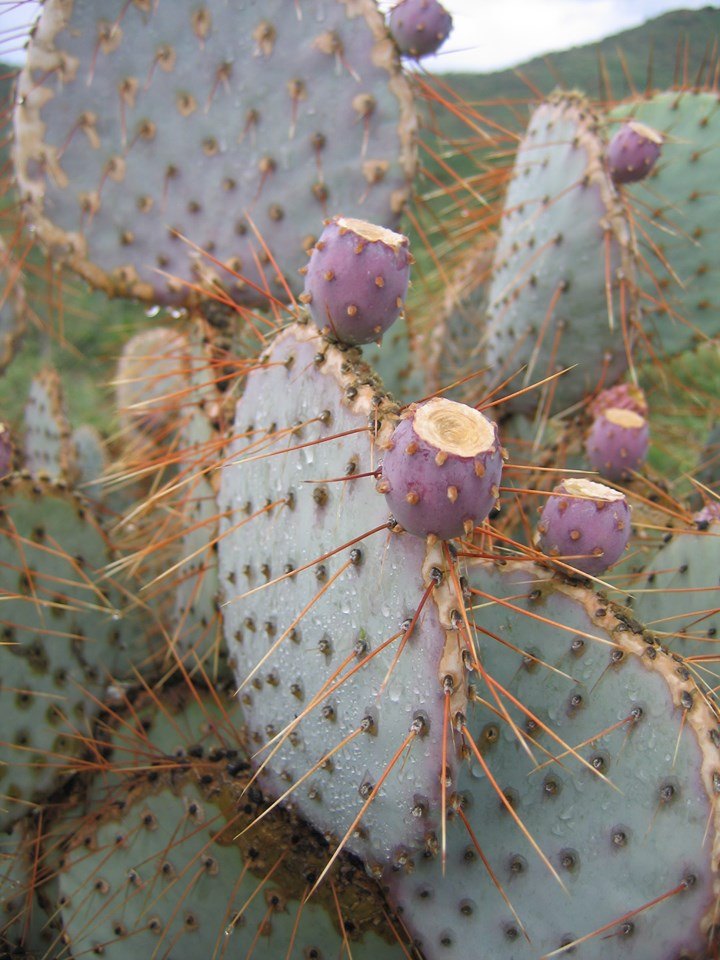
Opuntia santa-rita — deeper purple stress color; lighter armament.
Opuntia gosseliniana — glaucous blue-green pads; narrower fruits.
Opuntia macrocentra — red-centered flowers; fewer fruit areoles.
Opuntia engelmannii — pads longer than broad; bushier clumps.
Opuntia phaeacantha — thicker pads; retrorse spines frequent.
Other Notes
Characters are clinal within the complex, and plants often trend toward purple-pruinose forms in contact zones. Nearly spineless pad populations occur locally (e.g., near Congress, Arizona), though trunks remain well armed. Glochids are abundant and persistent; fruit is generally edible but rather bland.

how many are in the world?
Hi,
I think there are 200 species. Others disagree with me and set the number far lower.
Joe
HI,
I think there are over 200 species of Opuntia. Others set the number lower.
Joe Shaw
Is the fruit editable ?