(Anthony) Ferguson, Cactus and Succulent Journal (U.S.) 58(3): 124, 1986
Holotype; Isotype; Herbarium; Herbarium; Herbarium


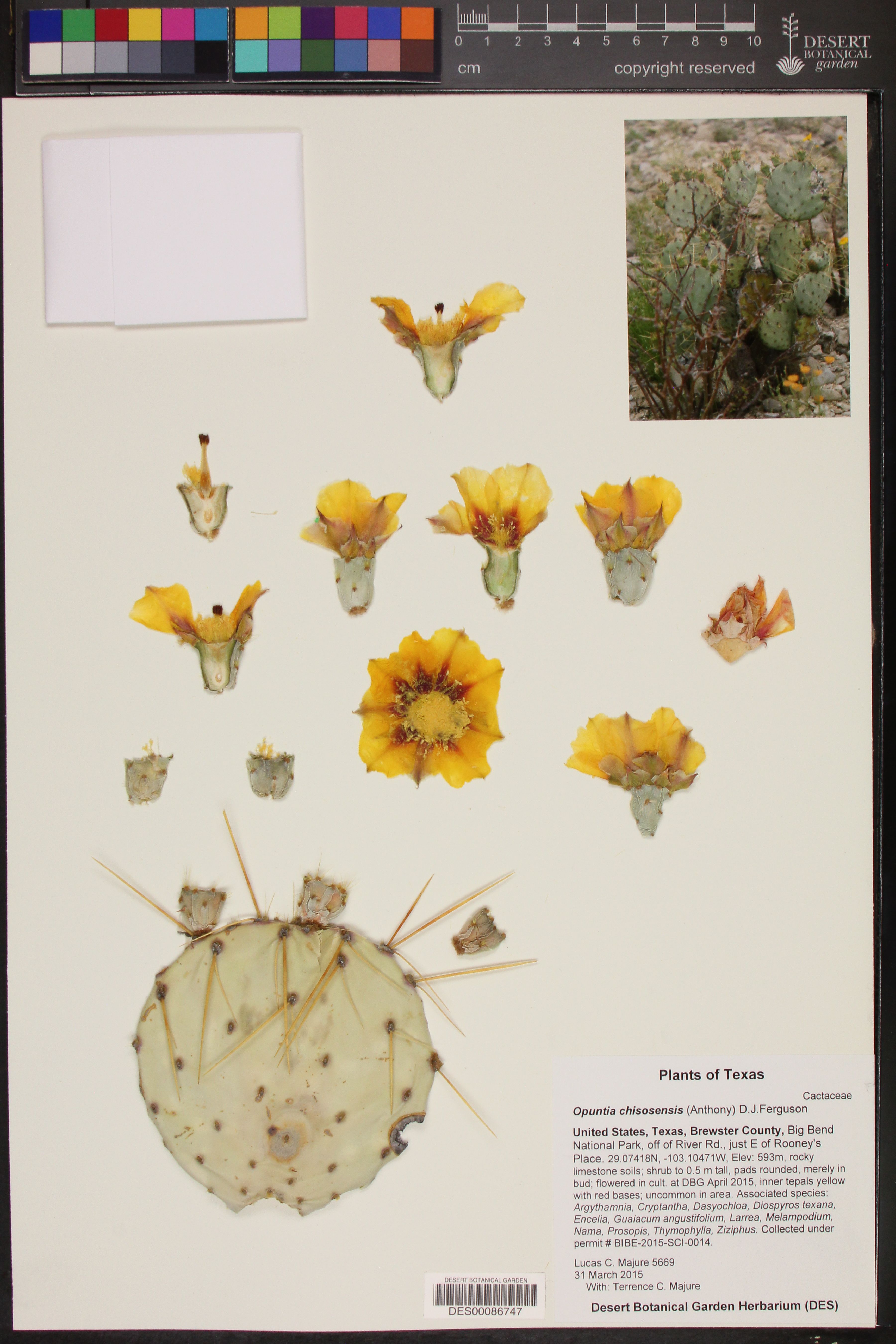
Original Description
What is Opuntia chisosensis?
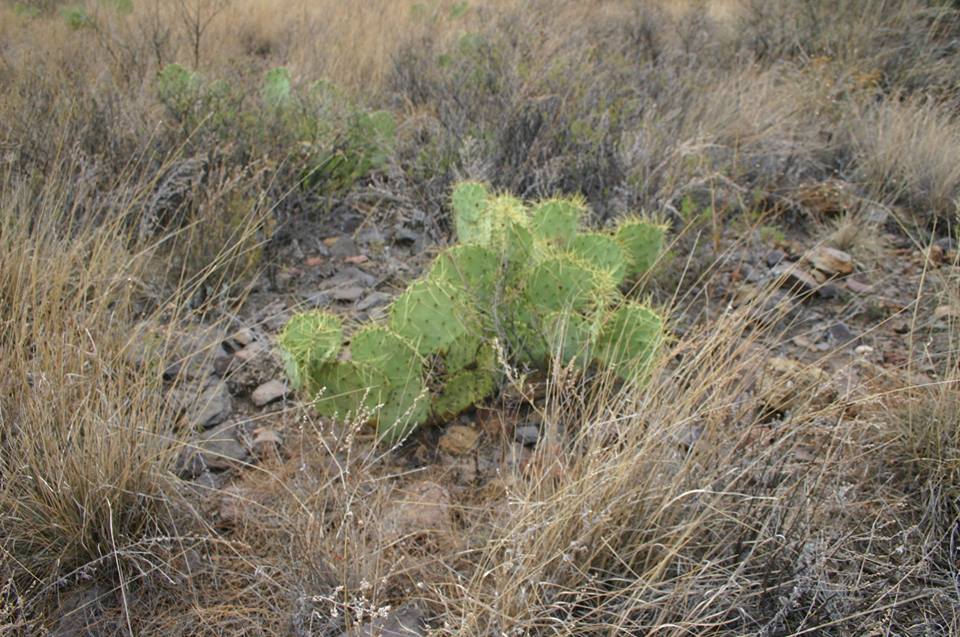
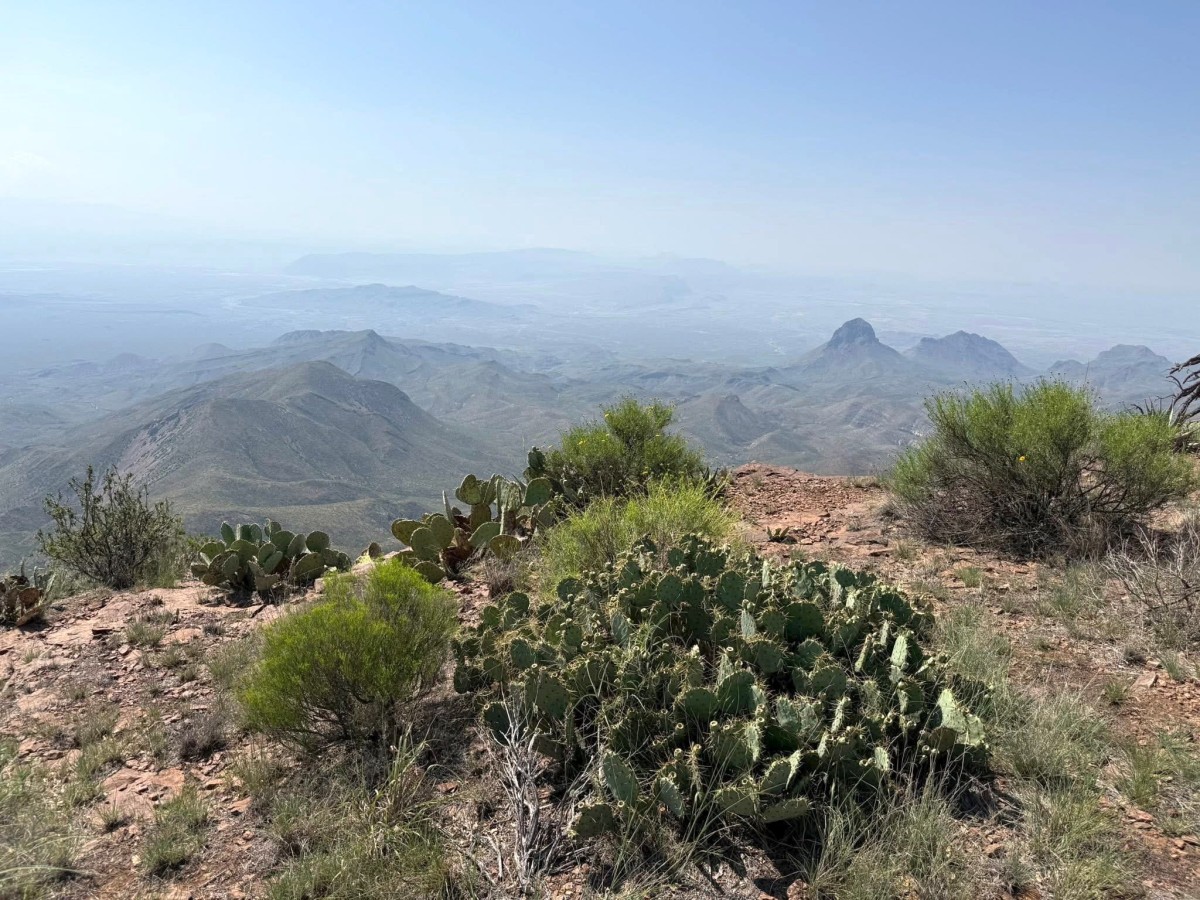
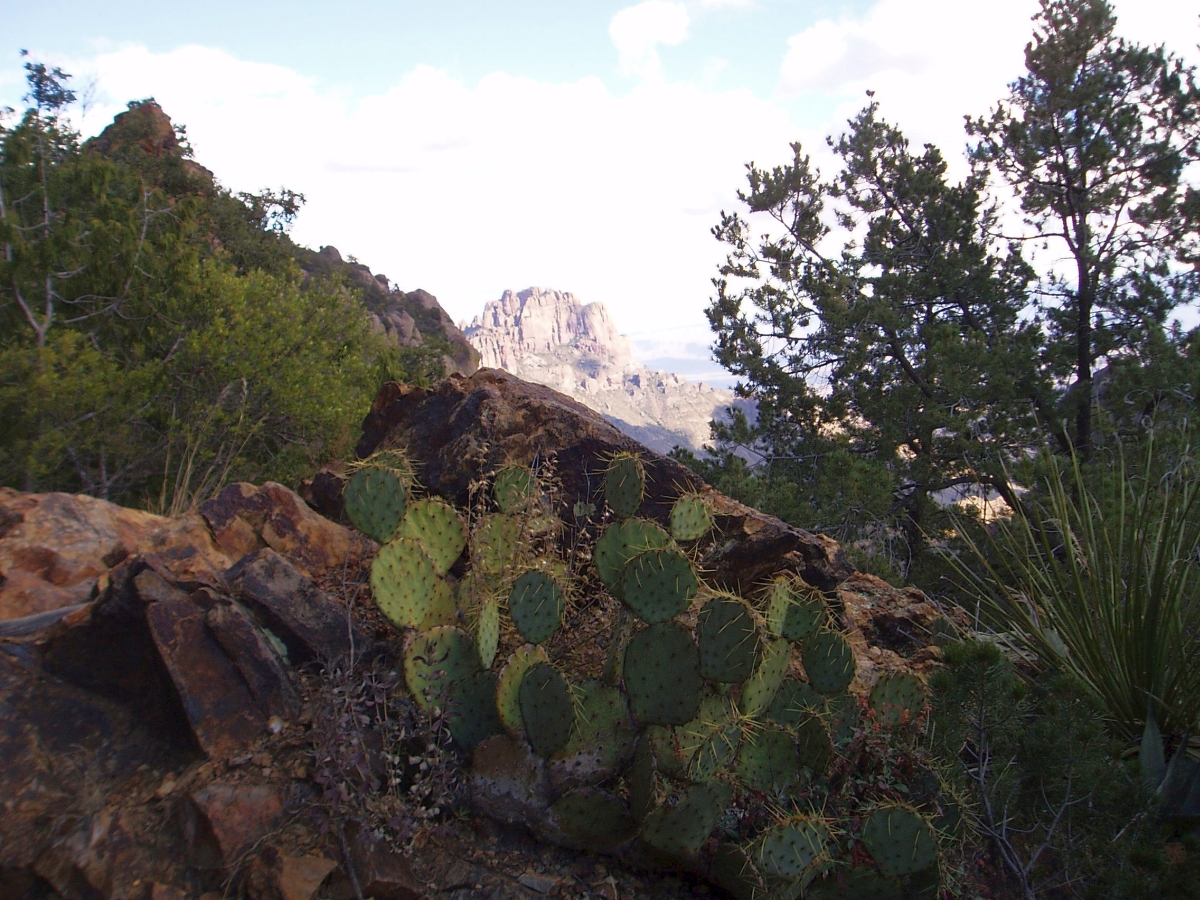
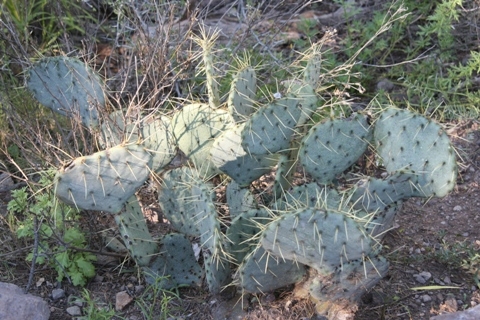
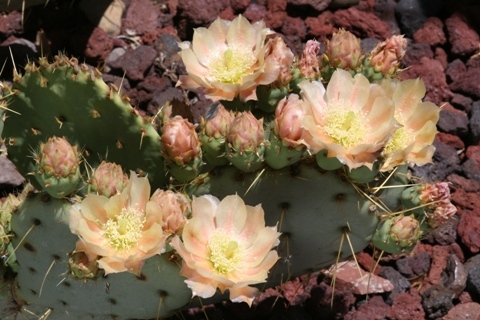
Opuntia chisosensis is a high-elevation prickly-pear native to the Big Bend region of Texas and adjacent northern Coahuila, Mexico. It grows mostly in open woodland—oak, juniper, and pinyon—typically above about 5,500 ft (≈1,650 m), with occasional plants on nearby grassy slopes. Once treated as a variety of O. lindheimeri, it is now recognized as distinct for its compact, upright shrubs with bluish to gray-green pads, bright yellow to yellow-buff flowers, and conspicuously small fruits.
Details
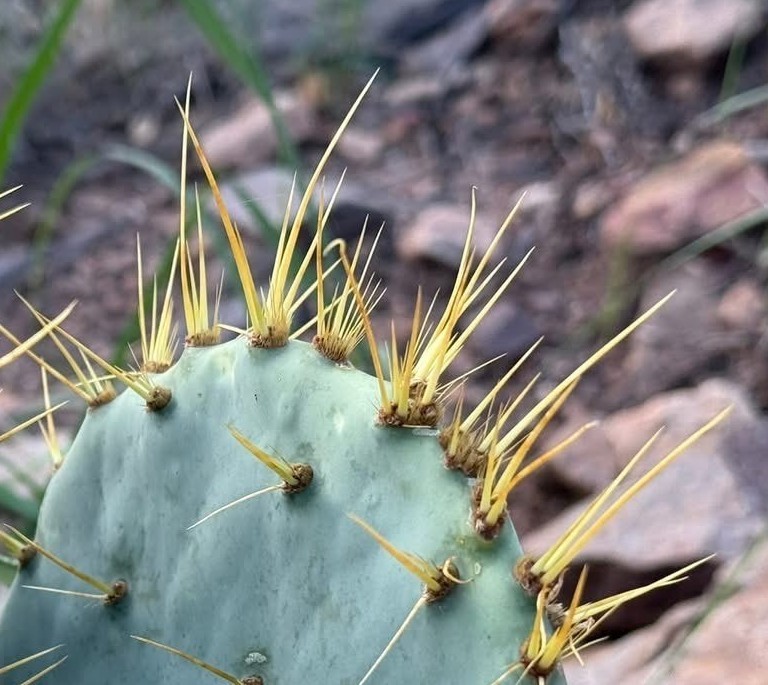
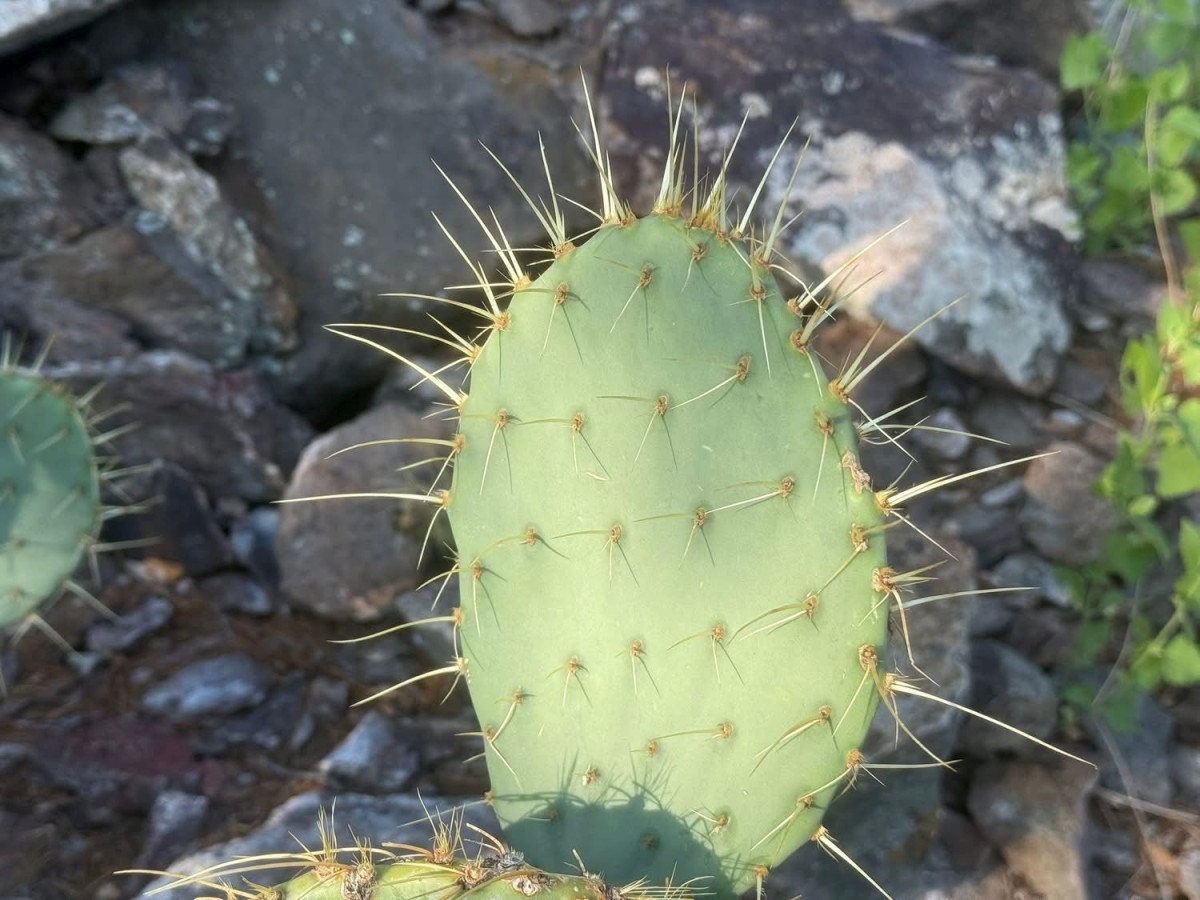
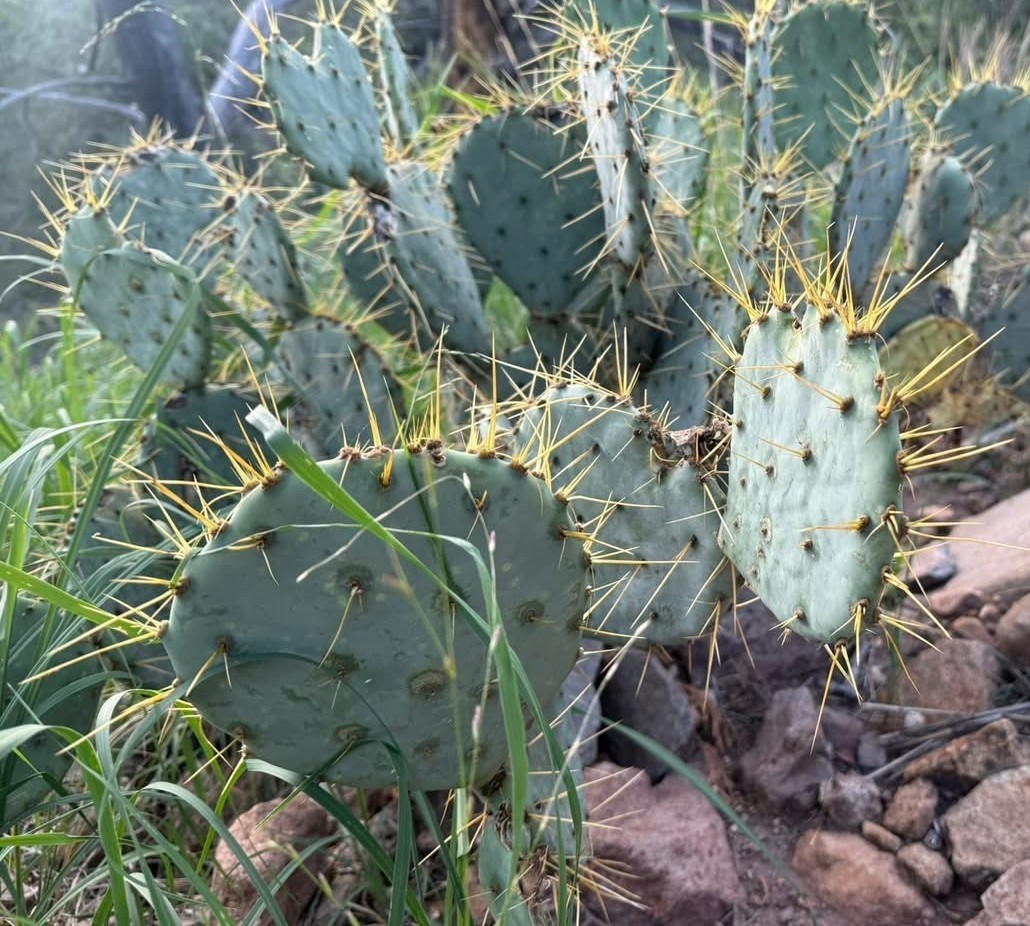
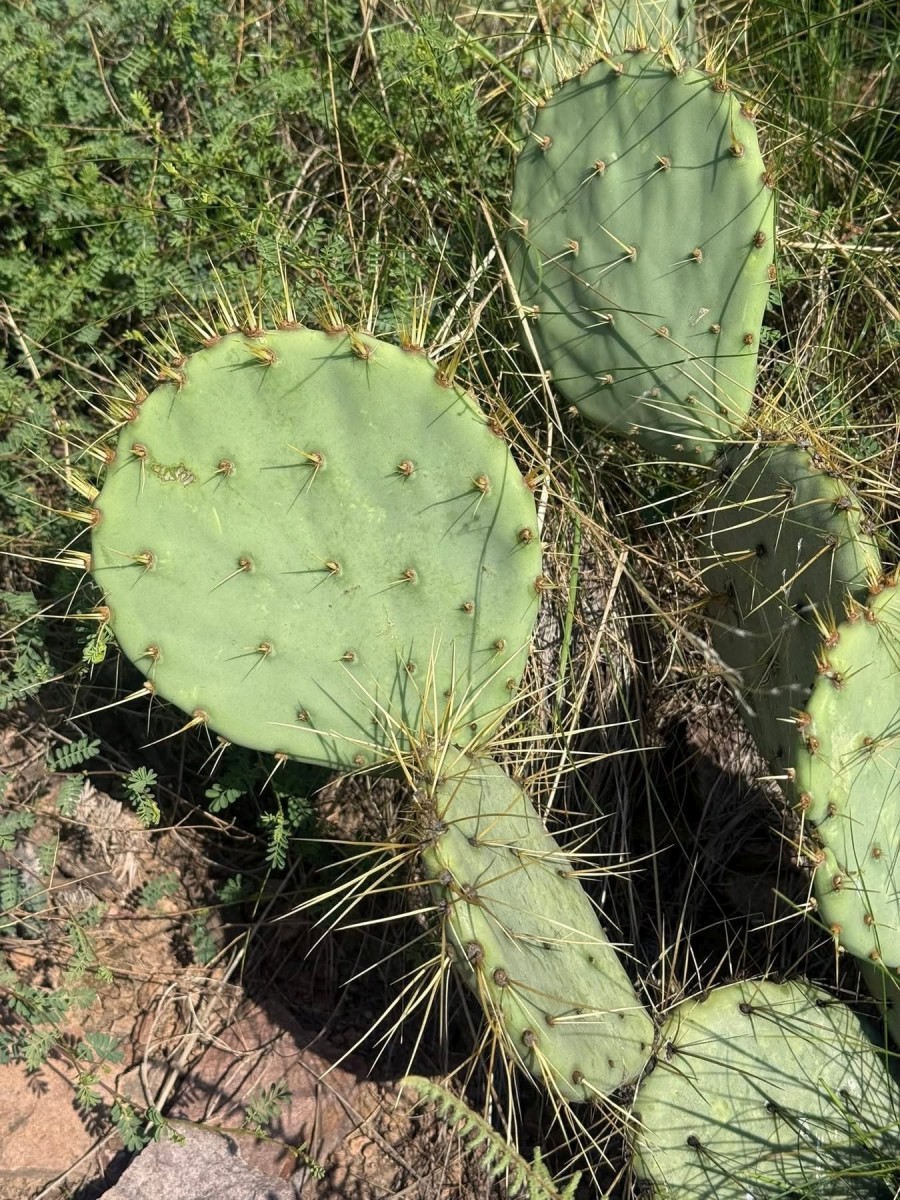
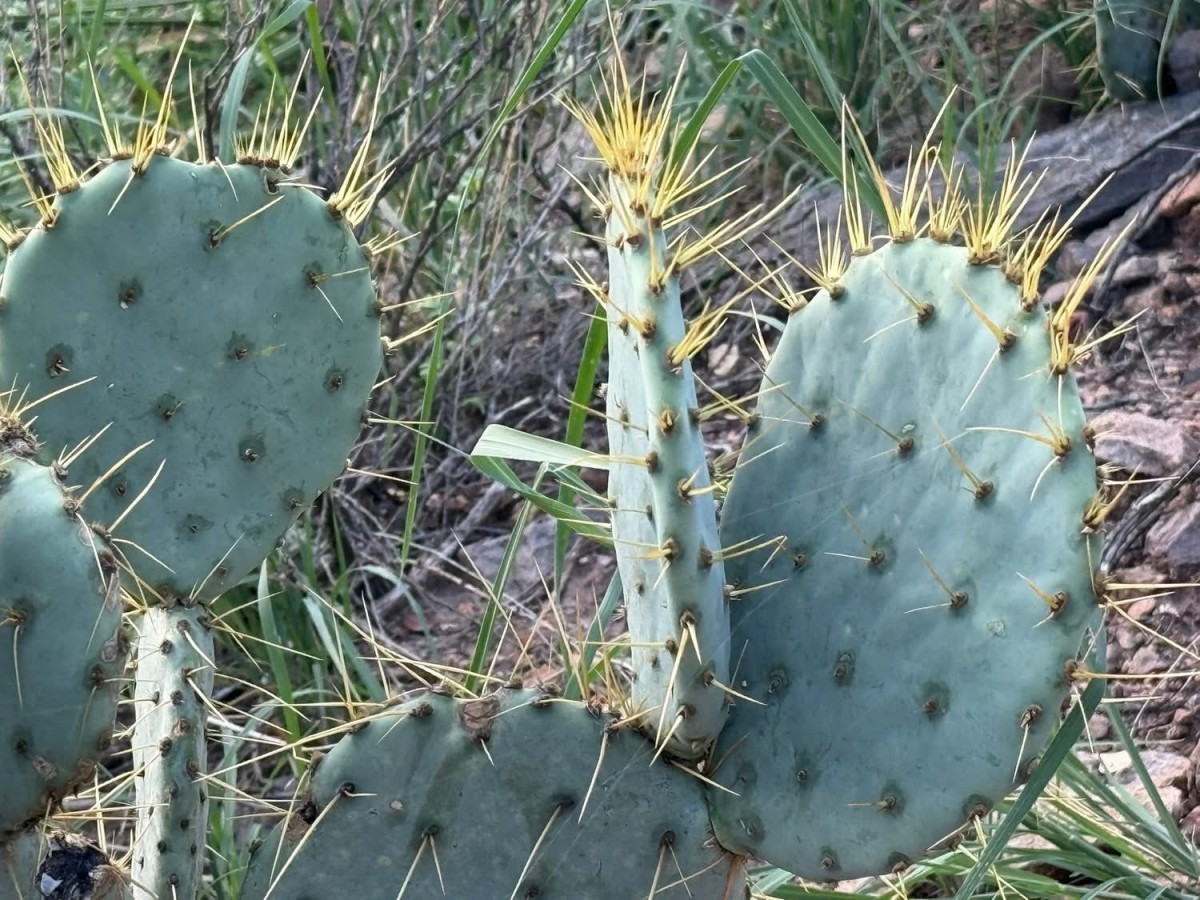
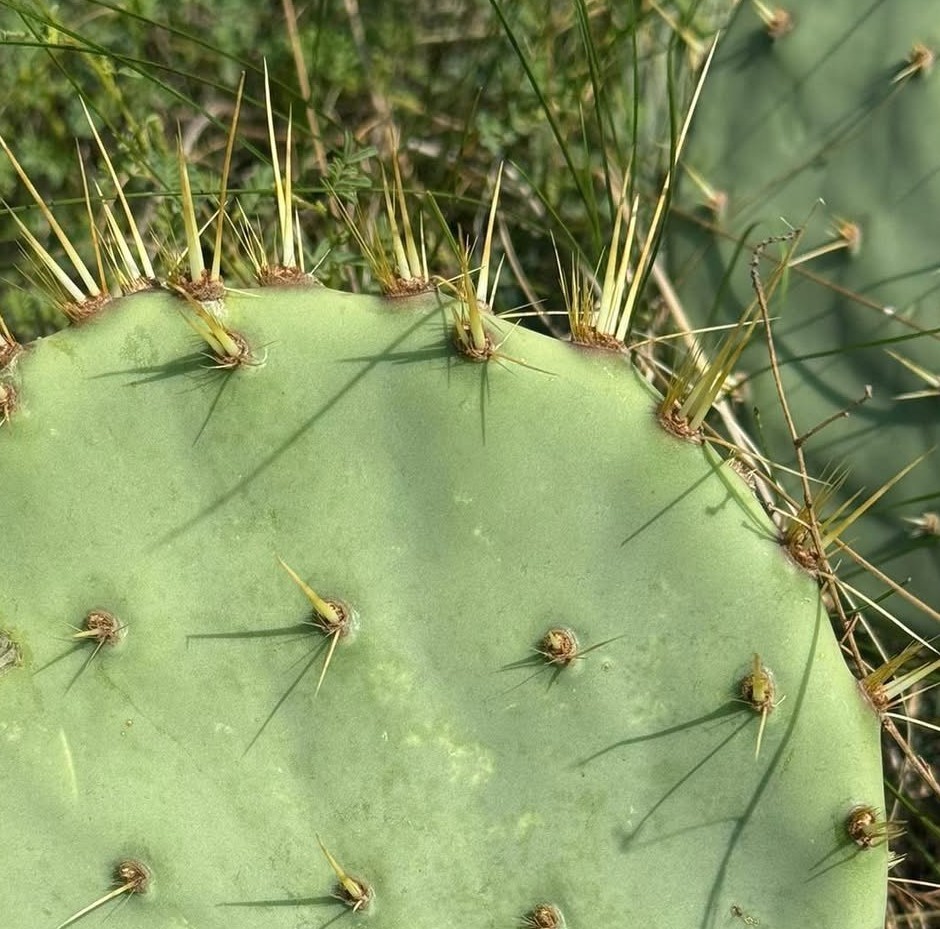
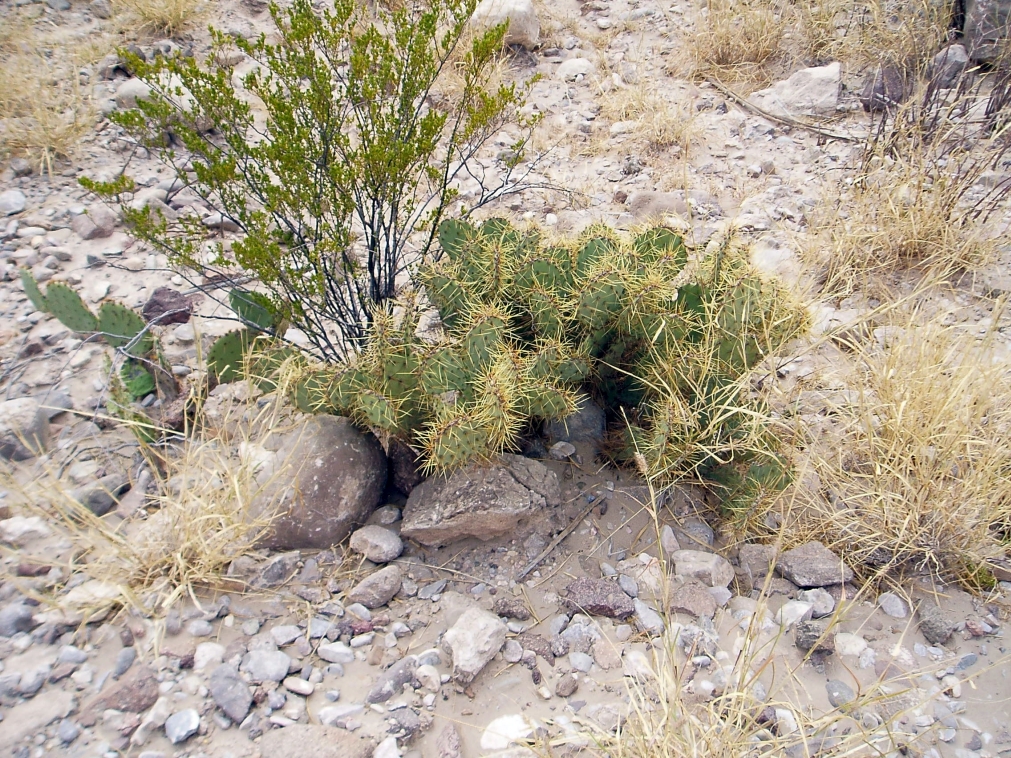
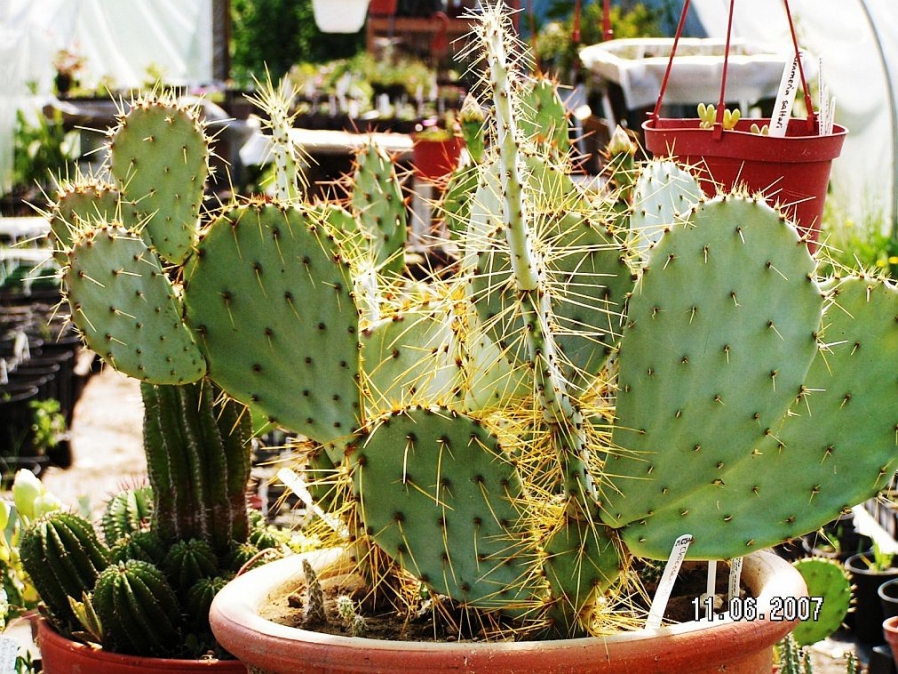
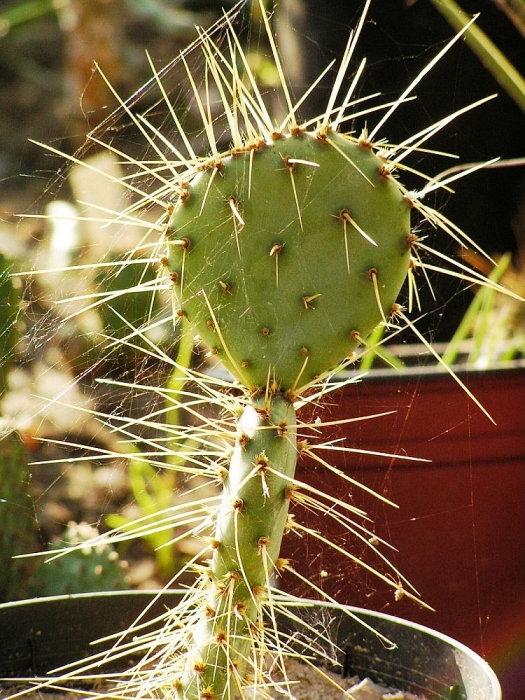
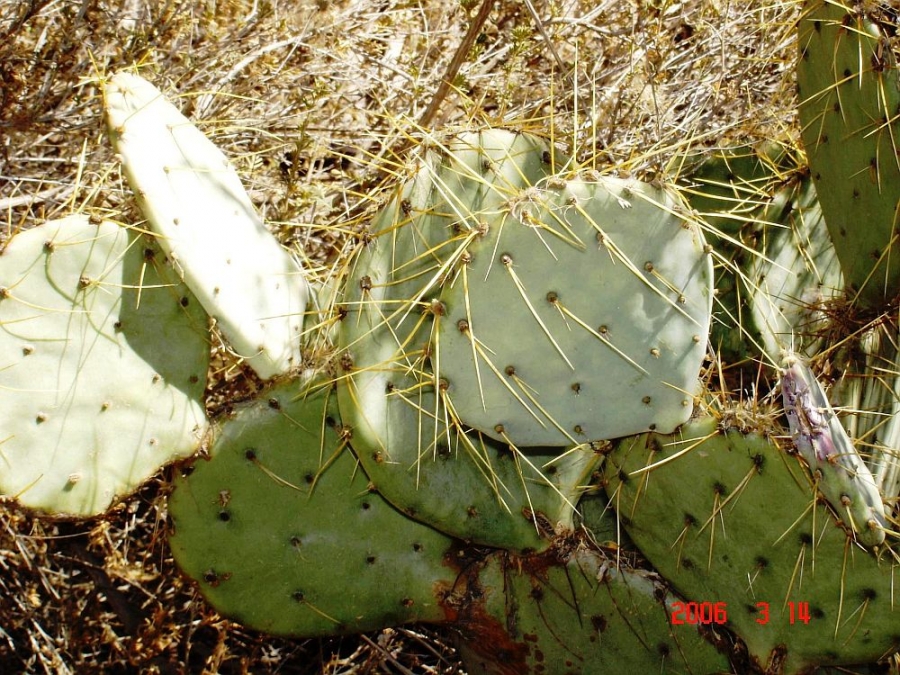
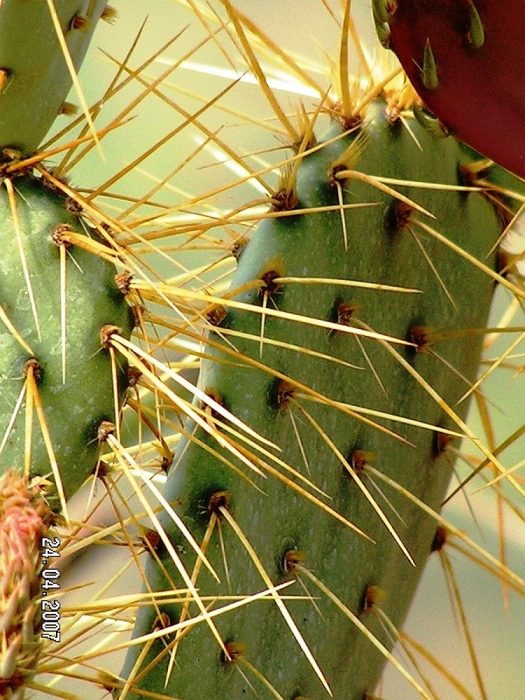
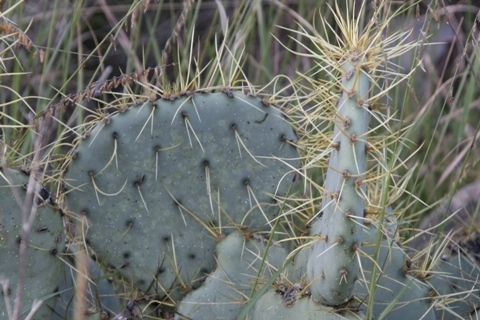
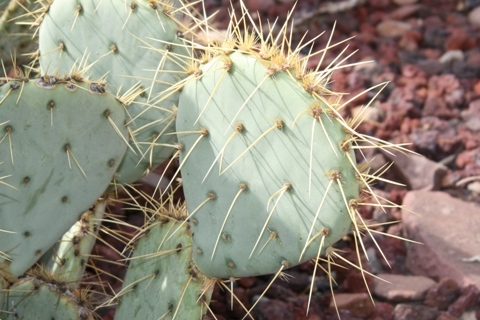
Shrubs: medium-sized, upright clumps to about 1 m tall, arising from a thicker base with ascending primary branches. Cladodes: circular to broadly obovate, bluish-gray to green, firm; areoles small to moderate and well-spaced. Spines: usually 1–5 per areole on the upper two-thirds (or more) of pads; spreading to deflexed; yellow to orange-yellow when young, often darkening through brownish-red with age; 2–6 cm, terete to slightly flattened at the base, sometimes gently curved. Glochids: present, sometimes partly encircling the areole and forming a loose apical tuft. Flowers: 5–7 cm across, yellow to yellow-buff; filaments pale green; style yellow with a green to yellow-green stigma. Fruits: notably small for the region, reddish-purple at maturity, ellipsoid to short-barrel-shaped (≈40 × 45 mm), juicy, with areoles mostly clustered near the apex and typically spineless. Seeds: yellow to tan, ≈4 × 3.5 mm; the protruding girdle about 1 mm.
Cytology
Known: diploid (2n ≈ 22).
Range & Habitat
Chisos Mountains, Big Bend National Park, Brewster County, Texas, and the Sierra del Carmen of northern Coahuila, Mexico. Plants occur on sunny, rocky, well-drained slopes and benches in open woodland with juniper, pinyon, oak, and Texas madrone; occasional plants extend into adjacent grassland.
Similar or Sympatric Species
O. engelmannii — usually larger overall, with broader pads and larger flowers and fruits; armament generally heavier.
O. phaeacantha — pads often more oval and plants more sprawling; fruits typically longer; flowers commonly brighter yellow without the buff cast.
O. macrocentra — pads tending gray-glaucous to purple; spines often darker and longer; fruits typically more elongate.
O. azurea — pads proportionally narrower; armament and coloration differ, with fruits commonly longer and less barrel-shaped.
O. spinosibacca — shares general morphology of the phaeacantha group but differs in spine and fruit details; fruits typically less short-barrel-shaped.
Other Notes
In cultivation this species is valued for its tidy, upright habit and contrasting yellow spines against bluish pads. Older spines may darken. Mountain origins suggest good cold-tolerance where soils are well-drained and winters are bright and dry.
For more information, see:
Ferguson, D.J. (1986) Opuntia chisosensis (Anthony) comb. nov. Cactus and Succulent Journal (U.S.) 58:124.