Clokey, Madroño 7(3): 71, 1943
Isotype; Isotype; Isotype; Herbarium; Herbarium; Herbarium; Herbarium; Herbarium; Original Description


What is Opuntia charlestonensis?
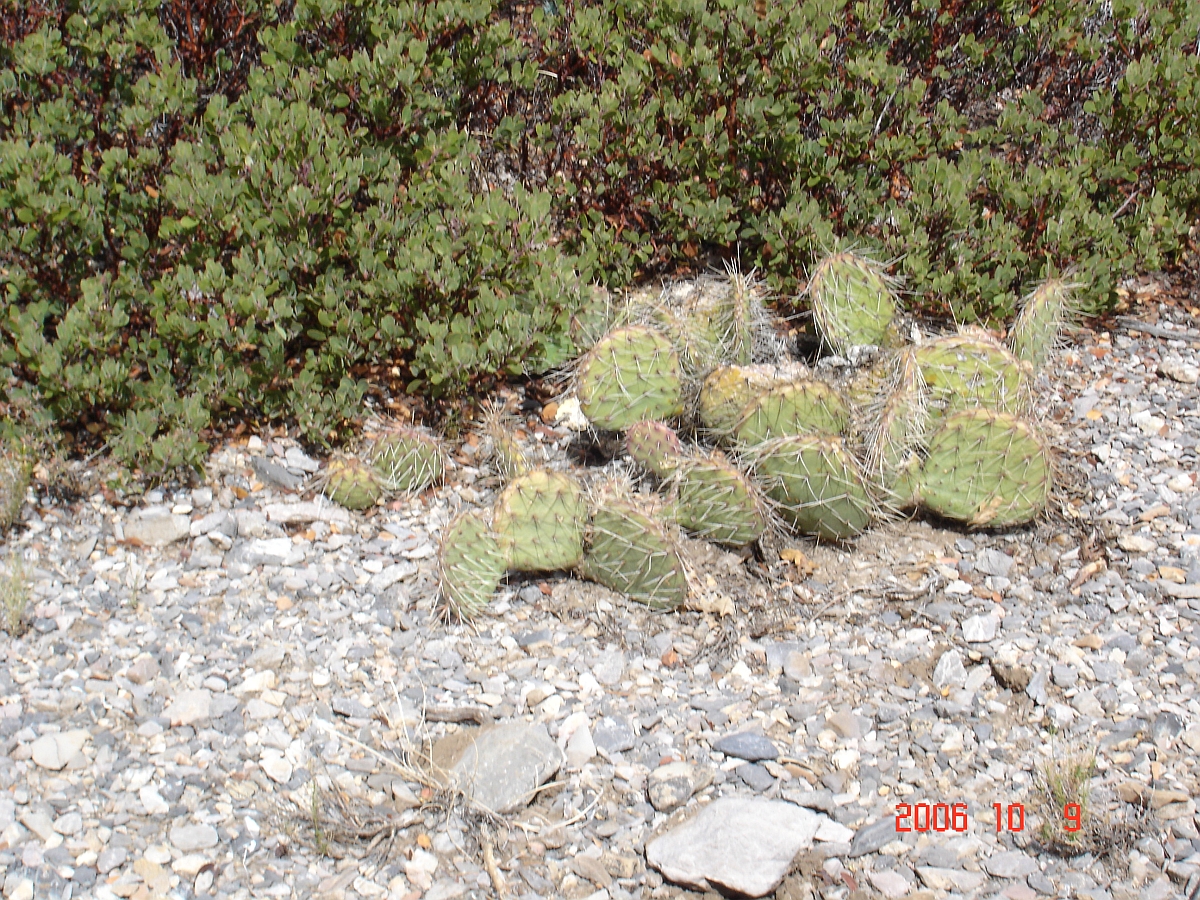
Opuntia charlestonensis is a high-elevation prickly pear from Kyle Canyon on Mt. Charleston, Nevada (≈6,000–8,000 ft). It has been proposed as a hybrid taxon derived from two sympatric species, O. phaeacantha and O. polyacantha var. erinacea.
Details
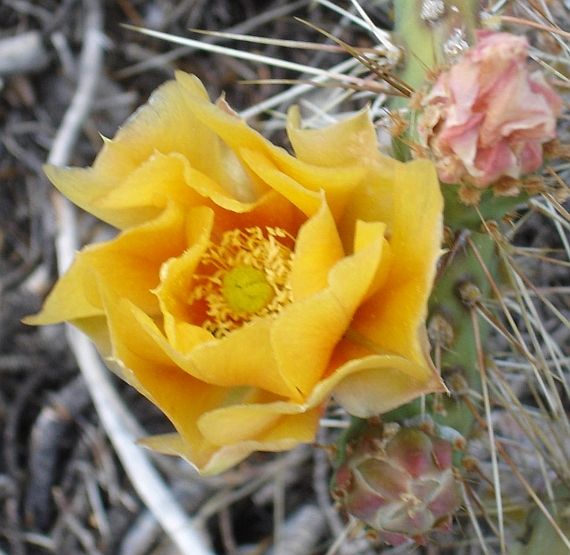
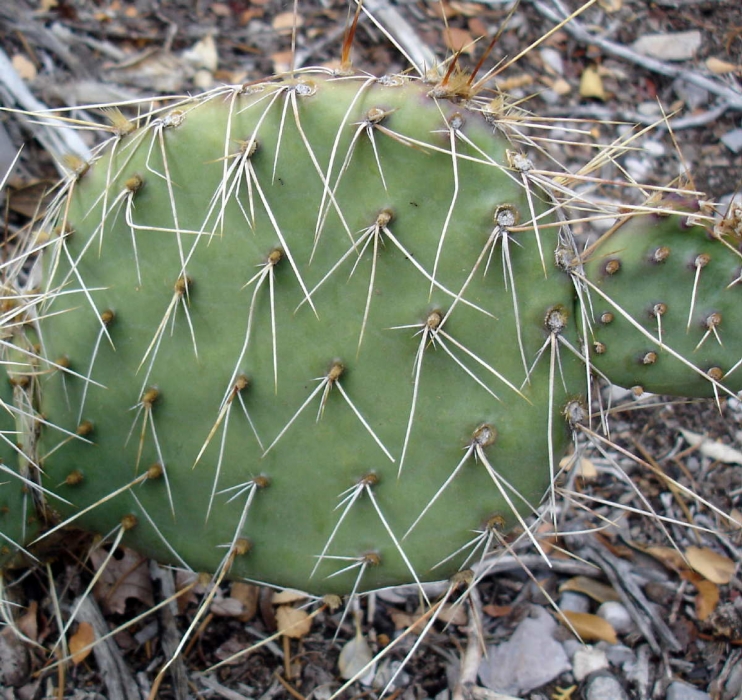
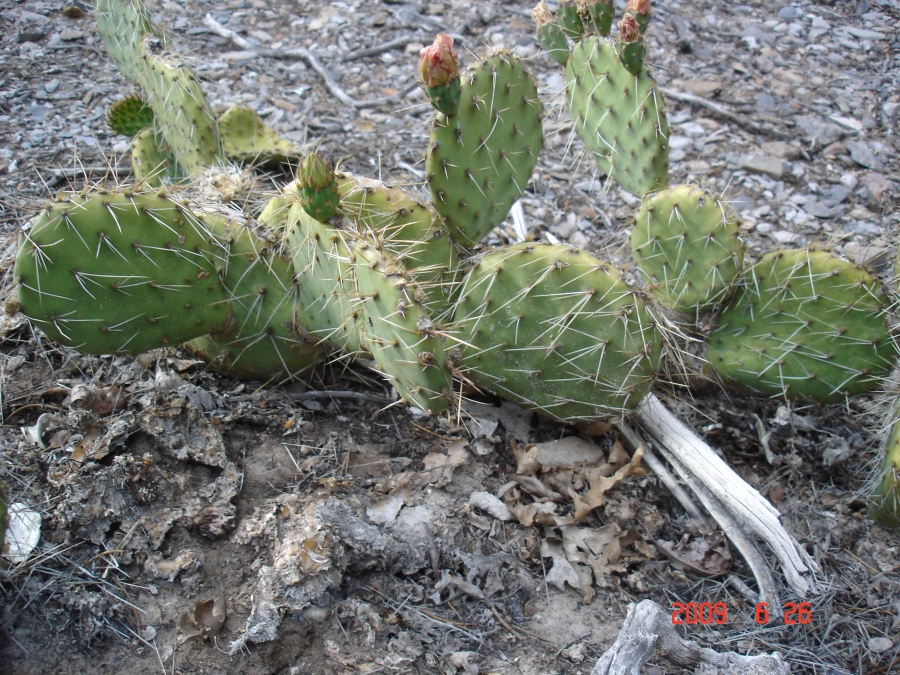
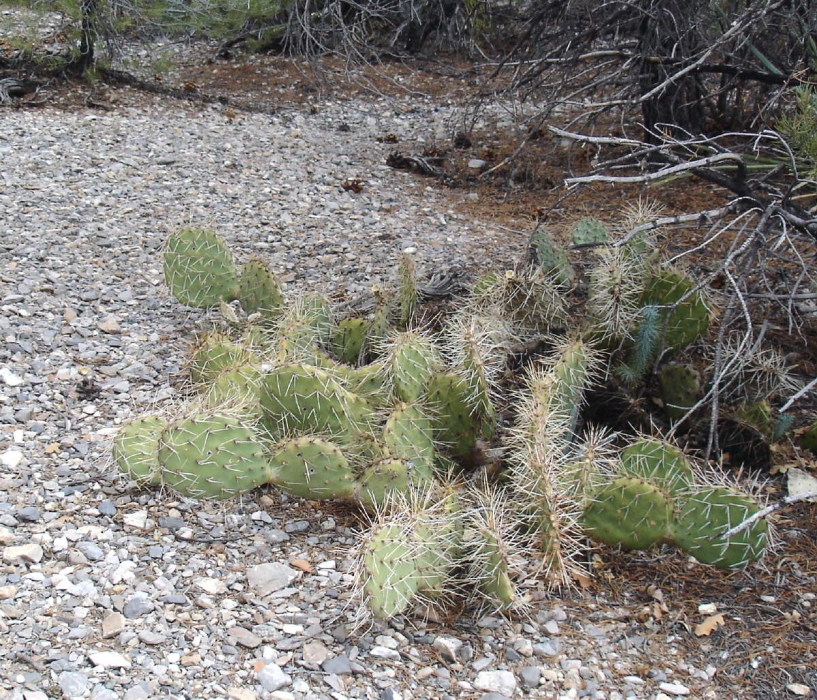
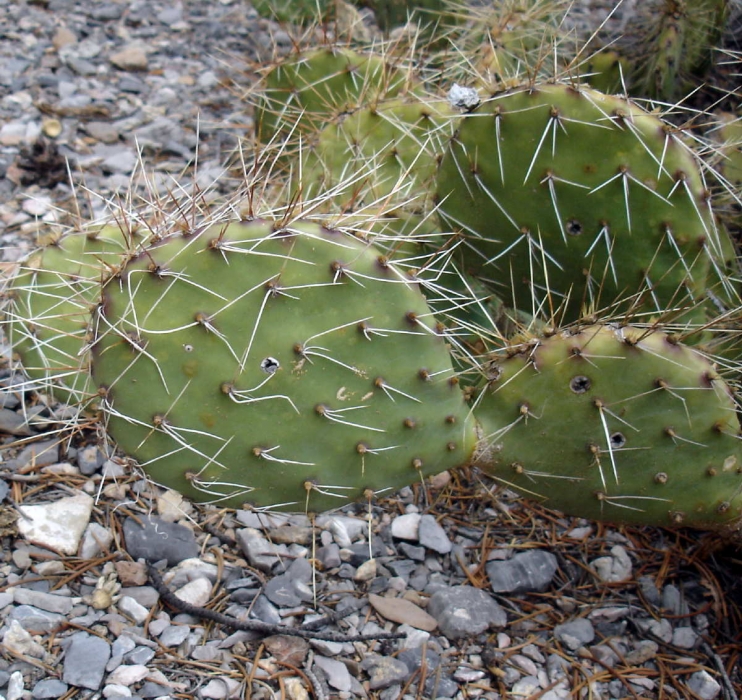
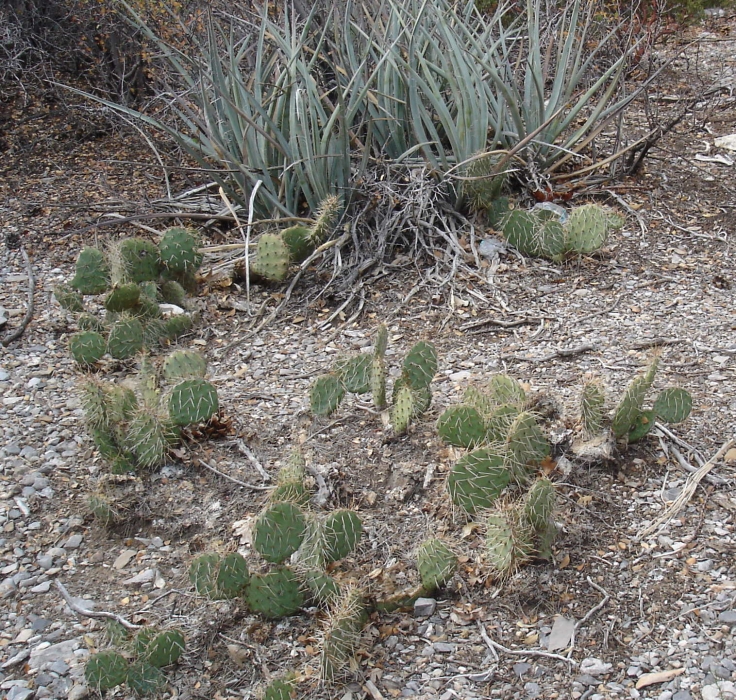
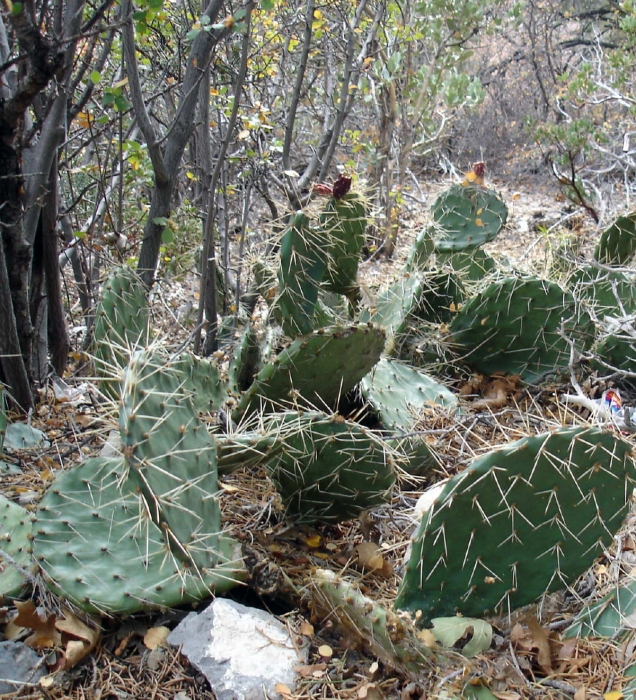
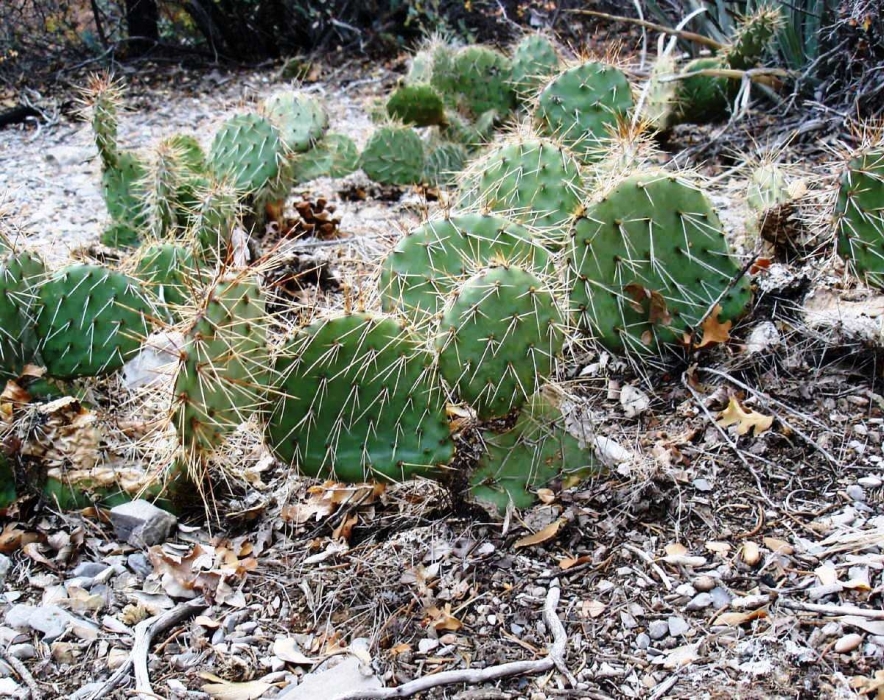
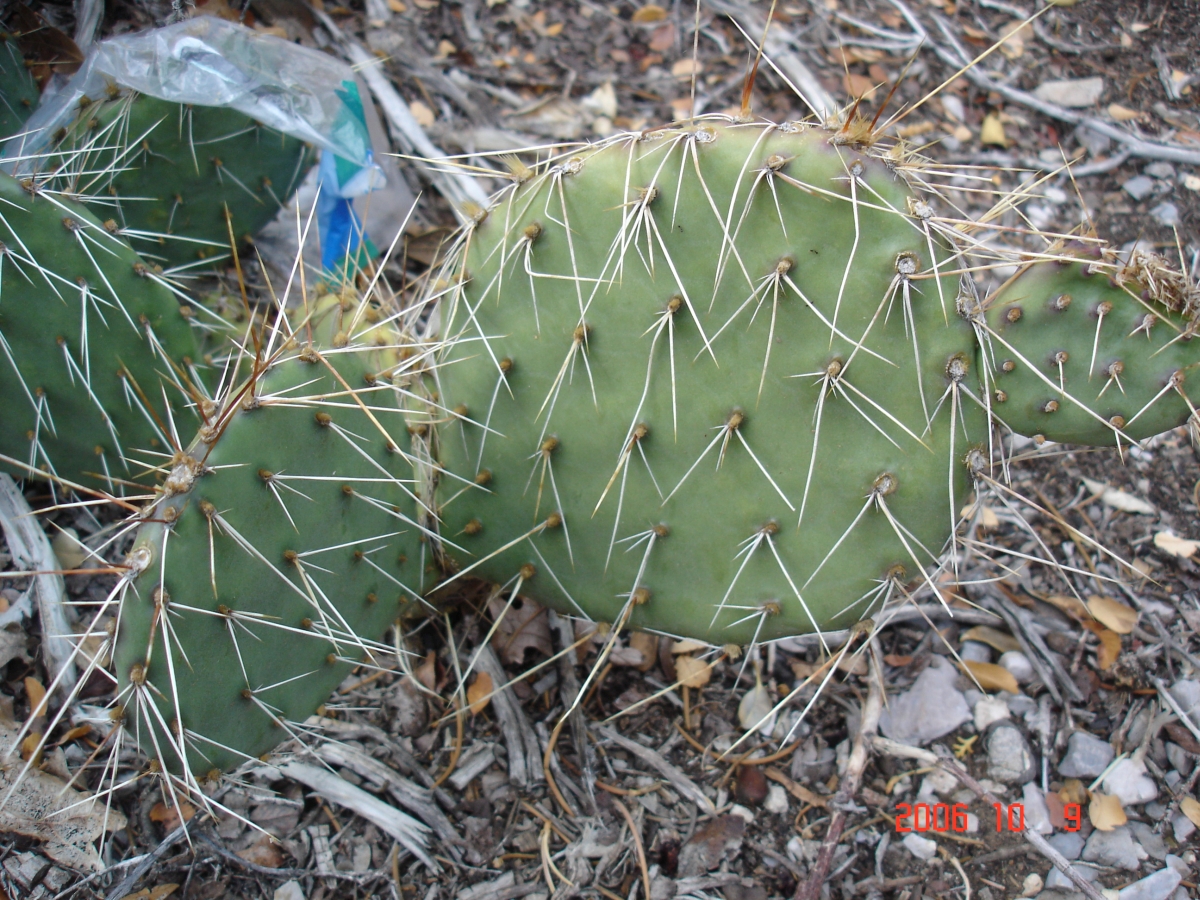
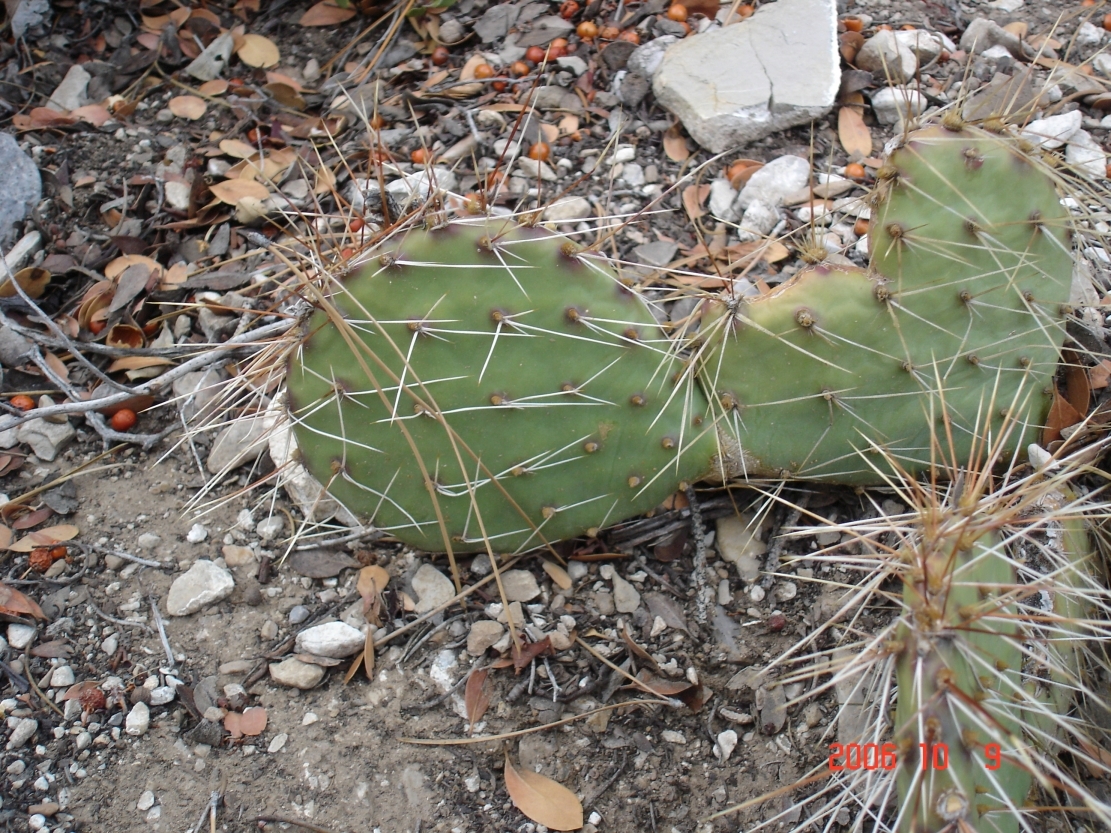
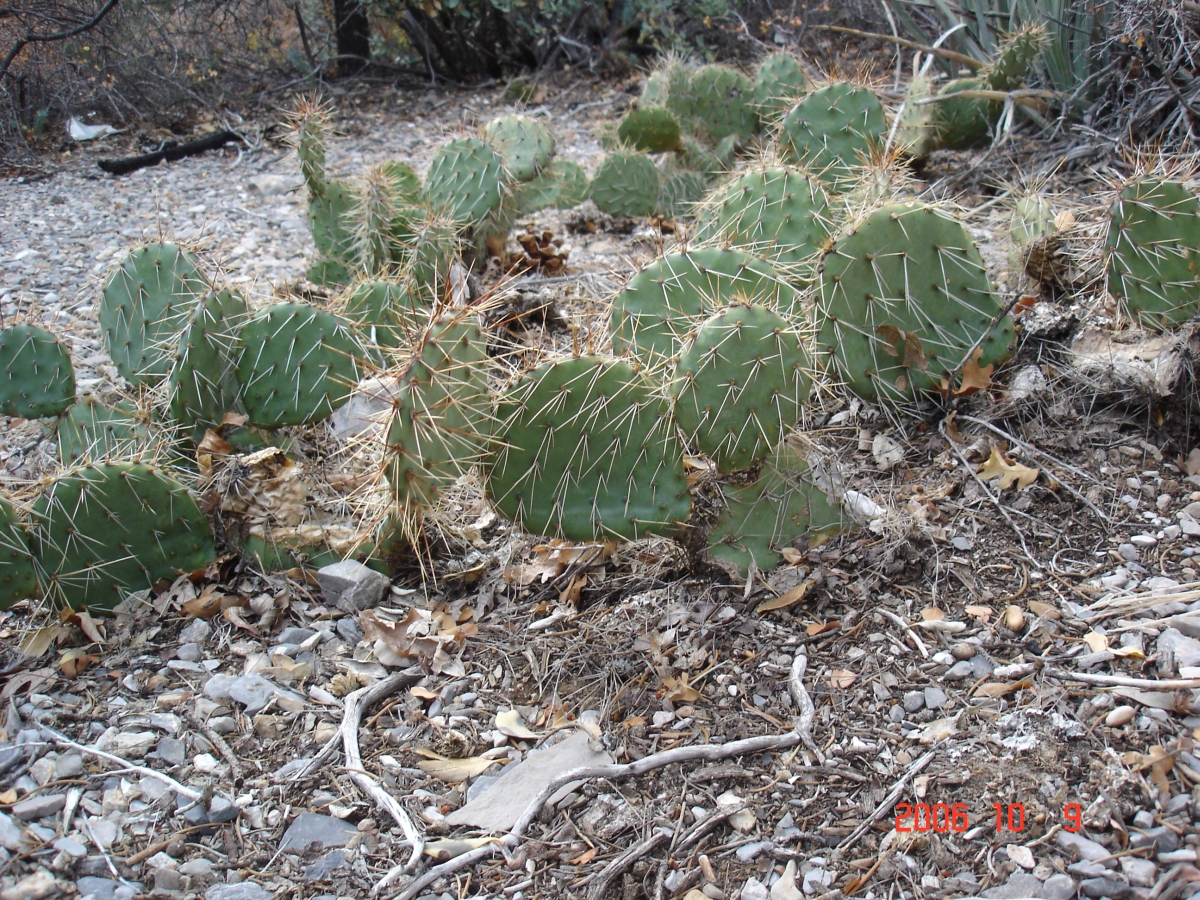
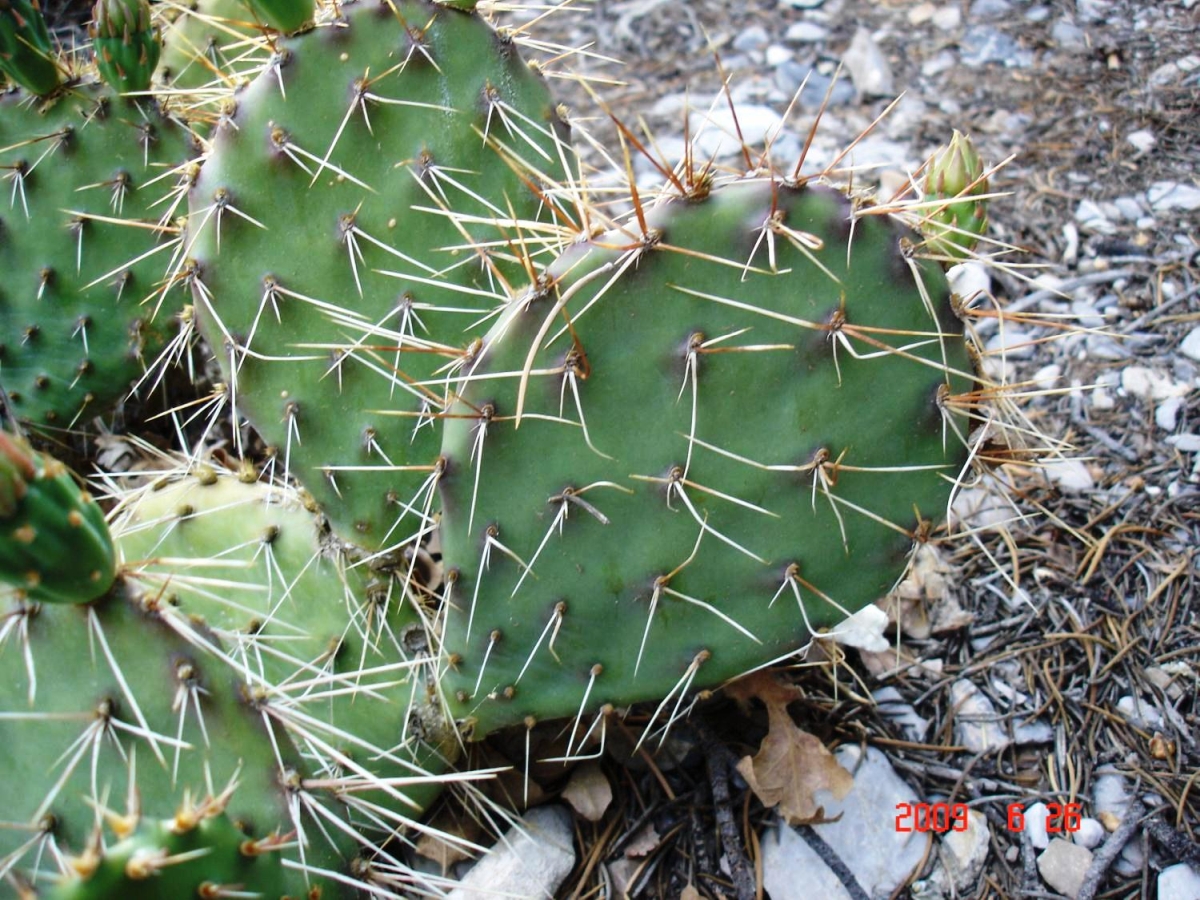
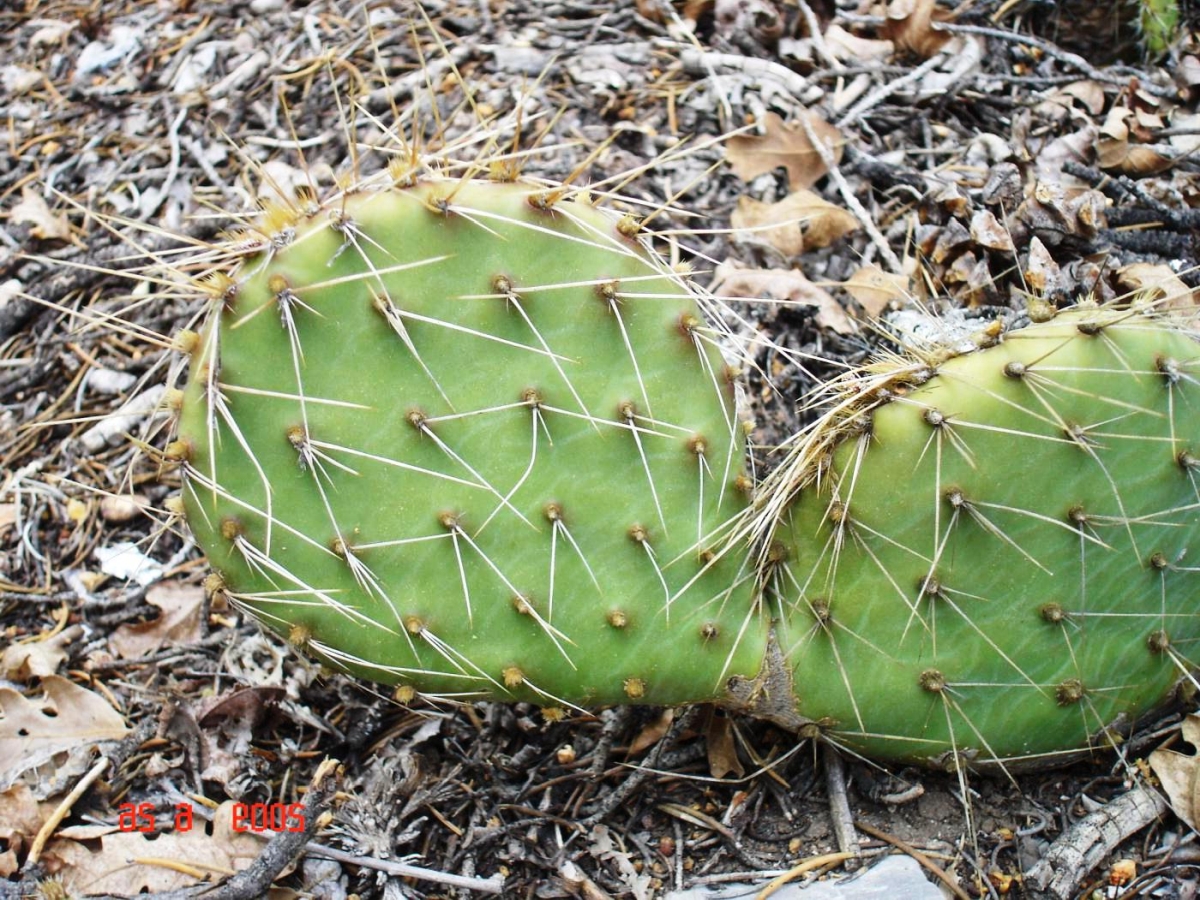
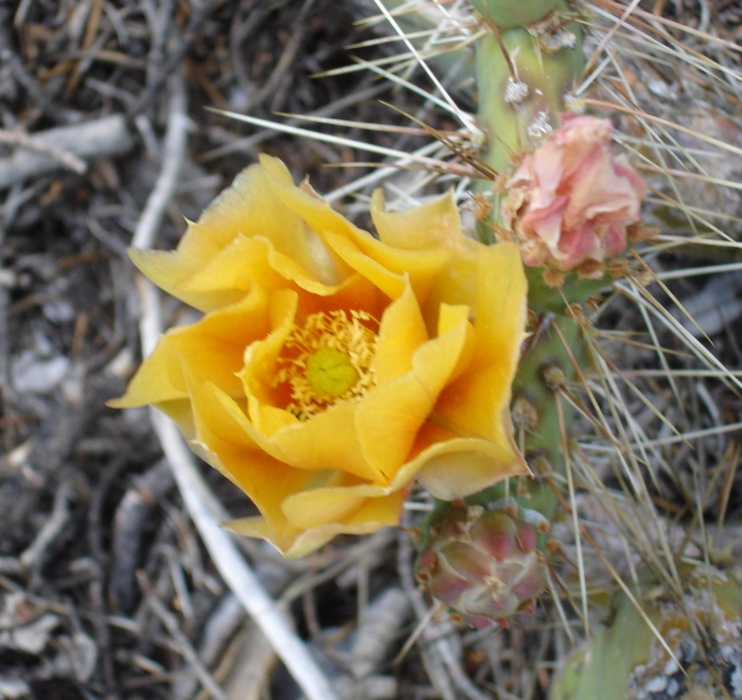
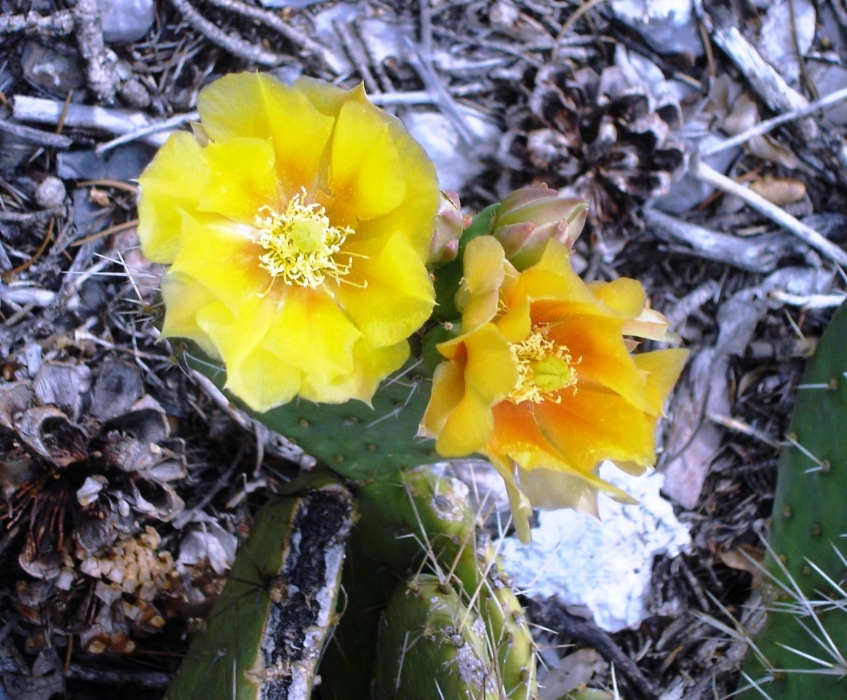
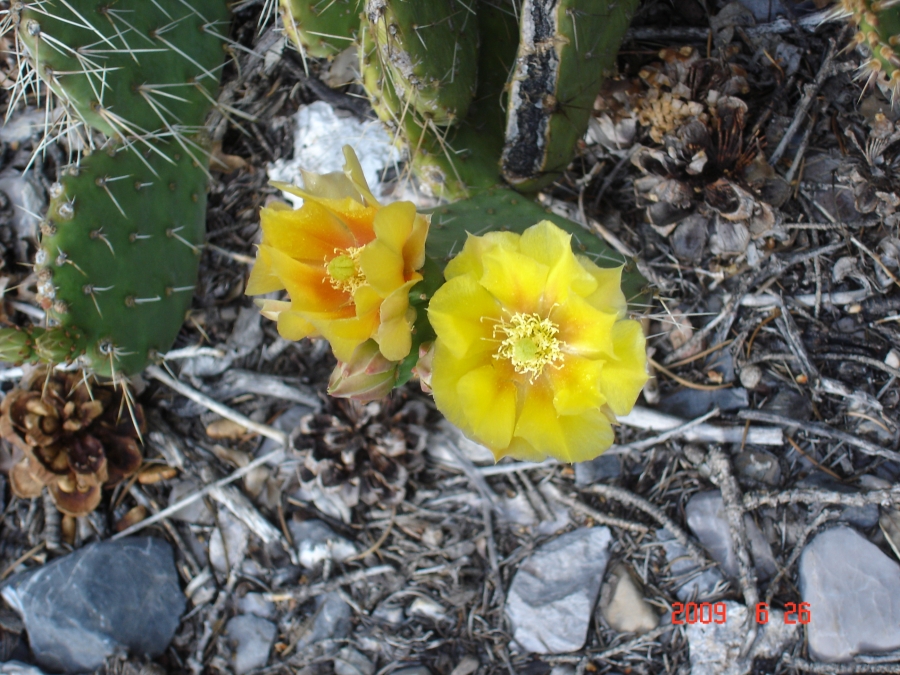
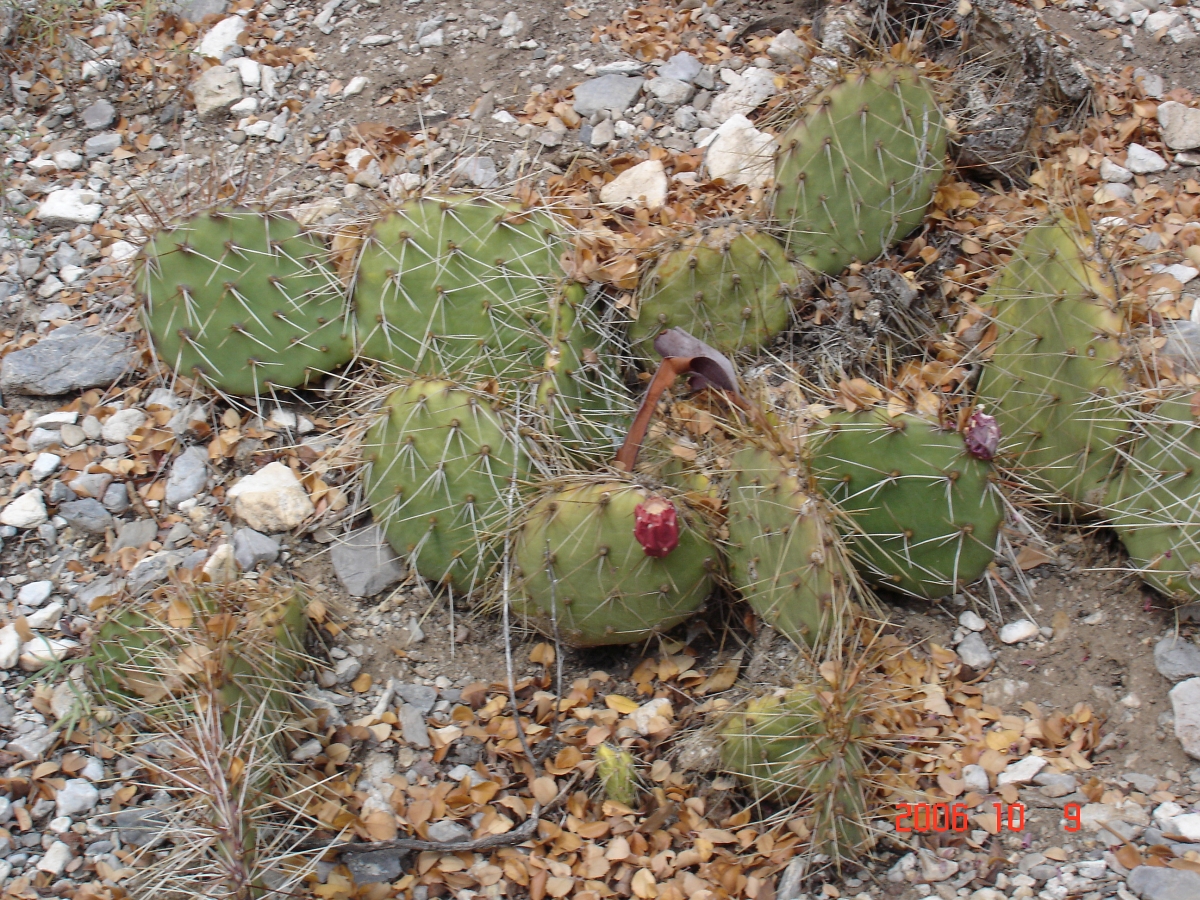
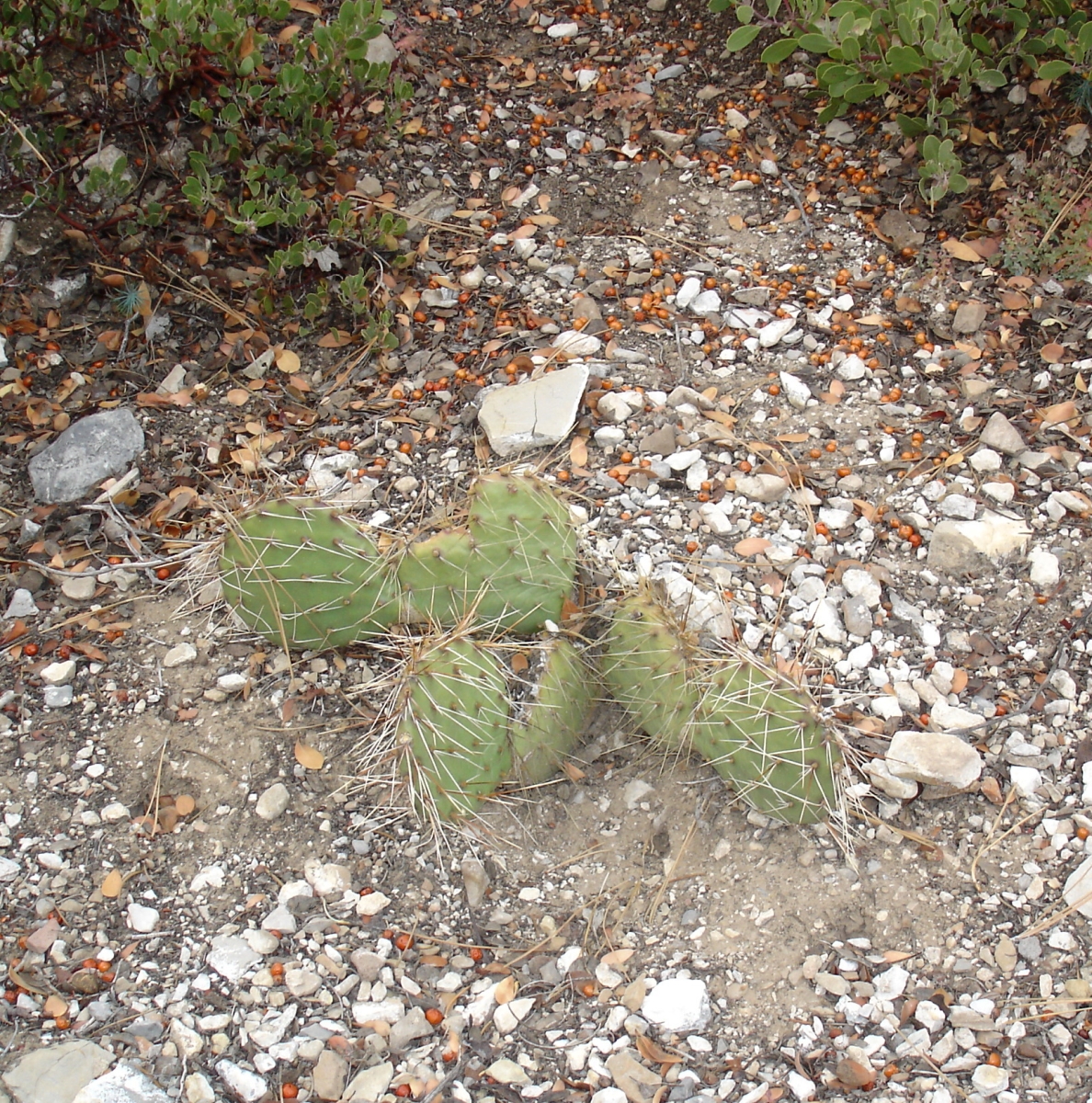
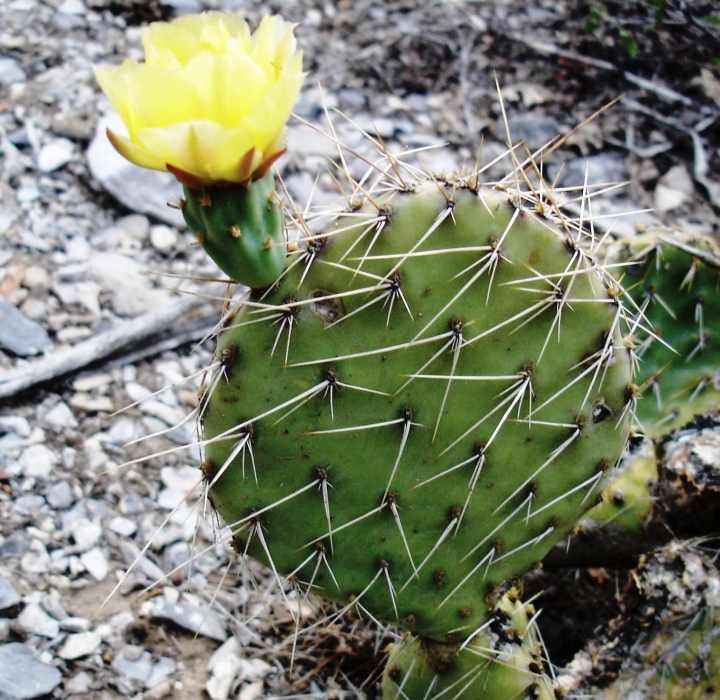
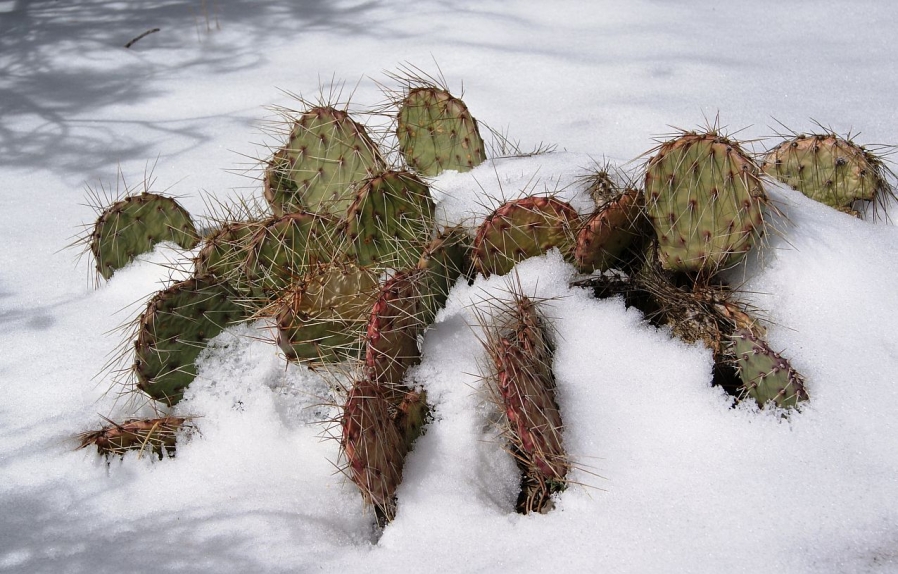
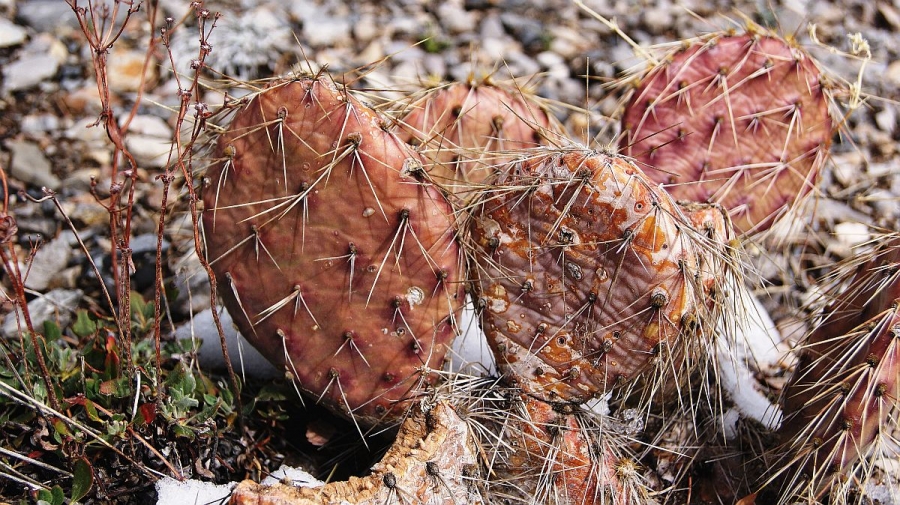
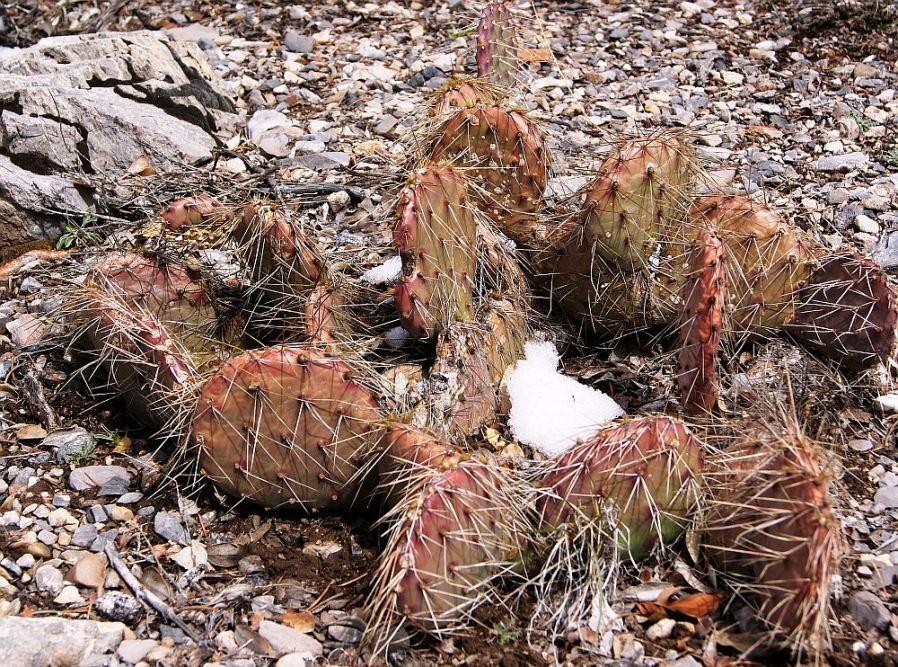
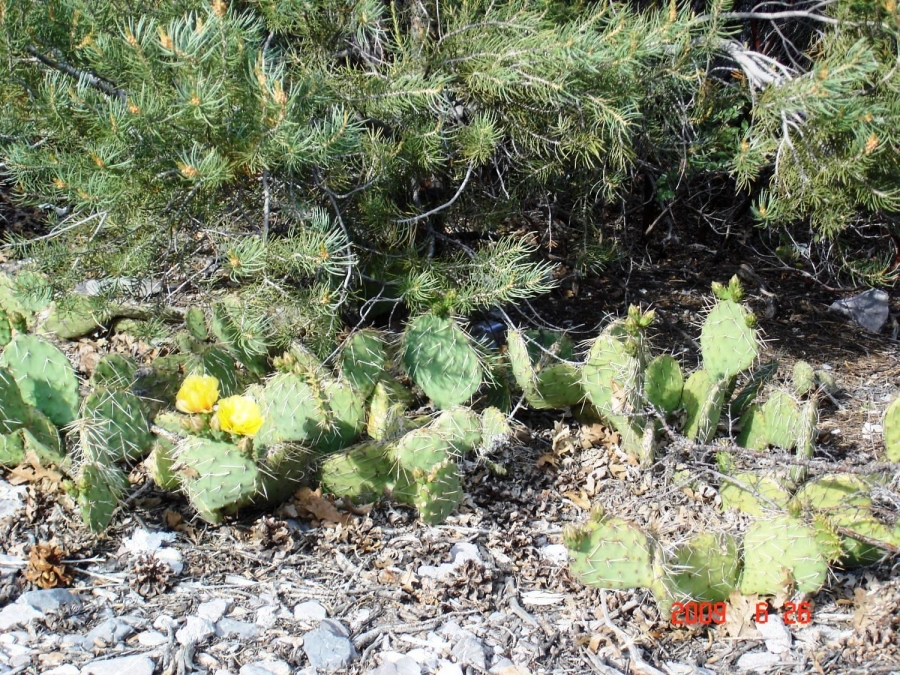
Shrubs: low, generally prostrate plants 20–40 cm tall, spreading to about 1.5 m, with a few cladodes rising from trailing branches; Cladodes: oval to obovate, about 10–20 × 7–14 cm, often strongly purple in winter–spring; Areoles: small to moderate, with obvious glochids; Spines: usually 4–6 per areole, pale, radiating in all directions; overall armament moderate but conspicuous; Flowers: yellow at anthesis, often taking on a reddish blush later the same day, ≈4–5 cm across, with yellow filaments and anthers; the style and stigma yellow to slightly reddish at the style base; Fruits: oval, dull reddish-purple externally with green pulp, generally not juicy or sweet; Seeds: flattened, about 4–5 mm in diameter.
Cytology
Ploidy: pentaploid (2n ≈ 55). Counts are documented for the Nevada population and for a later-reported California population, consistent with a hybrid origin.
Range & Habitat
Limestone slopes and benches in the Spring Mountains of Clark County, Nevada (Kyle Canyon), with a separate occurrence in the Mescal Mountains, San Bernardino County, California. Plants grow in open desert-scrub and pinyon–juniper margins with abundant sun and rocky, well-drained substrates.
Similar or Sympatric Species
O. phaeacantha — typically larger, with broader, often more erect clumps; flowers commonly open wider; usually hexaploid.
O. polyacantha var. erinacea — pads thicker and more rigid, with denser, heavier spination; usually tetraploid.
O. dulcis — present in Kyle Canyon and sometimes mistaken for O. phaeacantha; fruits often sweeter and juicier.
O. basilaris — sympatric at some California sites; easily distinguished by gray-glaucous pads and different floral morphology.
Other Notes
This prickly pear was originally described (1943) from the Kyle Canyon area on Mt. Charleston, NV. In 2014 a population of this Opuntia was reported in California, where it likewise appears to be of hybrid origin. In Kyle Canyon, O. dulcis grows nearby and is often misinterpreted as O. phaeacantha, so the precise parentage of O. charlestonensis remains to be tested thoroughly; both known populations are pentaploid.


“`