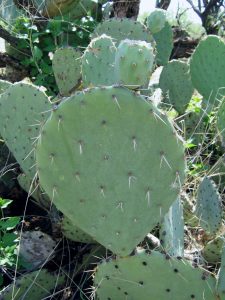
Griffiths, Annual report Missouri Botanical Garden 20: 90, 1909
Holotype; Topotype; Herbarium (as O. engelmannii); Painting.
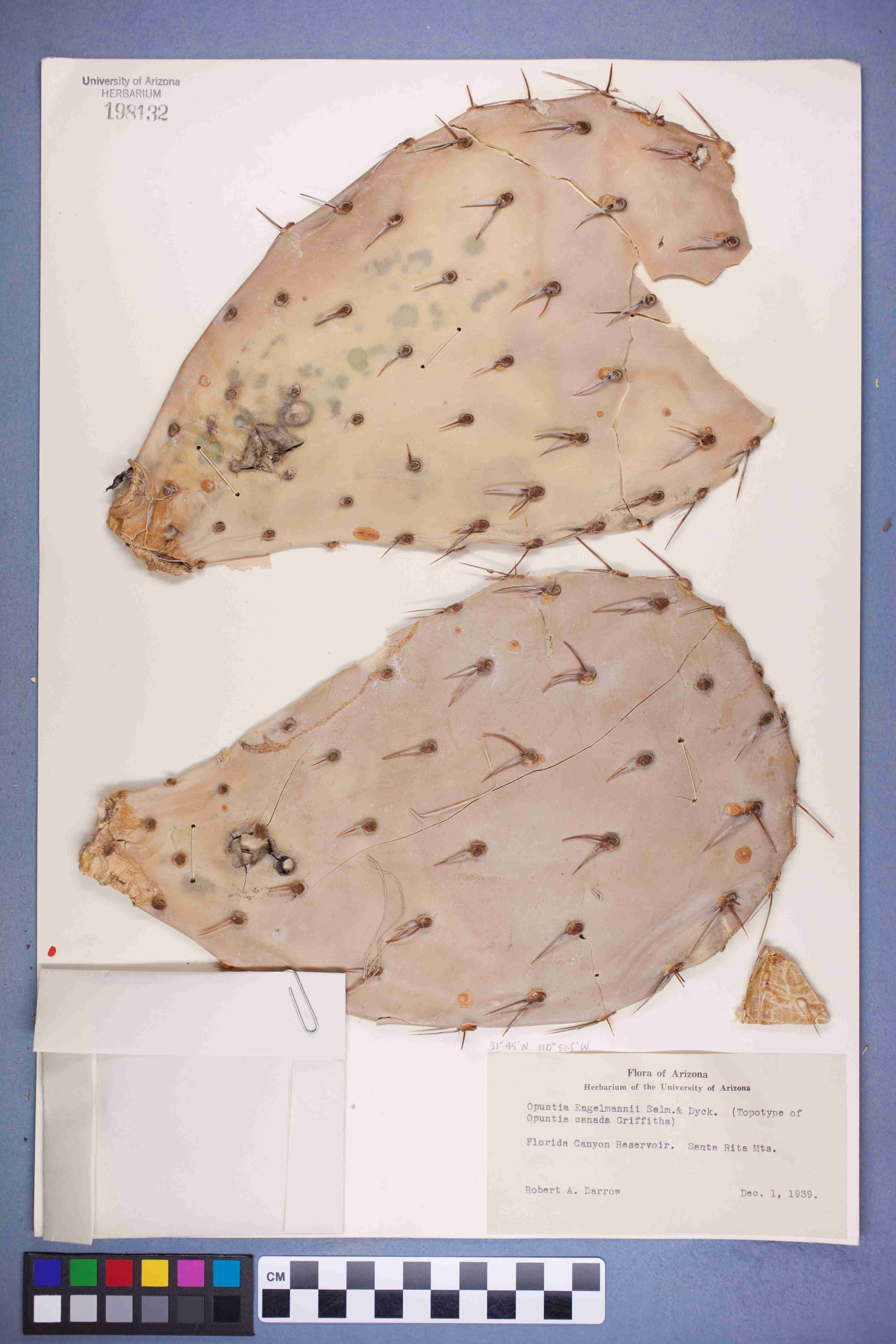
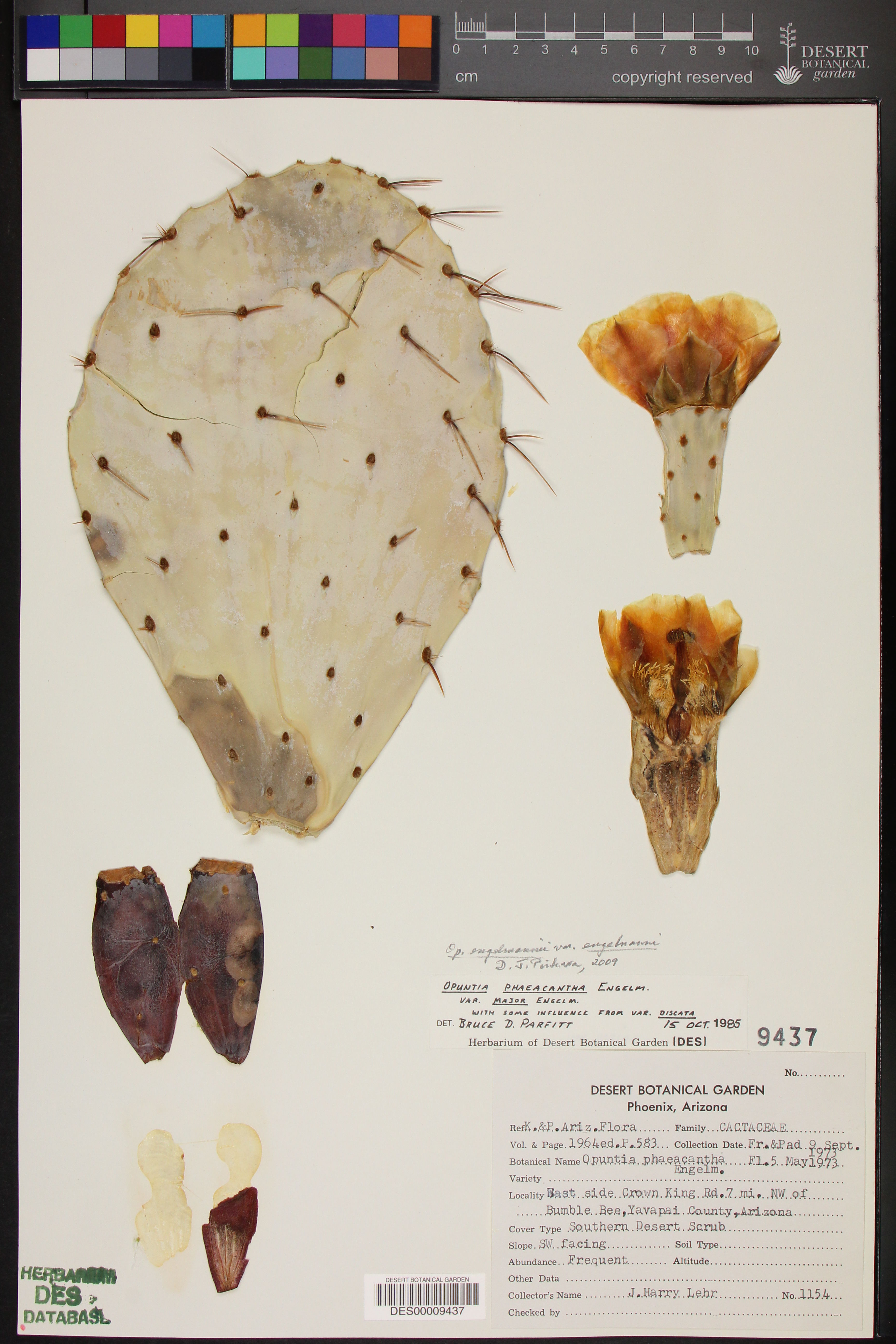
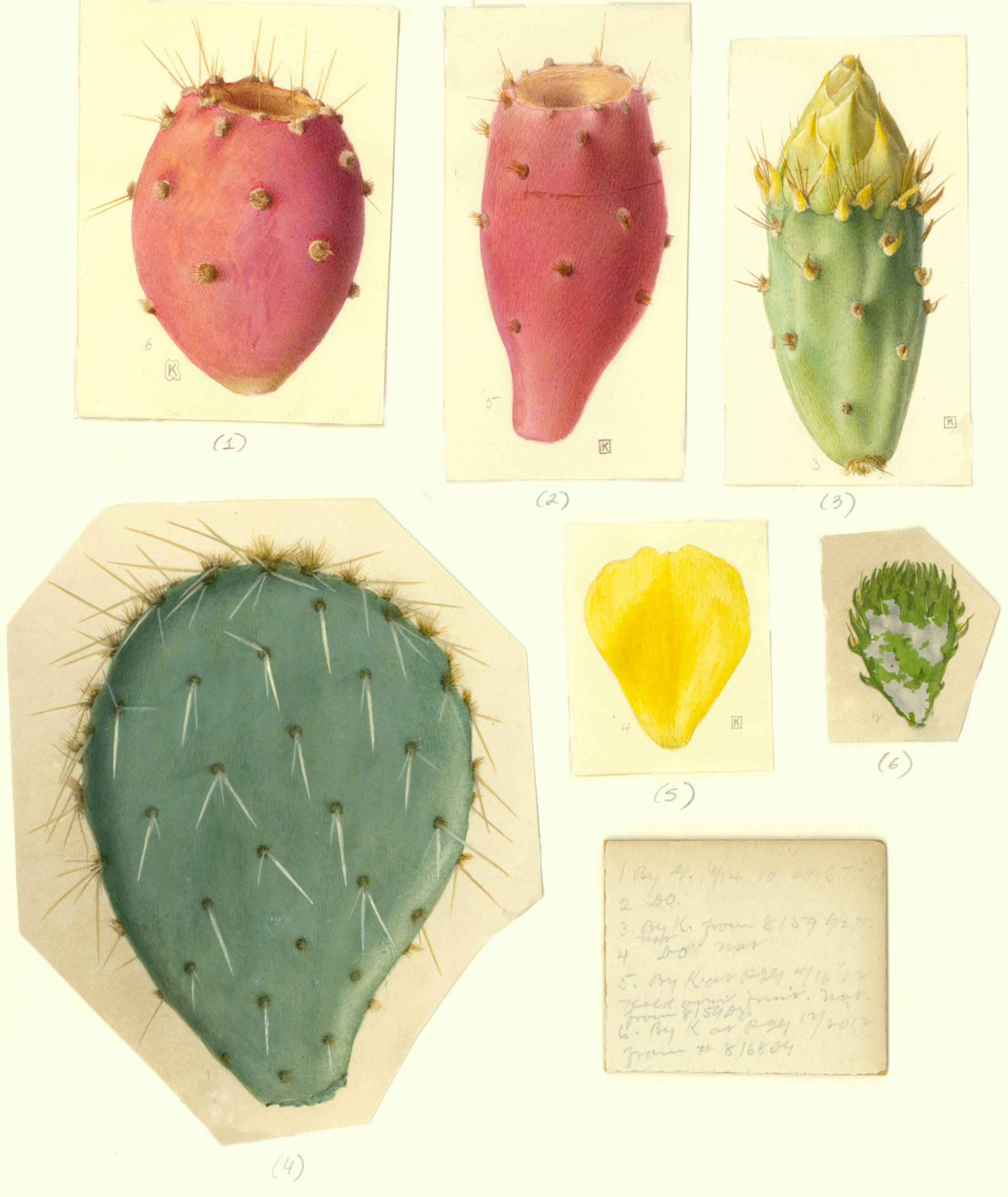
Original Description
What is Opuntia canada?
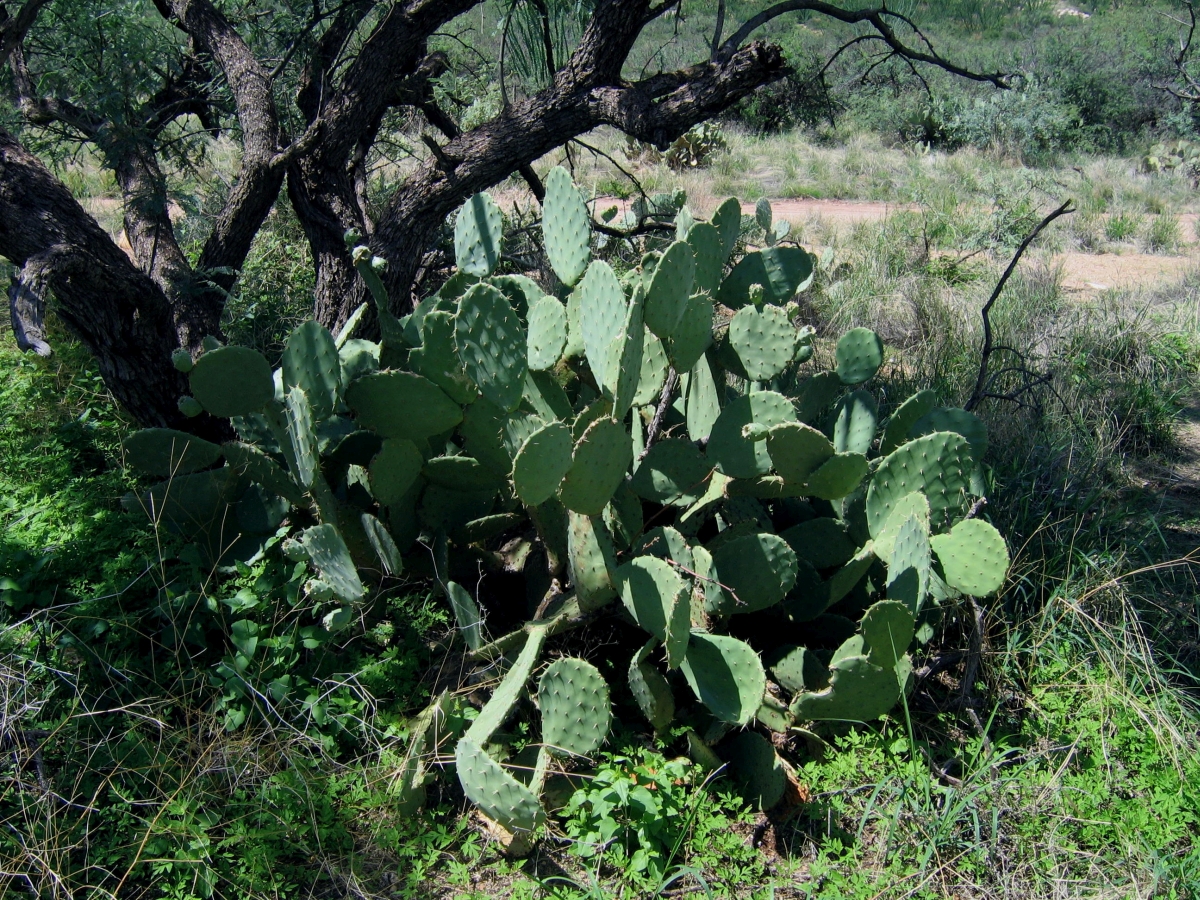
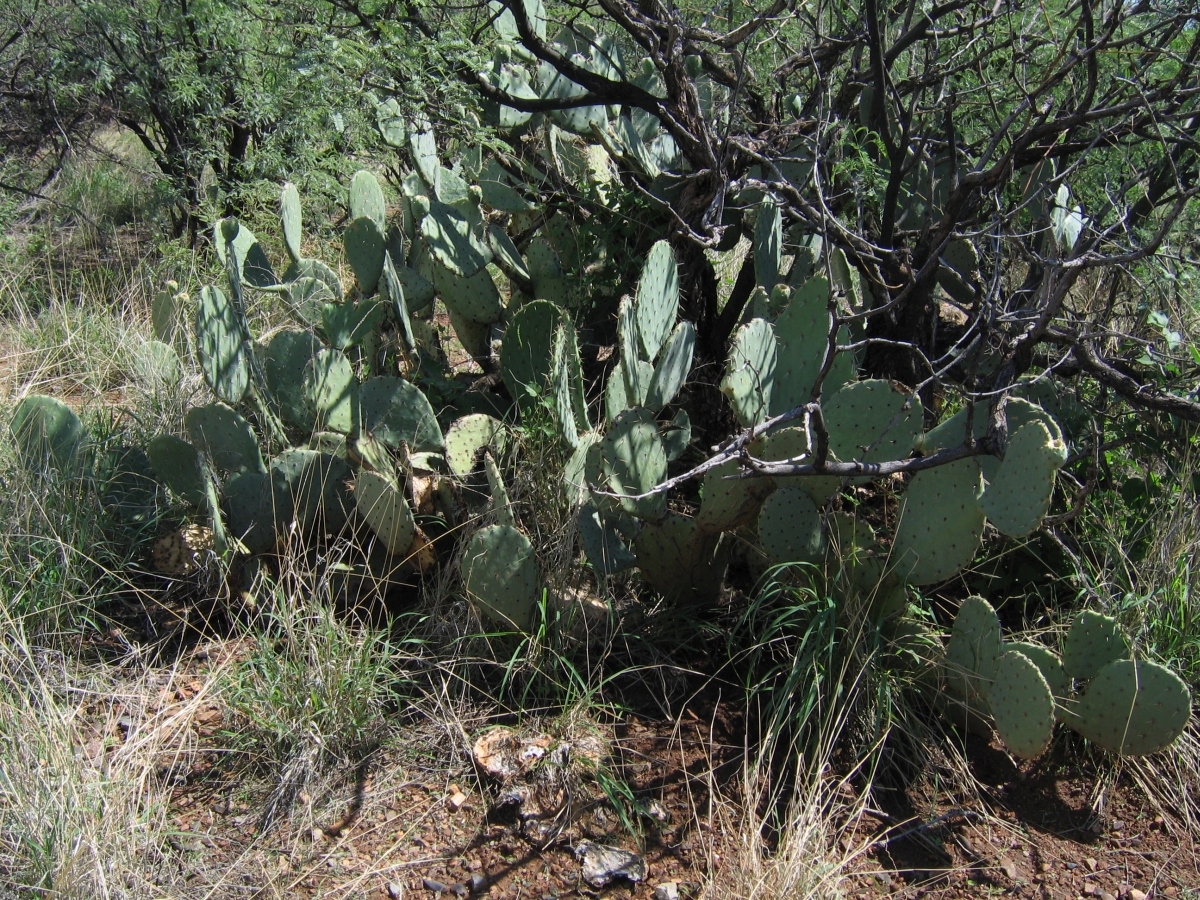
Opuntia cañada is a compact, erect to ascending prickly-pear of far southern Arizona. Plants are typically low-trunked to clumping, with a tidy overall aspect and comparatively few spines per areole relative to allied taxa such as O. engelmannii.
Details
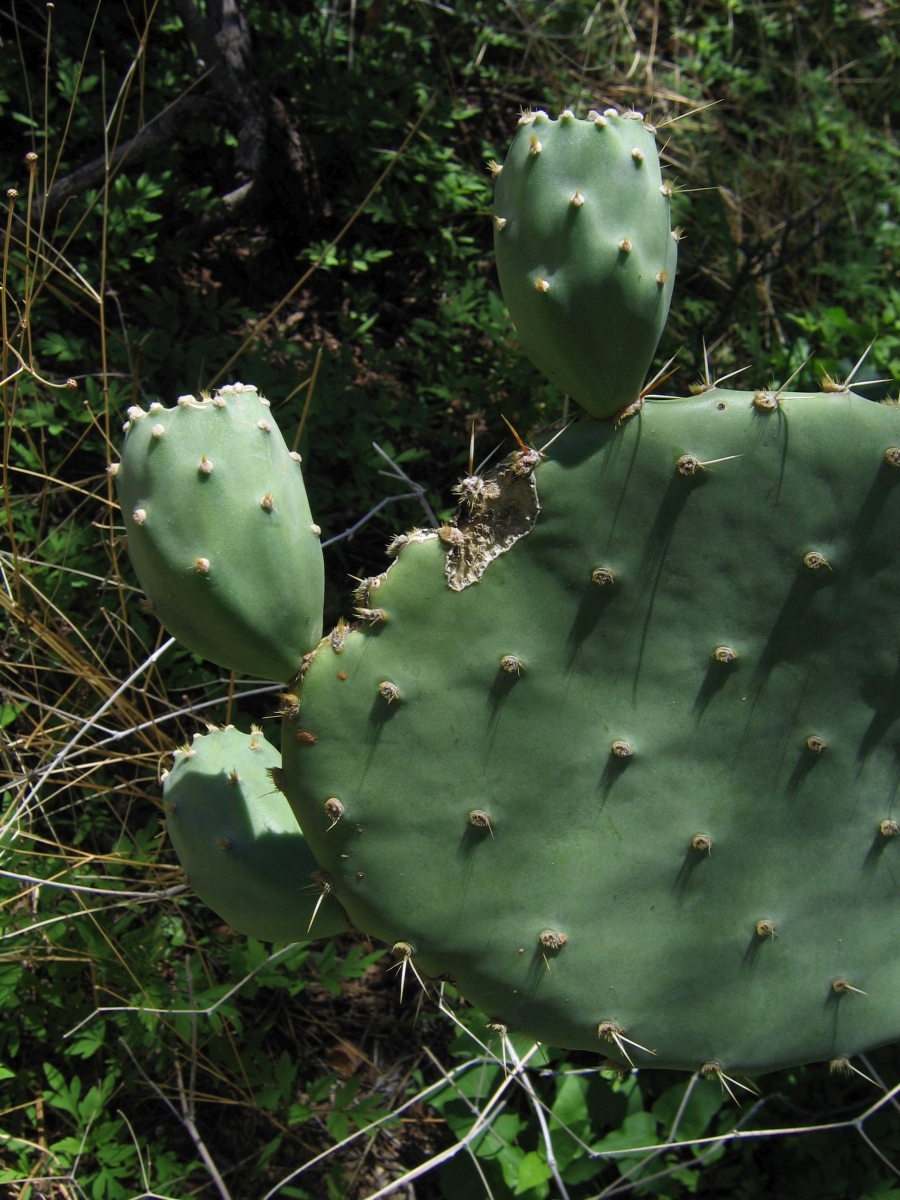
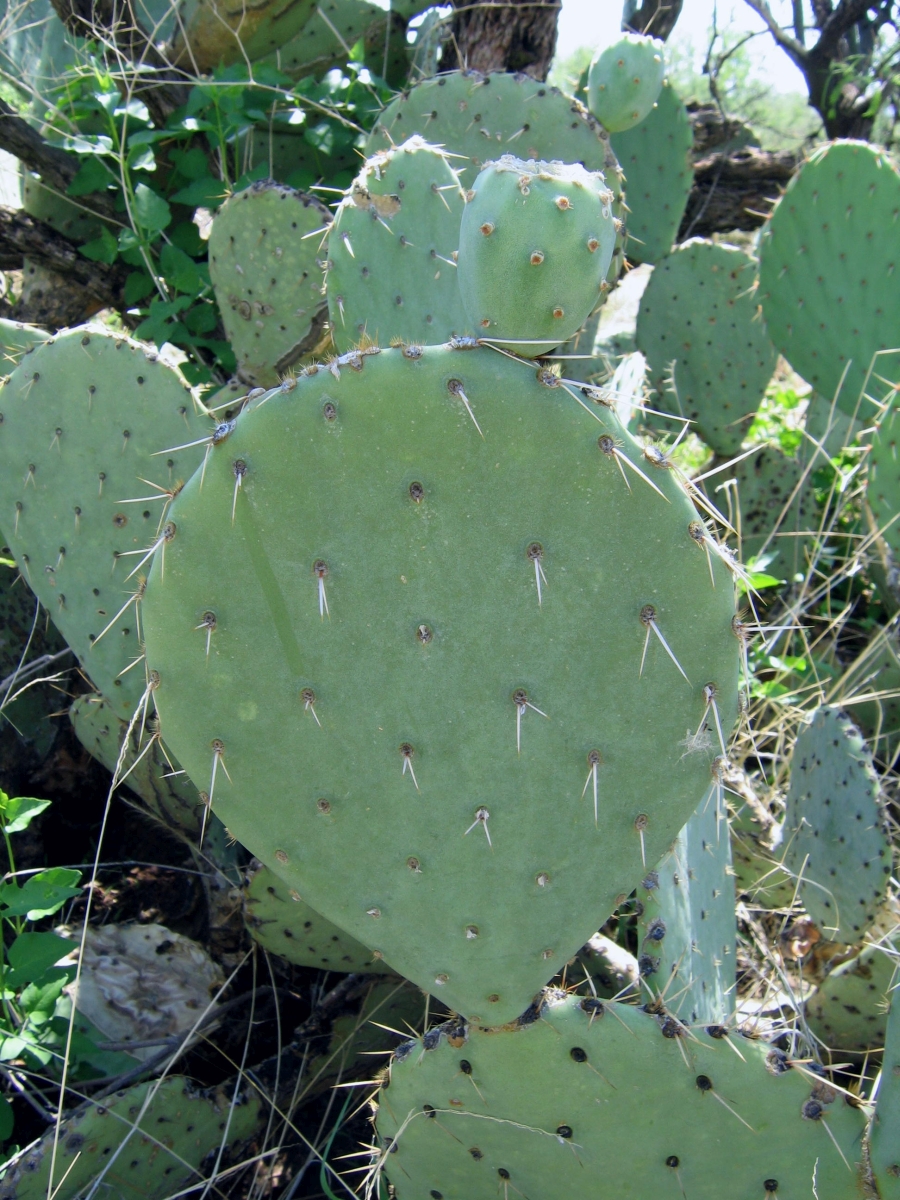
Shrubs: solitary or forming dense thickets, commonly to about 1 m tall (occasionally taller) and often broader than tall. Cladodes: ovate to obovate, variable but averaging c. 16 × 22 cm; joints may appear thick-edged on older growth. Areoles: initially brown, becoming black with age yet often retaining a brown center as new wool forms. Spines: frequently lacking on first-year joints; appearing by year two; per areole (1)2–3(5), c. 12–15 mm; yellow when young, weathering whitish; typically fewer per areole than in O. engelmannii. Glochids: present in areoles. Flowers: yellow, often with reddish to orange tones at the bases of the inner tepals; style white to faintly reddish-tinged; stigma bright green. Fruits: light red to mottled red-and-yellow at maturity. Seeds: thick, angular-flat, c. 3–3.5 mm in diameter with a distinctly notched hilum.
Cytology
Unknown.
Range & Habitat
Known from far southern Arizona, with verified occurrences in the Santa Rita Mountains (e.g., Brown Canyon; Florida Canyon Reservoir). Plants are most often observed on deeper soils along canyon bottoms and benches rather than on sheer canyon walls or talus.
Similar or Sympatric Species
O. laevis — typically on canyon walls or rocky debris at their base; pads longer and more narrowly shaped; seedlings hairy, fruits longer.
O. engelmannii — generally taller and more open-branched with more spines per areole; cladodes often larger and more coarsely armed.
O. phaeacantha — usually with denser armament and different fruit/pad expression; often in more open desert scrub.
O. chlorotica (incl. “santa-rita”) — gray-glaucous pads with a markedly different overall habit; typically upland desert slopes.
Other Notes
O. cañada can resemble spiny forms of O. laevis, but they are consistently distinct in habitat and morphology: O. laevis favors cliffy canyon settings and bears longer fruits and hairy seedlings, whereas O. canada occupies deeper canyon soils, has shorter fruits, and glabrous seedlings. See: Green, C.W. & Ferguson, D.J. 2011. Pricklypears Commonly Found in the United States and Canada. WorldCat No. 827221200.
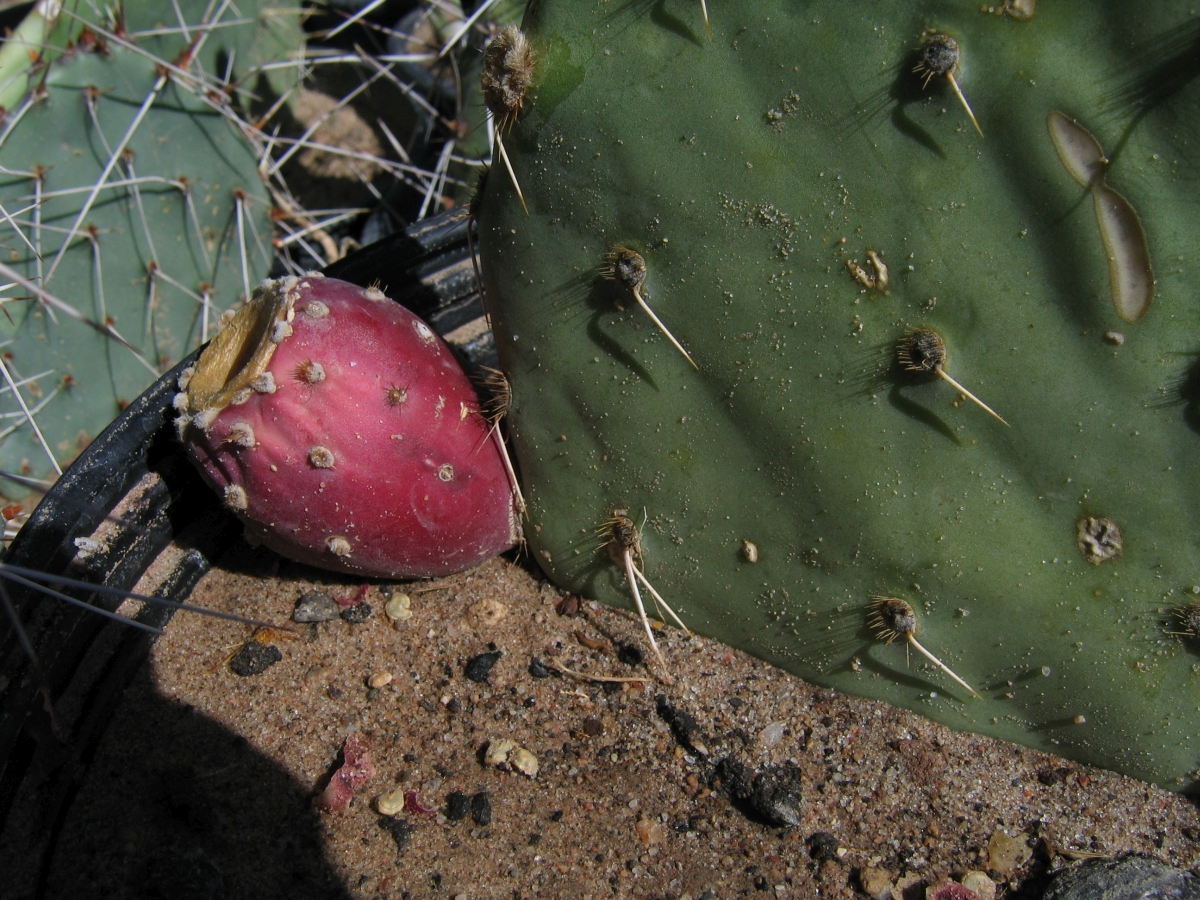
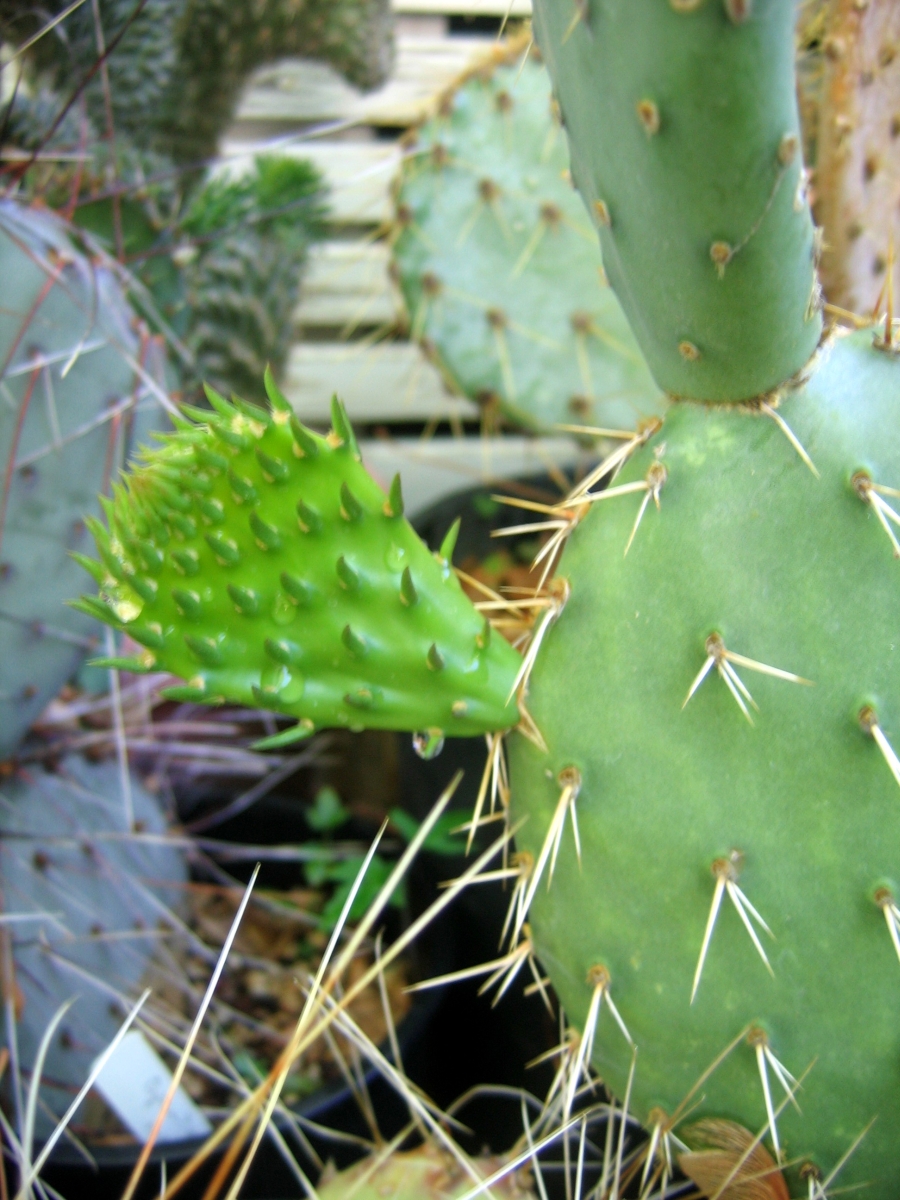
After searching through the various species, I believe this is what I have. I would love to share a picture to confirm!
Hi,
You can send a picture to [email protected]. We will try to ID it for you.
Joe Shaw