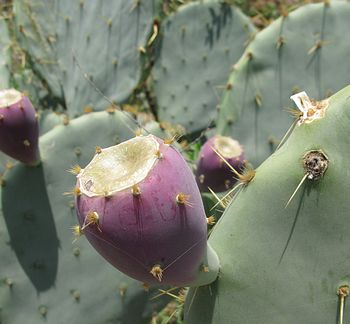
Opuntia cacanapa
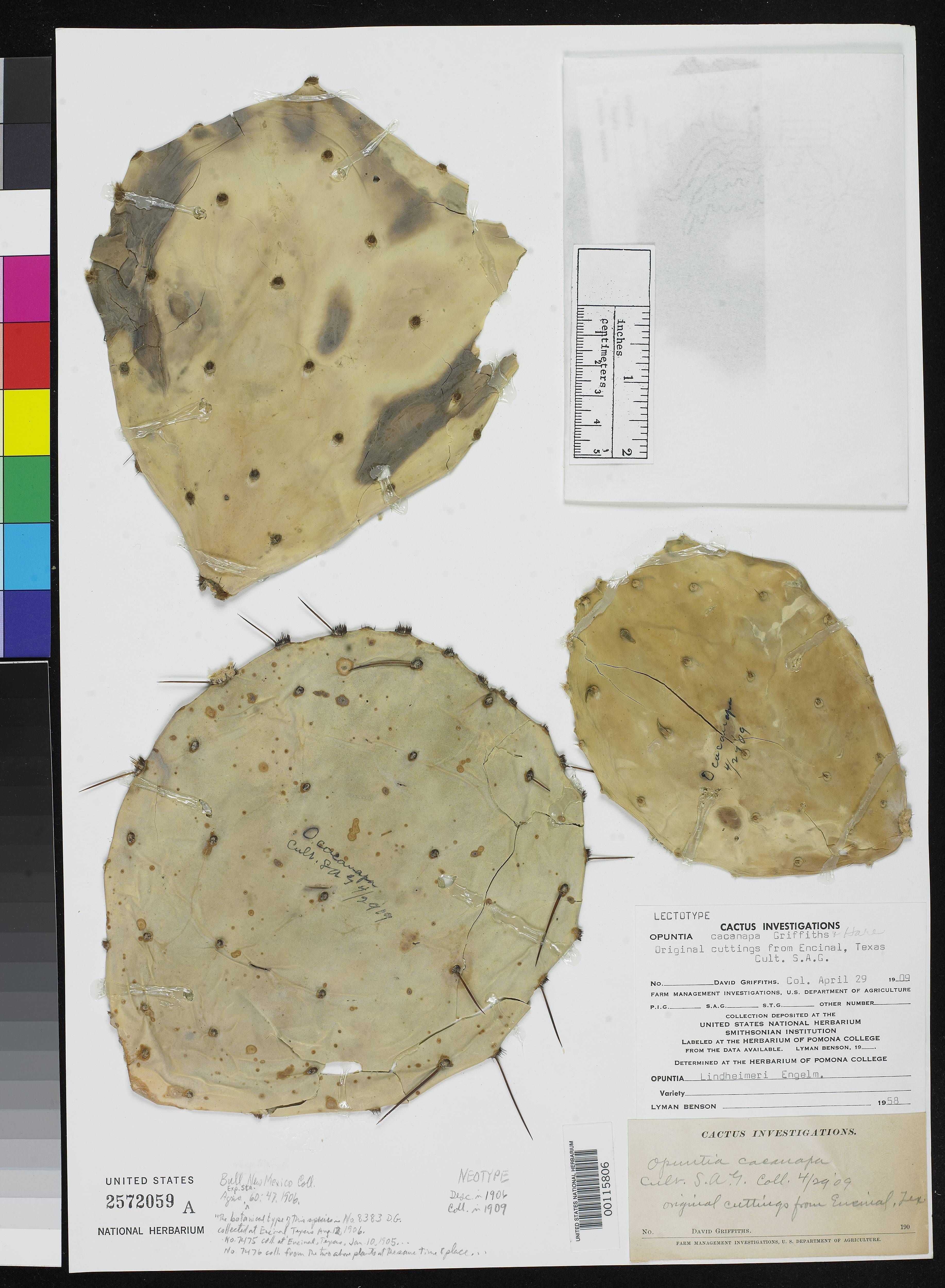
Griffiths & Hare, New Mexico Agricultural Experiment Station Bulletin (New Mexico College of Agriculture and Mechanic Arts) 60: 47, 1906
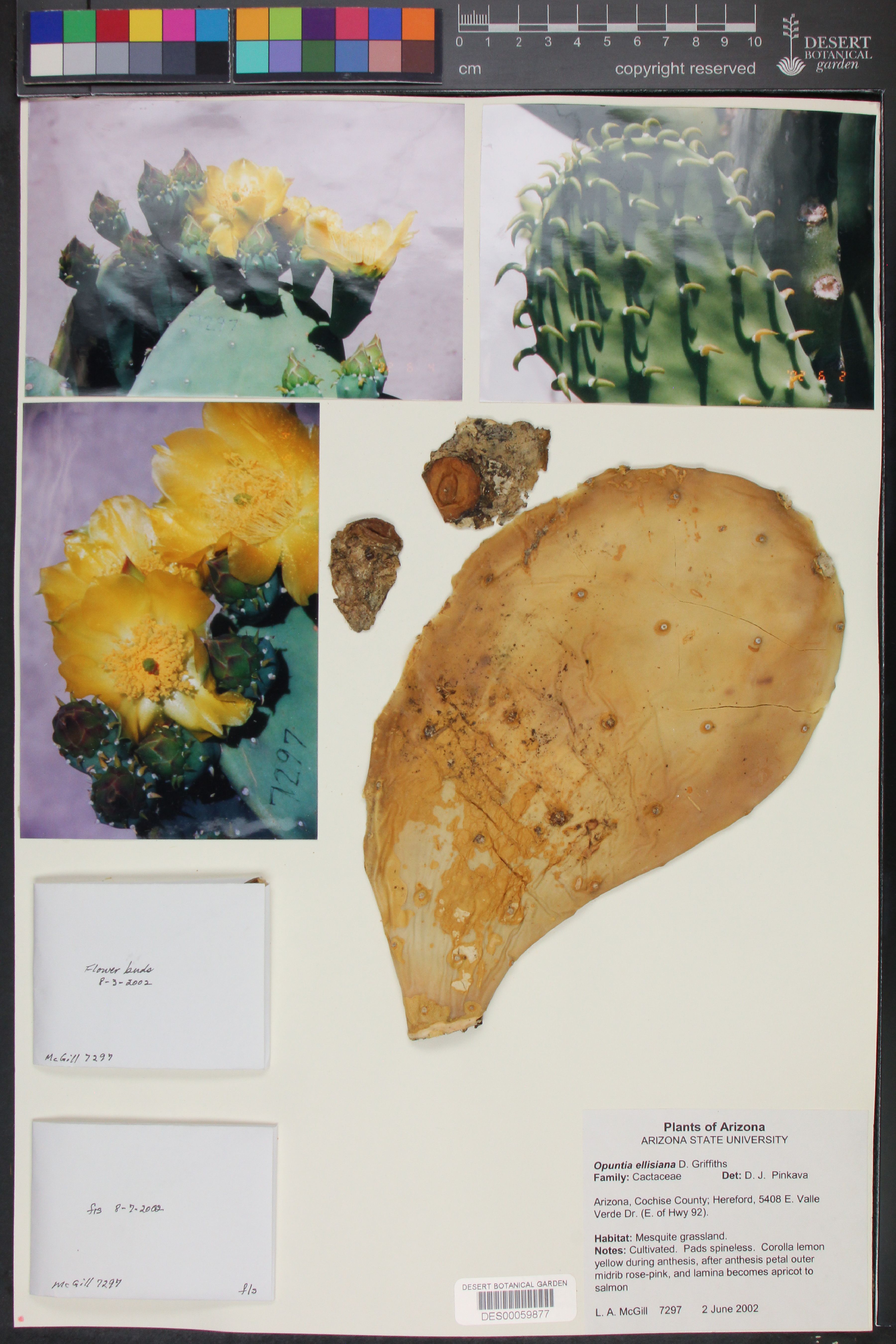
Isotype; Neotype; Holotype (O. cacanapa ‘Ellisiana’); Isotype (O. cacanapa ‘Ellisiana’); Herbarium (O. cacanapa ‘Ellisiana’)
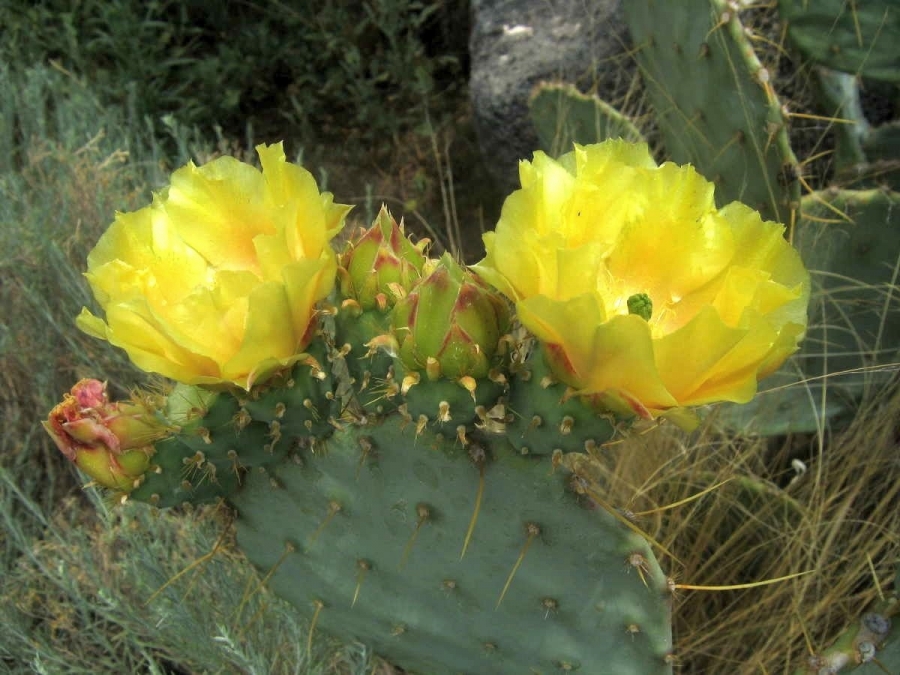
O. alta is another large Texas Opuntia
Original Description
What is Opuntia cacanapa?
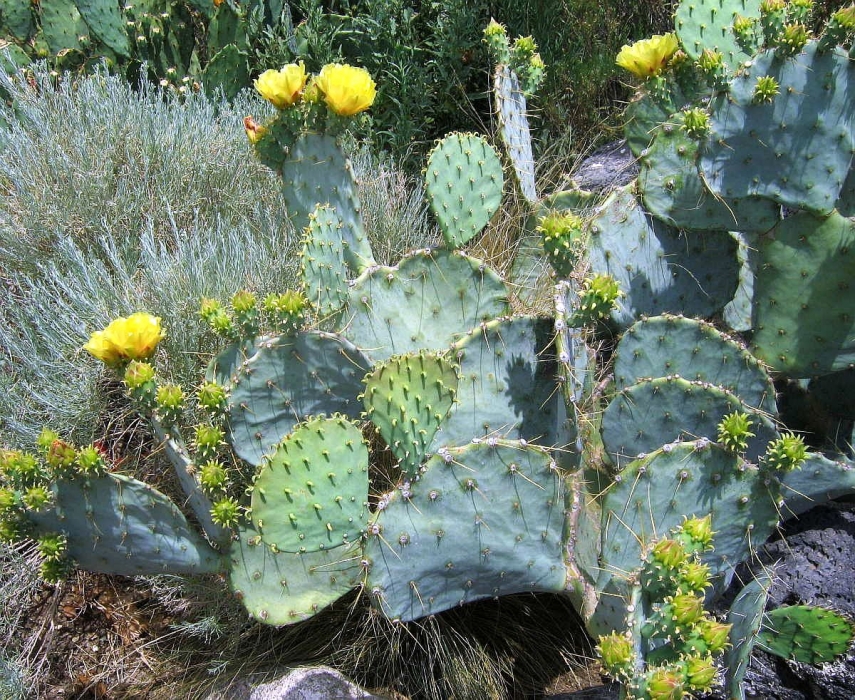
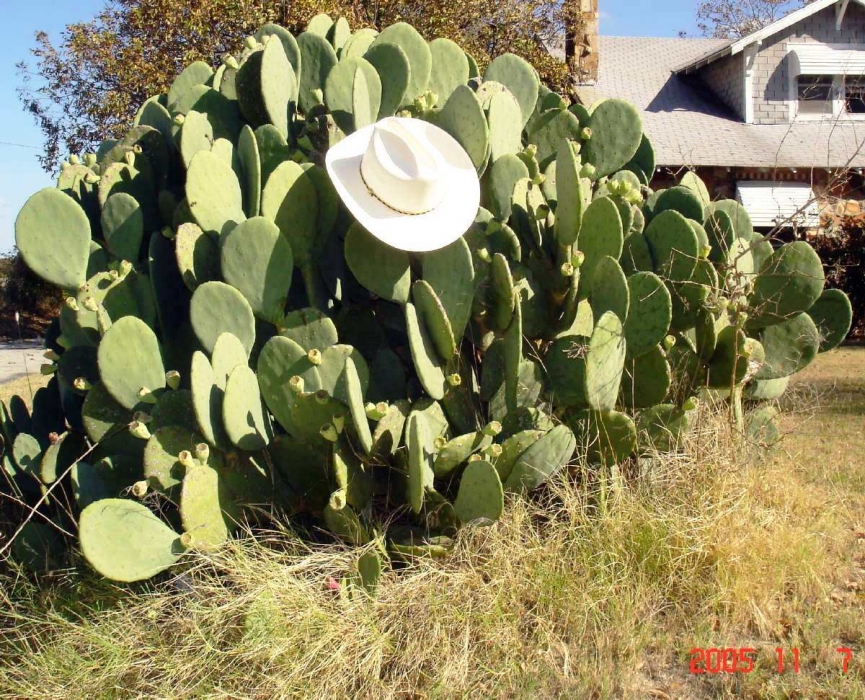
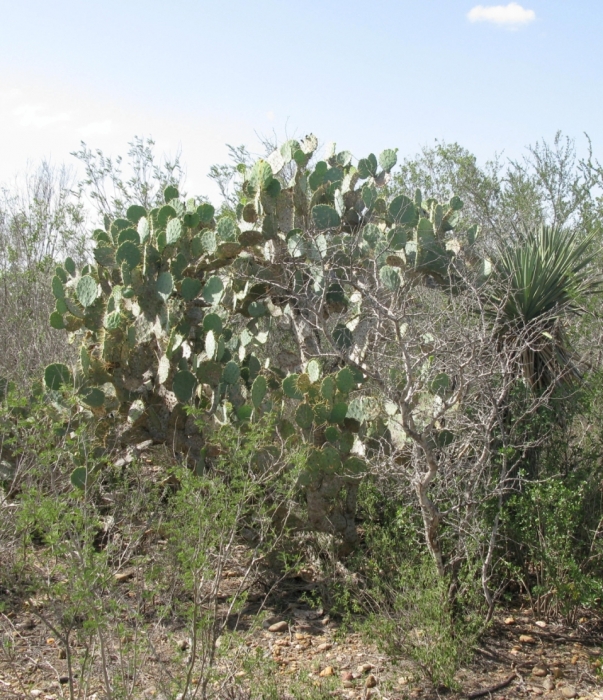
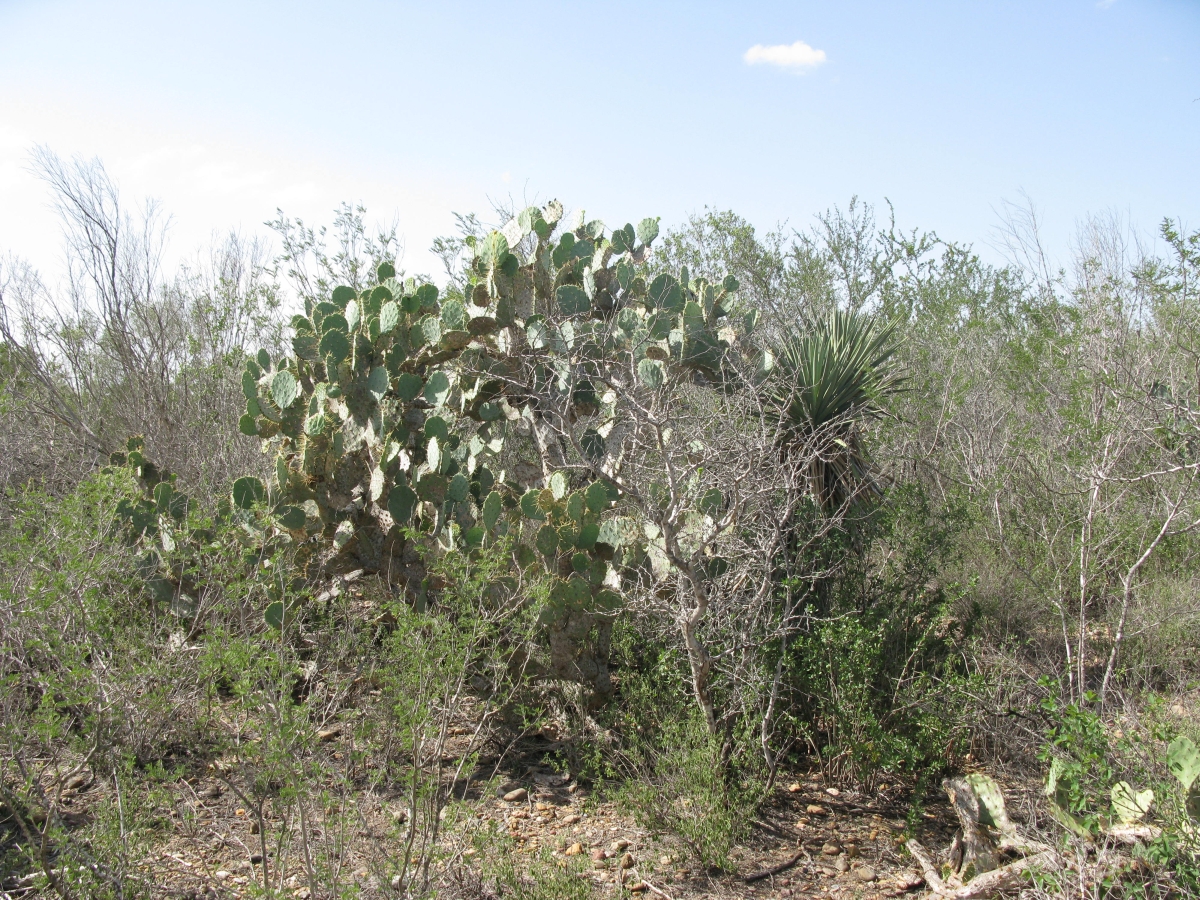
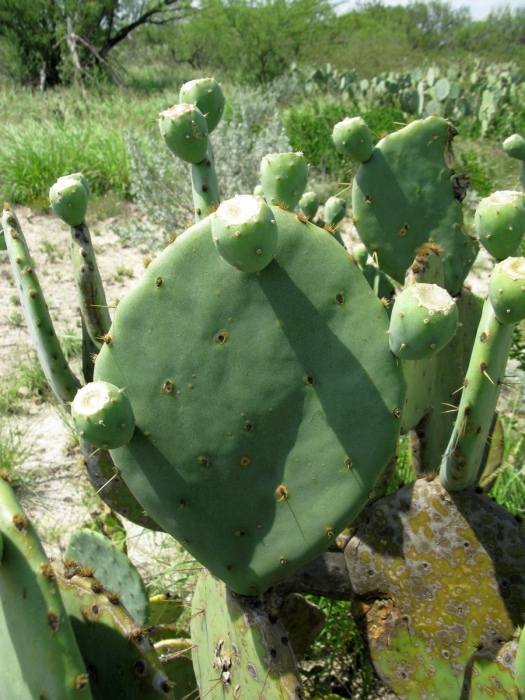
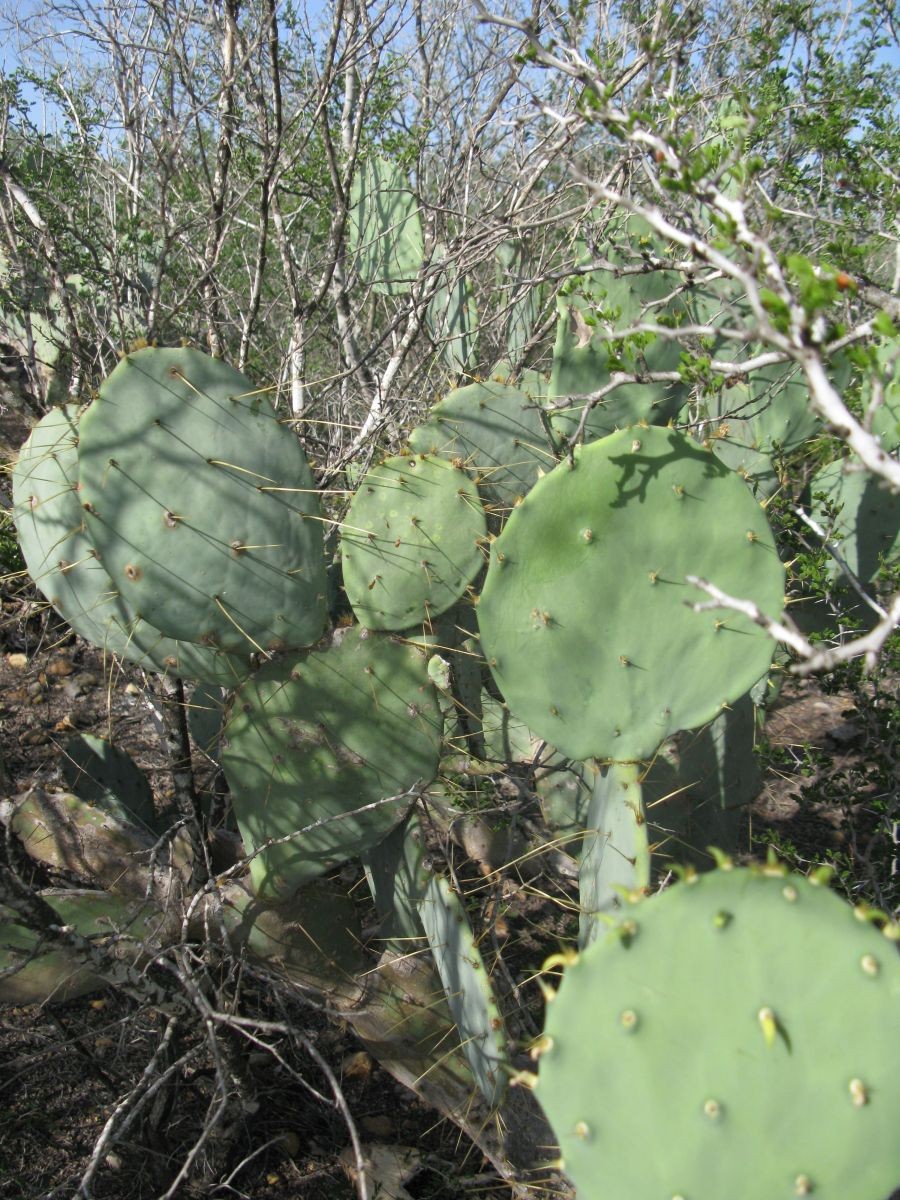
A large, blue-green prickly pear forming shrubs to arborescent plants in Brewster County, Texas, and adjacent areas, extending southeast and into neighboring Mexico; also present inland on the South Texas Plains, where it grows with other Opuntia.
Details
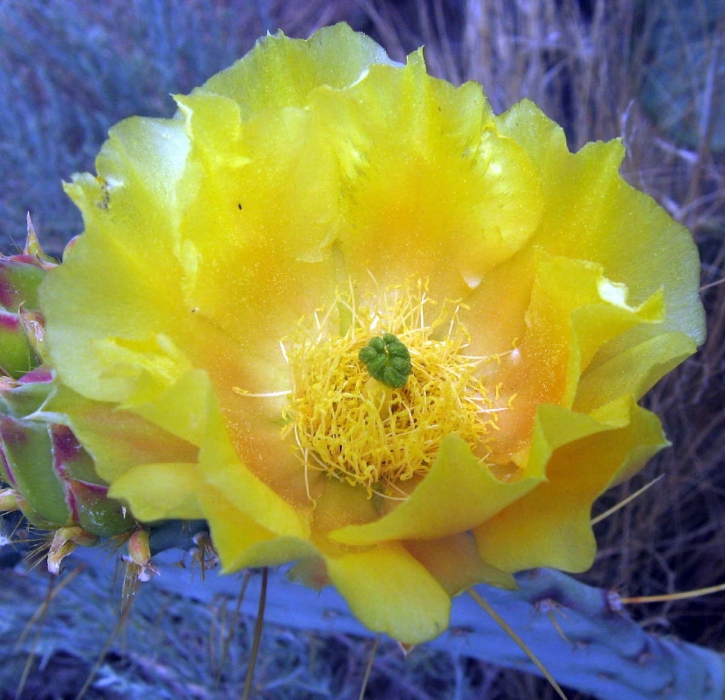
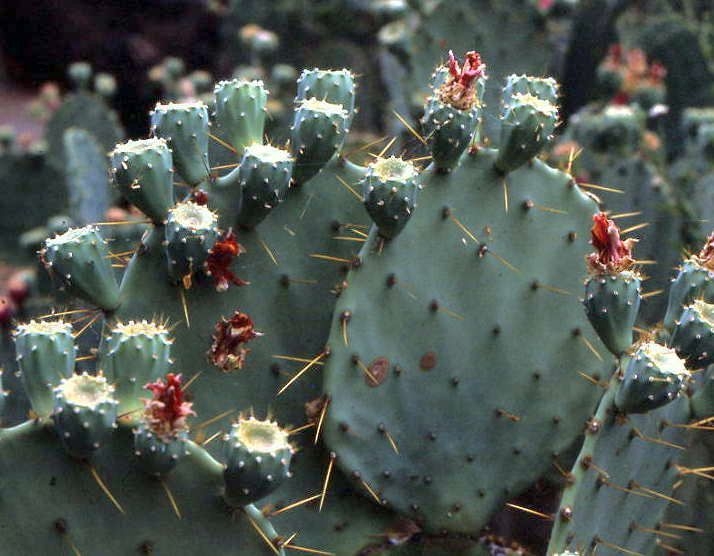
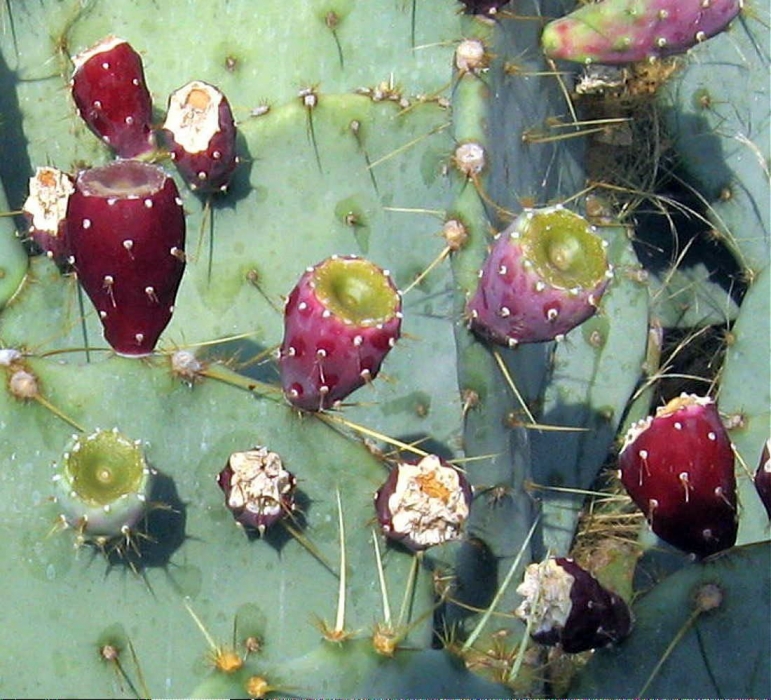
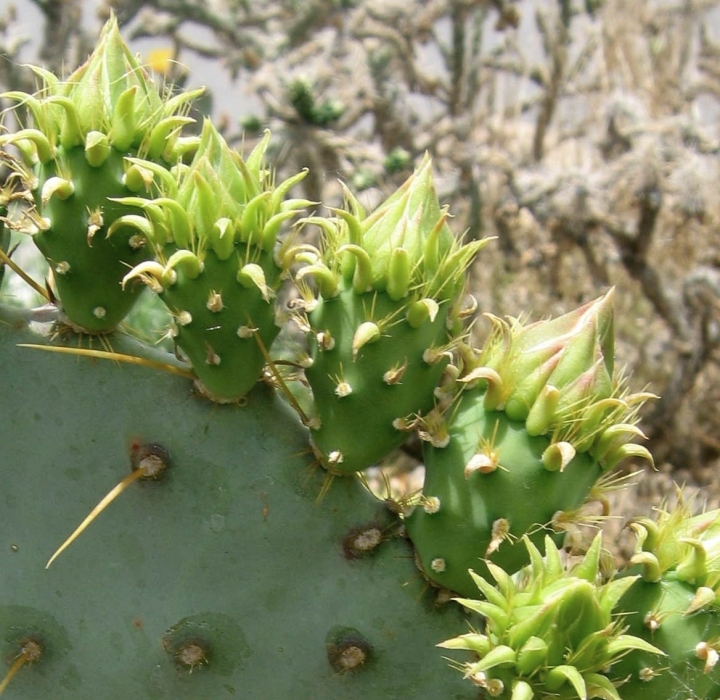
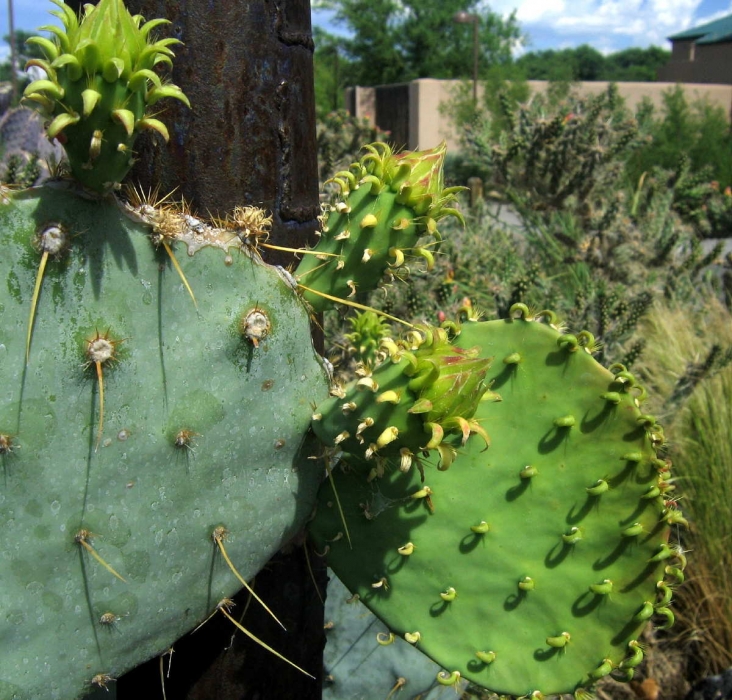
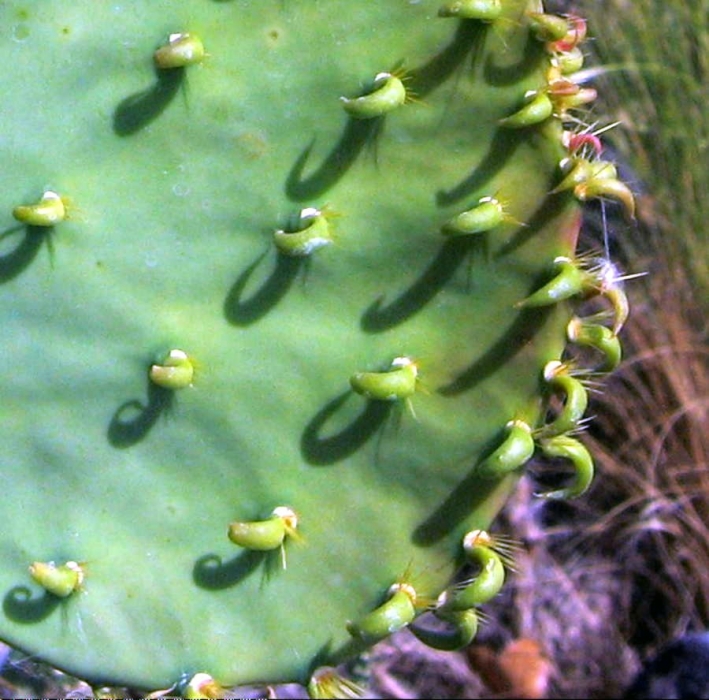
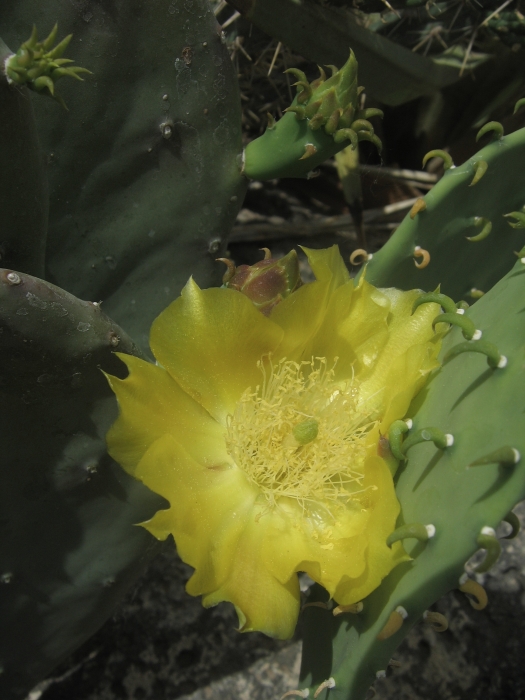
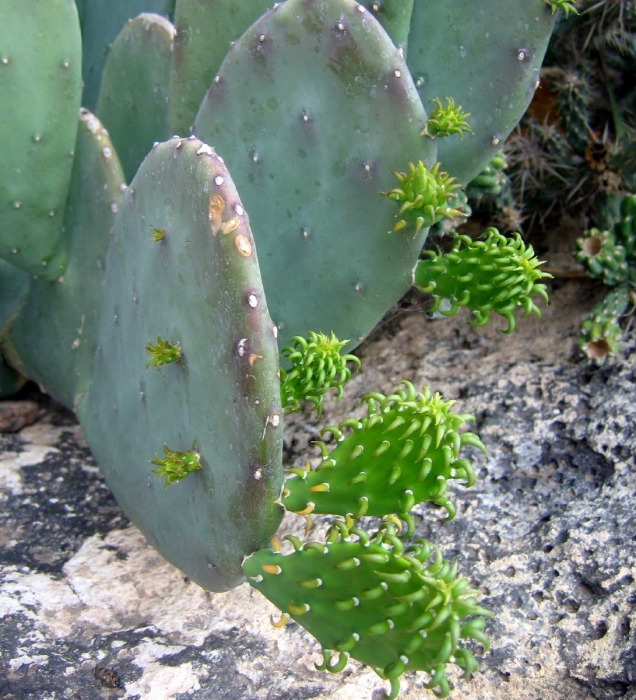
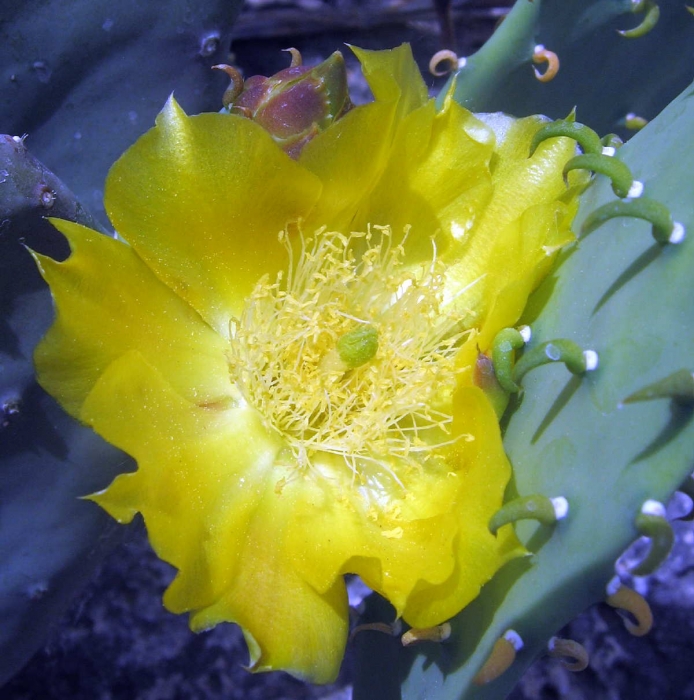
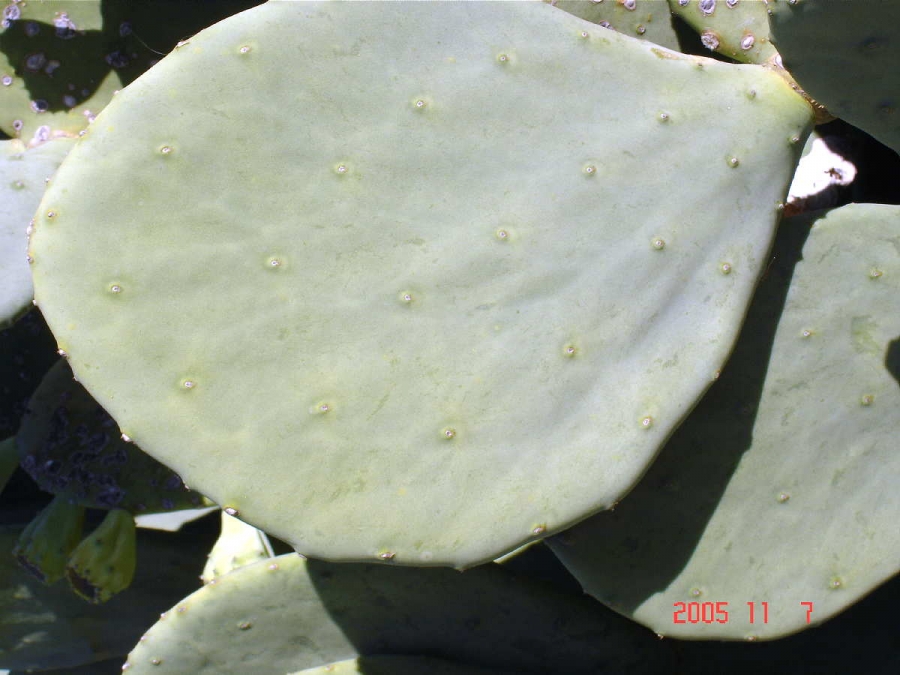
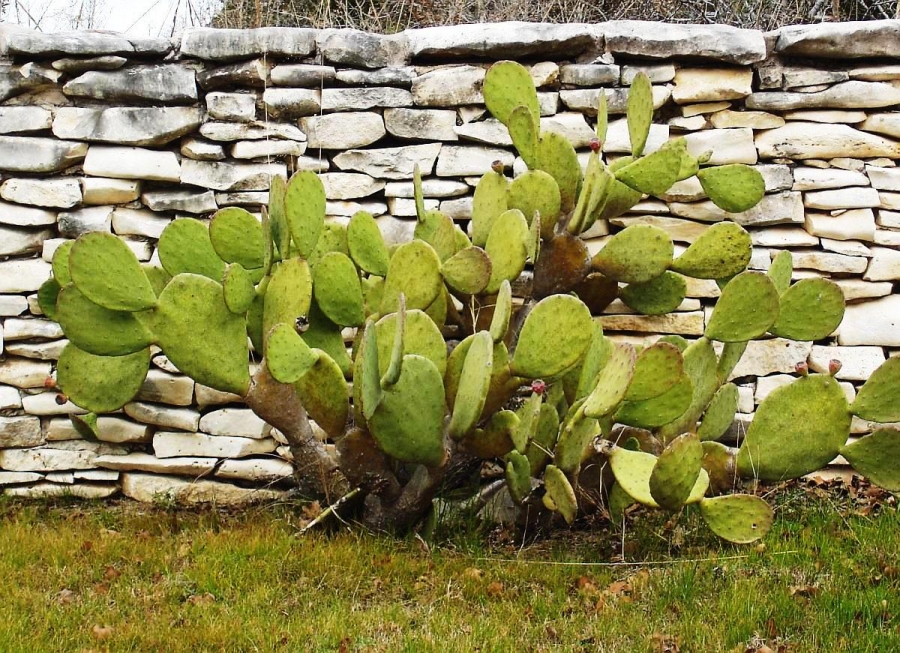
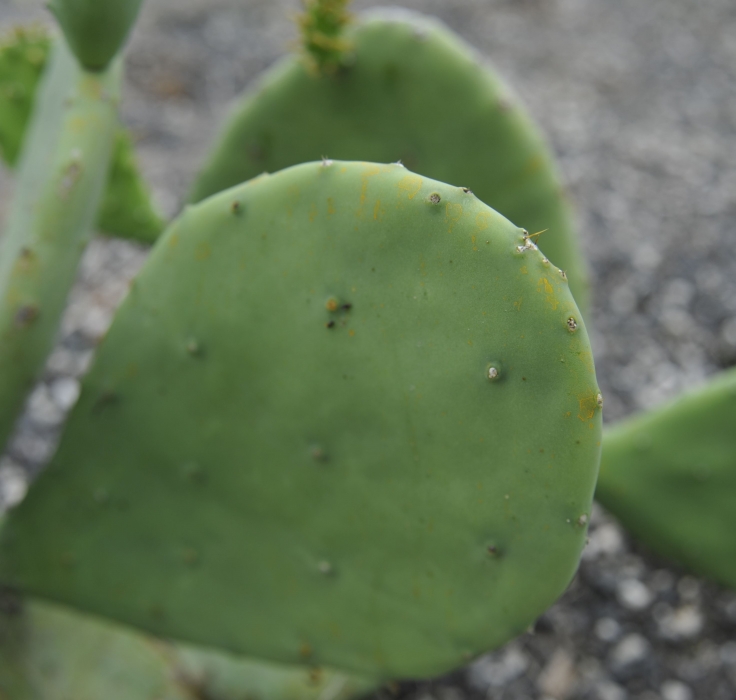
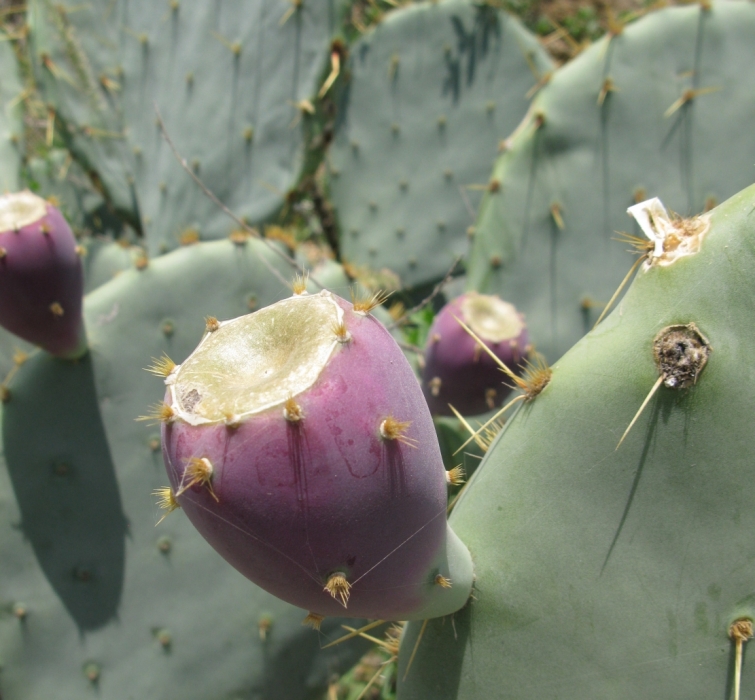
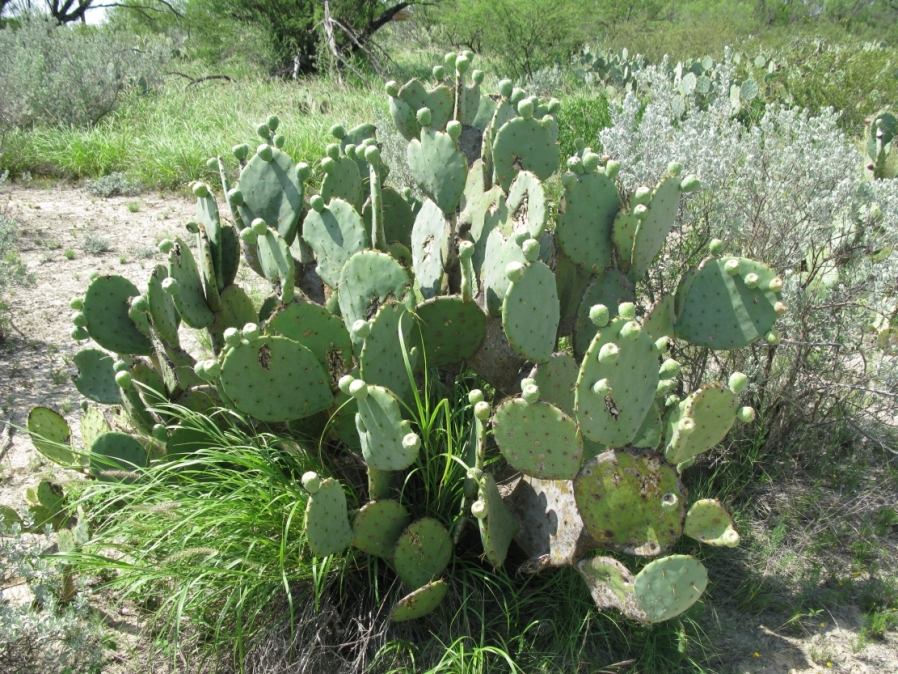
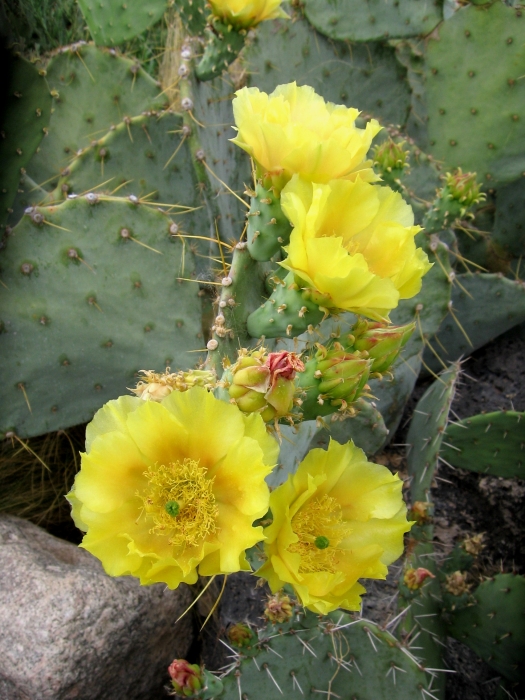
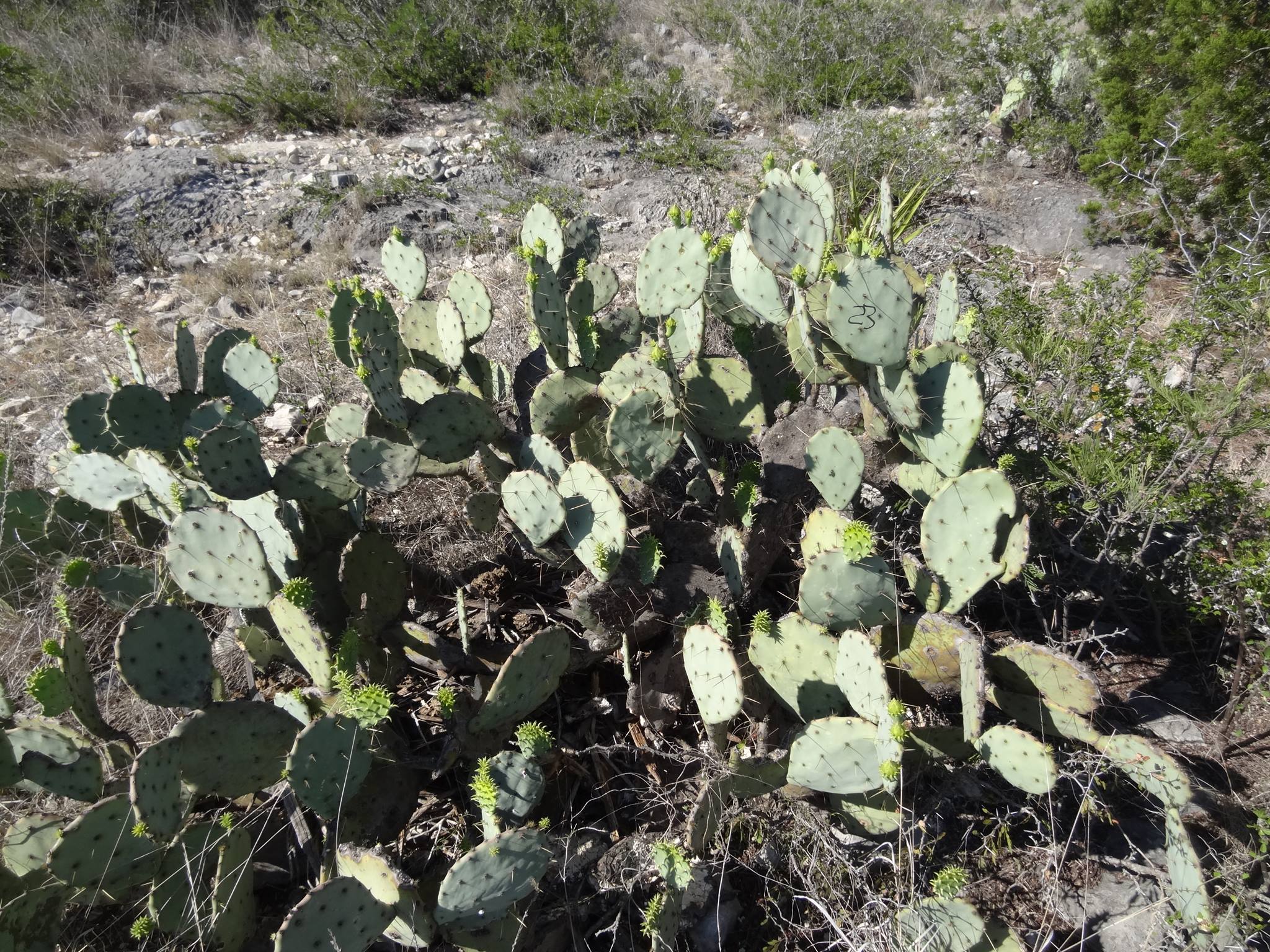
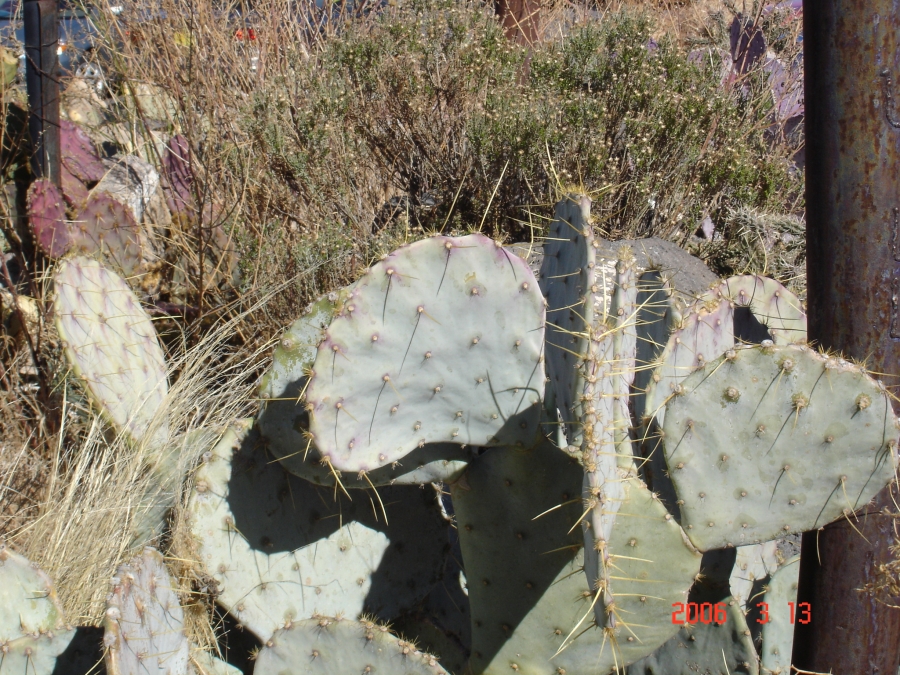
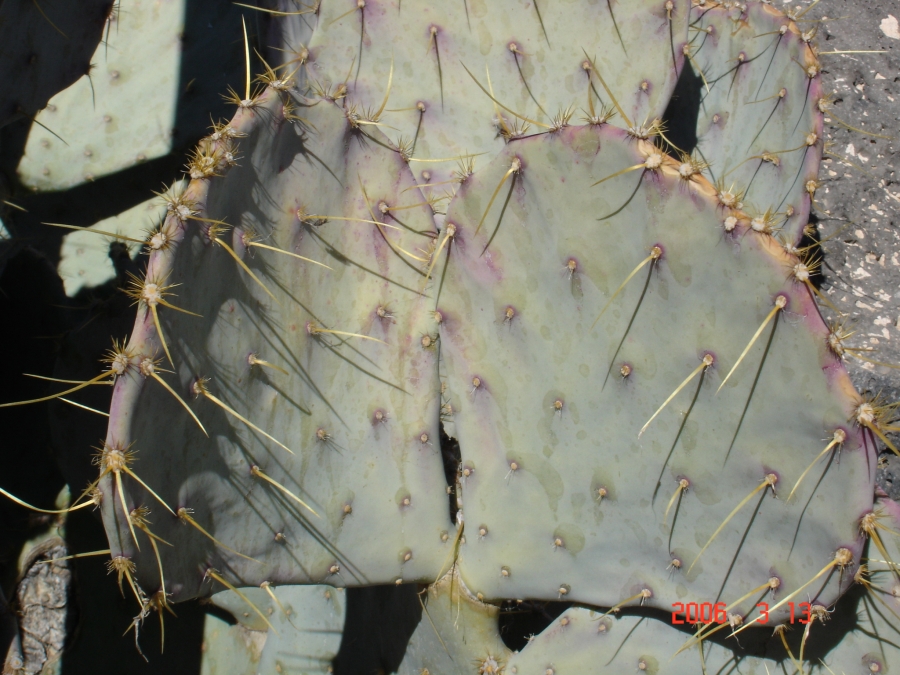
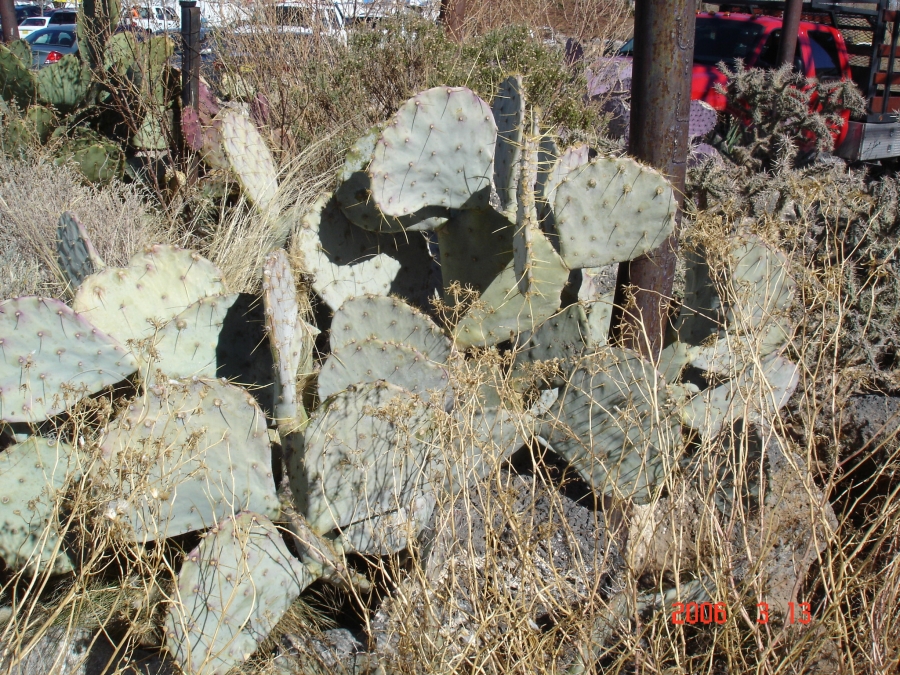
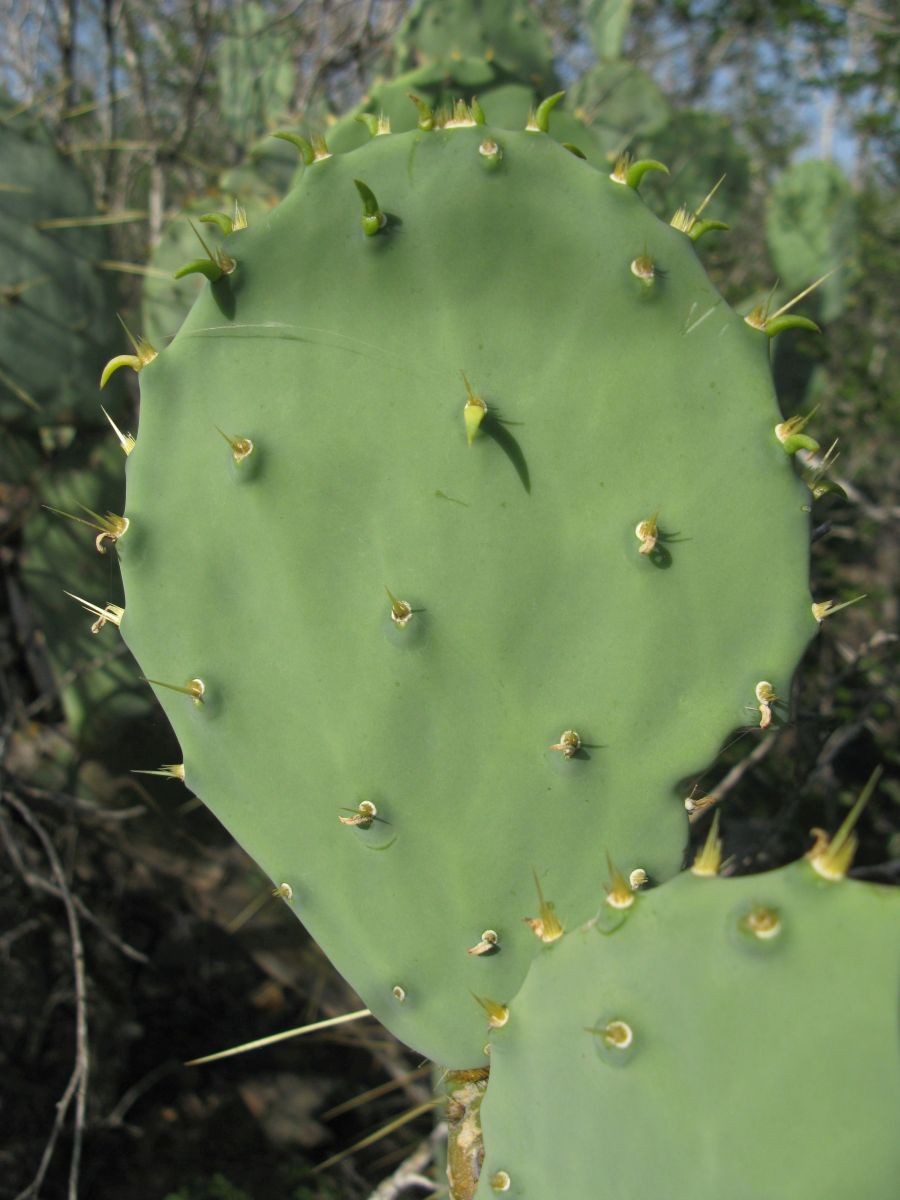
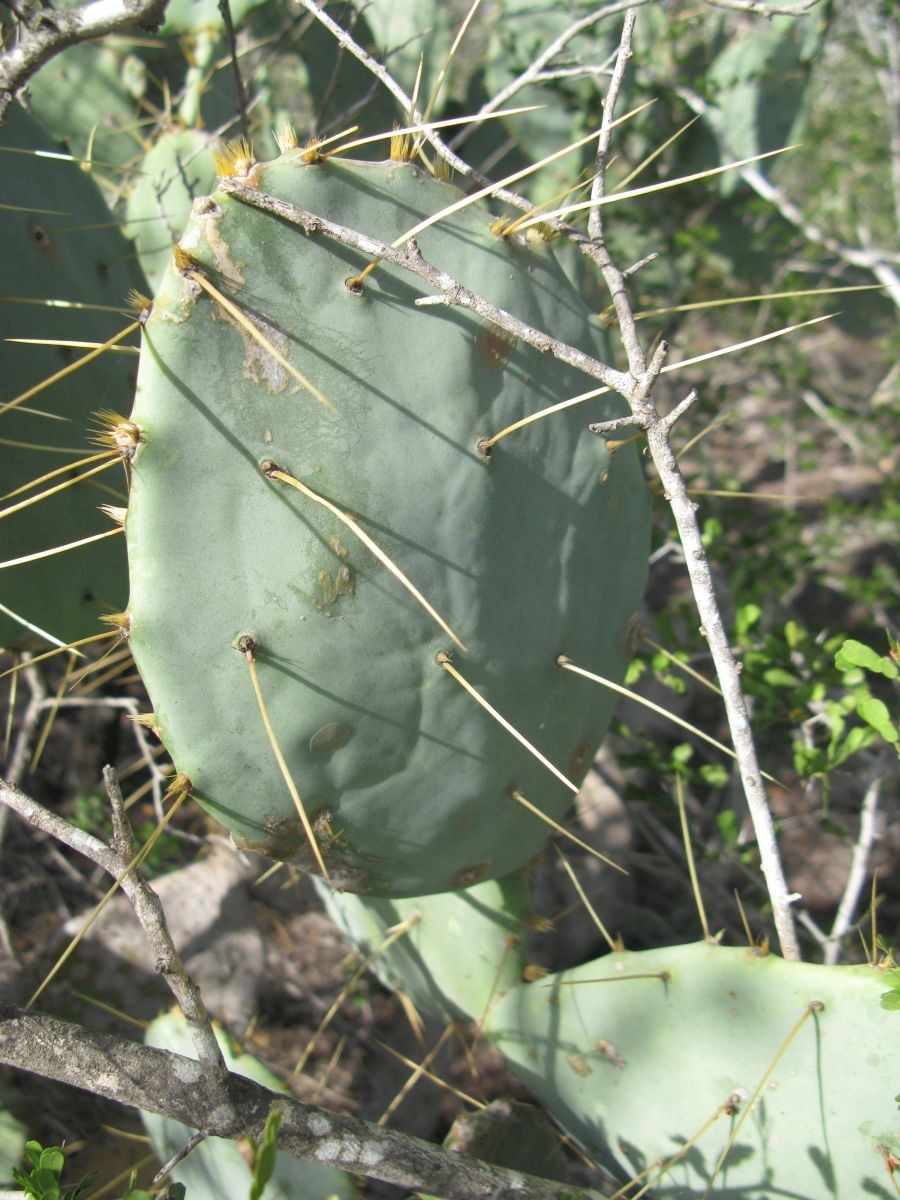
Plants develop an open, branching crown and may reach 2–2.5 m when arborescent (shrubby plants much shorter), with trunks/major branches to ~16 cm diameter. Cladodes are glaucous blue-green and commonly subcircular, oval, or broadly obovate, to ~20 cm in the longest dimension. Areoles may be sparsely to moderately armed; spines (when present) are typically 2(3–5) cm, yellow and sometimes brownish or reddish-brown basally, and can curve outward. Some plants are nearly unarmed on much of the pad surface. Leaves are strongly recurved. Flowers are yellow with pale to yellow-green stigmas.
Cytology
Diploid (2n = 22) reported.
Range & Habitat
Trans-Pecos Texas (notably Brewster Co.) southeastward and into adjacent Mexico; also on the South Texas Plains, often sympatric with other Opuntia.
Similar or Sympatric Species
O. lindheimeri — Typically a stout, shrubby prickly pear with thicker, broadly oval pads and stronger armament. Spines, when present, are usually longer and more numerous than in many plants of O. cacanapa. Pads are often less glaucous (more green than blue-green), and plants are not commonly arborescent. In regions where both occur (e.g., parts of south-central to southern Texas), O. cacanapa often shows a more open, sometimes tree-forming habit with strongly recurved leaves and frequently lighter overall armament.
O. phaeacantha — Usually a lower, spreading shrub with greener pads (less consistently glaucous) and variable but often darker spination. Flowers are typically yellow and may show reddish basal marks in some forms. Compared to O. cacanapa, pads in O. phaeacantha tend to be less uniformly subcircular/obovate, and plants seldom become arborescent. Where sympatric in the southwestern U.S. and adjacent Mexico, O. cacanapa can be recognized by its blue-green tone, strongly recurved leaves, and tendency toward taller, open crowns.
Other Notes
O. cacanapa ‘Ellisiana’ is a garden variant without spines and essentially lacking glochids. It matches O. cacanapa in key traits—strongly recurved leaves, pale stigmas with white styles, white filaments and yellow anthers, fruit form and size, obovate to subcircular pads, similar bloom period, and tendency to form large shrubs or small trees. Complete absence of glochids is unusual in prickly pears. ‘Ellisiana’ is hardy through much of USDA zone 8 (and in sheltered parts of zone 7), is slow-growing and can be size-managed by pruning; plants generally need some size before they bloom.
For more information, see
Shaw, J. & Ferguson, D.J. (2024)
Opuntia cacanapa and O. cacanapa ‘Ellisiana’. Cactus and Succulent Journal, 96:279.

Would you happen to know where I might be able to find Opuntia cacanapa seeds in bulk. I am looking to plant around 13 acres of it.
Cheers
I’m sorry. I don’t know where to purchase O. cacanapa seeds.
Is the original species Opuntia cacanapa rare I see Opuntia cacanapa Ellisiana but not the spined variety