Rose, Contributions from the U.S. National Herbarium 12: 402, 1909
Holotype; Isotype; Isotype; Herbarium; Herbarium; Herbarium.
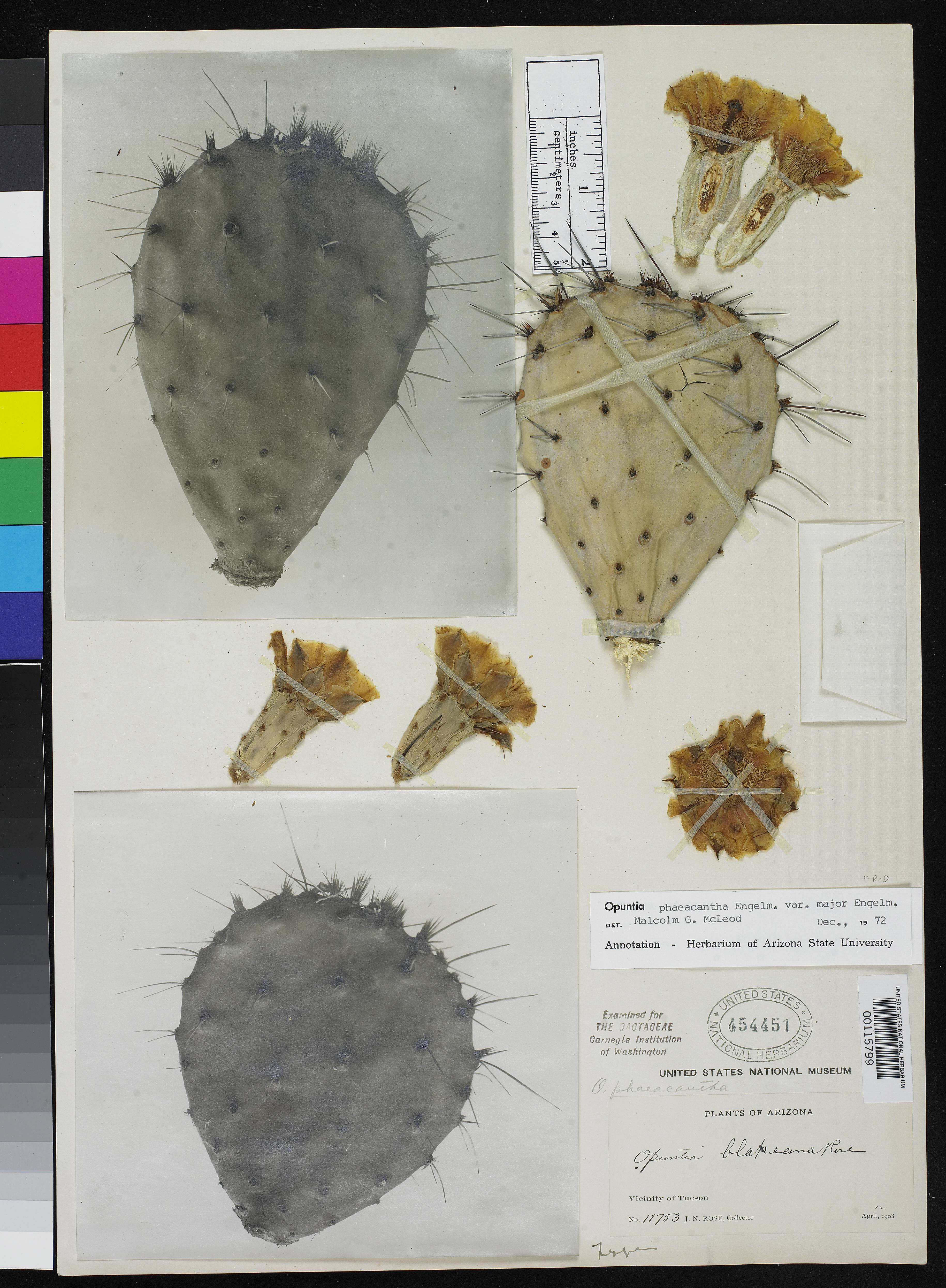
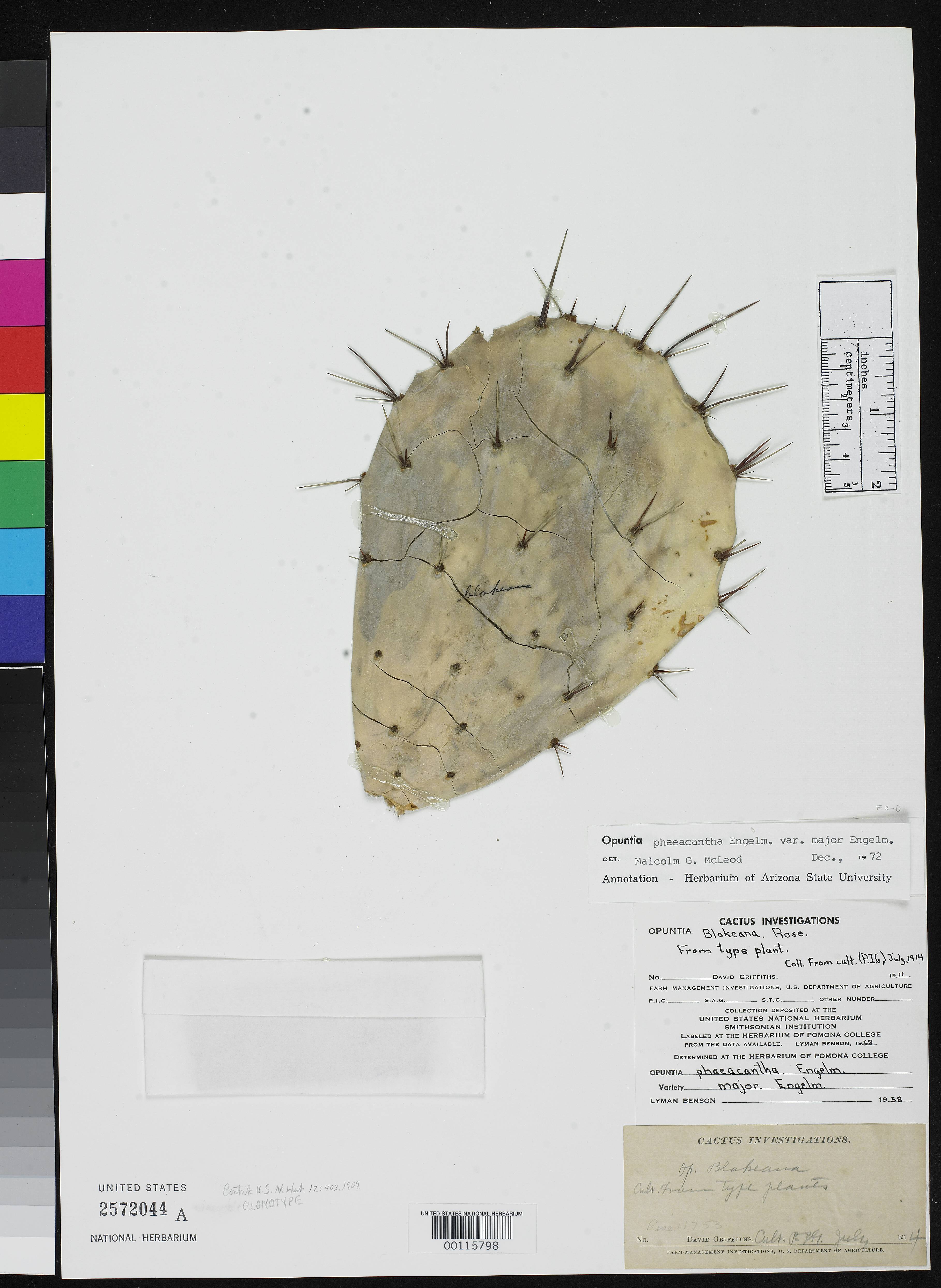
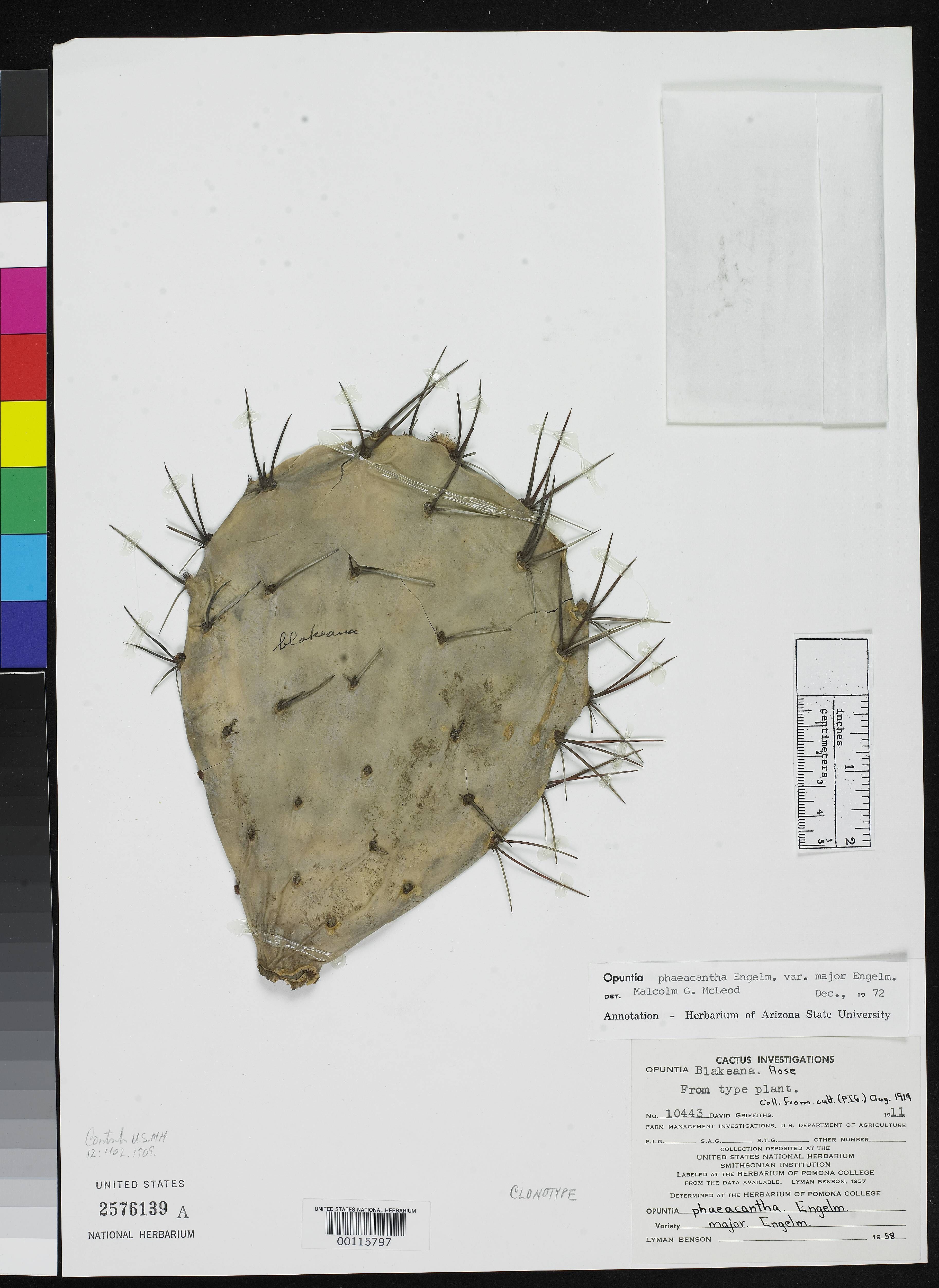
Original Description
What is Opuntia blakeana?
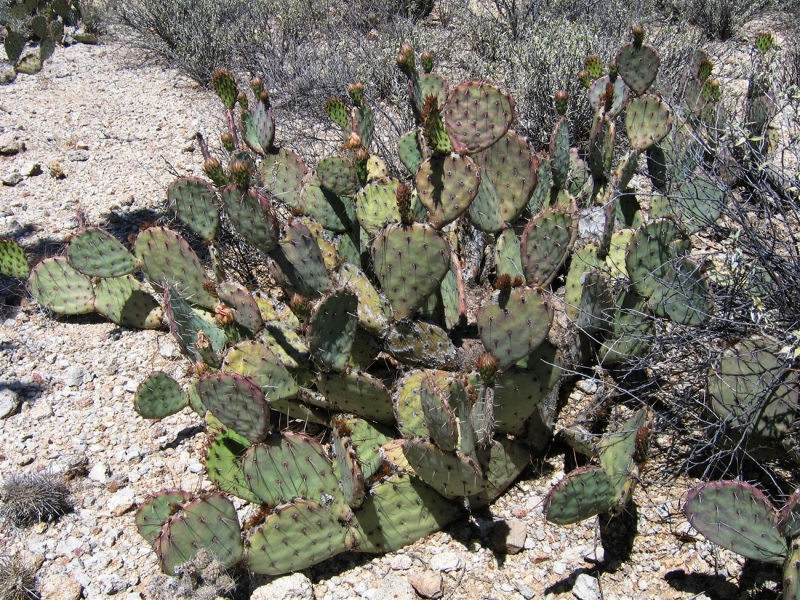
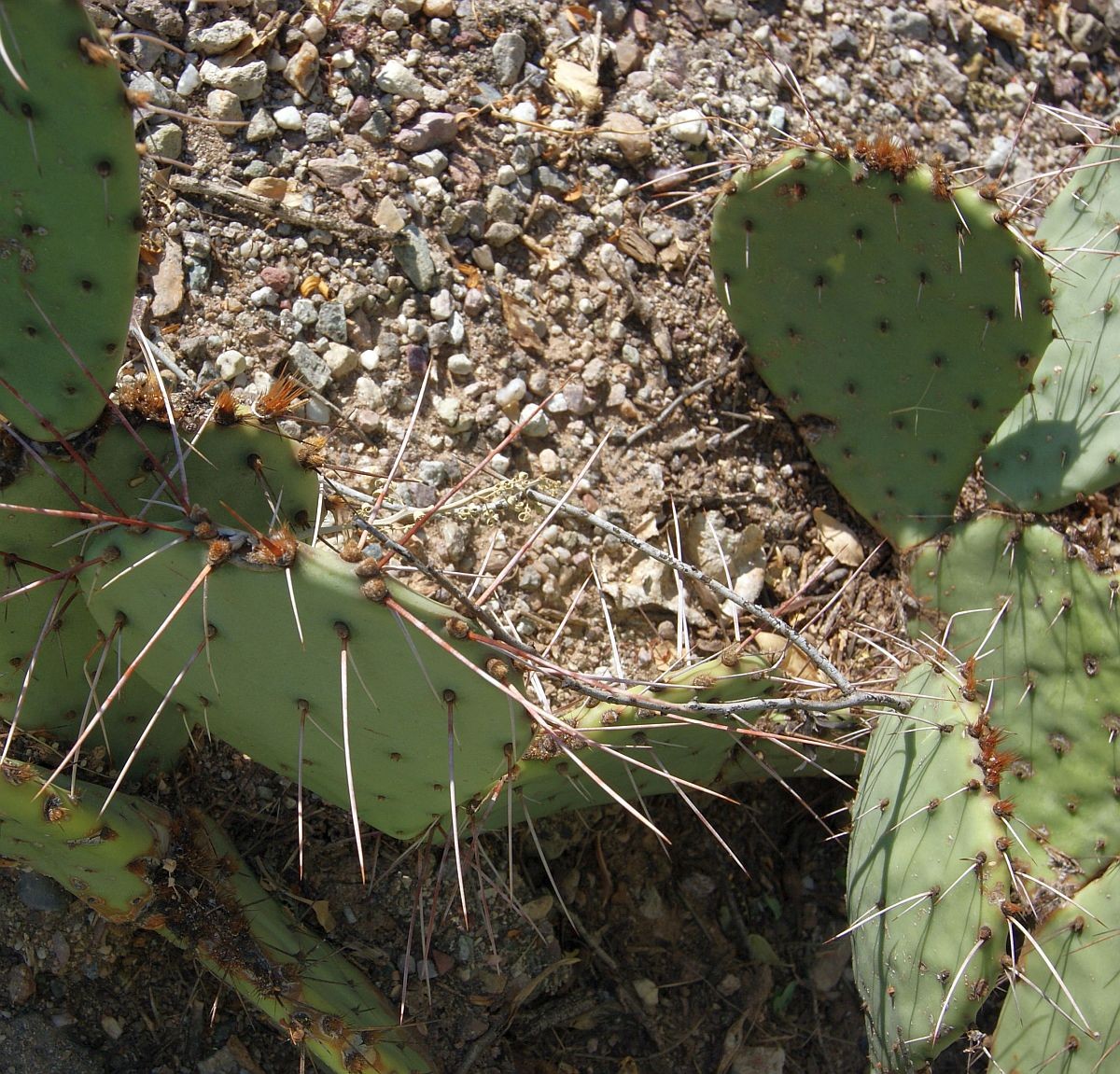
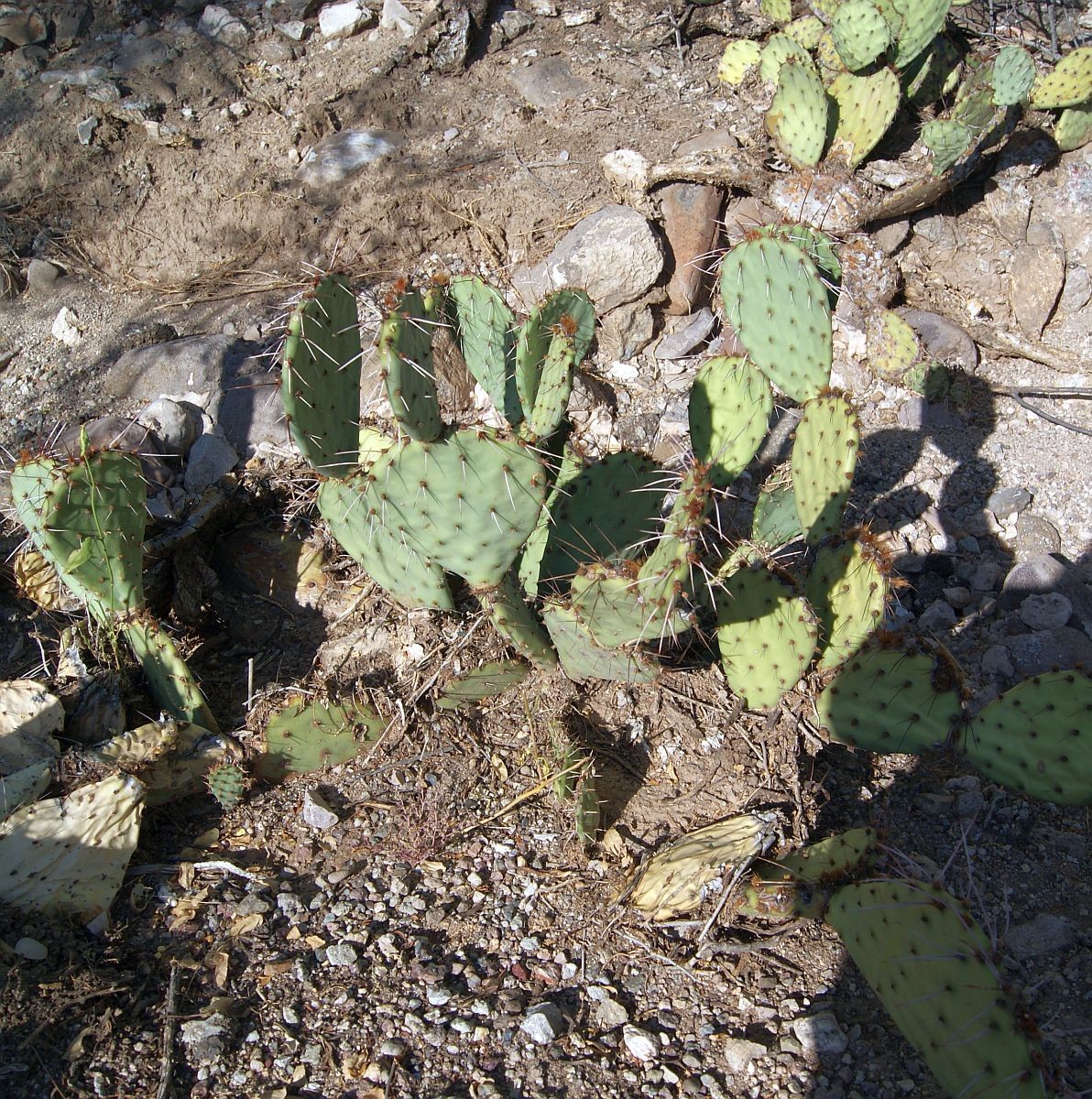
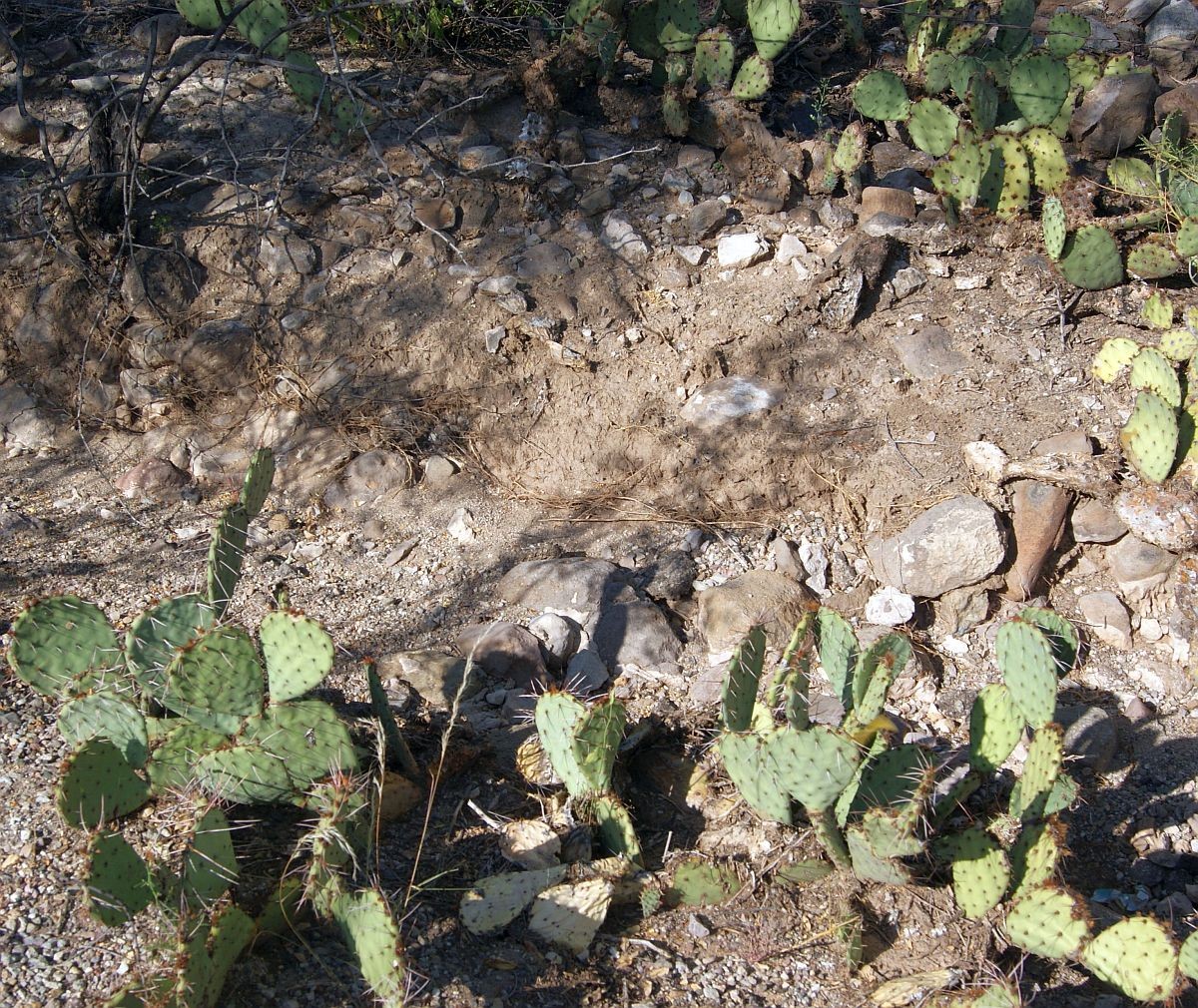
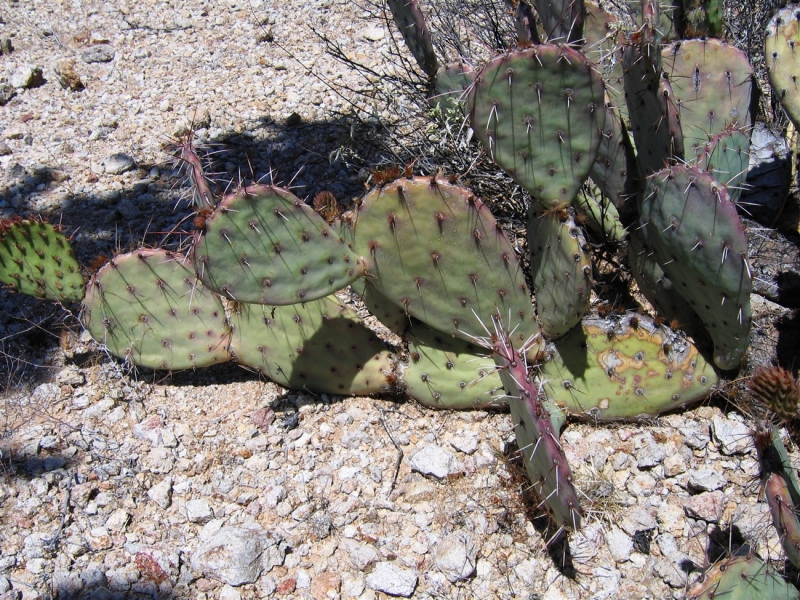
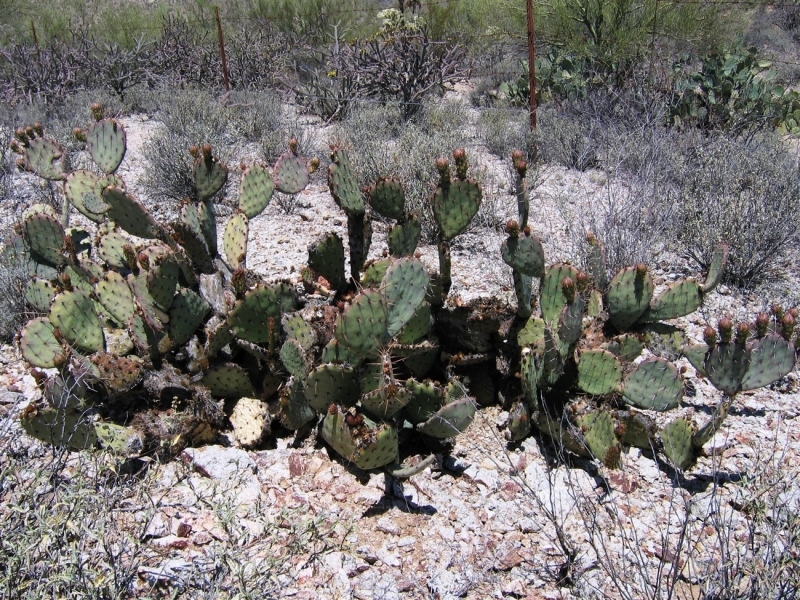
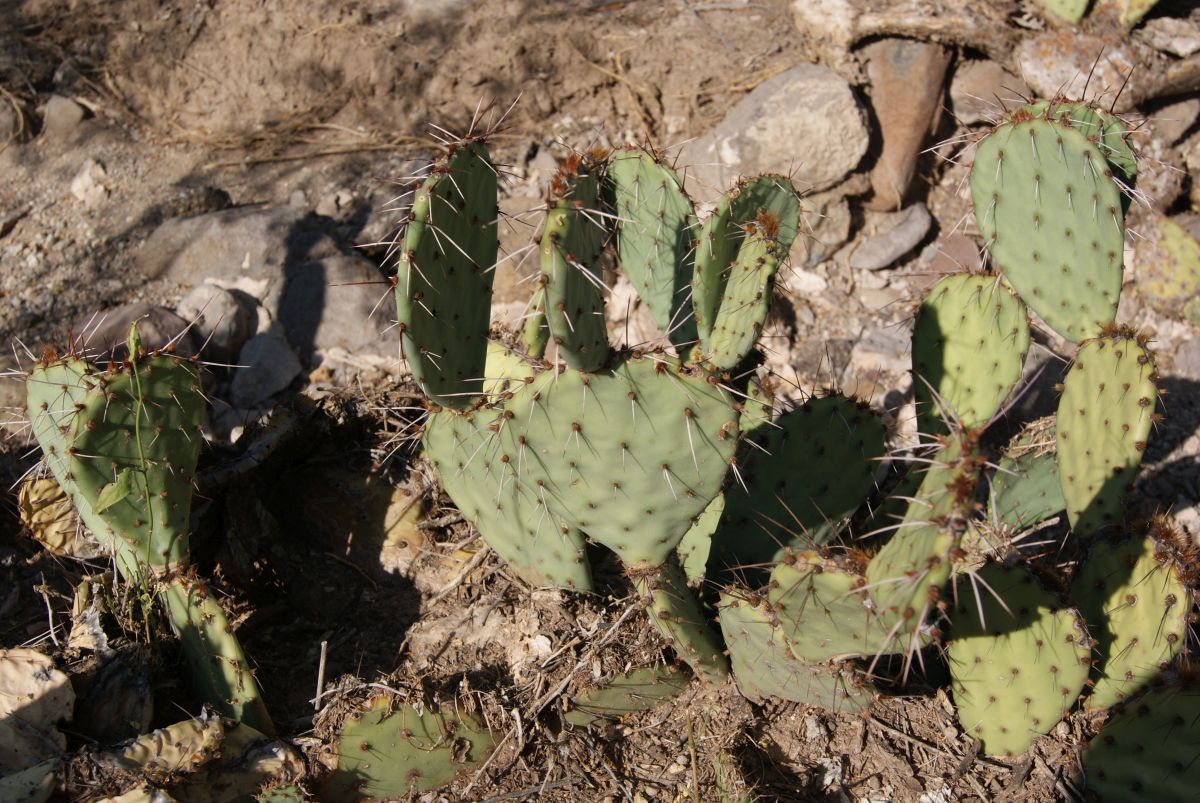
A small, low, spreading prickly-pear recognized from the greater Tucson area of the Sonoran Desert. This treatment regards it as distinct based on its consistently modest habit and expression of small to medium, subcircular to broadly obovate joints; the name has received limited attention in modern literature and has been confused with nearby taxa.
Details
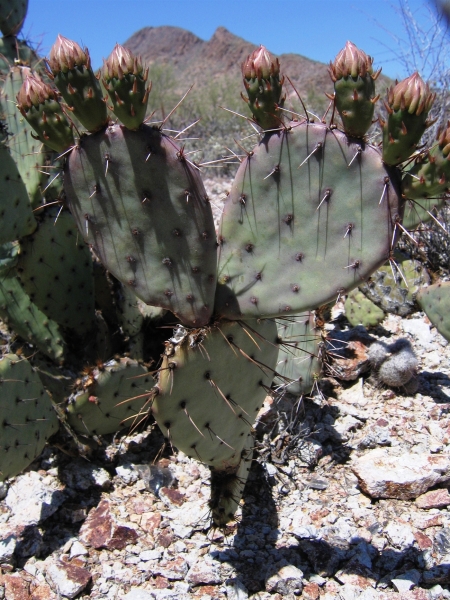
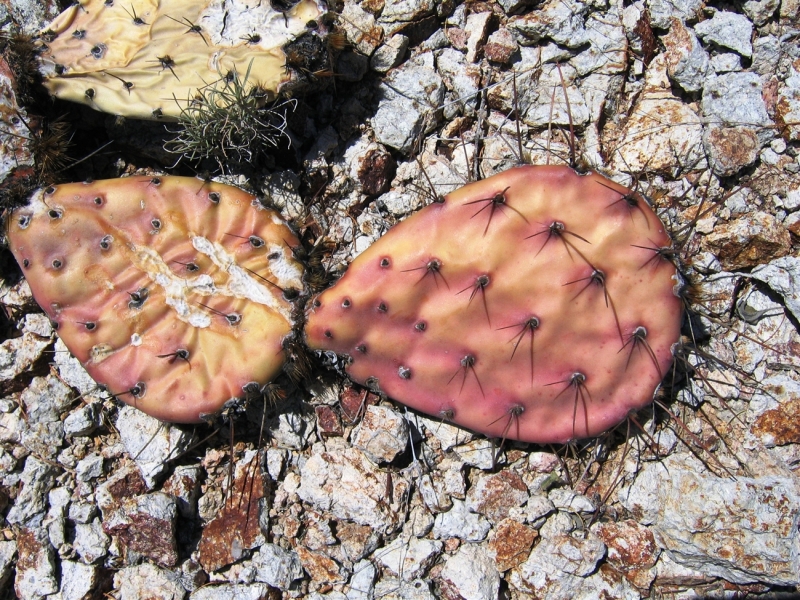
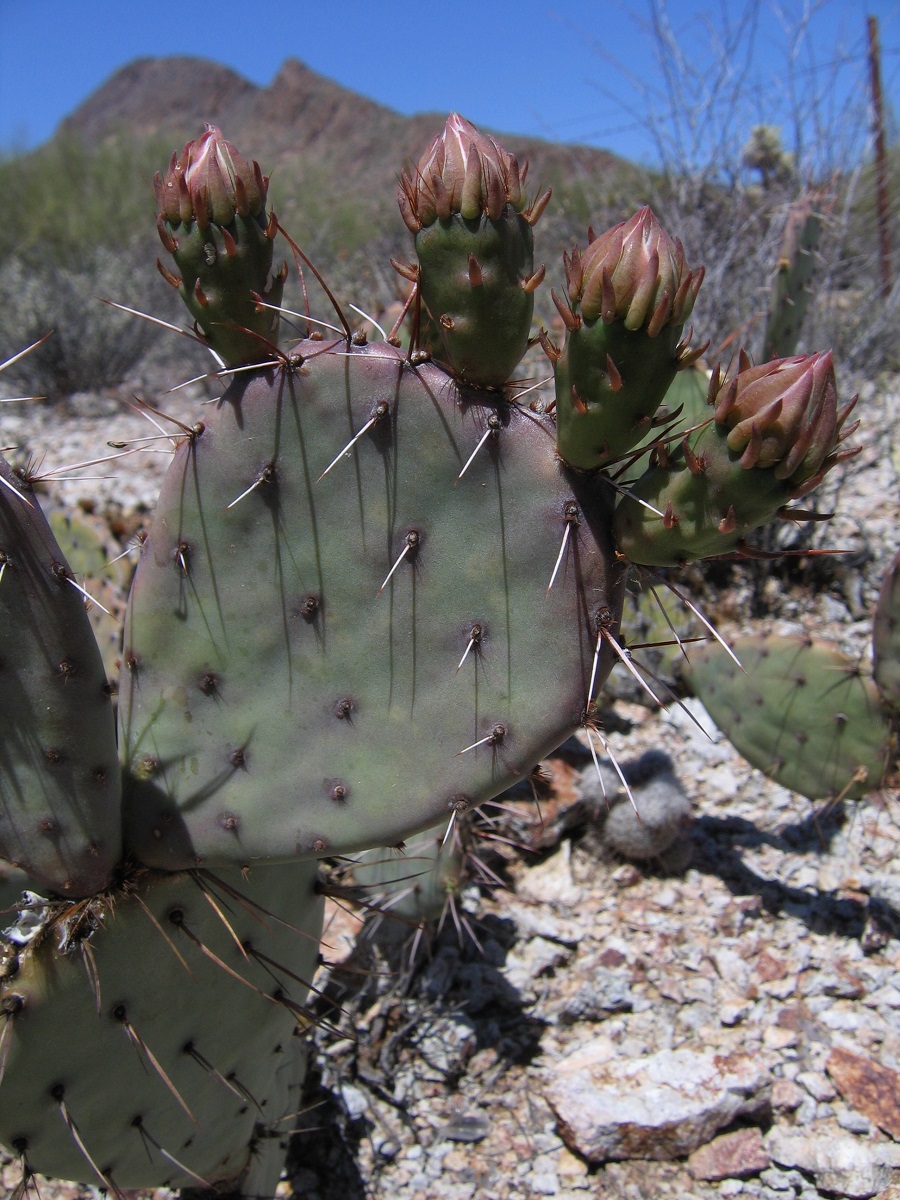
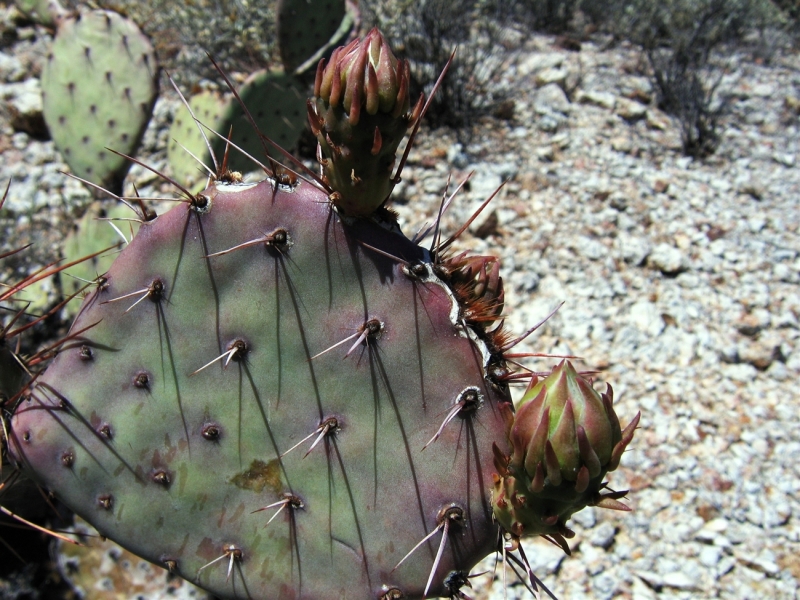
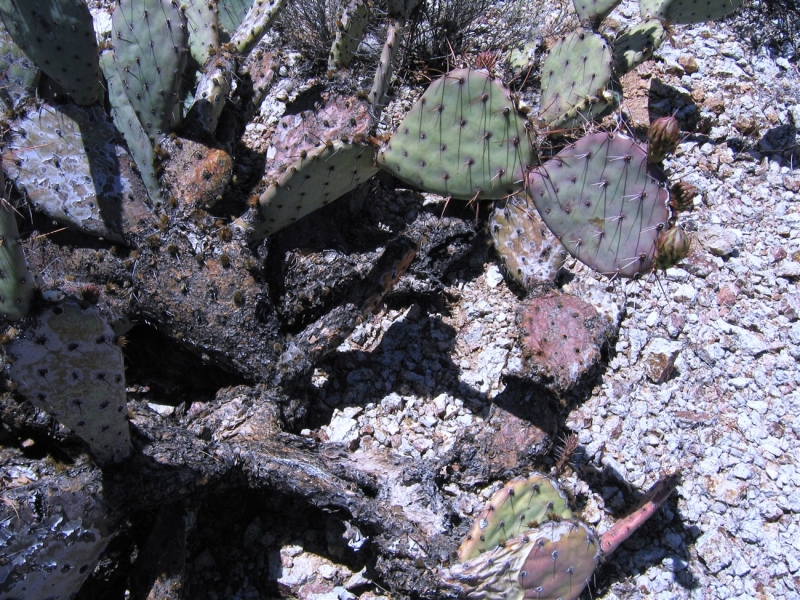
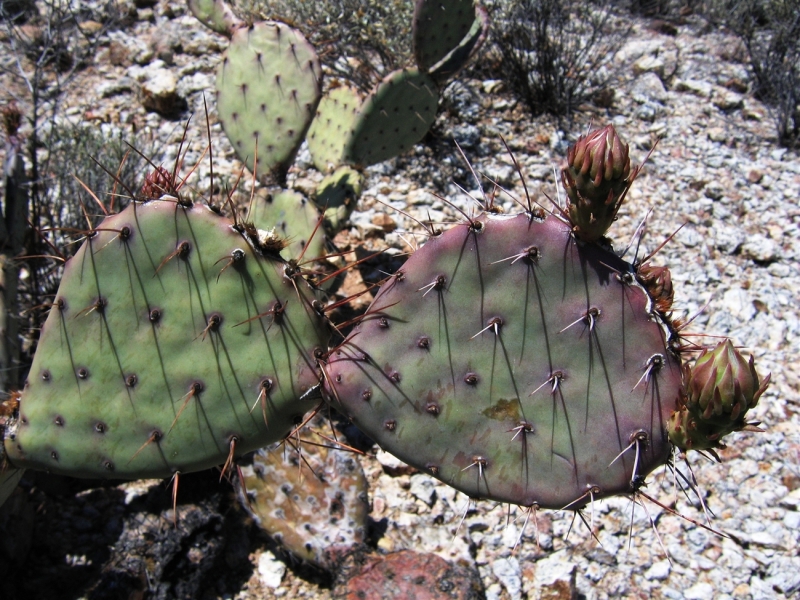
Plants are low and compact, often trailing with age as older branches become notably woody. Cladodes are typically ~10–15 cm, subcircular to broadly obovate, dark green and sometimes showing brownish-purple around areoles. Areoles bear glochids; spination is modest overall, commonly about 2–3 short spines per areole that vary from light tan to dark brown and weather paler. Flowers are yellow, sometimes with reddish centers. Fruits are egg-shaped to short-pyriform, purplish-red; in general aspect they resemble those of nearby O. phaeacantha populations.
Range & Habitat
Sporadic in and around Tucson (south-central Arizona), with probable occurrences elsewhere in the Sonoran Desert of southern Arizona and adjacent northern Mexico; desert flats, bajadas, and open scrub.
Similar or Sympatric Species
O. phaeacantha — usually larger and more erect; O. blakeana tends to remain lower and more compact overall.
O. camanchica — often taller and more upright; O. blakeana is characteristically low and may trail with age.
Cytology
Unknown.
Other Notes
A classic developmental discussion is by Brown (1920, Botanical Gazette 70(4): 295–307); the name is not included in Anderson (2001), underscoring its omission from recent syntheses.
For more information, see:
Tucson area Opuntia , the prickly pears, XEROPHILIA • Volume VIII, No. 1 (25), August 2019.