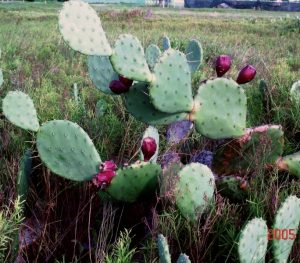
Griffiths, Bulletin of the Torrey Botanical Club 43(2): 92, 1916
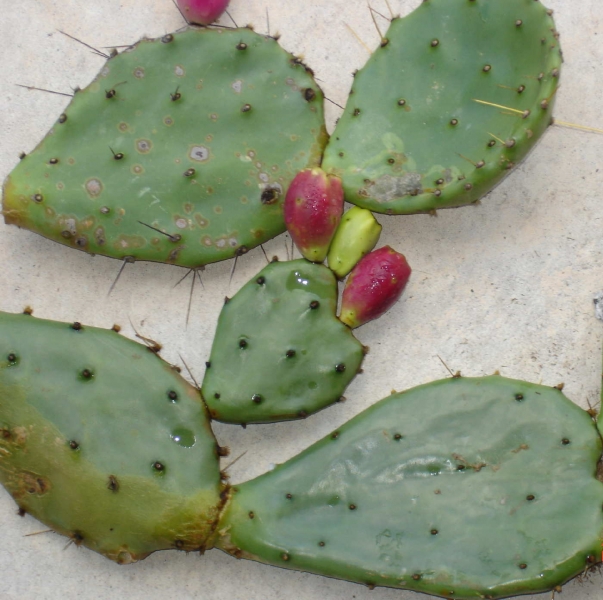
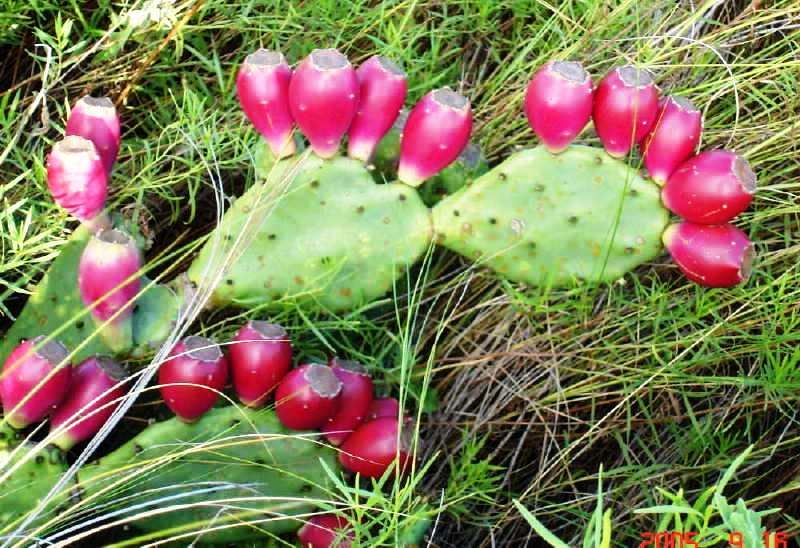
Holotype; Isotype; Painting (Smithsonian Institution); Painting. Painting of fruit. NOTE: The holotype specimen is remarkable because it contains two different cladode types. Only the cladode on the left conforms to the original description of this Opuntia and plants found near the type locality. Also, the cladode on the left agrees with the isotype specimen. Therefore, we accept the pad on the left as the correct holotype. The pad on the right is unidentified but may be O. gomei, a more southerly species.
O. anahuacensis is different from O. stricta, but they are both beach Opuntias.
O. anahuacensis is different from O. bentonii, but they are both beach Opuntias.
Original Citation
What is Opuntia anahuacensis?
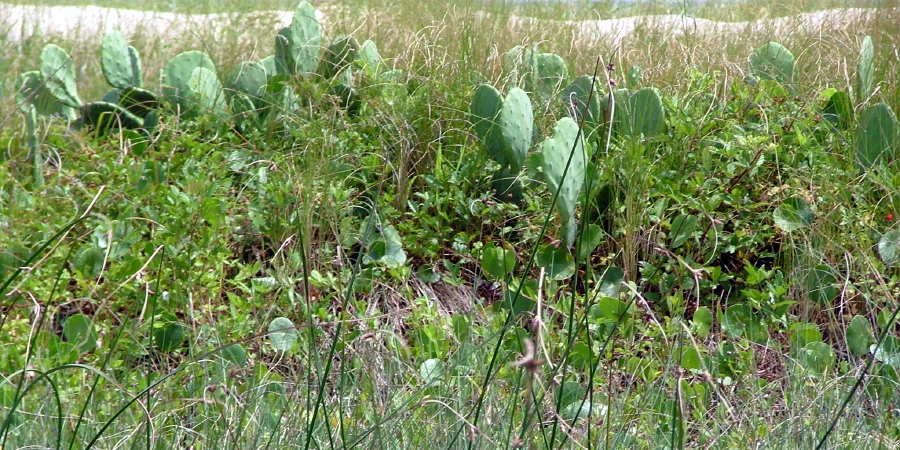
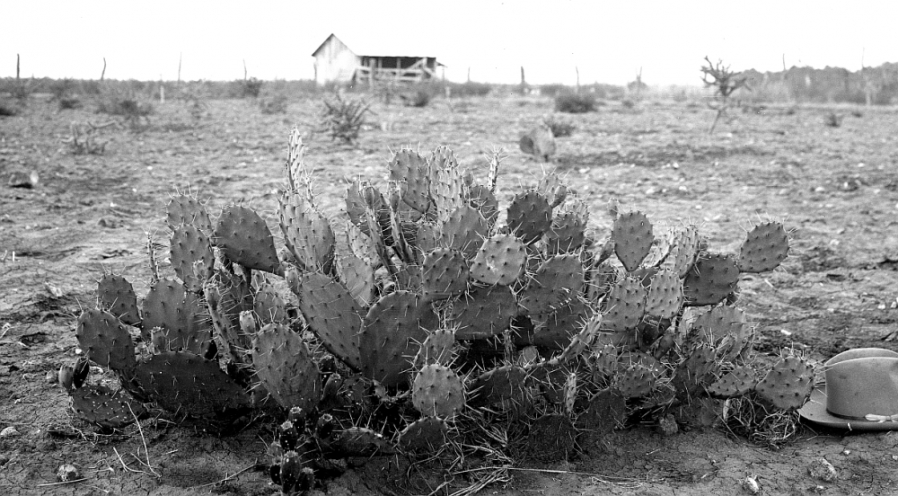
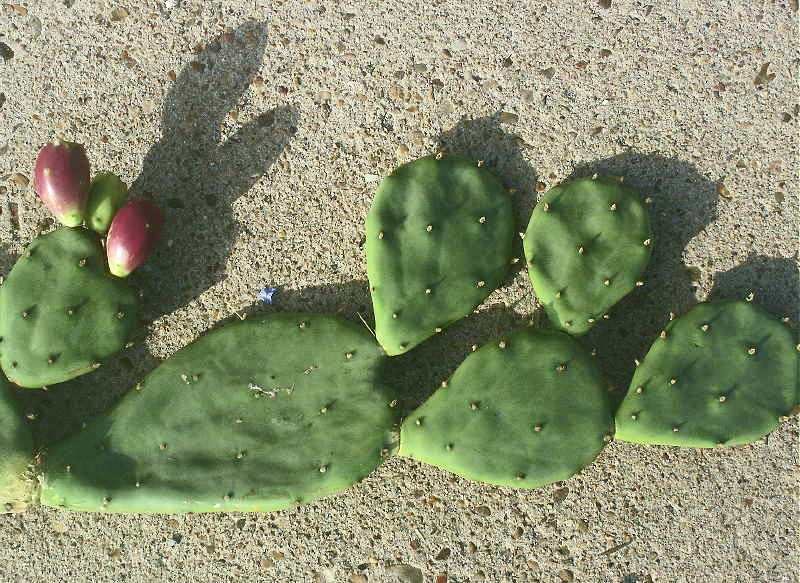
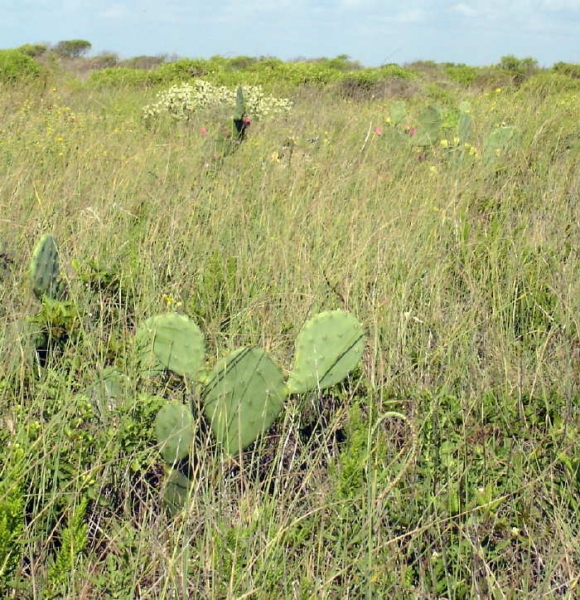
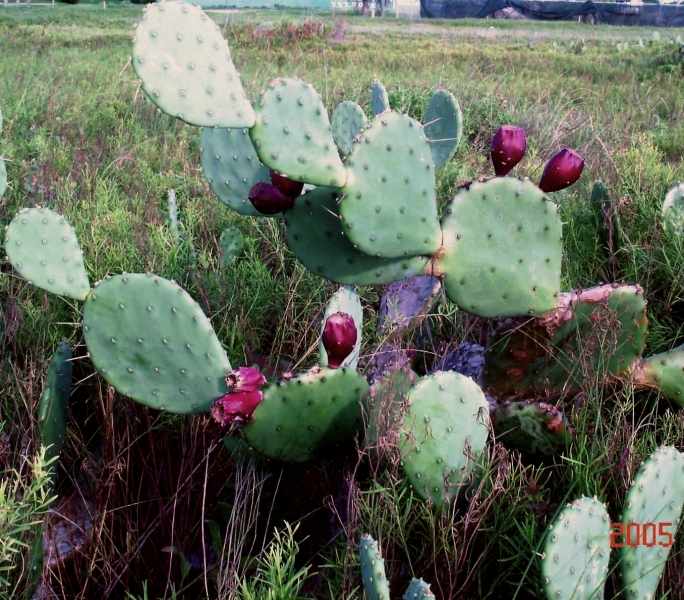
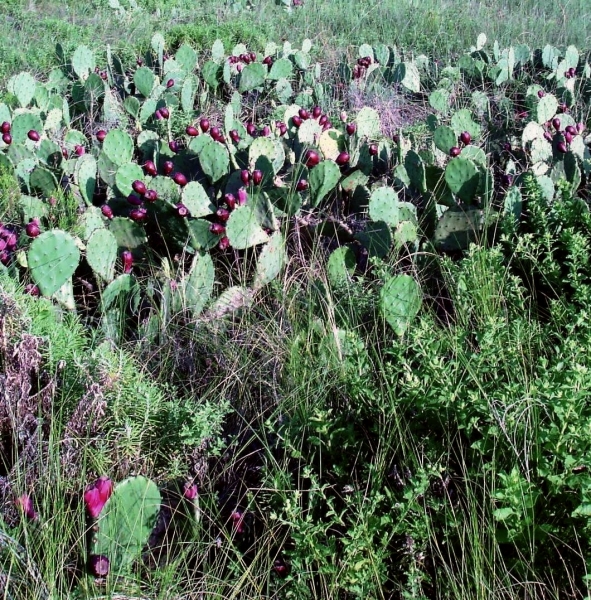
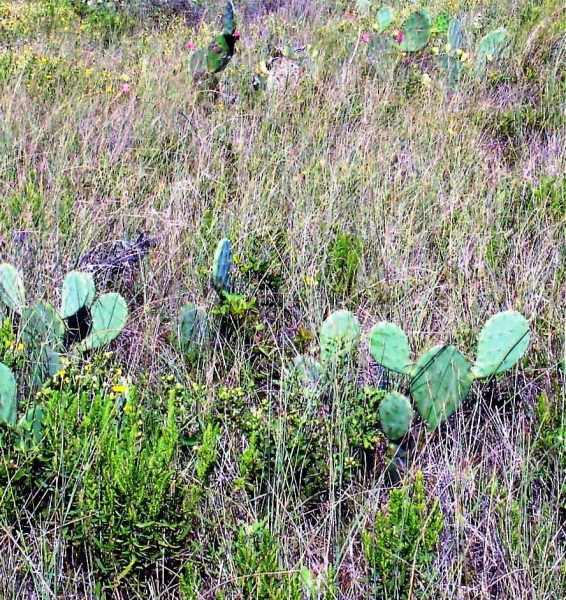
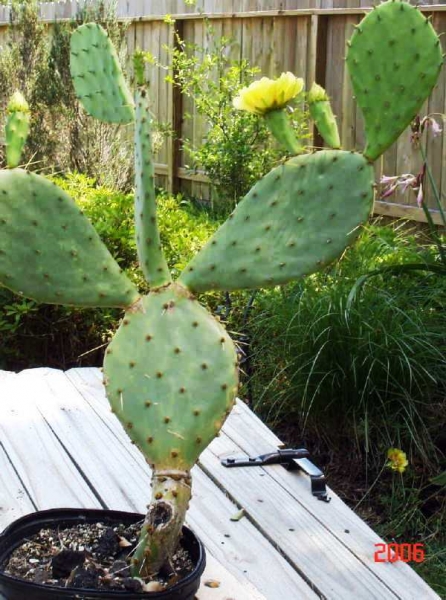
Opuntia anahuacensis is a beach-dune prickly-pear of the upper Texas and adjacent Louisiana Gulf Coast. Plants are characteristically low and reclining, forming broad, horizontal thickets on aeolian sands above normal tide lines. Stands can span several meters even though individual shoots are typically short.
Details
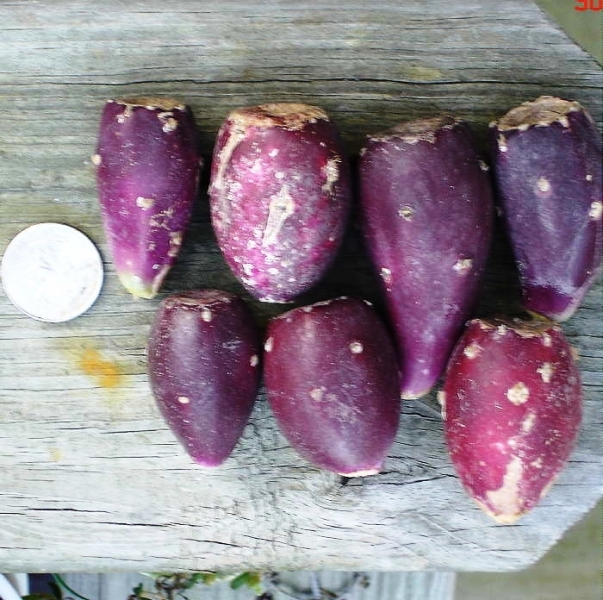
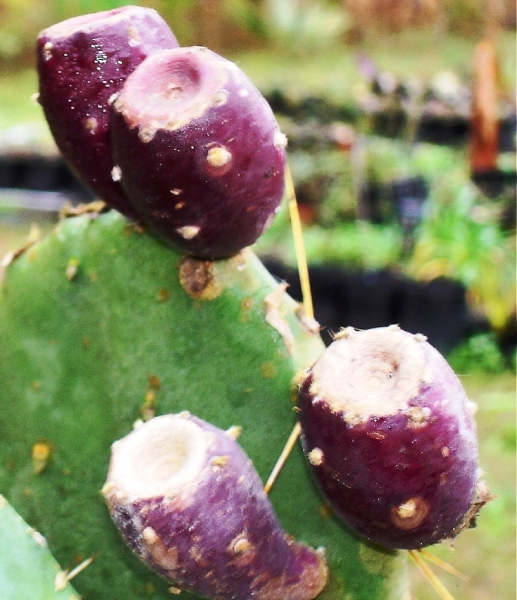
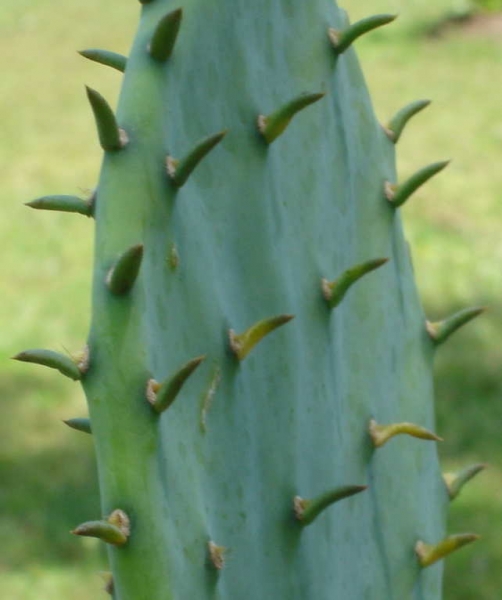
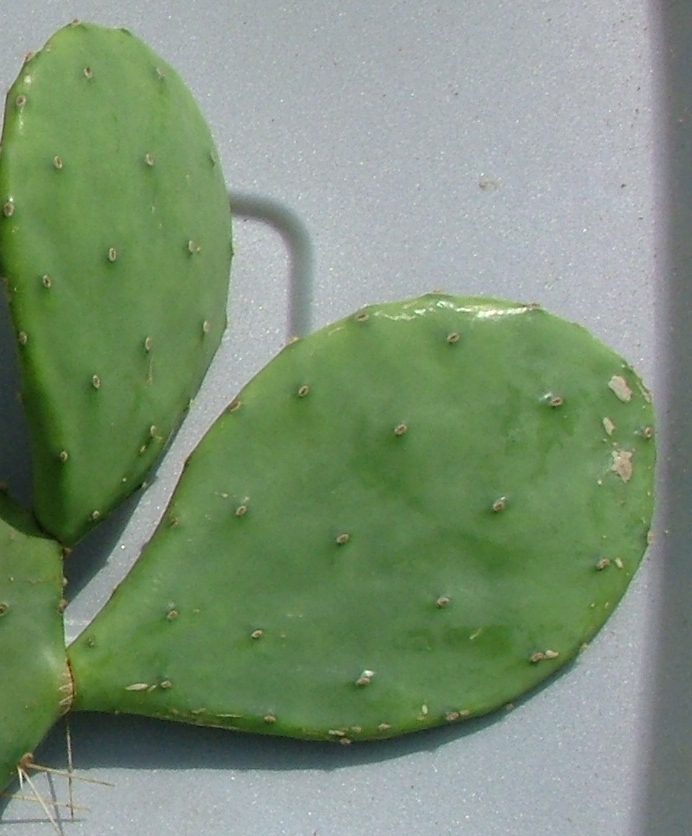
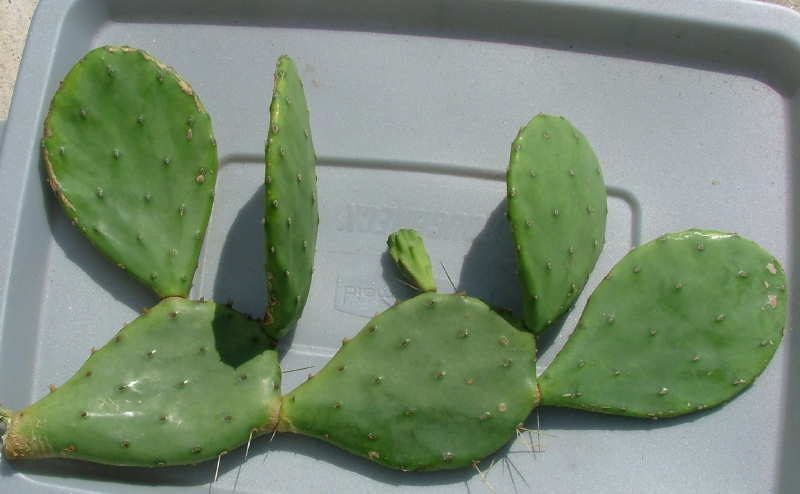
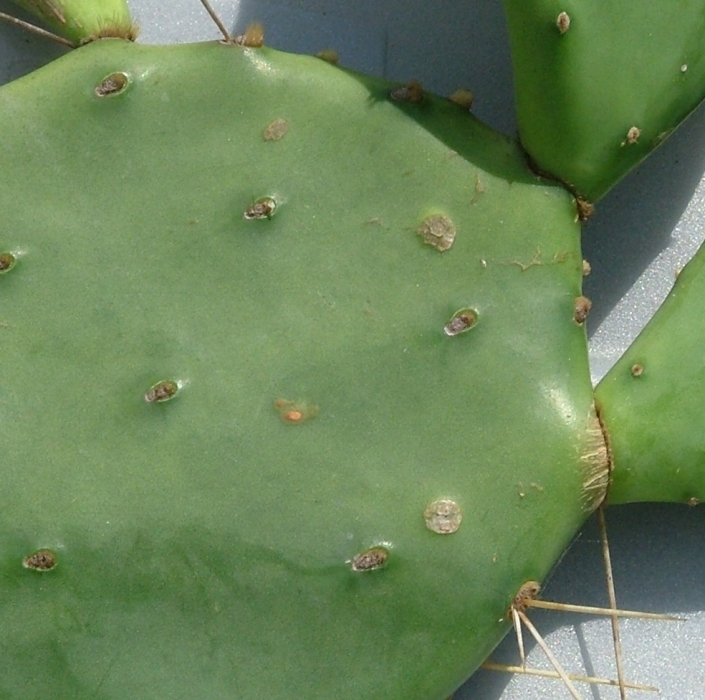
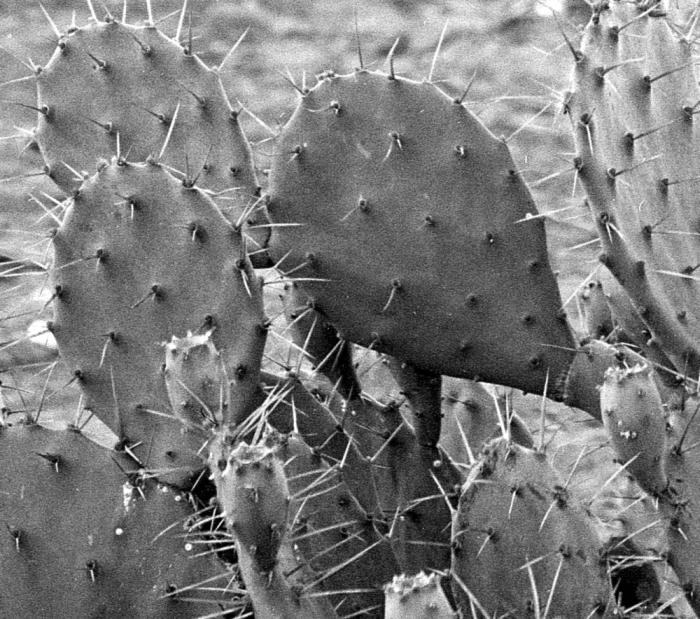
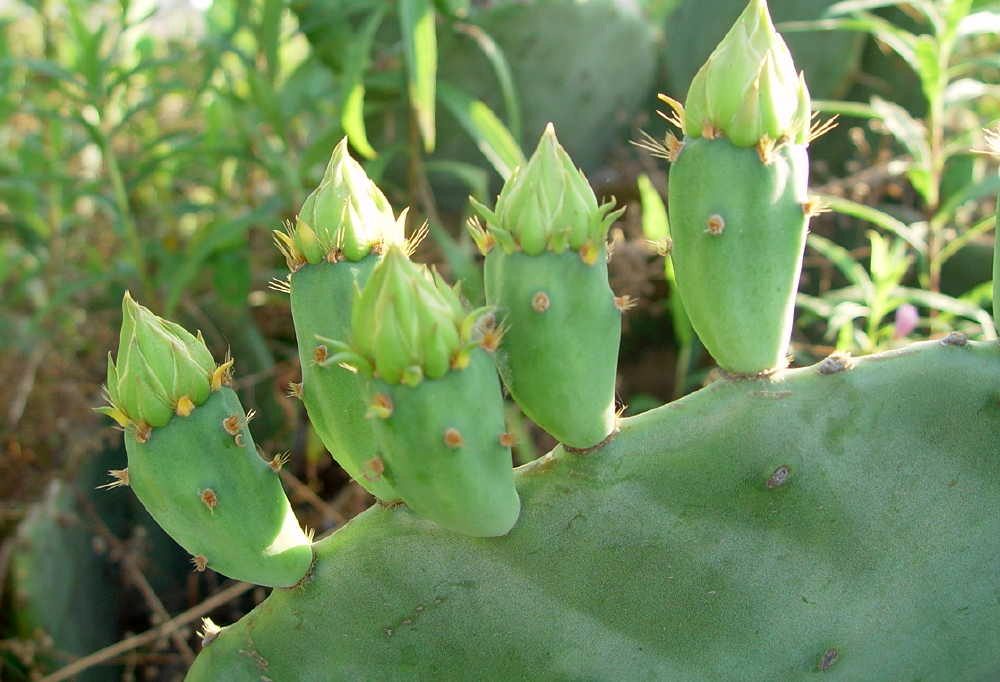
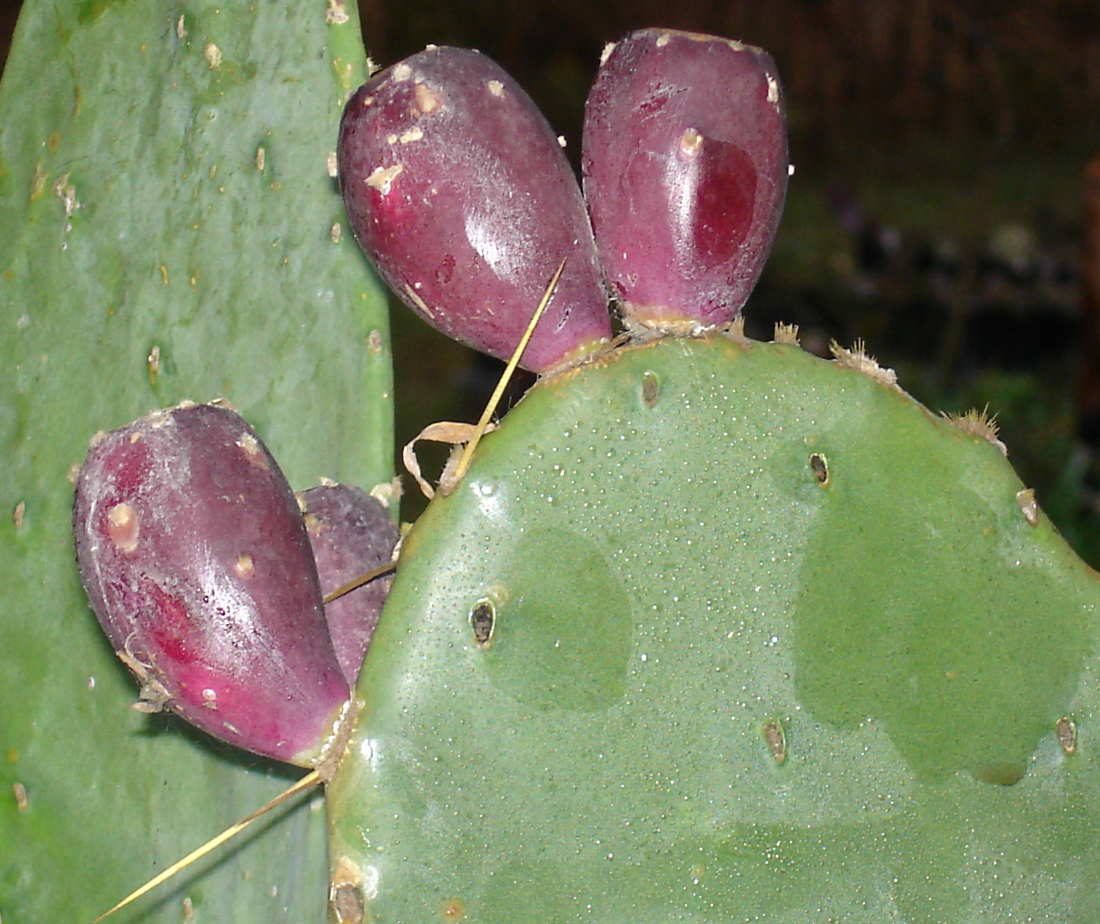
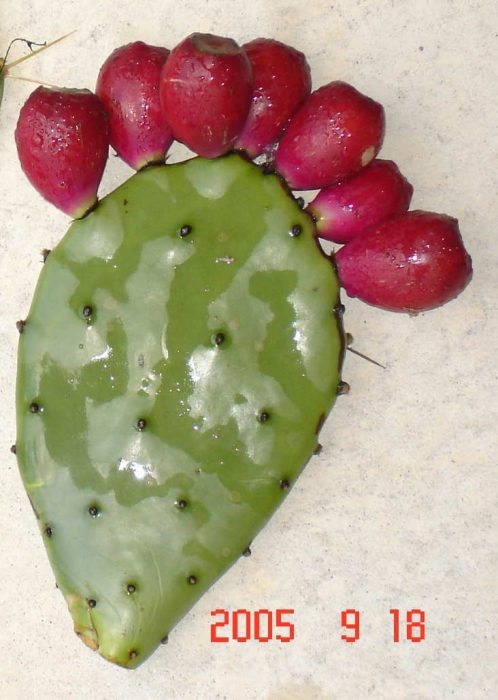
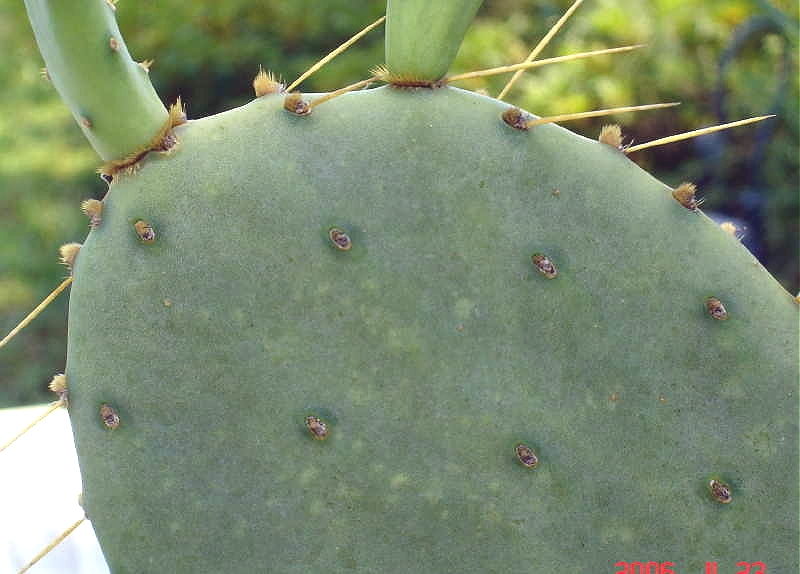
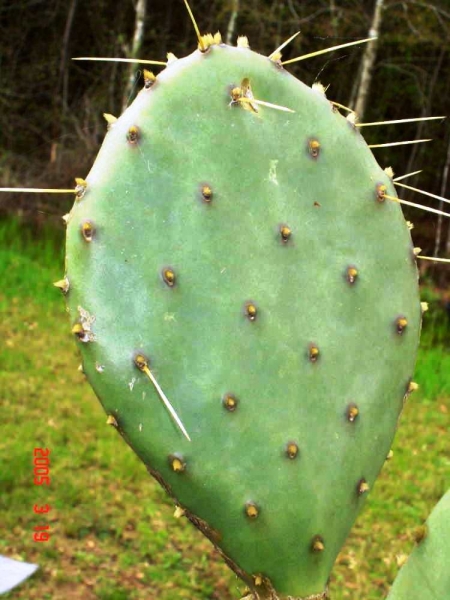
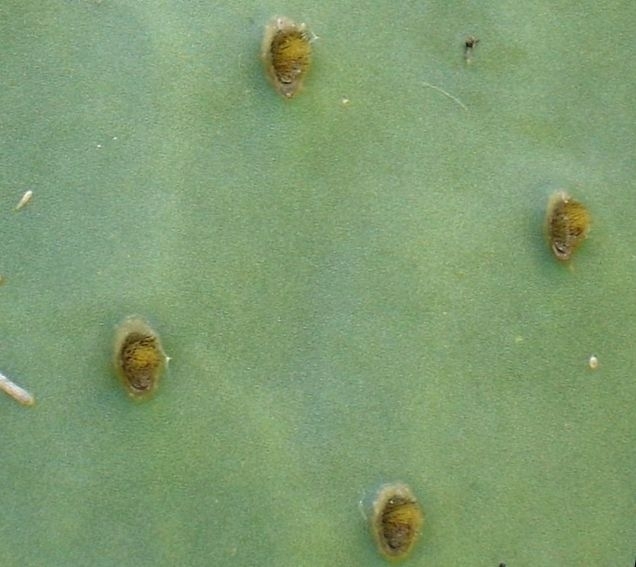
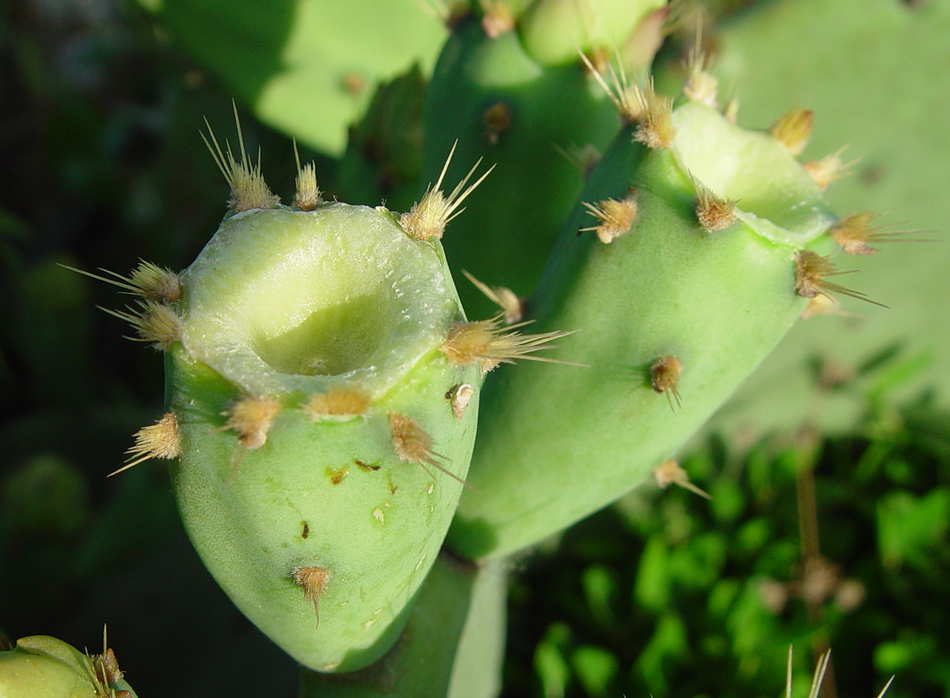
Shrub: Low, reclining to decumbent, forming extensive, horizontal thickets rather than upright shrubs. Cladodes: Obovate with a rounded apex and a conspicuously tapered “neck,” commonly ~10–15 cm wide and to ~25 cm long. Areoles: Spination variable—pads may be nearly unarmed or bear 0–2 spines per areole; when present, a porrect yellow primary spine ~2(–3) cm is typical, sometimes with a shorter, deflexed secondary spine; spines weather to whitish. Glochids: Present at the areoles as in other Opuntia. Flowers: Yellow to yellow-with-red; stigma and style typically white and bulbous. Fruits: Variable in form—most often clavate, occasionally pyriform and rarely obovate; any spines on the fruit are transient. Additional field notes: the pad apex is distinctly rounded; colonies often show wide areas with very sparse spination.
Cytology
Reported as hexaploid; no alternate cytotypes are confirmed.
Range & Habitat
Foredunes and other sandy coastal sites of the upper Texas coast (e.g., Galveston Island, Bolivar Peninsula, Sea Rim area), with occurrences into southwestern Louisiana. An inland, depauperate population has been noted on deep sands several miles from the coast. Modern plants are most frequently encountered on open, well-drained dune sands.
Similar or Sympatric Species
O. bentonii — Often sympatric on Texas beaches; typically shrubbier (not reclining), more decidedly spiny, and with yellow stigmas showing visible venation between areoles—contrasts that are consistent where they co-occur.
O. stricta — A beach-dune species of the eastern Gulf/Atlantic; habit (prostrate-ascending shrubs), fruit form, and overall expression differ from anahuacensis.
O. dillenii — Sometimes cited historically in this region but morphologically distinct; coastal distribution and pad/areole expression separate it from anahuacensis.
Other Notes
Fruits are most often clavate, with pyriform—and more rarely obovate—forms also seen; any fruit spines are transient. Colonies commonly form low, horizontal thickets with broad patches of very sparse spination, and pads have a distinctly rounded apex; in cultivation plants can become large and sprawling if unpruned and have shown tolerance to about USDA zone 7 in favorable sites. Although named for Anahuac, Texas, recent surveys have not relocated plants at the type area; a depauperate inland population has been noted on deep sands several miles from the coast, and the overall distribution along secluded stretches of the South Texas coast may be broader than currently documented. The species has also been reported as invasive on some Mediterranean shorelines.
For more information, see:
Ćato S. and Bogdanovic S. (2023) Euphorbia hypericifolia L. and Opuntia anahuacensis Griffiths: two new, potentially invasive species in Croatia, 5th Croatian Symposium on Invasive Species. (poster No. 40).
Shaw and Ferguson, Page 23, Opuntia Bentonii, a little known prickly pear cactus, JBRIT, 2025
Thank you. So far no email. Knowing of your site will be helpful.
Thanks for visiting.
Does to fruit taste different from San Antonio Rickey Pear?
Does to fruit taste different from San Antonio Prickly Pear?
Hi J.R.,
I don’t know about the fruit of O. anahuacensis. I’ve never tried to taste it. But, I can assure you it is very slimy when you cut into it.
Joe
I recently obtained cuttings of a similar looking prickly pear. The cuttings were roughly 10-12 in. tall and 5-7 in. wide. The areoles appear to be brown with large, painful glochids. It has about the same number of spines per nopal as O. anahuacensis, the spines are light yellow color. The base of nopals often appear to be a yellow color as well. The innards of the nopals have a bizarre and nauseating odor and are slimy as you described. The tuna are red and look just like O. anahuacensis. But the only thing preventing a match is that I obtained the cuttings in zone 6 in an unprotected area of Cincinnati. Are there any Opuntias that match this description?
Hello,
What is the basic difference between O. stricta and O. anahuacensis? In Greece there are many records of Opuntia humifusa, very few of O. Stricta and none of O. anahuacensis. I believe the three are much confused in my area.
Thank you