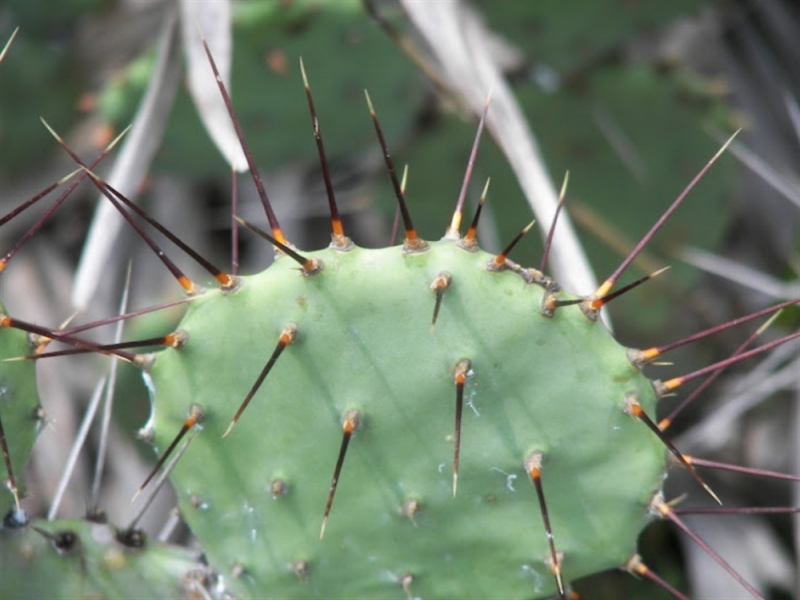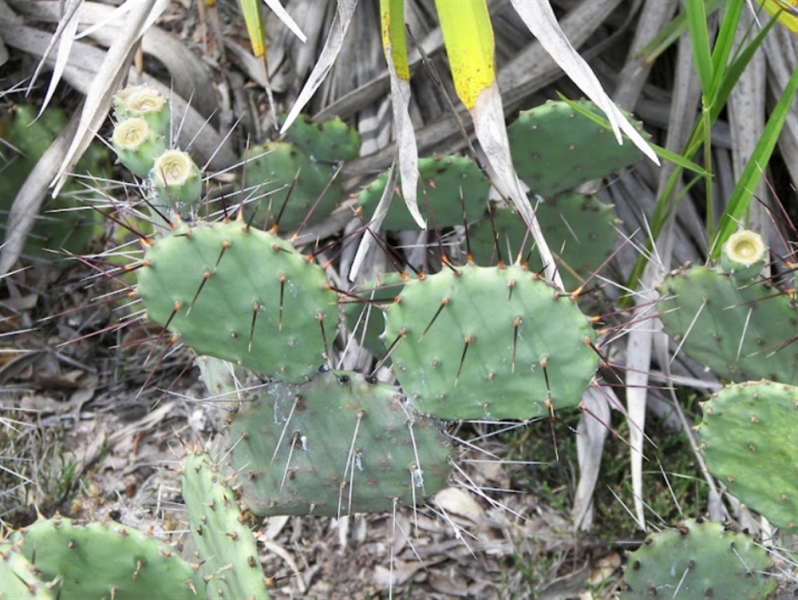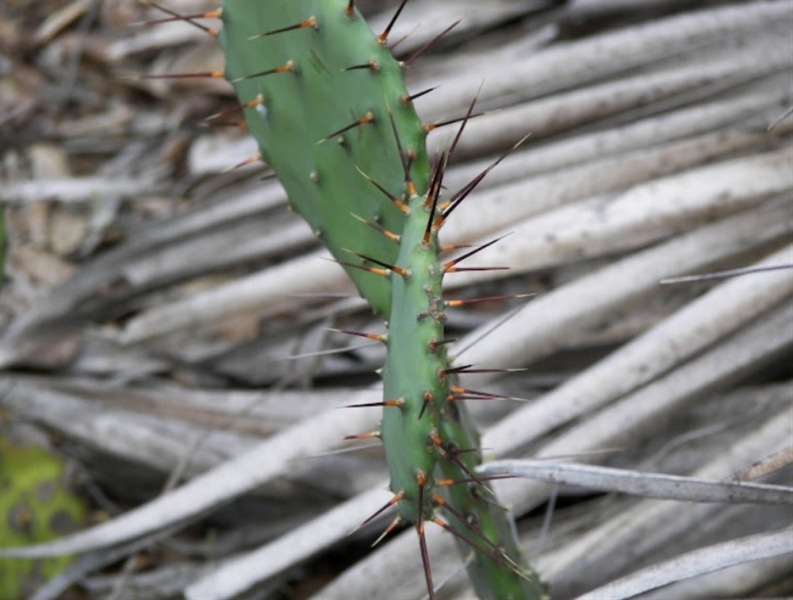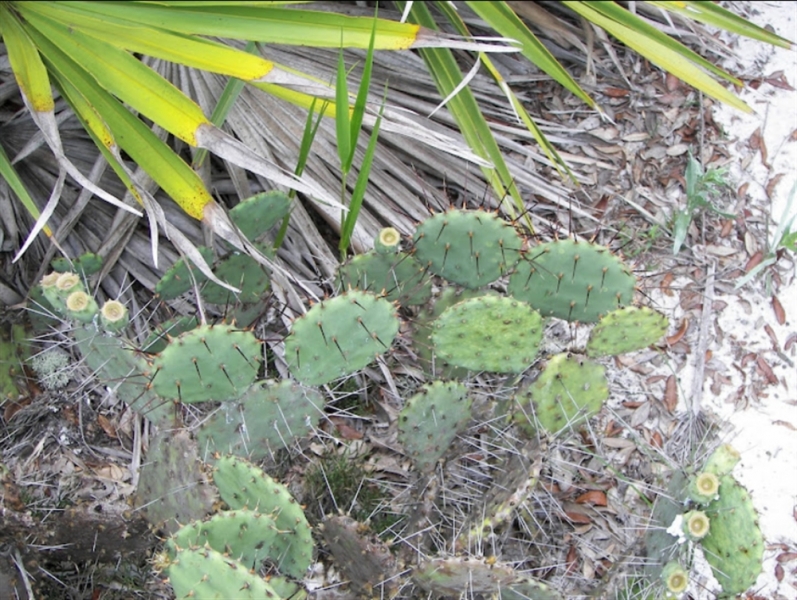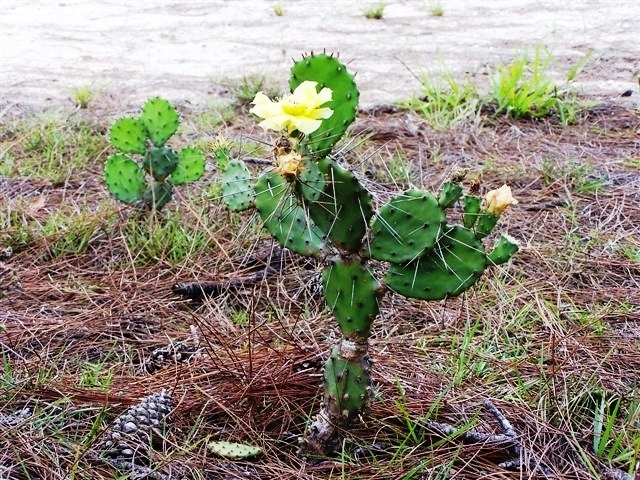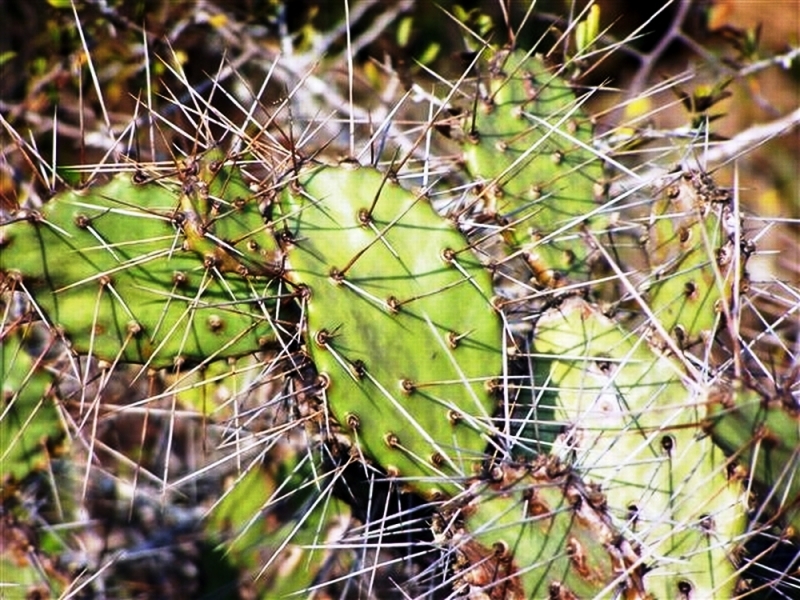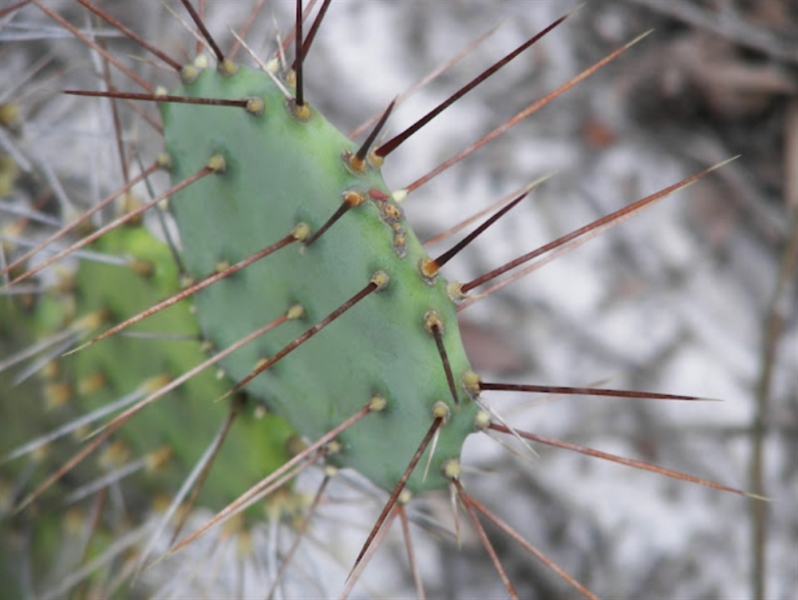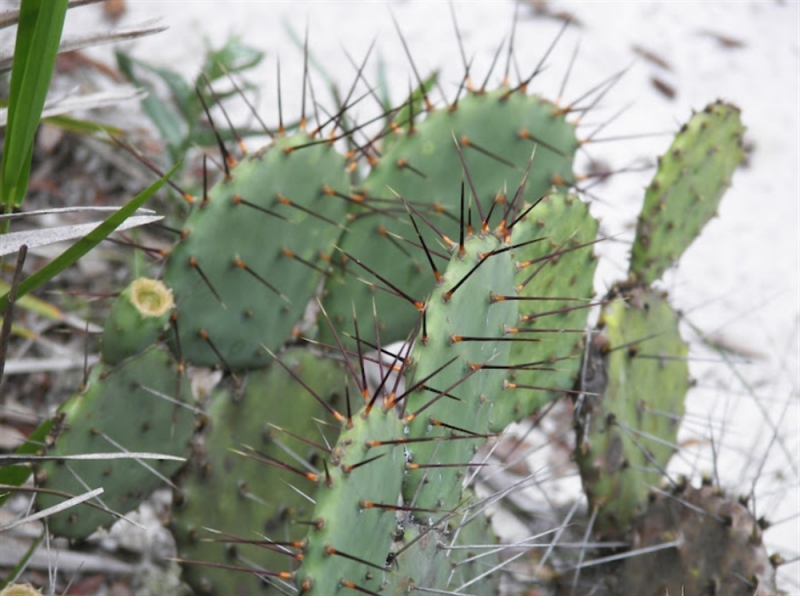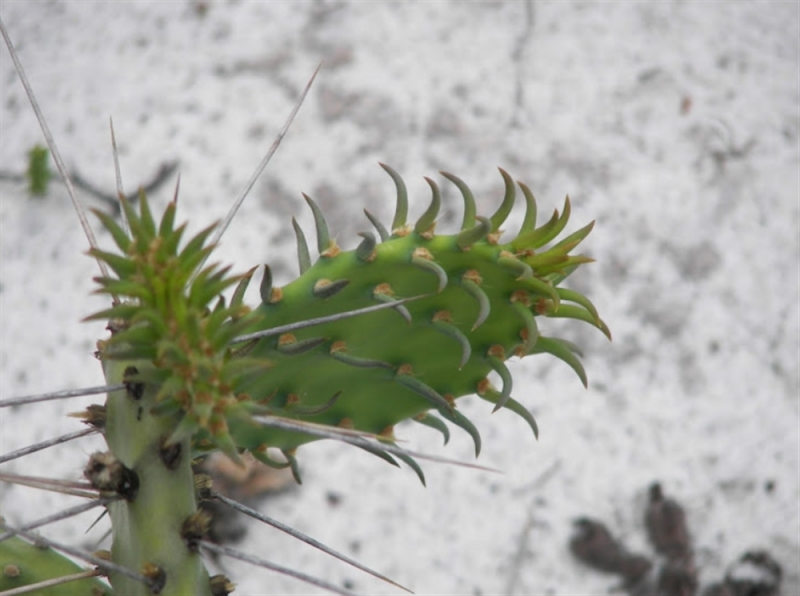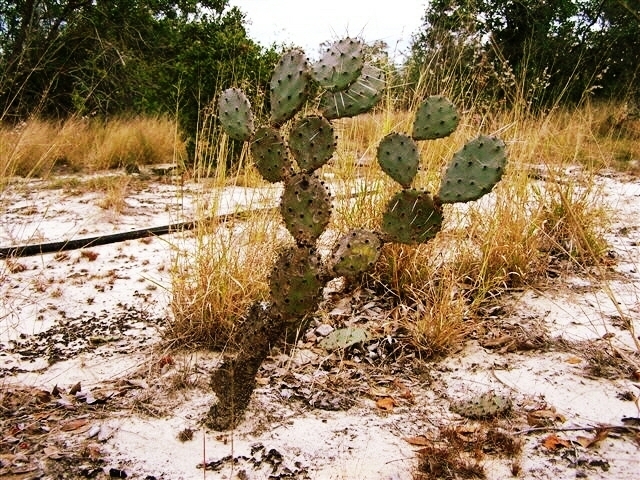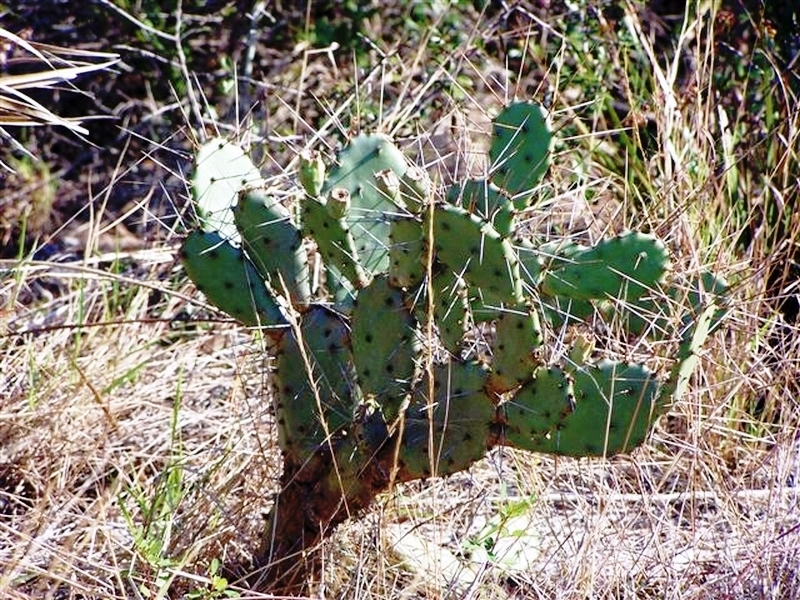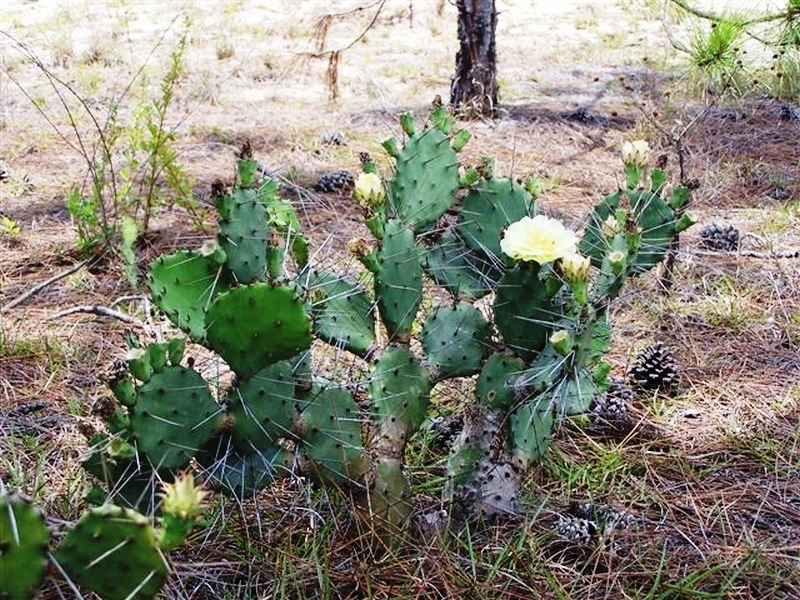
Opuntia ammophila, Devils Tongue


Opuntia ammophila
Opuntia ammophila

Small, Journal of the New York Botanical Garden 20(230): 29, 1919

Herbarium; Herbarium; Herbarium; Herbarium; Herbarium; Herbarium; Herbarium; Herbarium; Herbarium; Herbarium; Herbarium

See O. austrina, a related cactus

See O. polycarpa, a related cactus

Original Citation

What is Opuntia ammophila?

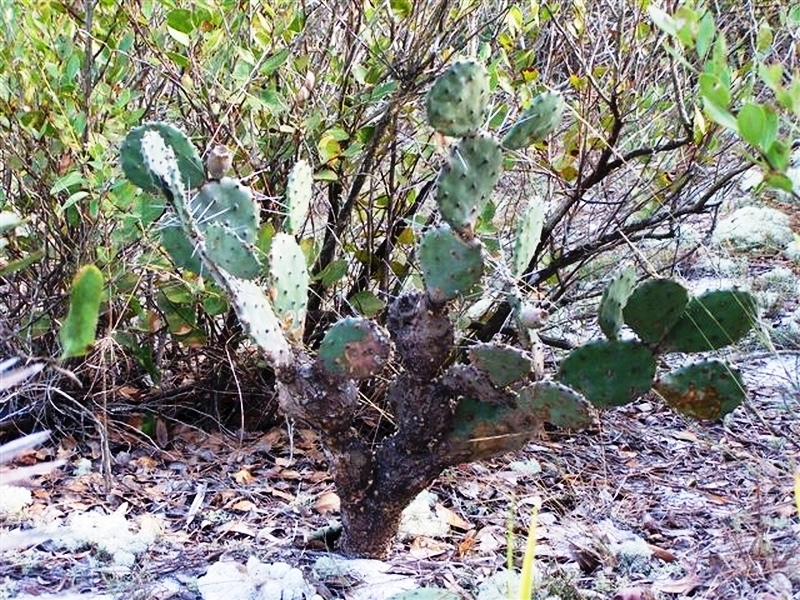
Opuntia ammophila is a small, arborescent prickly-pear native to peninsular Florida. Plants often develop a short, woody trunk with a compact crown. In cultivation it is attractive in warm climates but lacks cold hardiness.

Details

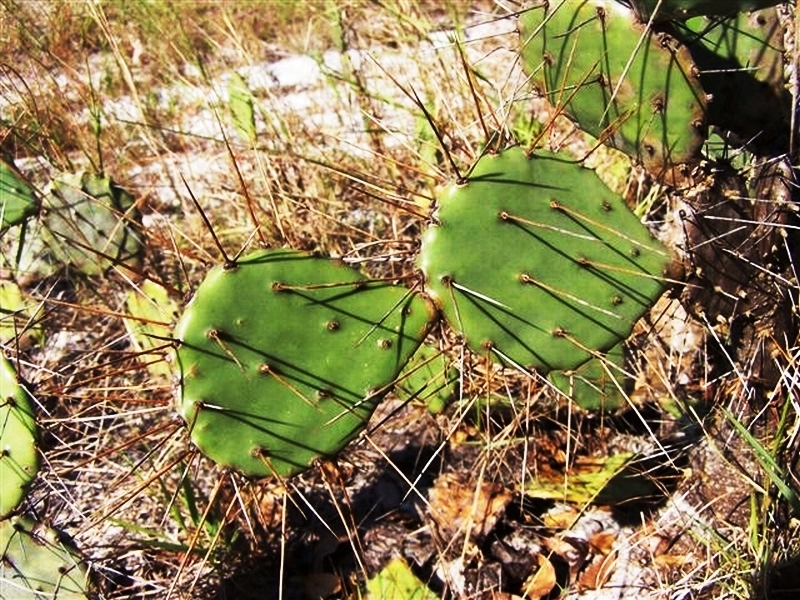
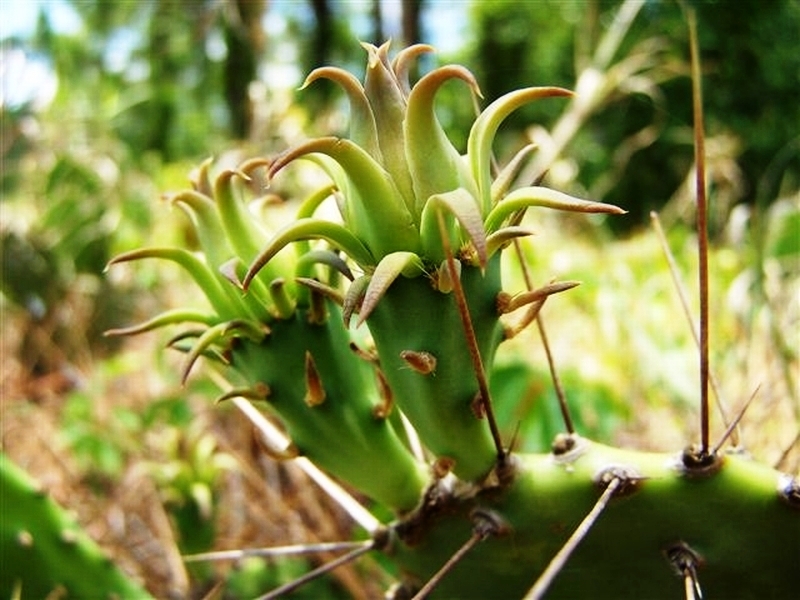
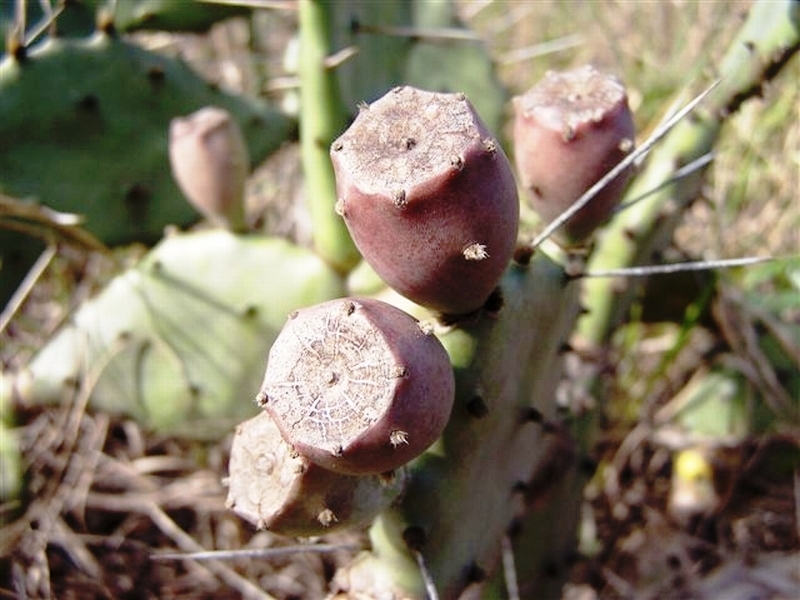
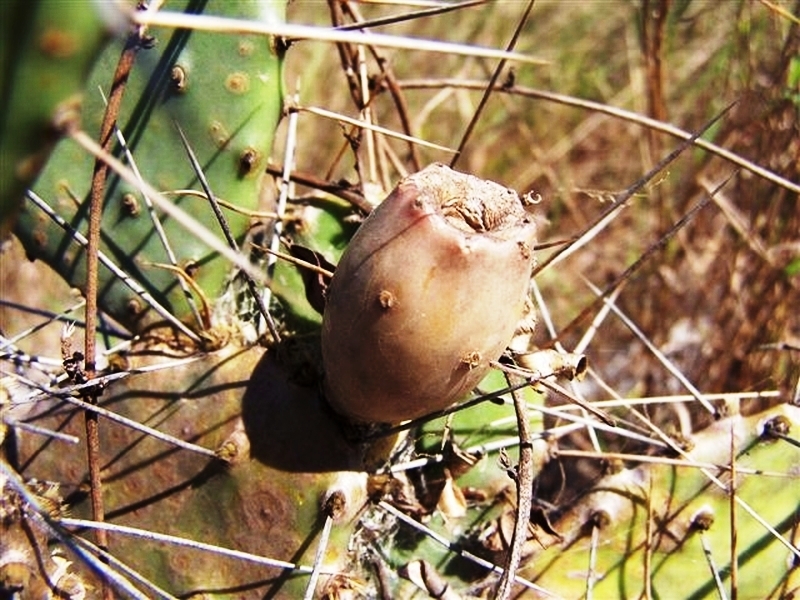
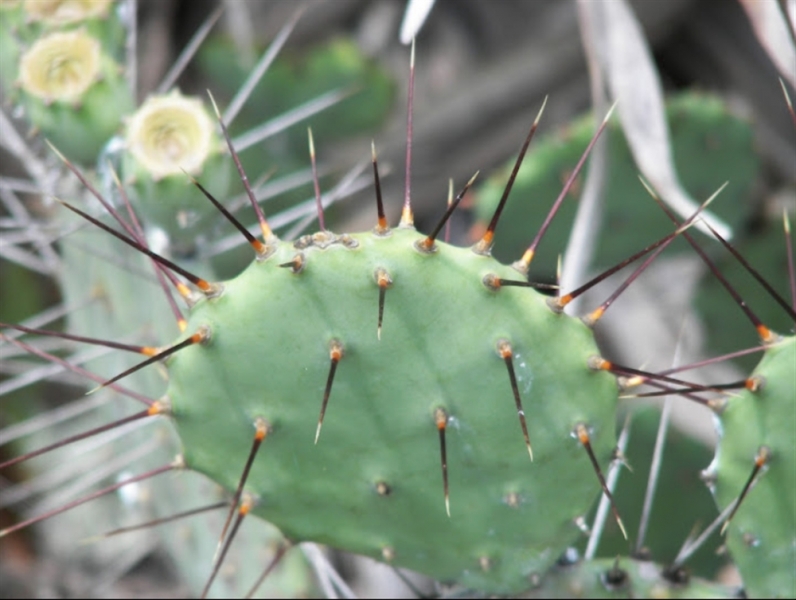
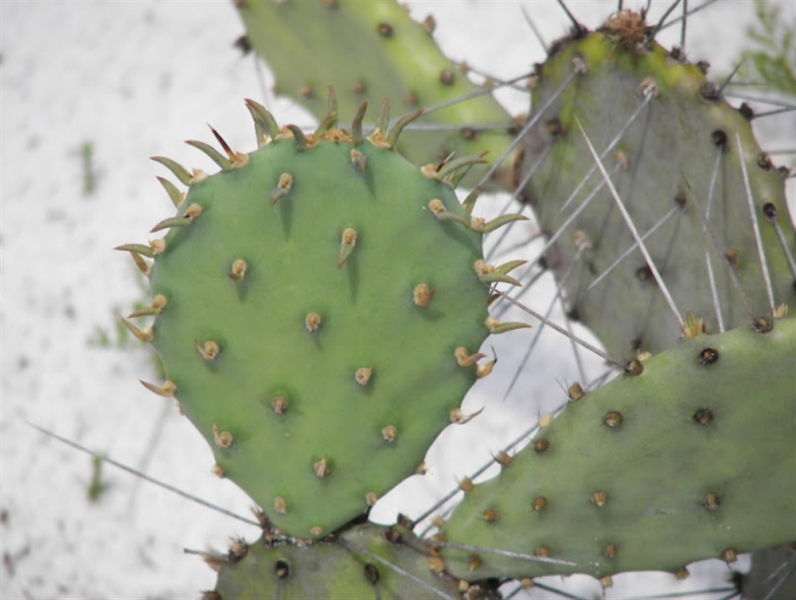
Shrub: typically a small, upright, tree-like plant with a short trunk and compact crown. Cladodes: obovate to cuneate (sometimes elliptic/oval), thick-textured, gray- to steel-green; segments near the trunk may become somewhat cylindric with age. Areoles: usually sparsely armed, commonly with 1–2 slender spines that are erect to slightly deflexed, to about 4(–6) cm; some areoles weakly armed. Glochids: present in the areoles as in other Opuntia. Flowers: pale to light yellow; buds often show recurved outer tepals; stigmas typically cream-colored. Fruits: small, thick-obovoid; seeds numerous and comparatively small.

Cytology

Reported as diploid; no alternate cytotypes are confirmed for O. ammophila.

Range & Habitat

Peninsular (lower) Florida; historically on sandy inland sites (including dunes) and other well-drained sands. It persists today mainly on open, sandy substrates in southern Florida. Not cold-hardy.

Similar or Sympatric Species

O. austrina — Usually smaller and bushier with smaller cladodes; sometimes treated similarly in older literature, but ammophila tends to be more clearly trunked and gray-green in aspect.
O. stricta — Coastal beach-dune species; typically prostrate-ascending to shrubby on dunes. Coastal setting and habit distinguish it from inland, tree-like ammophila.
O. dillenii — Another coastal taxon often confused with O. stricta; coastal distribution and pad/areole expression differ from ammophila.
O. turbinata — Dune-dweller of Georgia to northeast Florida with sand-hugging stems and short erect shoots; ammophila commonly forms a discernible trunk.
O. keyensis — Florida Keys/Cape Sable; larger, ocean-proximate plants with thicker, bright-green pads and pale pink to salmon flowers, unlike the yellow-flowered, gray-green ammophila.
O. humifusa — Widespread eastern species; commonly prostrate to low-mounded. The upright, trunked habit and gray-green pads help separate ammophila where they approach.

Other Notes

Earlier authors sometimes associated O. ammophila with the O. humifusa complex, but its frequently single-trunked, tree-like habit has long been remarked upon and remains a useful field character. Urbanization and habitat loss likely account for many present-day plants being smaller than historical accounts suggest.

For more information, see

Majure, L.C. (2007) Majure, L.C. (2007) The ecology and morphological variation of Opuntia (Cactaceae) species in the mid-south, United States. Graduate thesis, Department of Biological Sciences, Mississippi State University.

Photo credits

All photographs on this page are by Daniel Alfred Green. 
Leave a Reply

Your email address will not be published. Required fields are marked *