Baxter, Cactus and Succulent Journal (U.S.) 5(6): 489, 1933
Holotype; Herbarium; Herbarium; Herbarium; Herbarium; Herbarium; Herbarium; Herbarium; Herbarium; Herbarium; Herbarium; Herbarium; Herbarium; Herbarium
Original Description
What is Opuntia aurea?
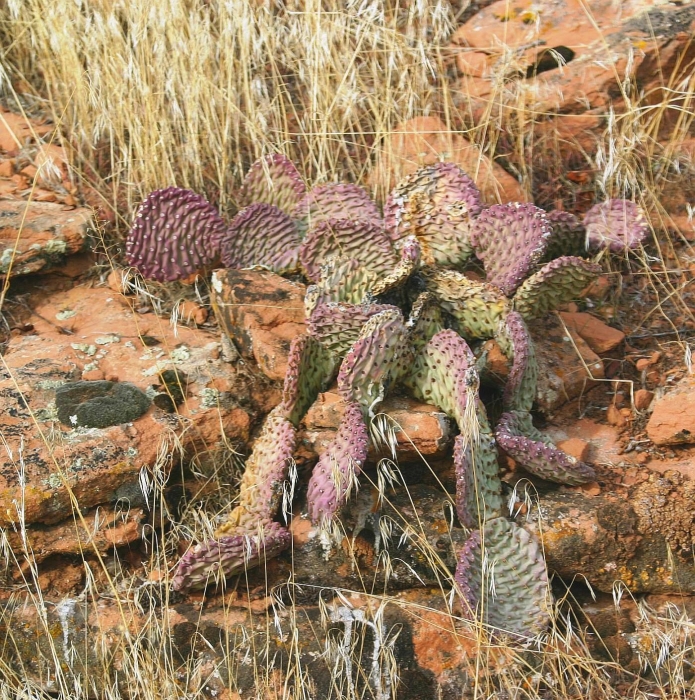
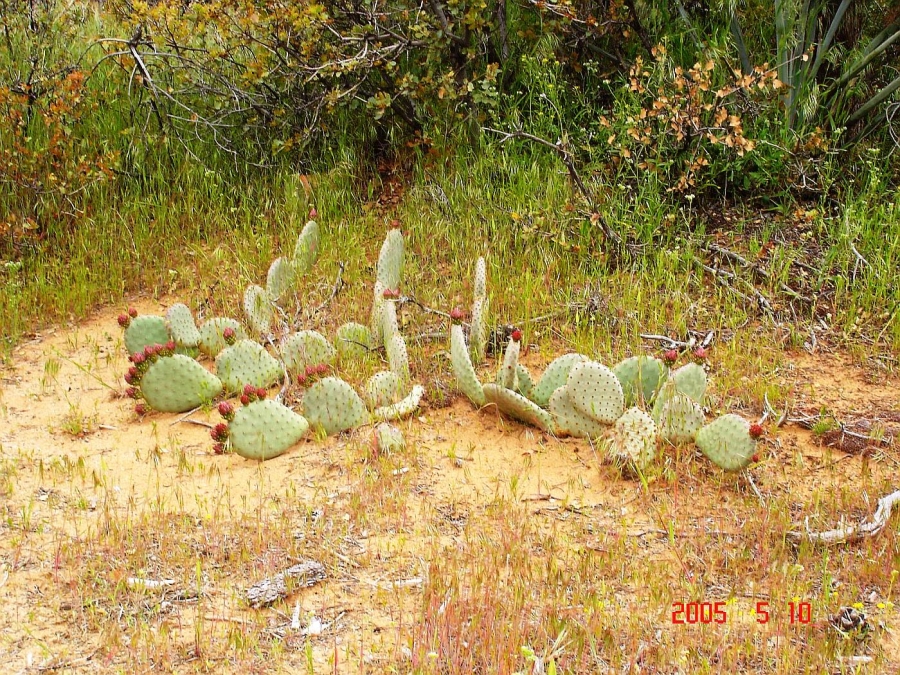
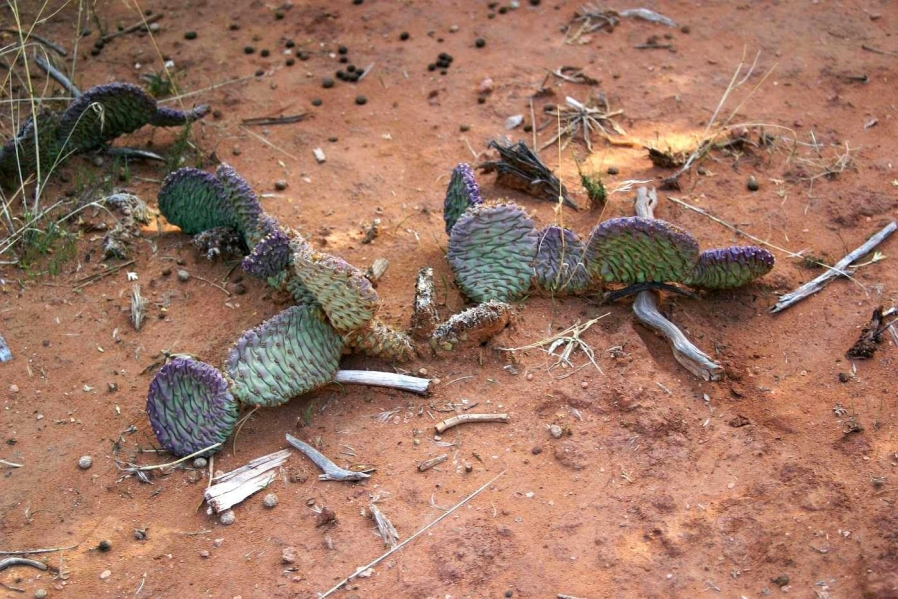
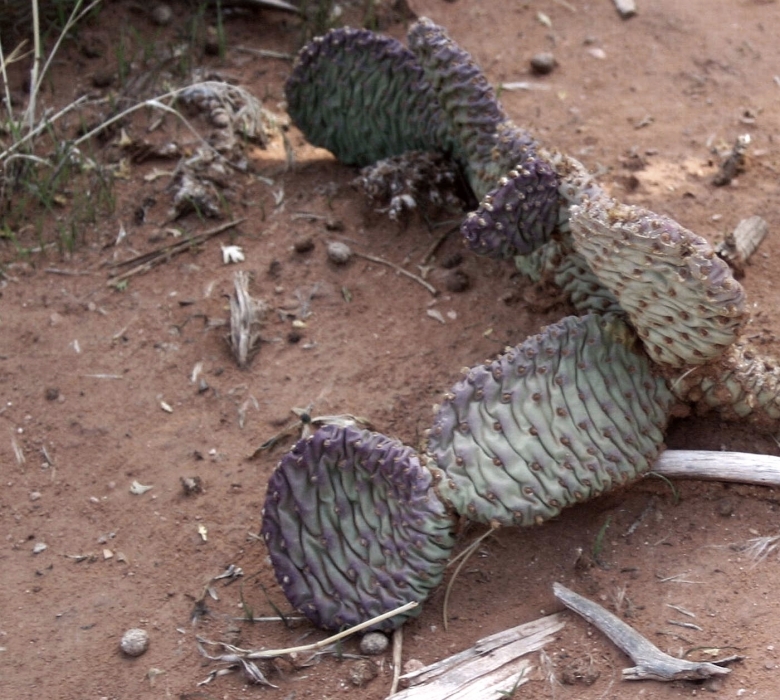
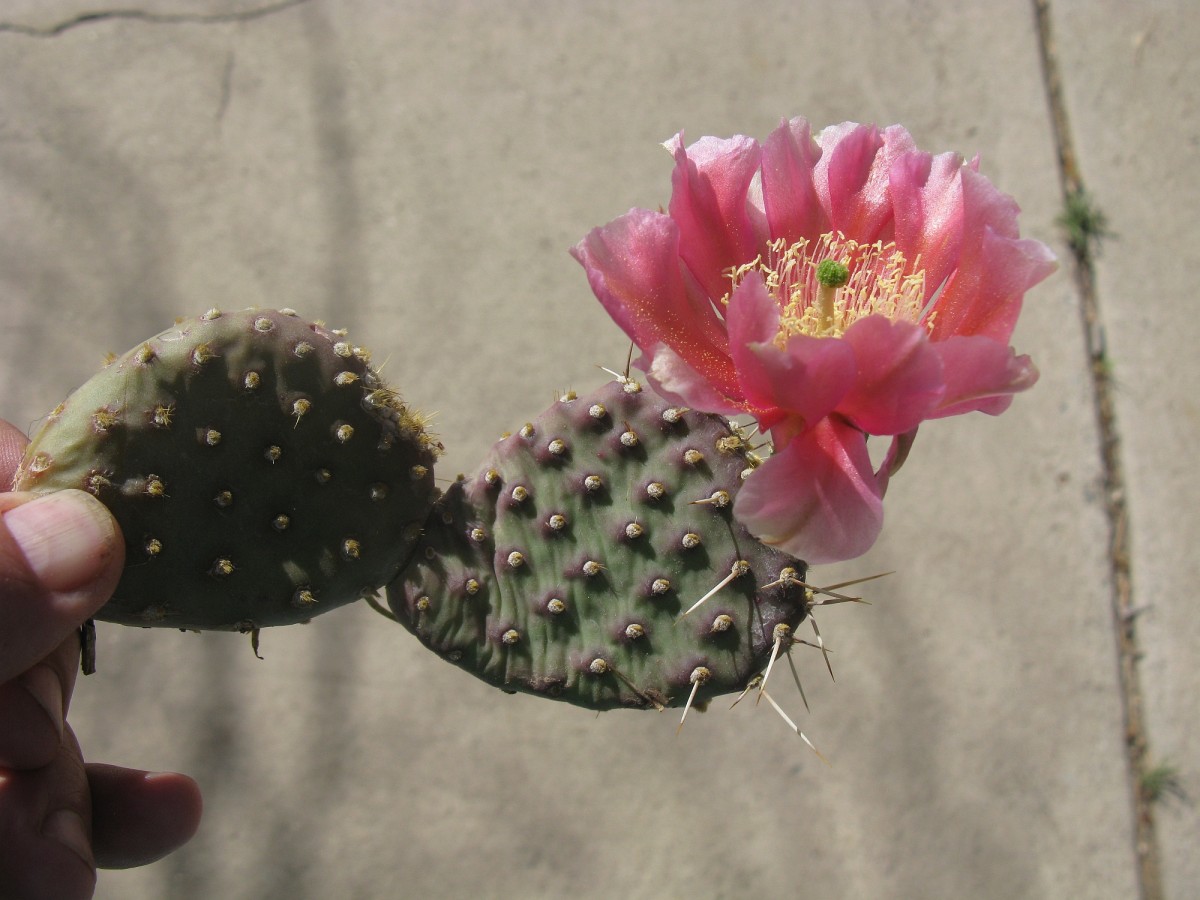
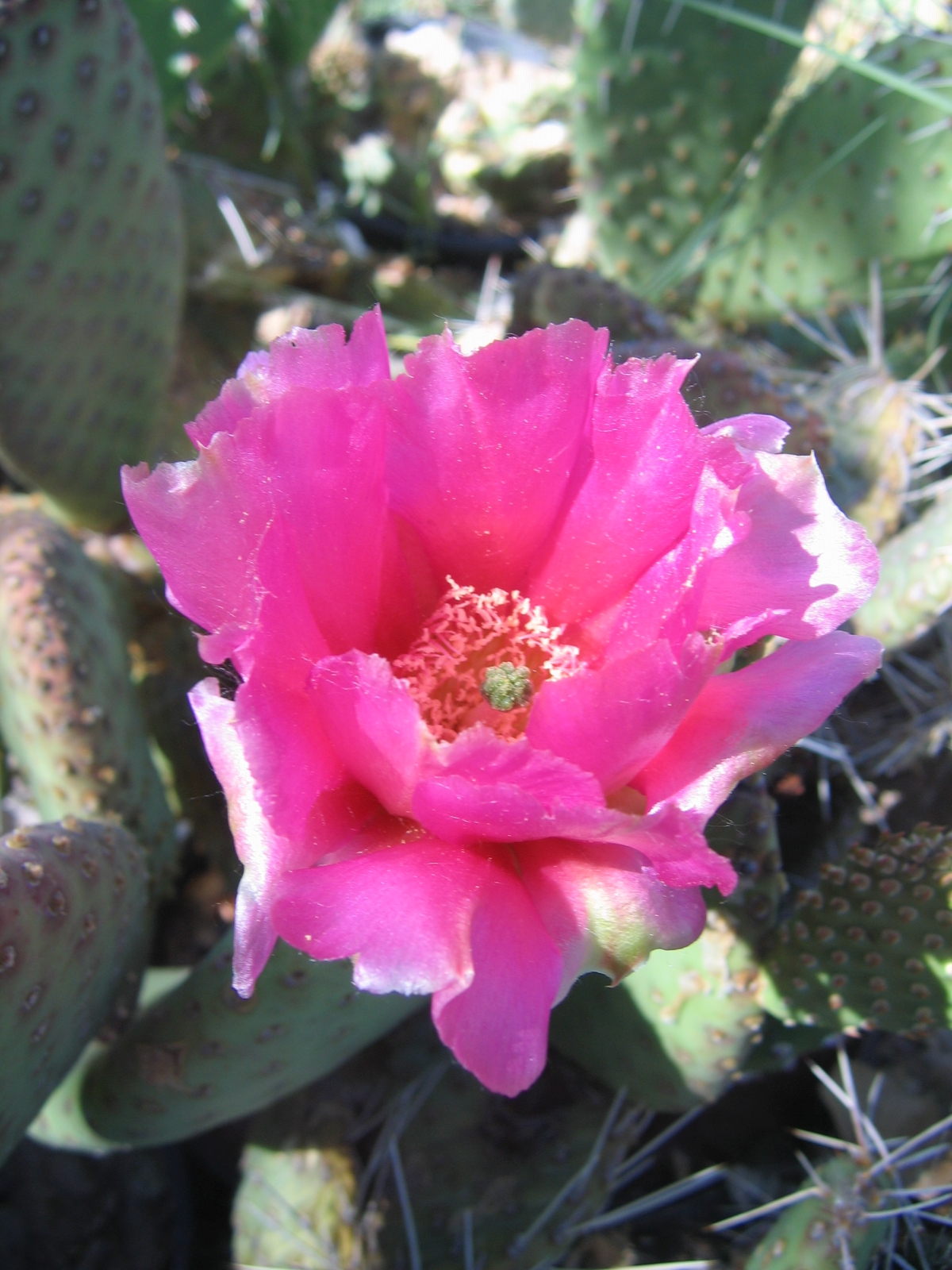
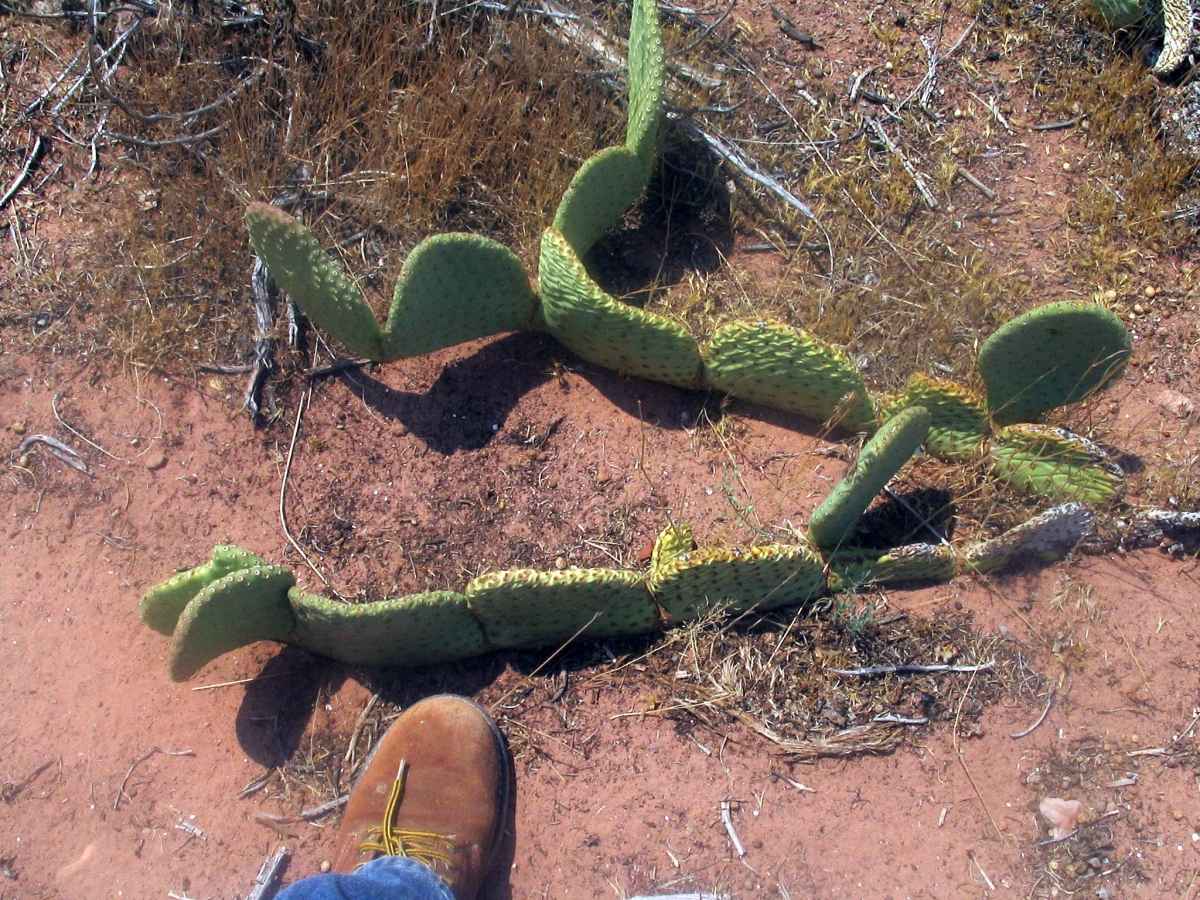
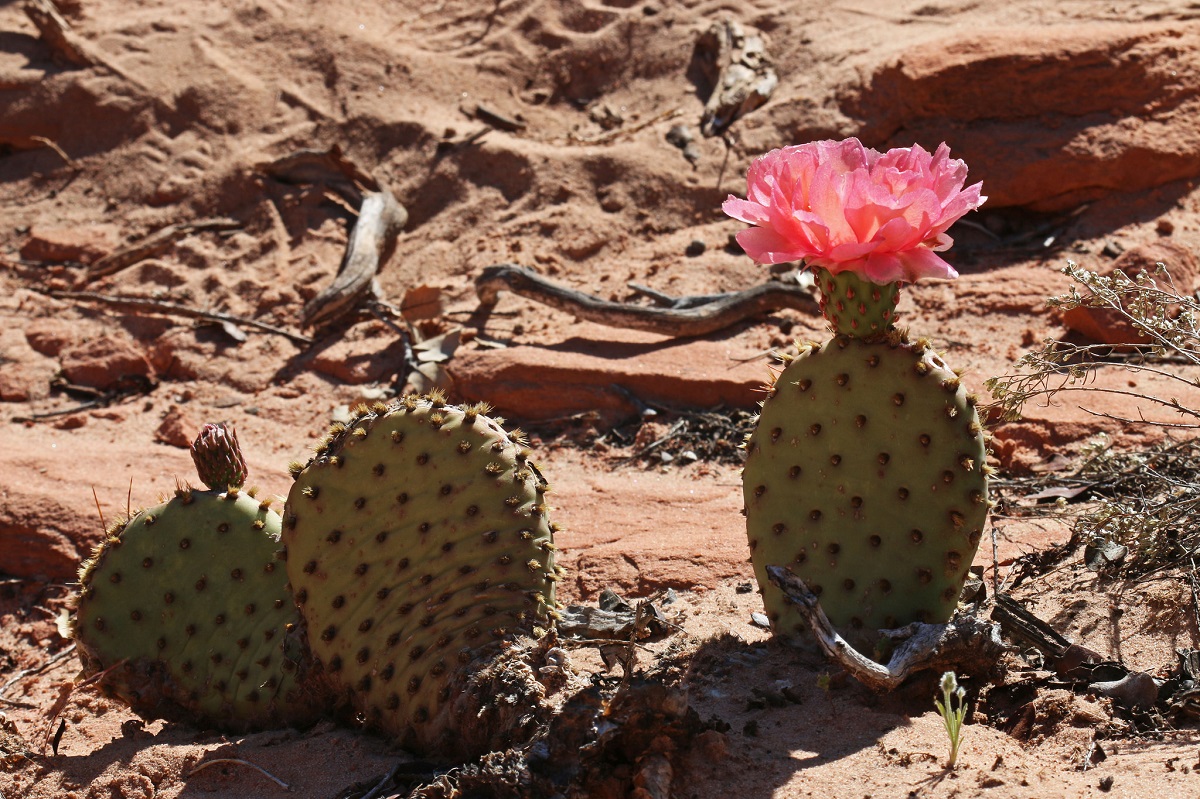
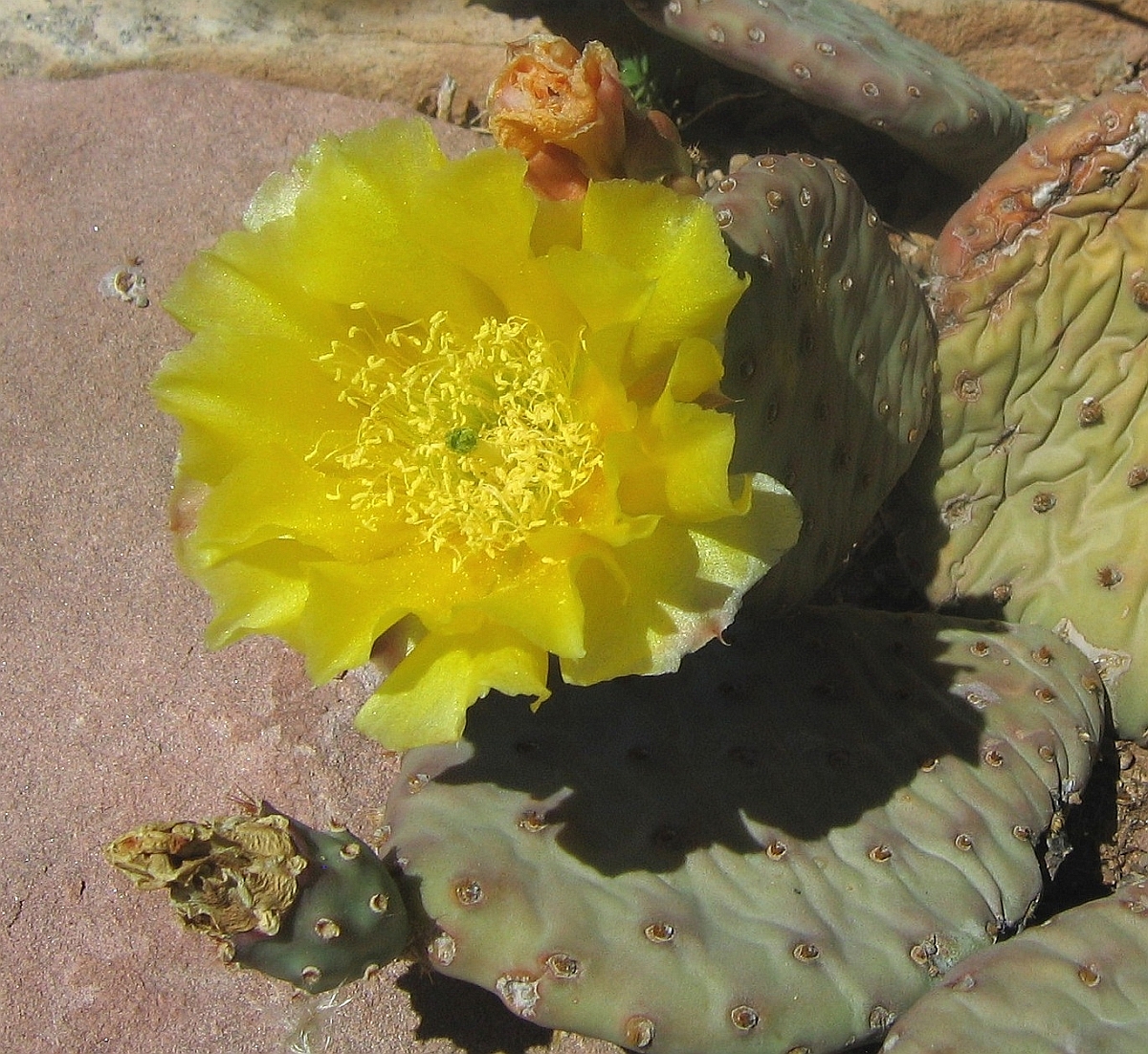
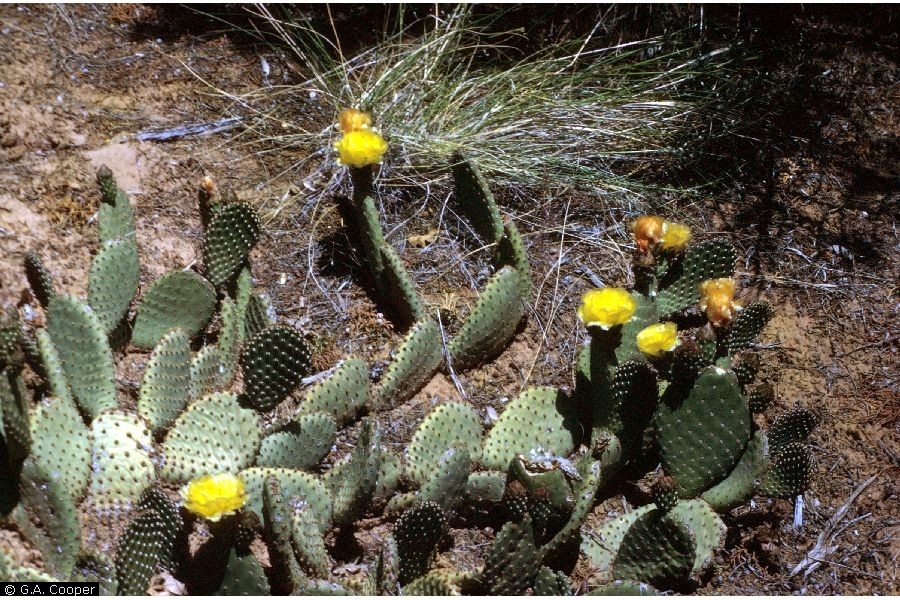
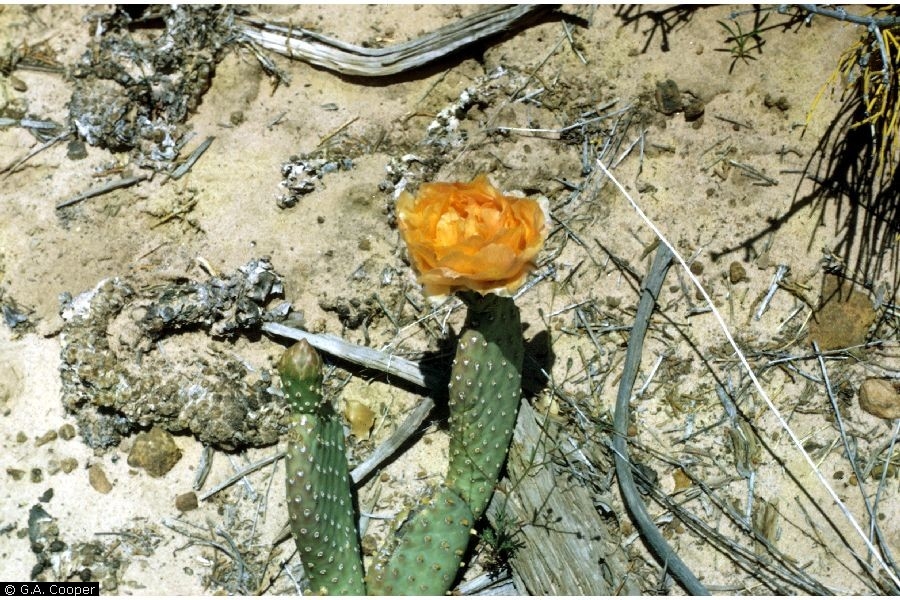
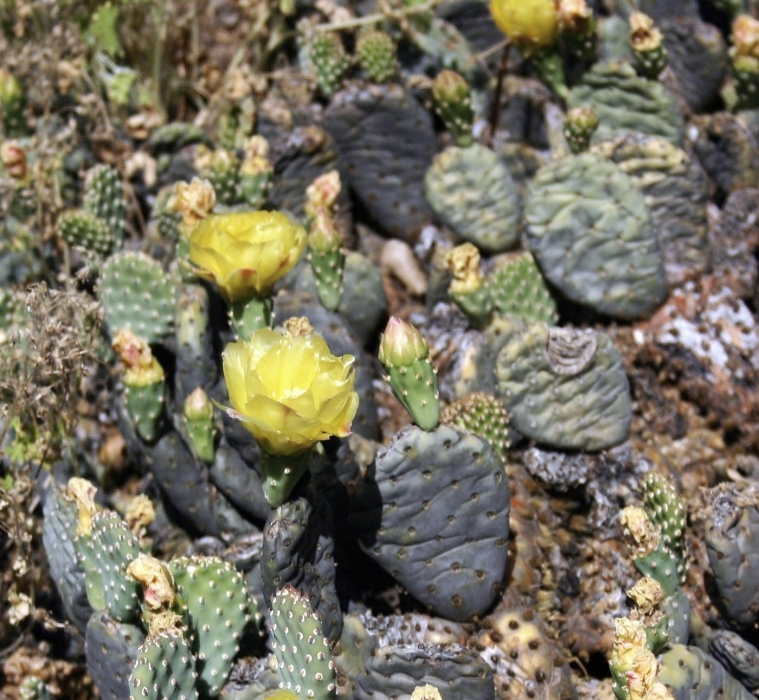
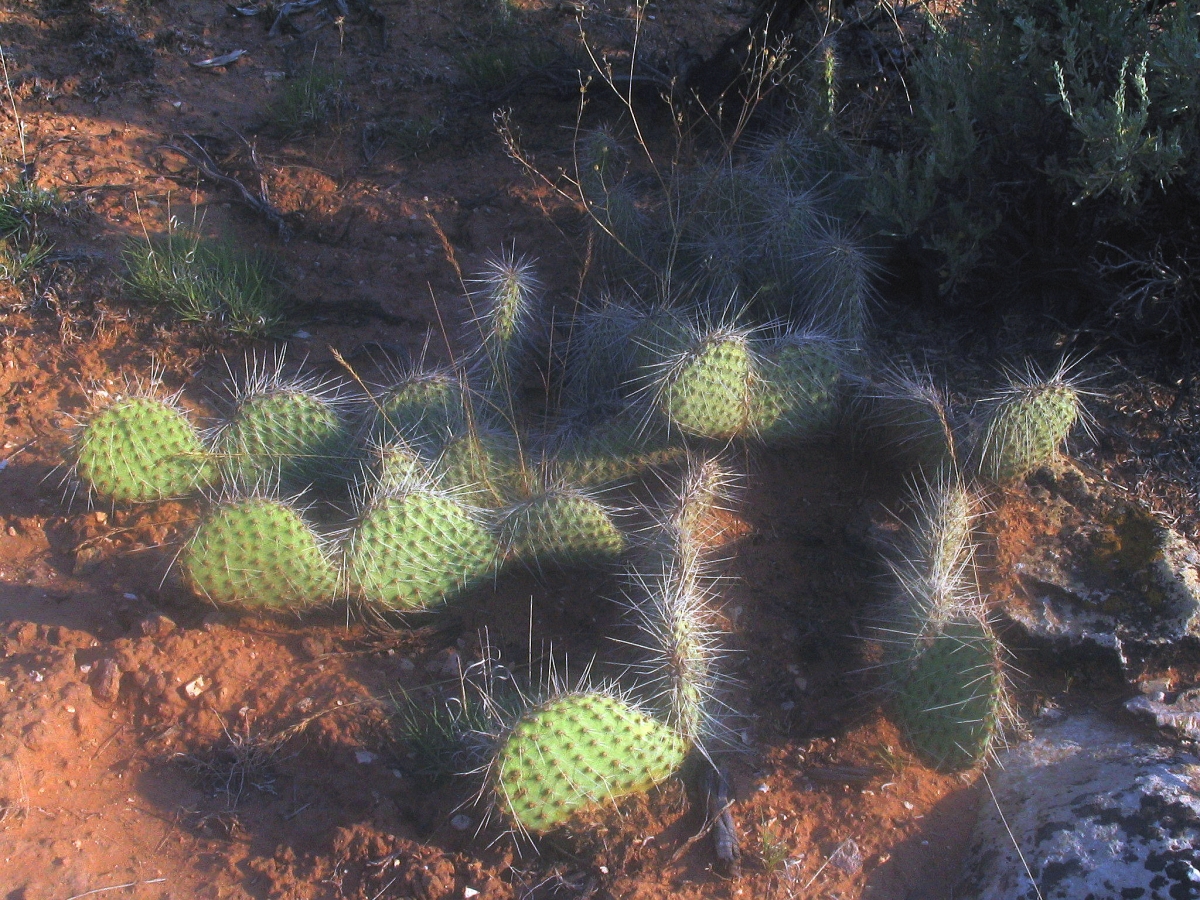
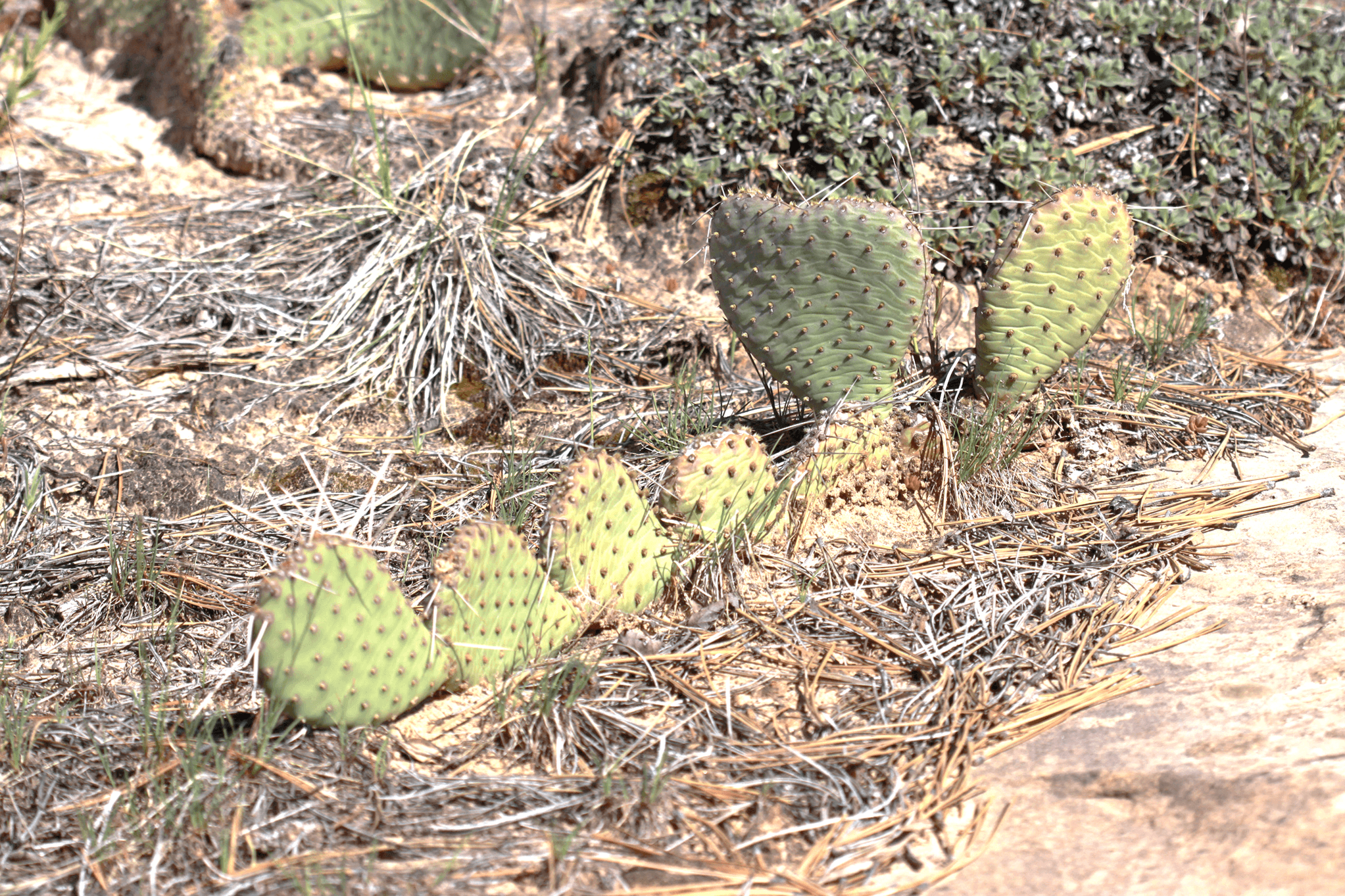
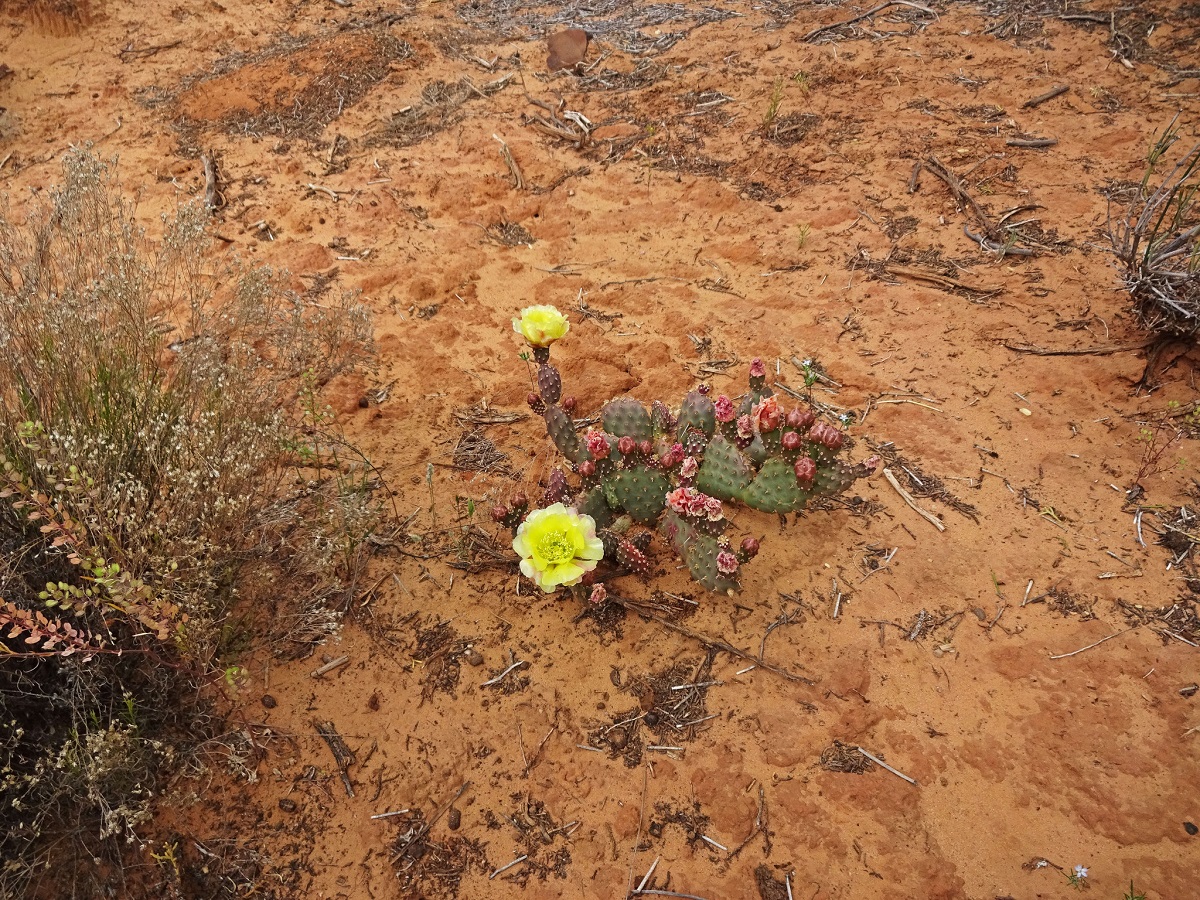
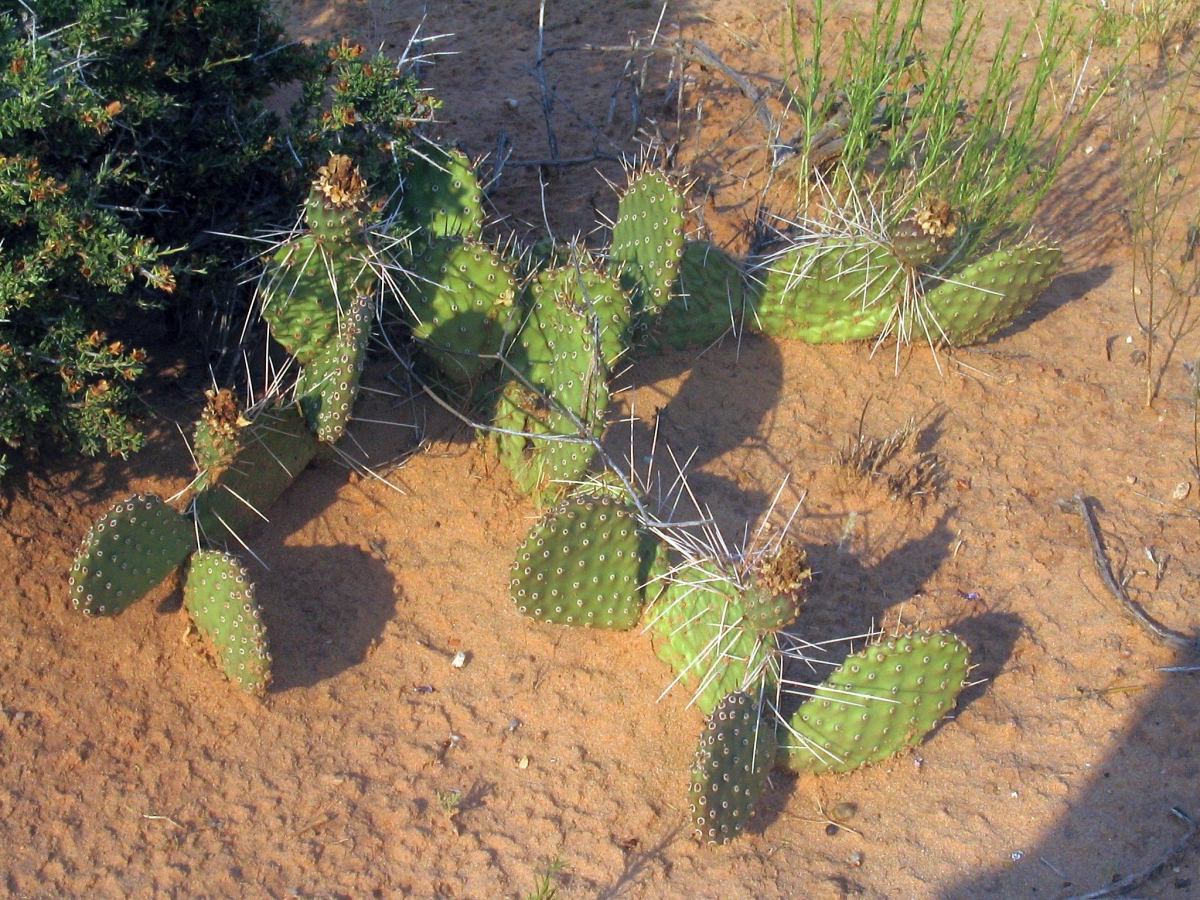
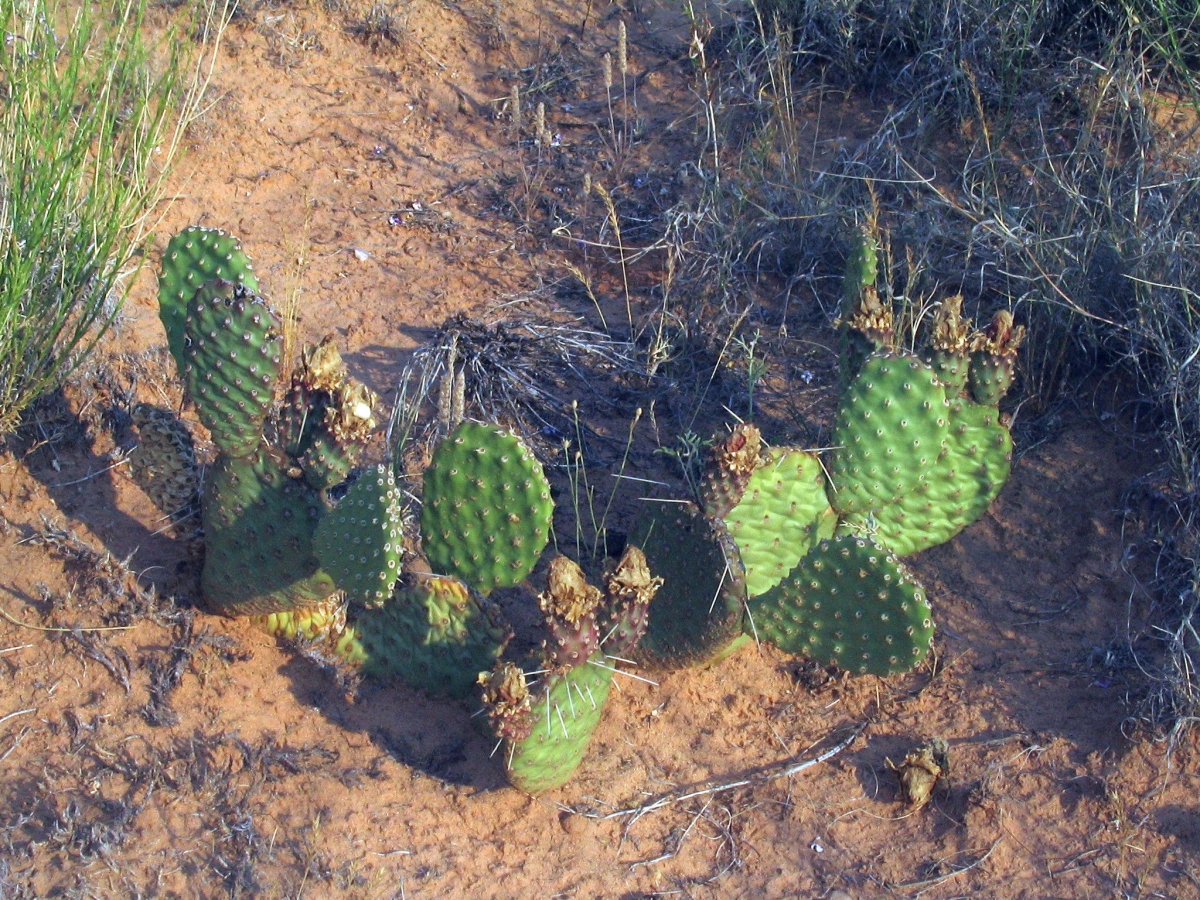
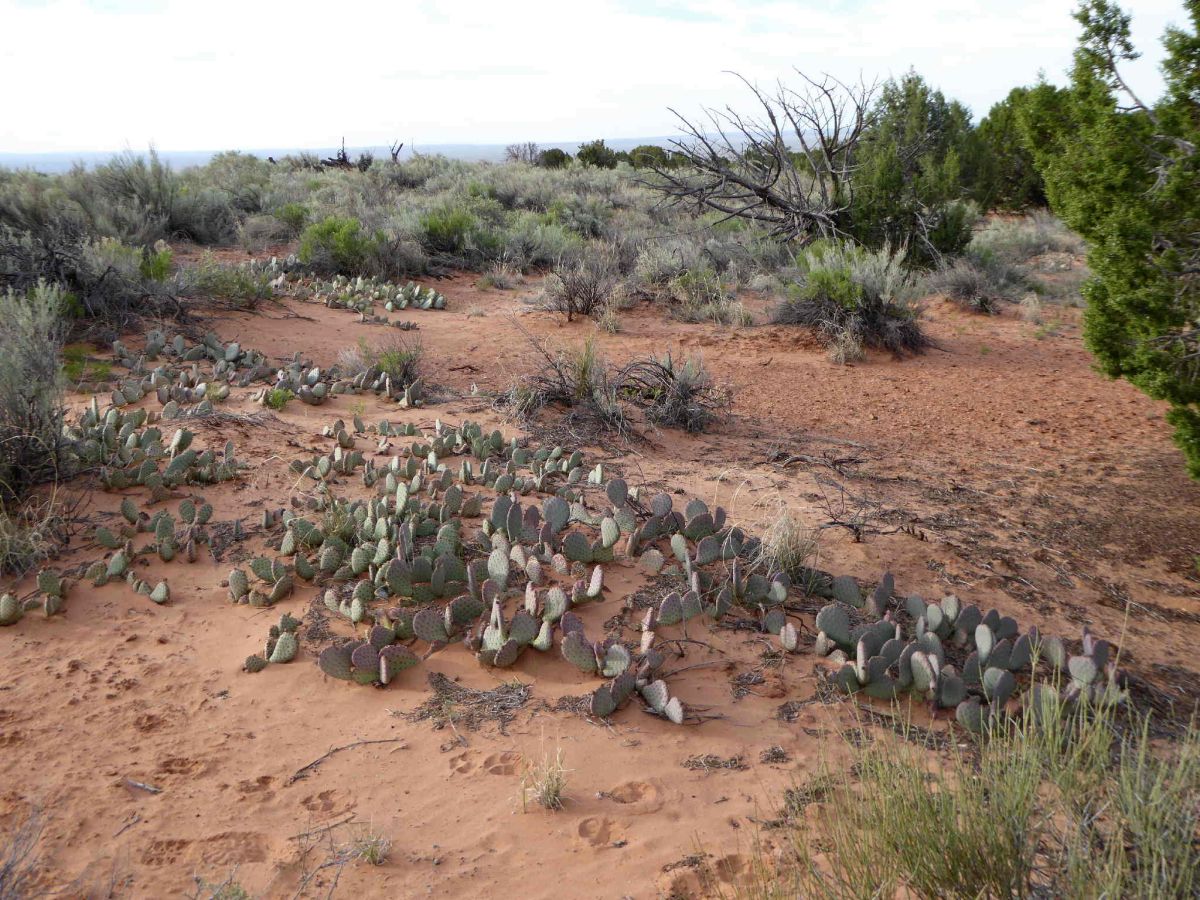
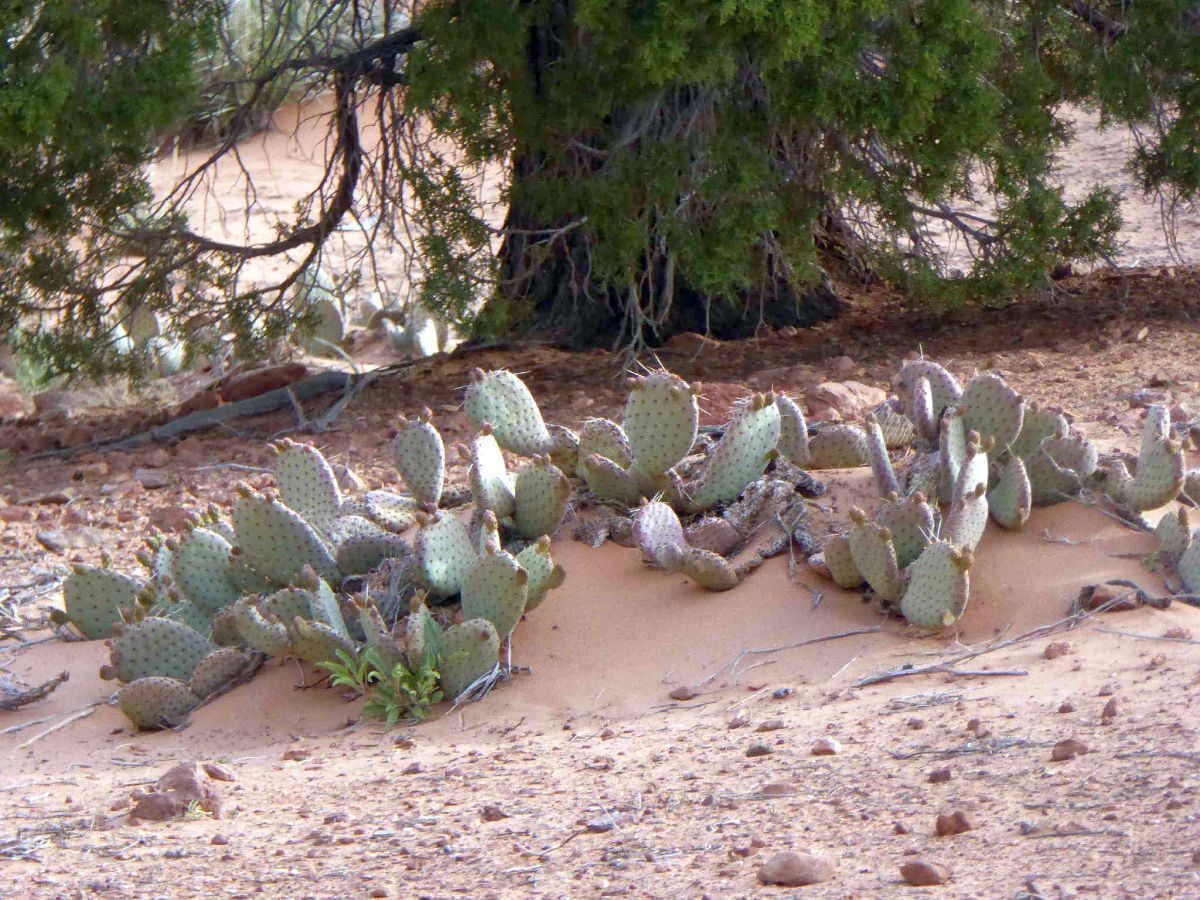
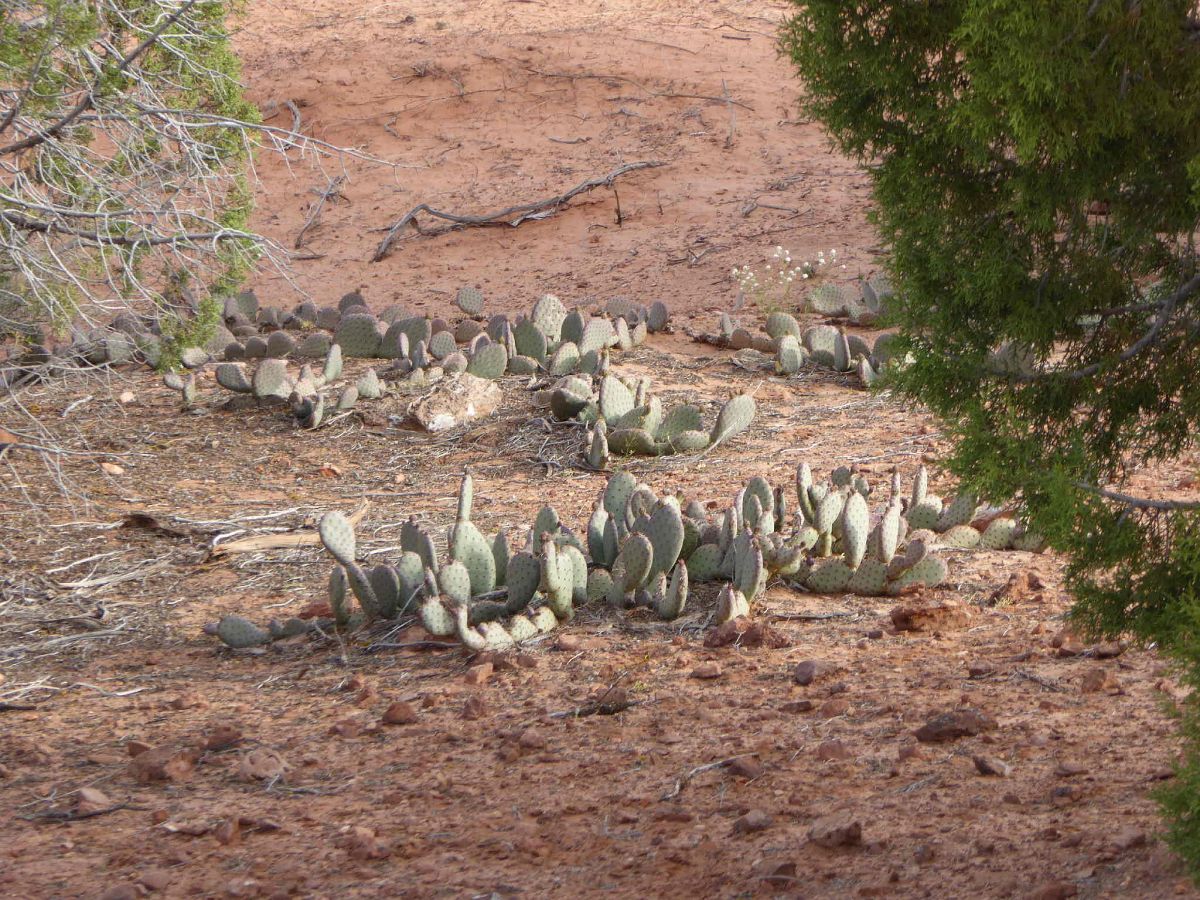
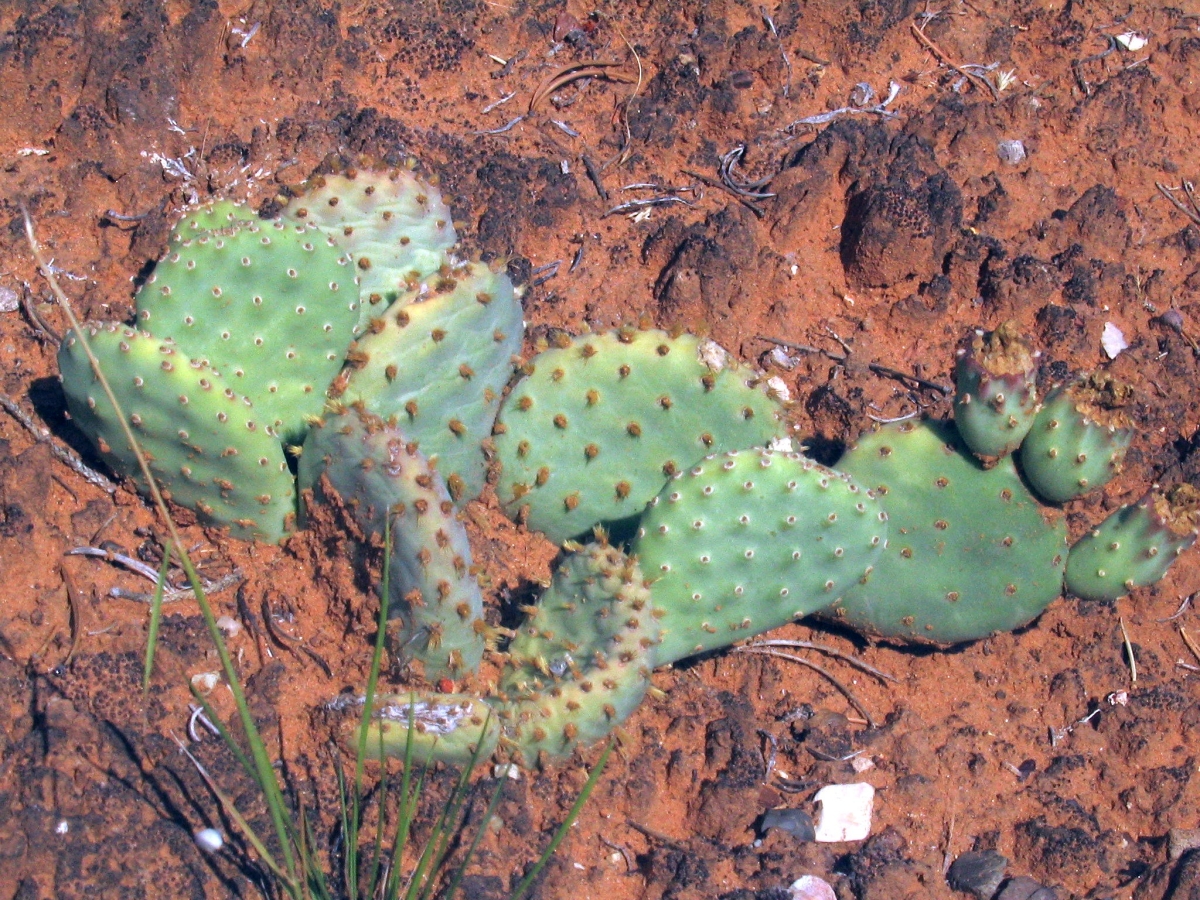
Opuntia aurea is a prostrate, mat-forming prickly-pear of southern Utah and adjacent northern Arizona. Plants typically creep outward in low patches rather than forming upright shrubs, and they are recognizable on this site by their variable armament (often sparse to spineless on portions of a pad) and the wide range of flower colors shown here.
Details
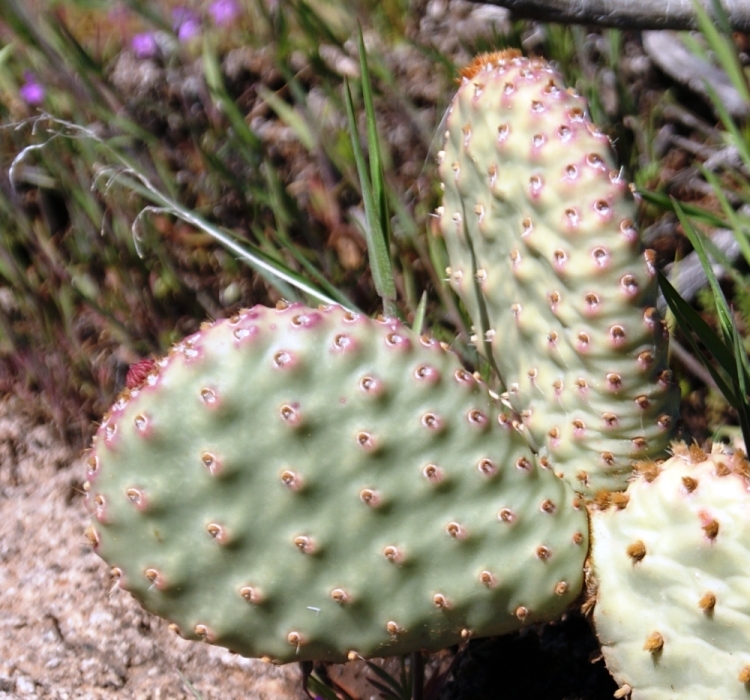
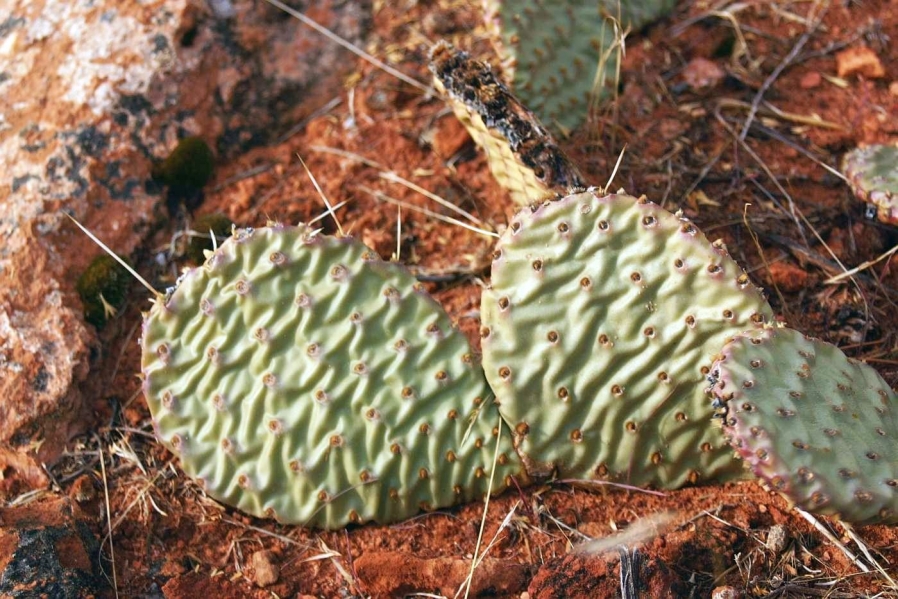
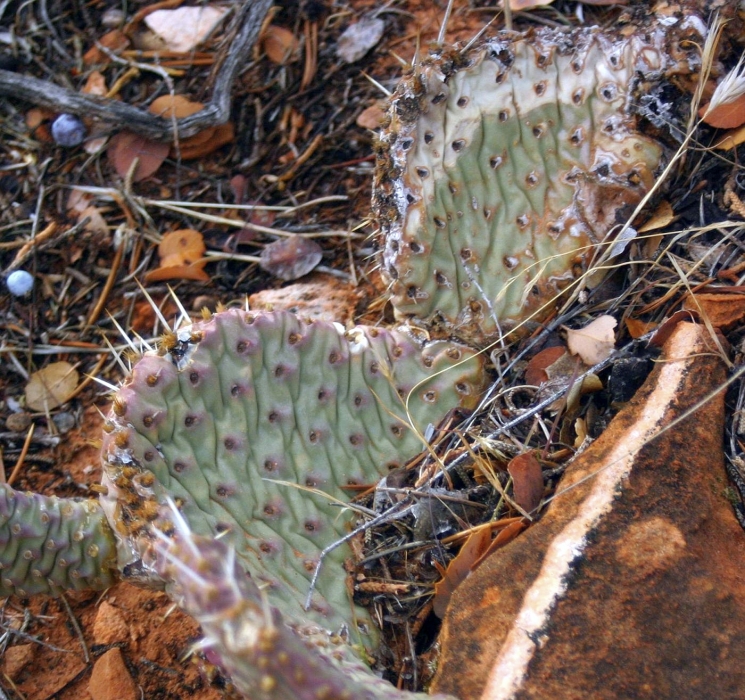
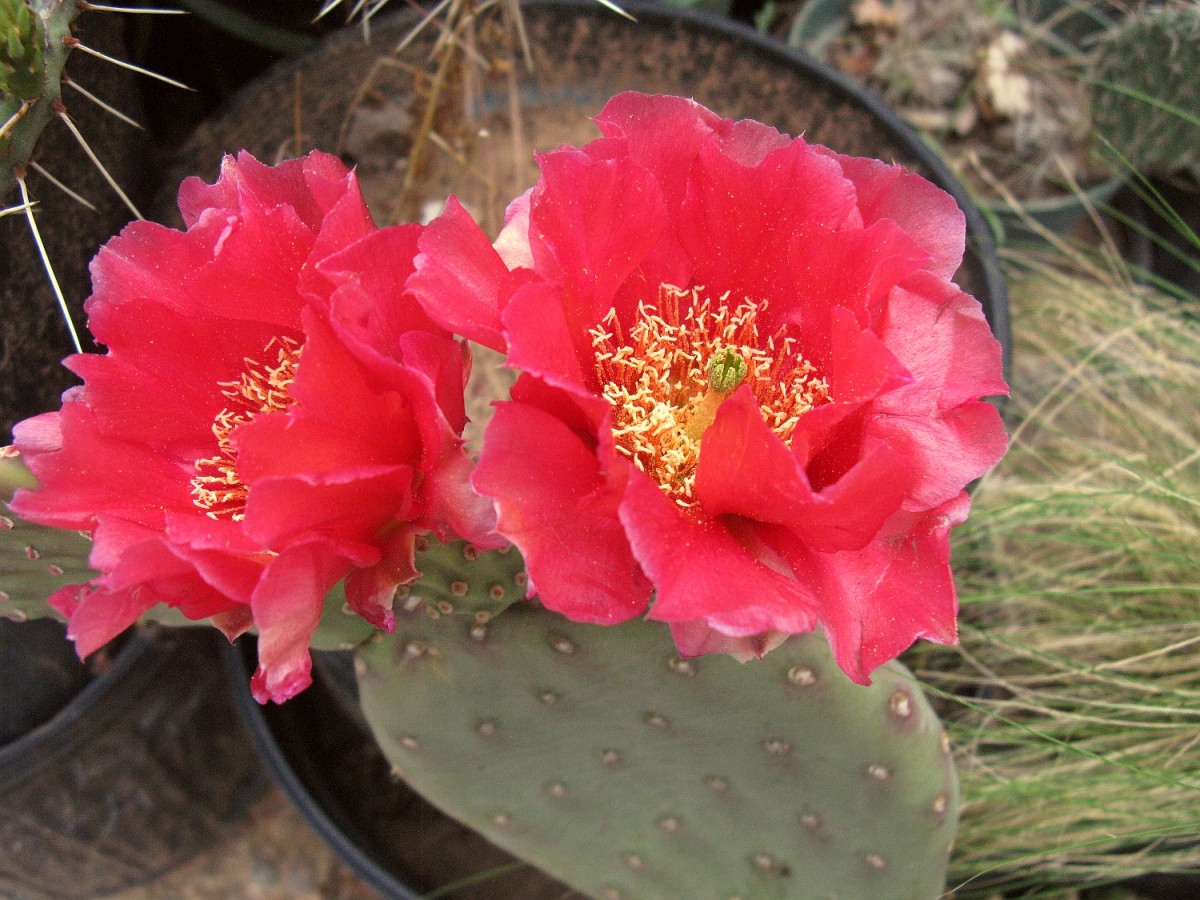
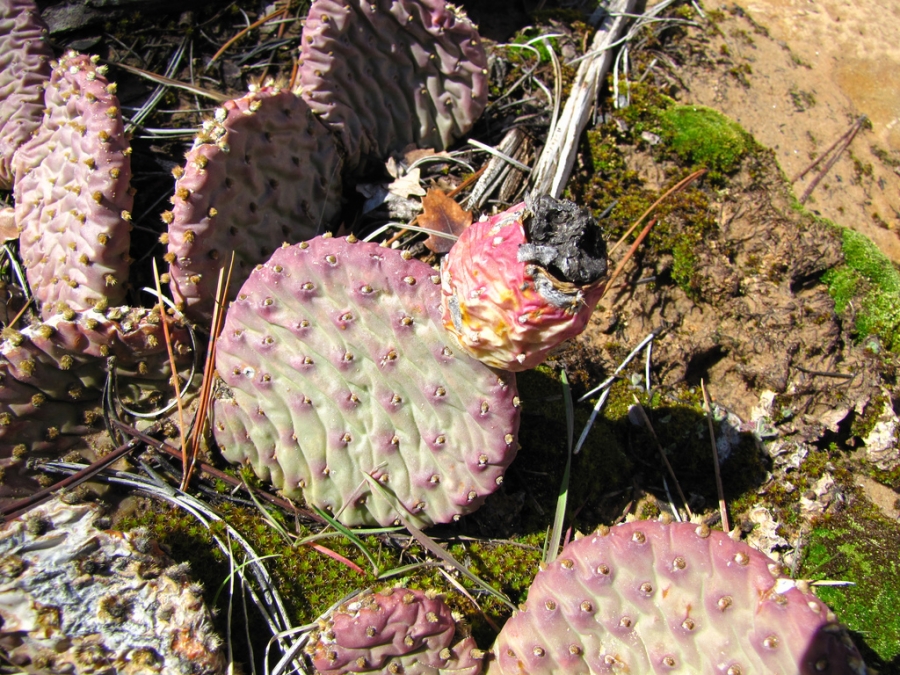
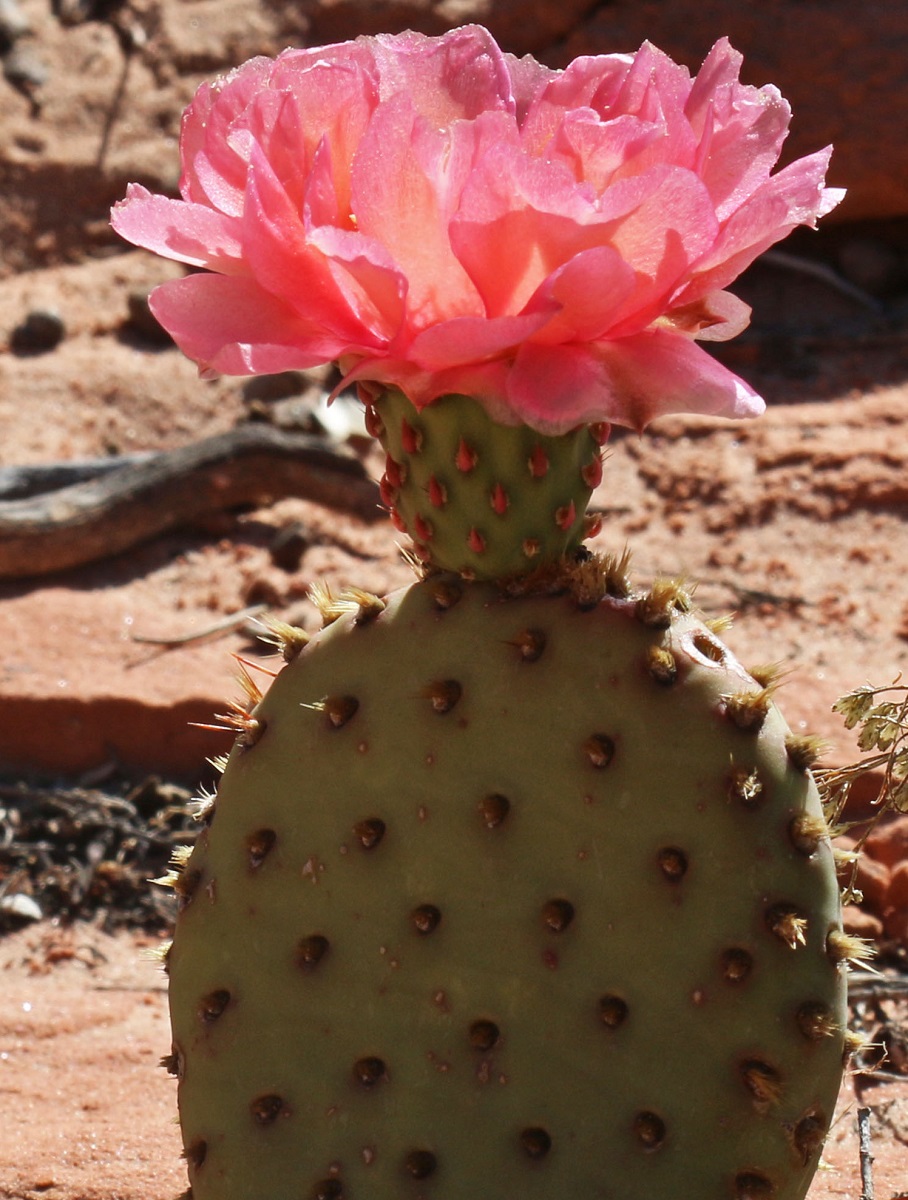
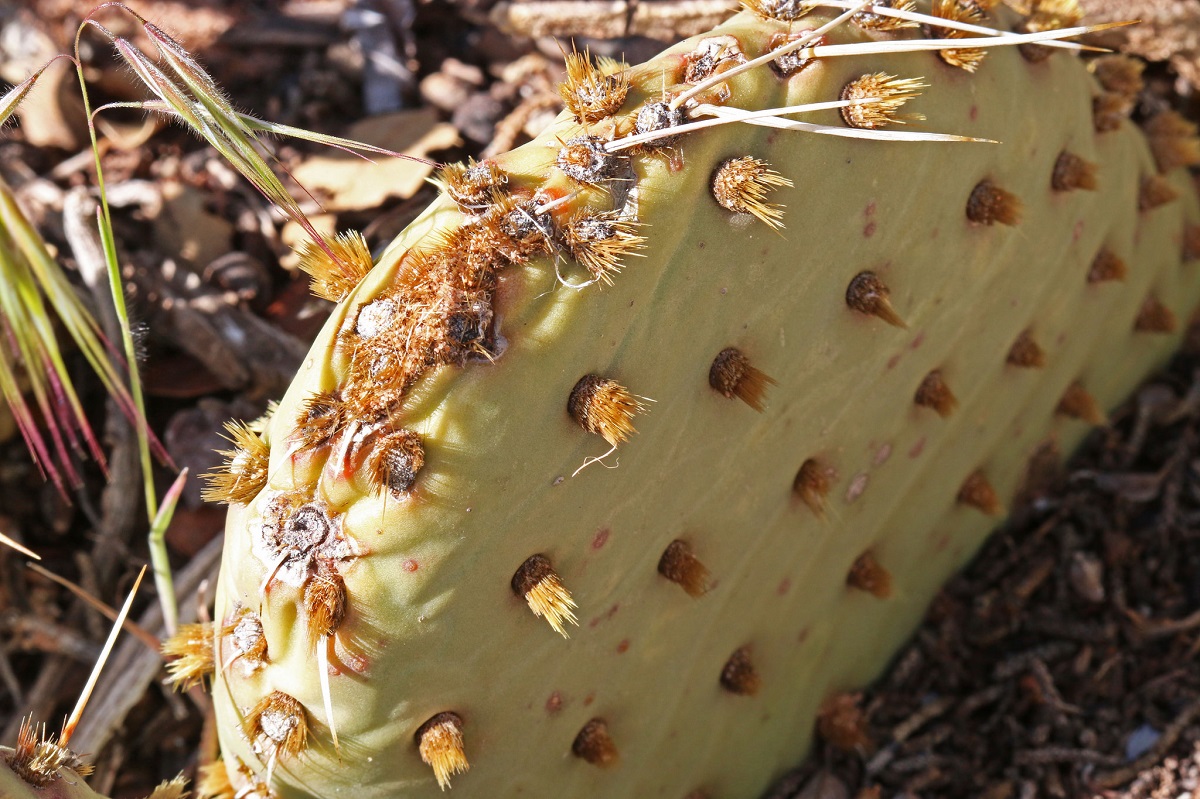
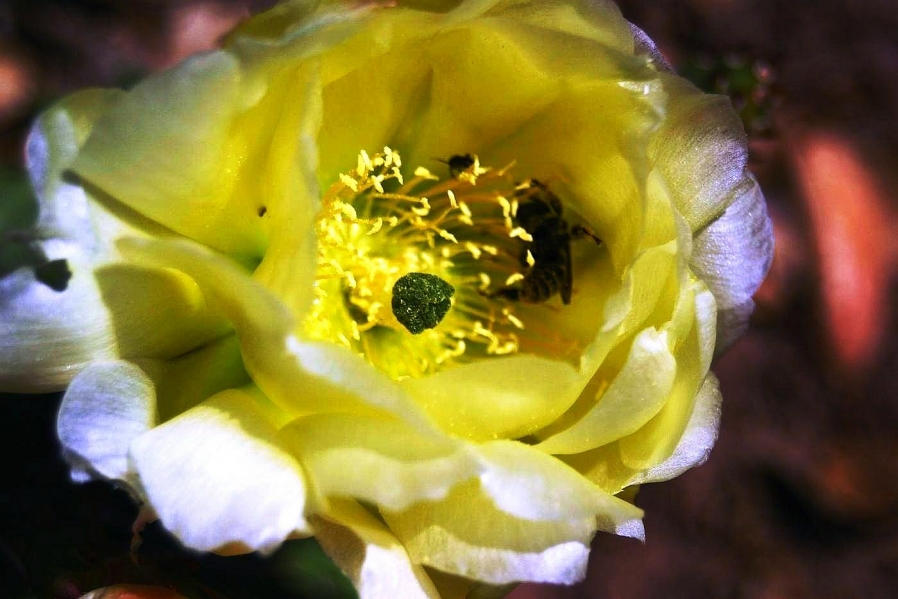
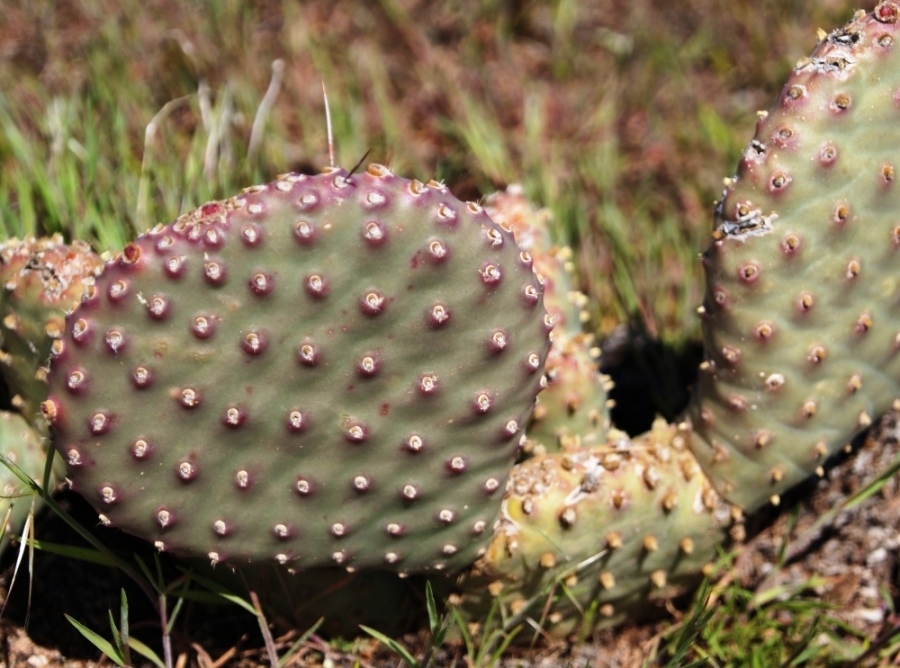
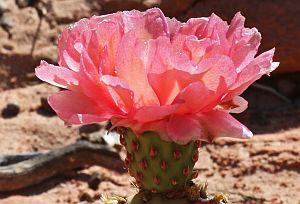
Shrubs: low, spreading mats rather than upright shrubs. Cladodes: oval to broadly obovate and notably thick; pads may flush pink to purple in cool seasons. Areoles: sometimes slightly sunken; armament variable—from nearly spineless to well armed—either confined toward the pad tips or also on pad faces. Glochids: present in the areoles. Flowers: variable, ranging from pale to bright yellow through apricot-pink to deep pink. Fruits: dry at maturity, usually spineless though occasional apex spines may occur; seeds typically round with a noticeable rim.
Cytology
Hexaploid.
Range & Habitat
Southern Utah and extreme northern Arizona, as shown on this page; plants illustrate a low, mat-forming habit in that region.
Similar or Sympatric Species
O. basilaris — Historically associated because aurea often shows sparse spines and slightly sunken areoles, but the two are treated here as distinct based on the consistent expression used on this site.
Other Notes
Aurea on this page commonly appears nearly spineless, with slightly sunken areoles and pads that color richly in winter. The combination of a low, creeping habit with variable armament and broad flower-color range is the practical field cue used here.
Special thanks to the Cactus and Succulent Society Journal for permission to reproduce the original description.
New nomenclatural combinations have been proposed for the species.