Griffiths, Annual Report of the Missouri Botanical Garden 19: 266, 1908
Original Description
What is Opuntia discata?
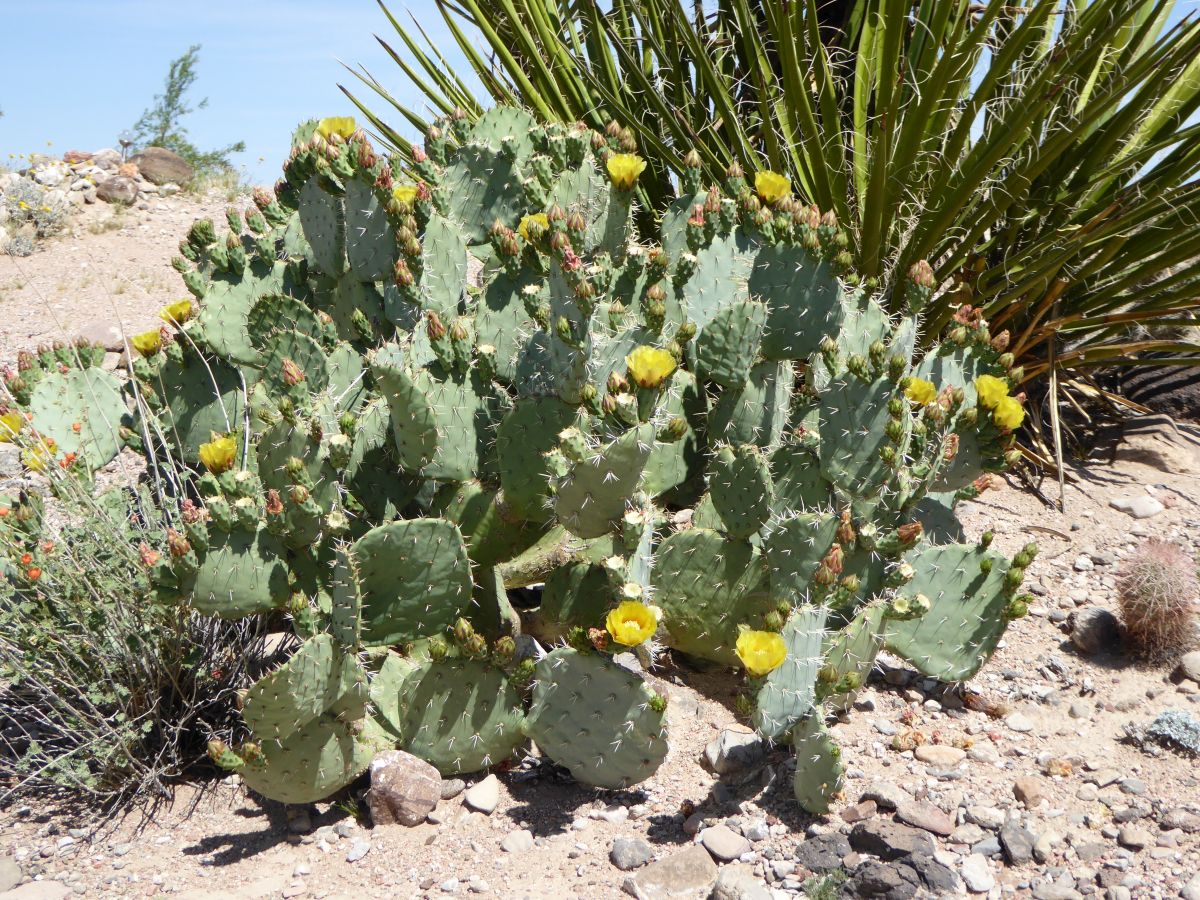
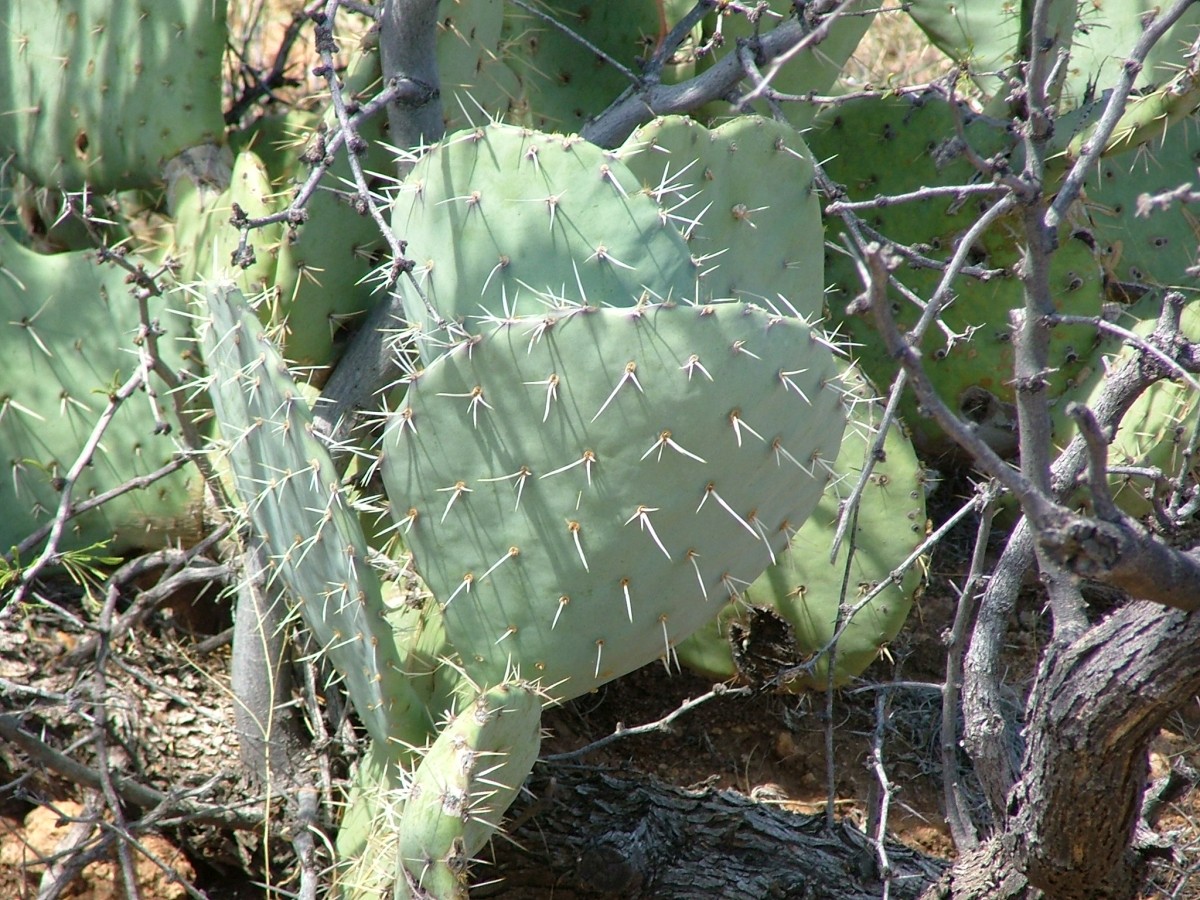
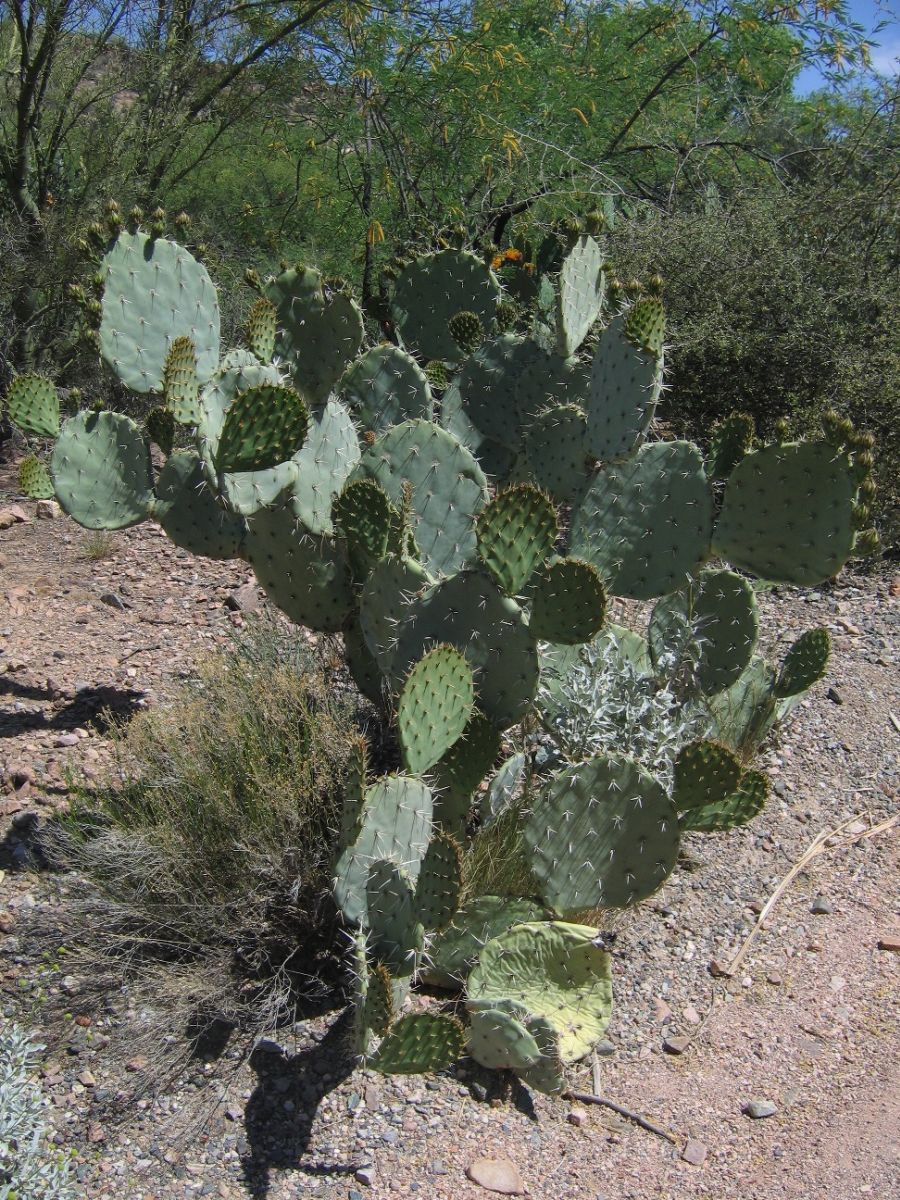
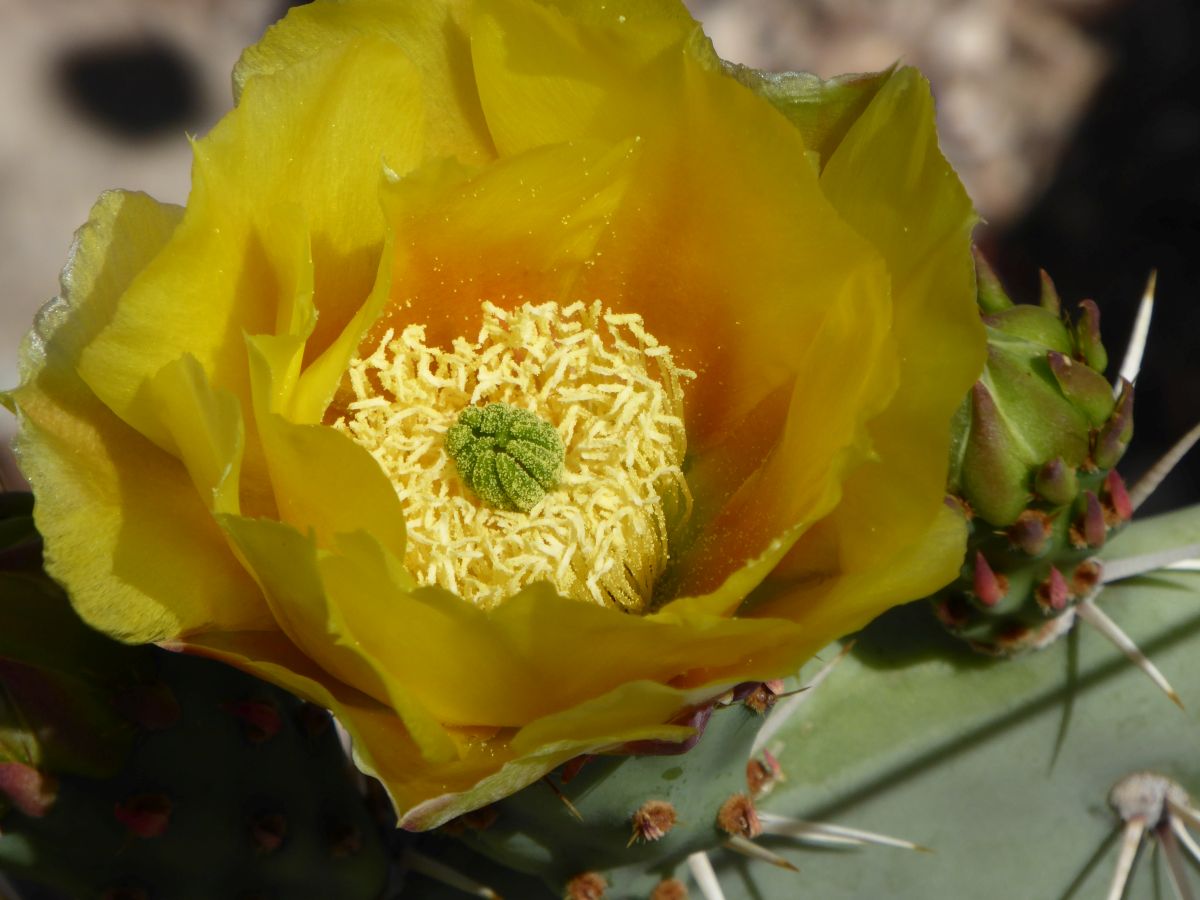
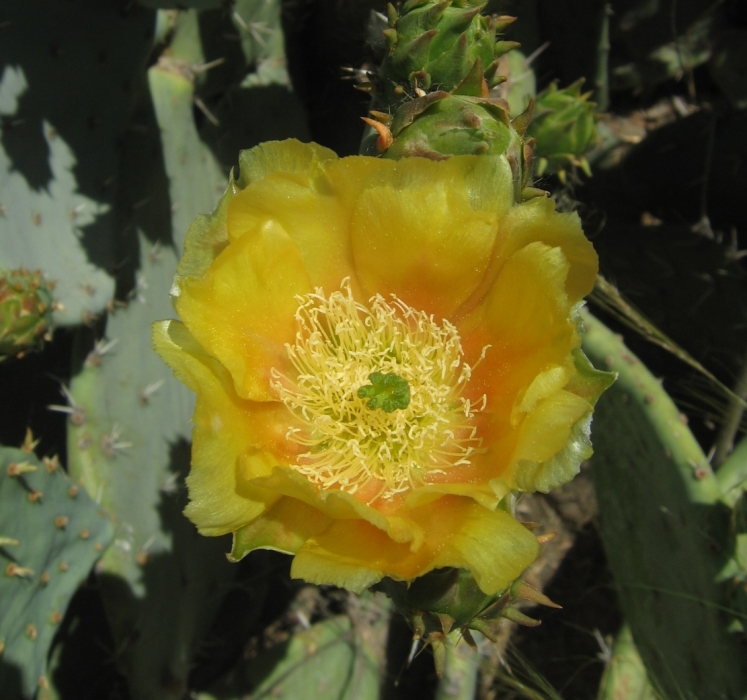
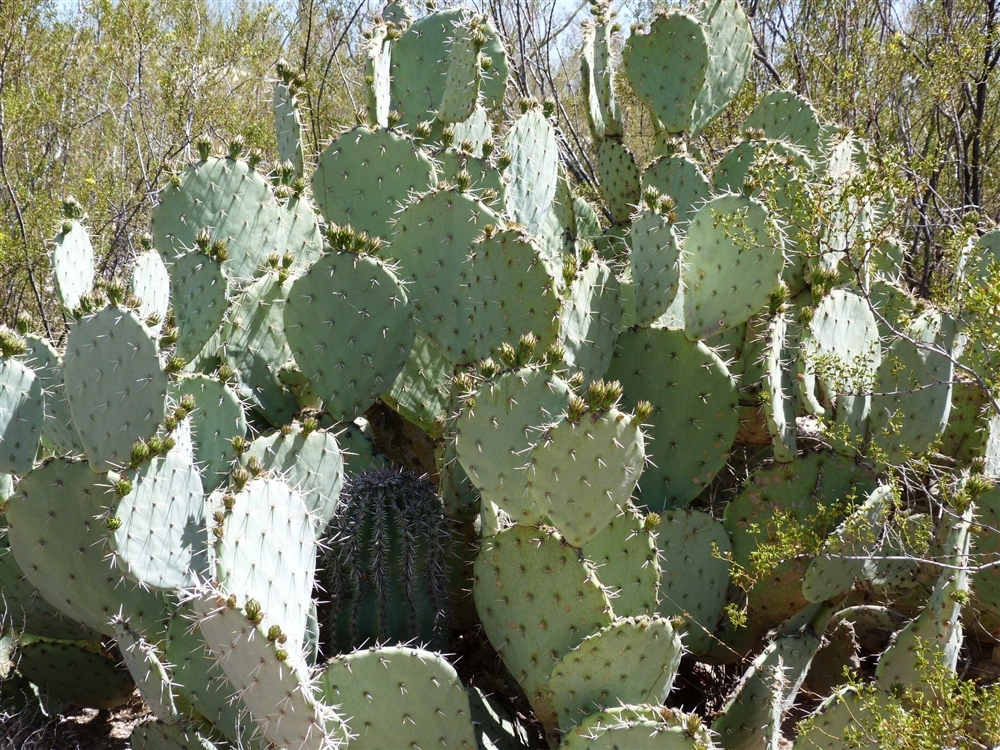
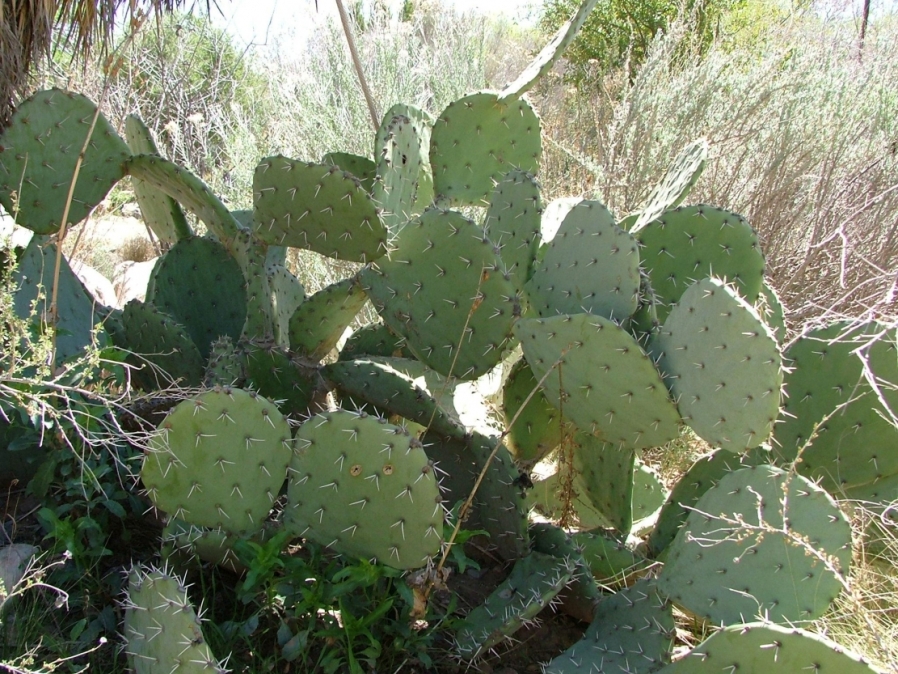
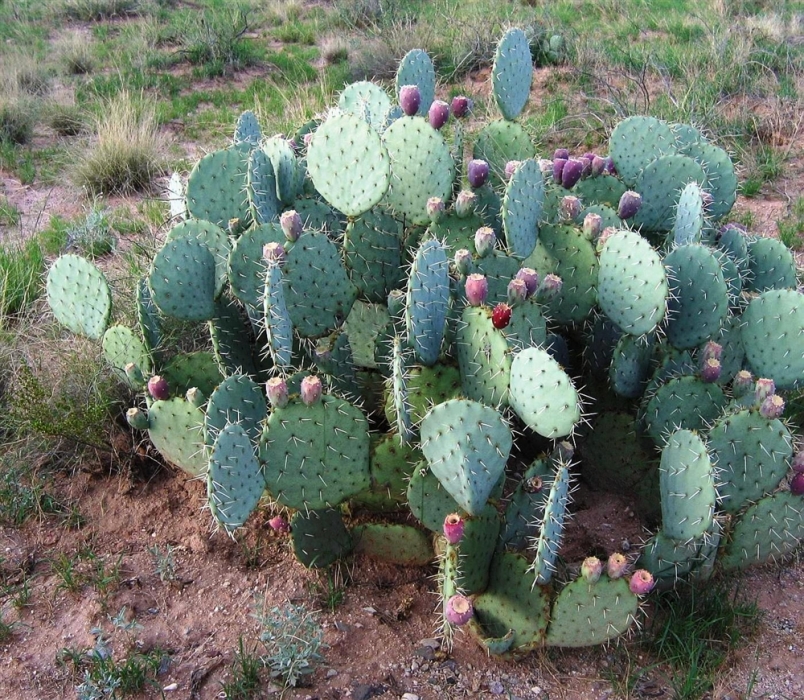
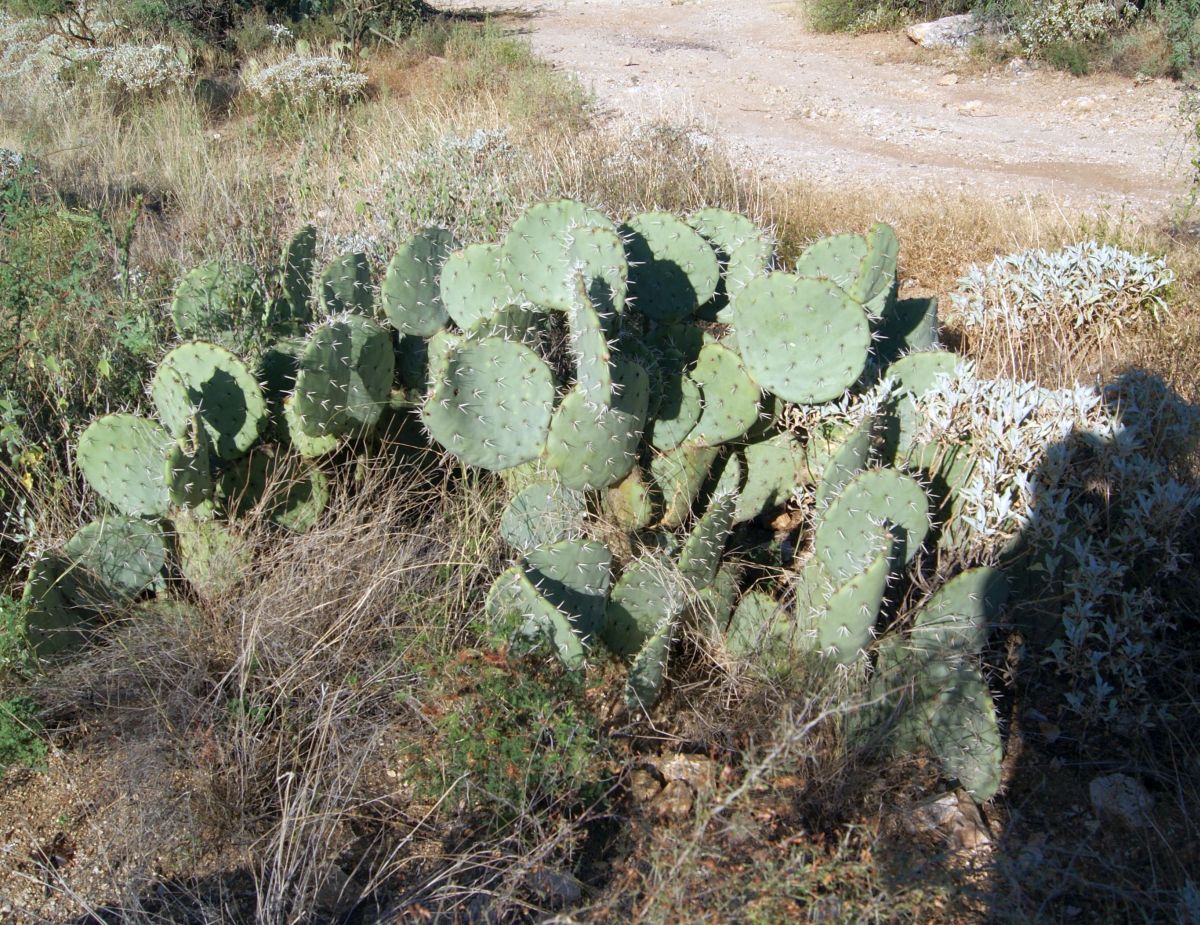
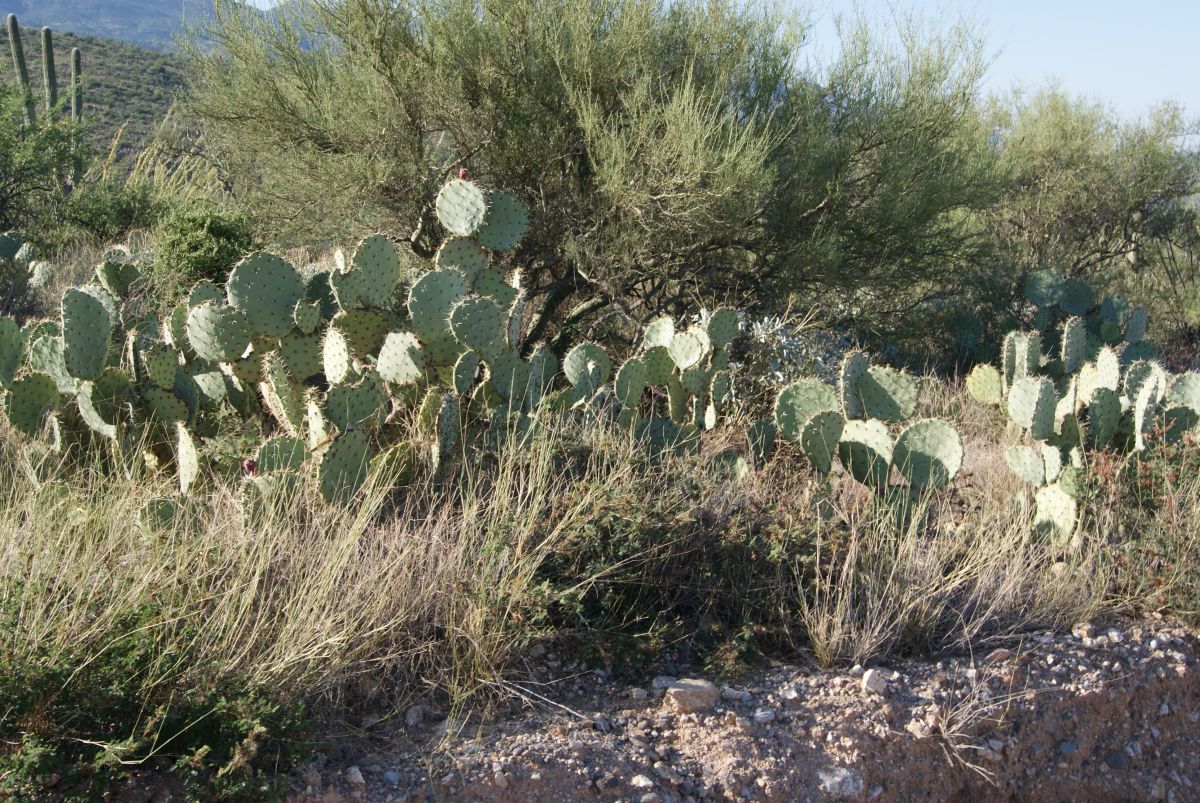
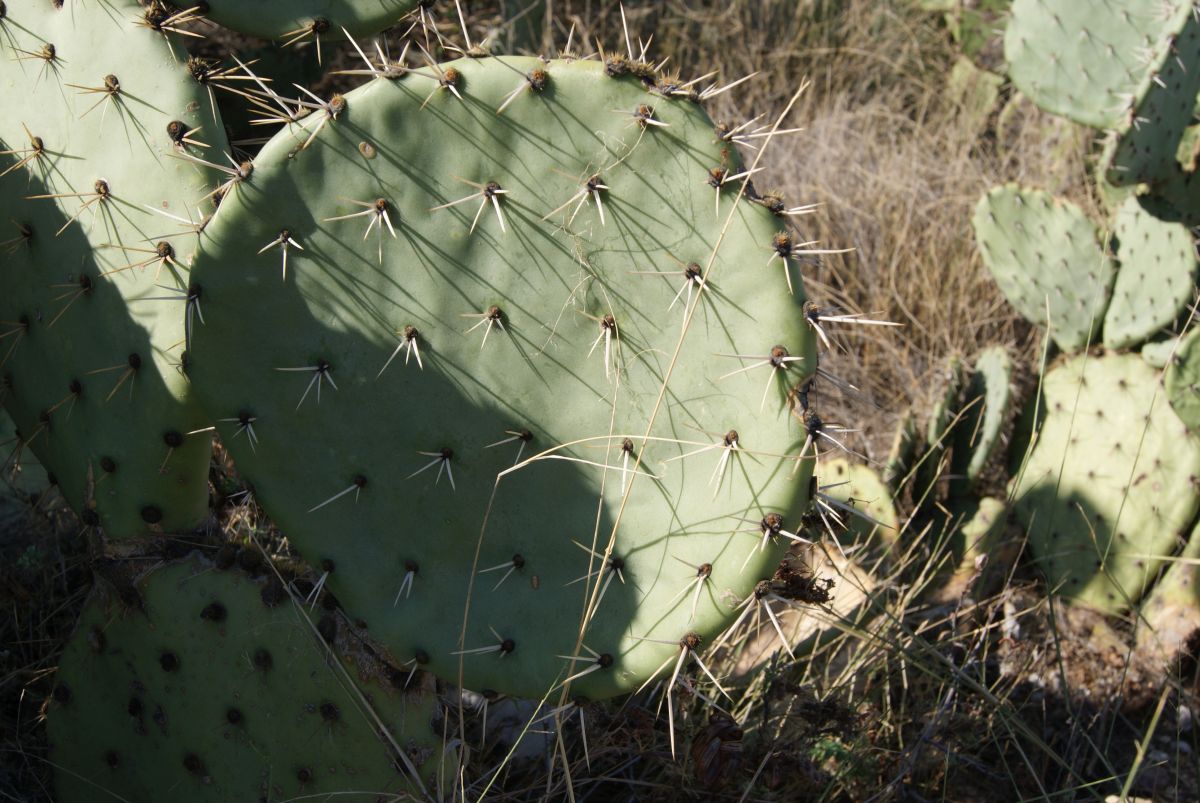
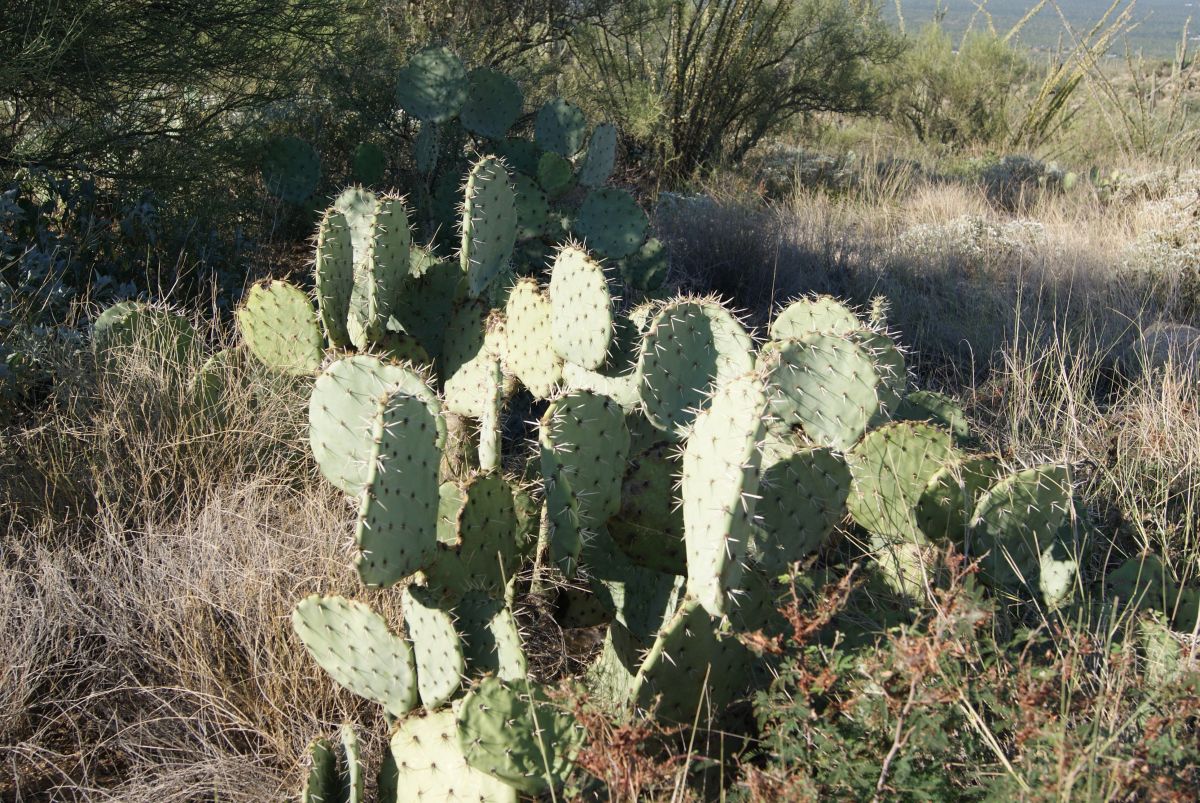
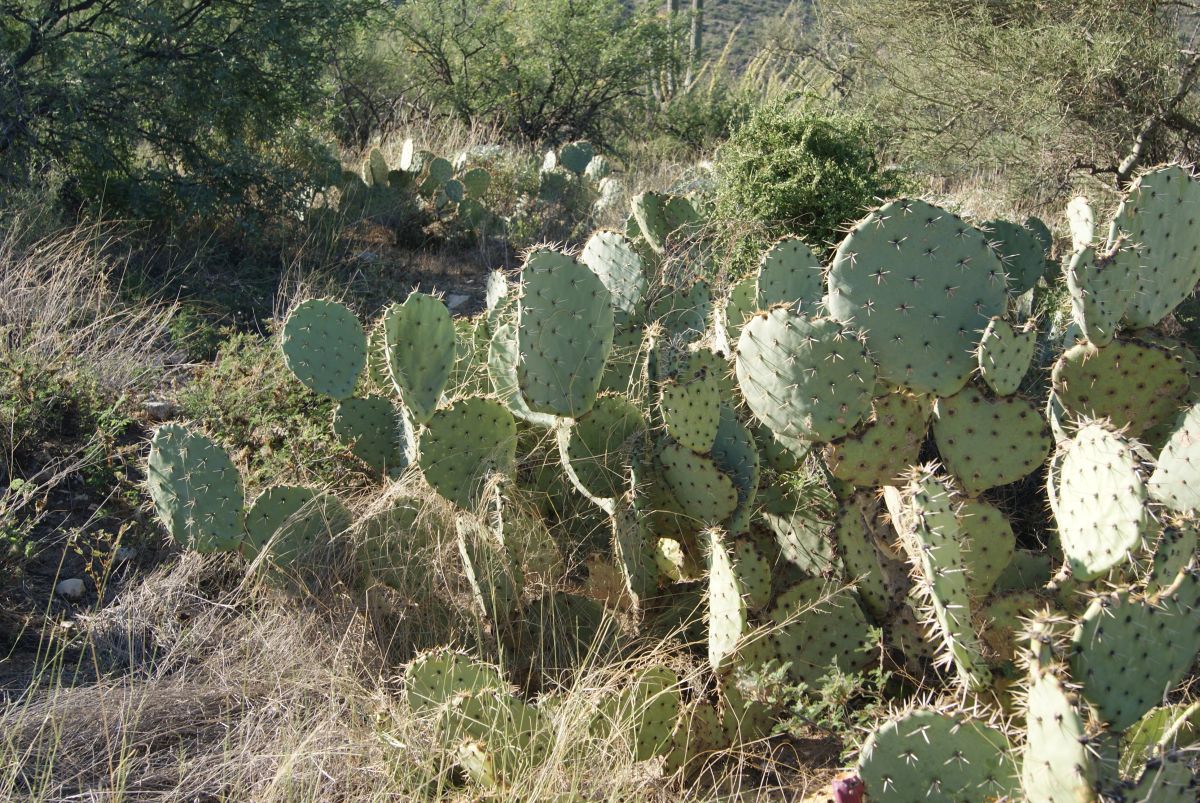
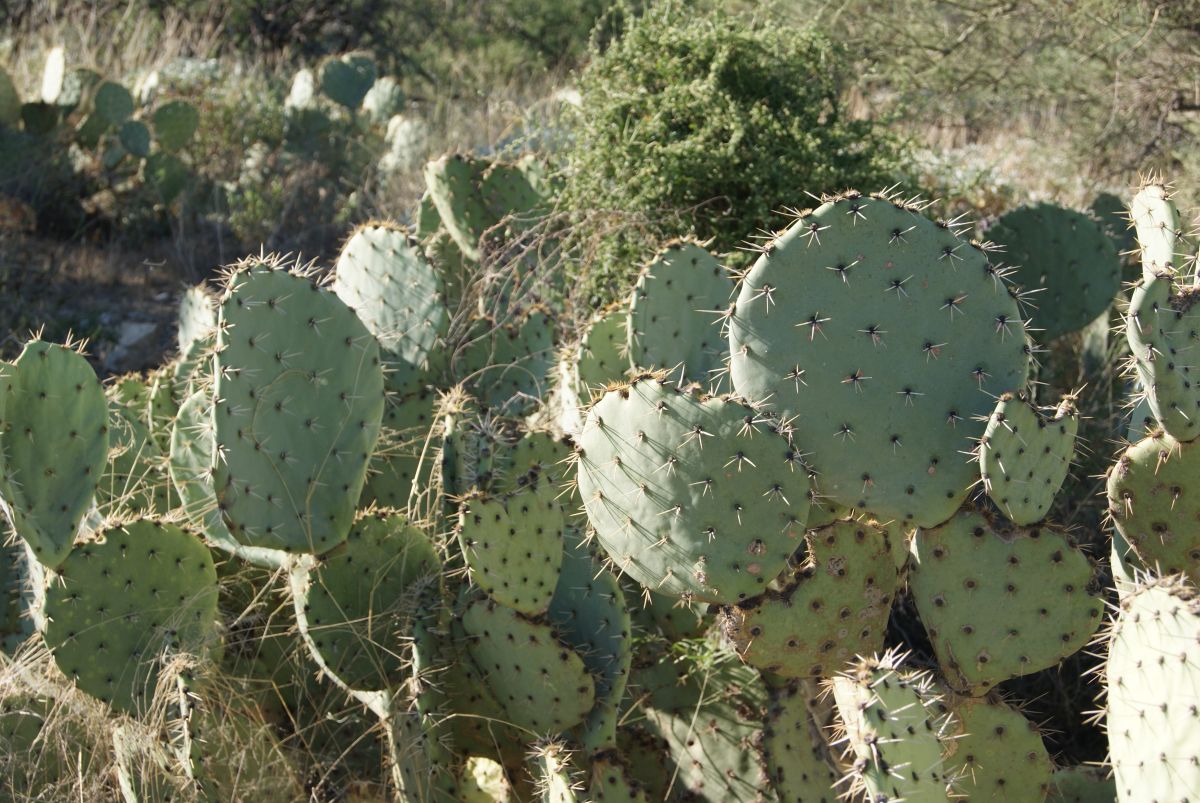
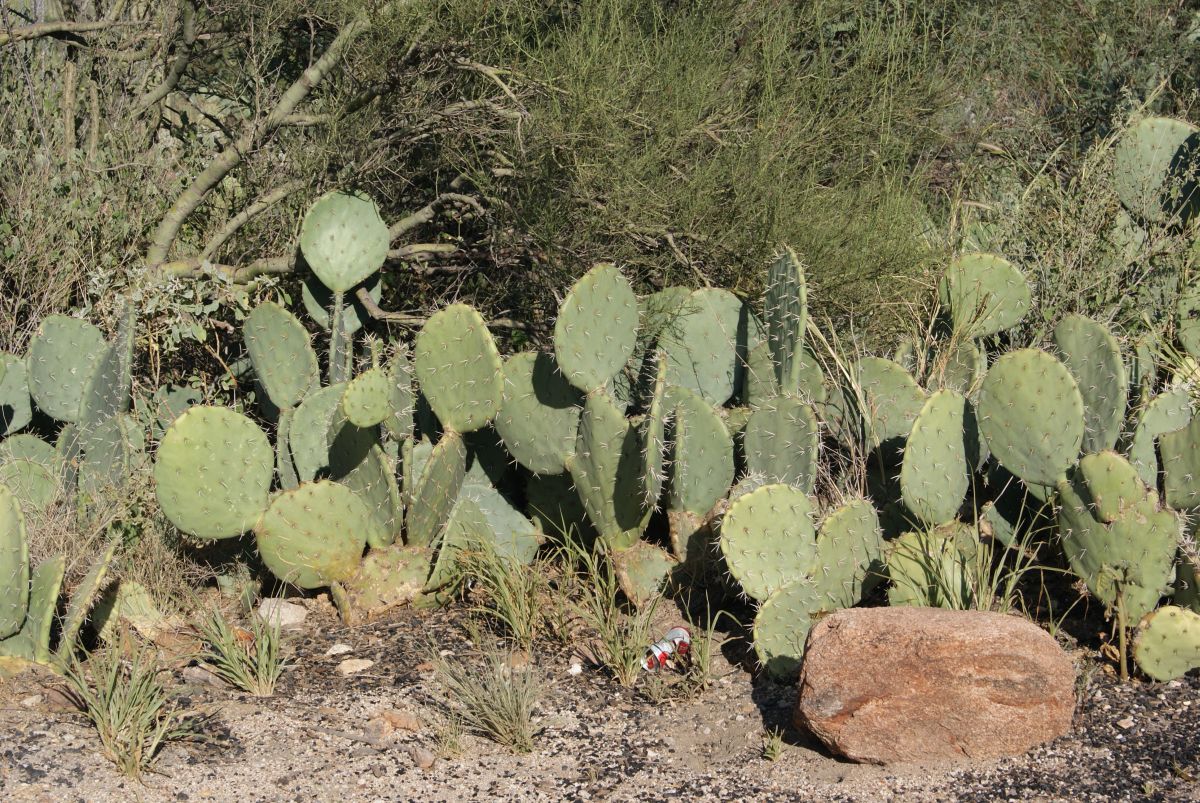
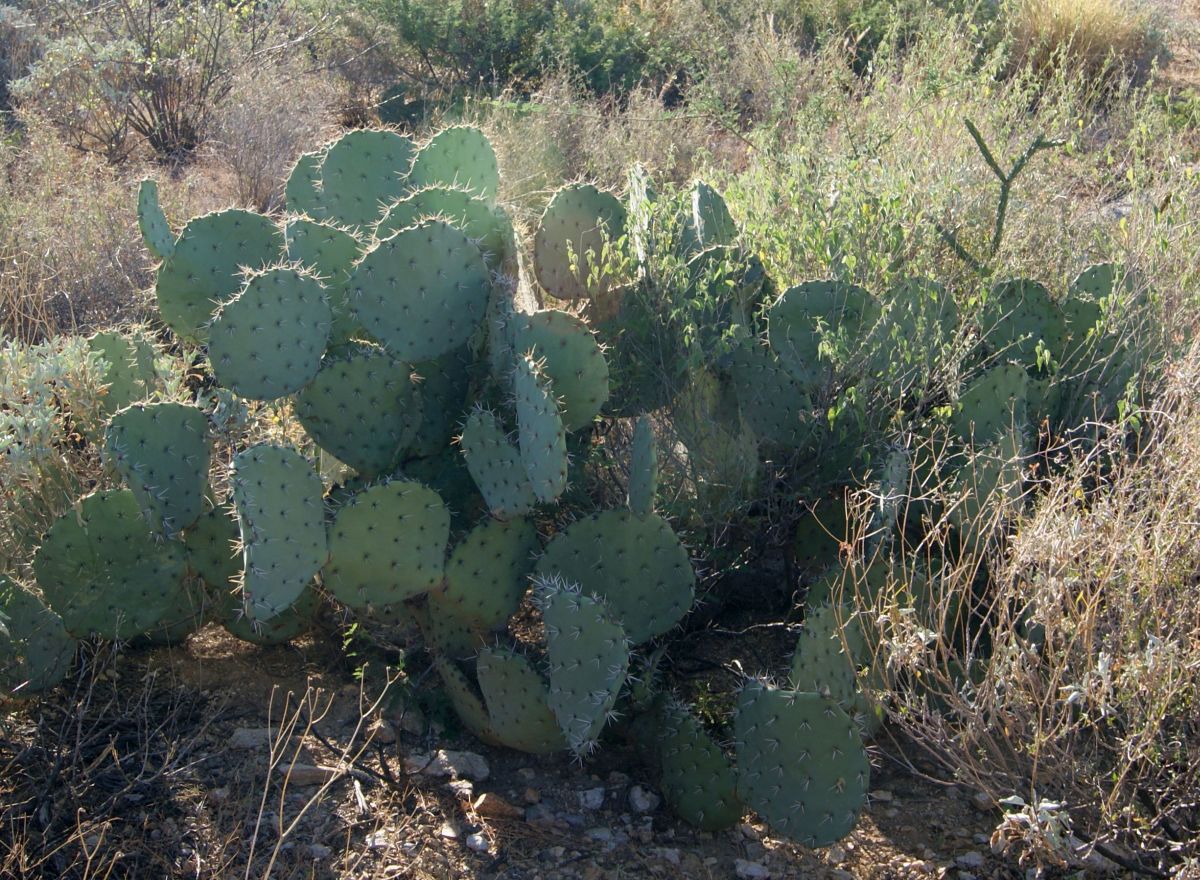
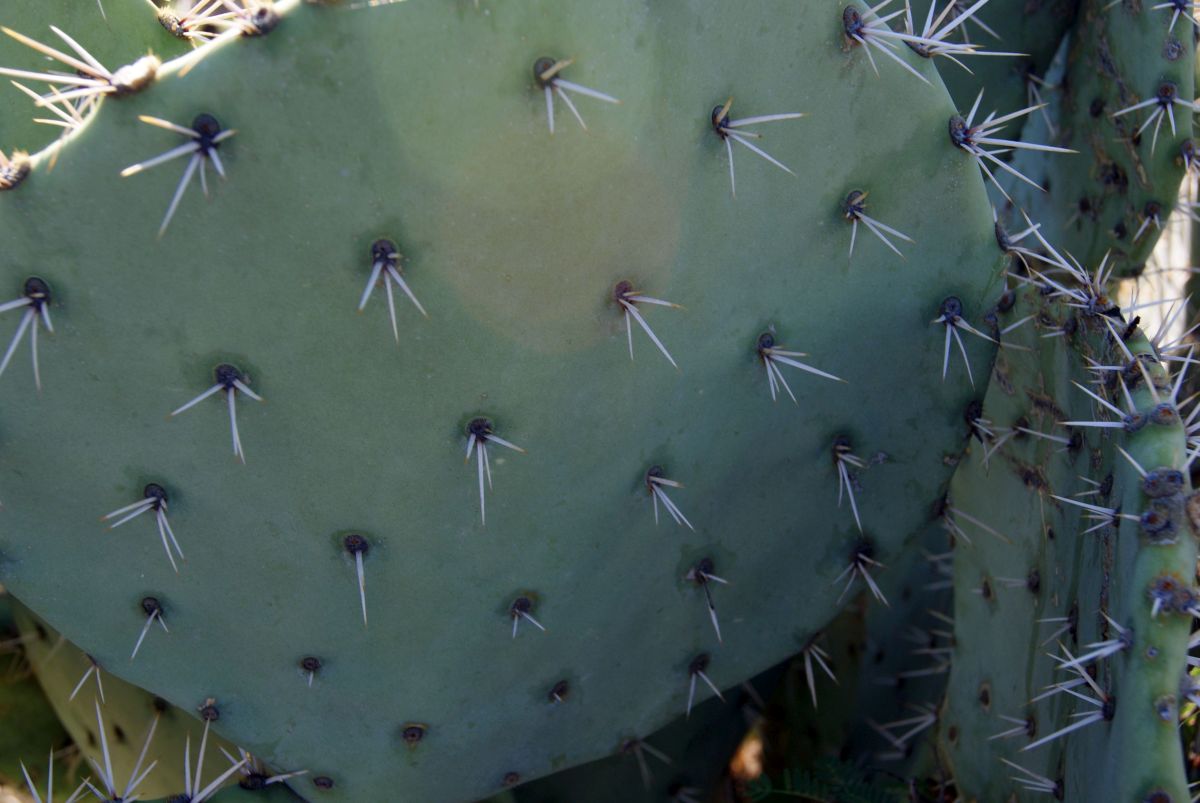
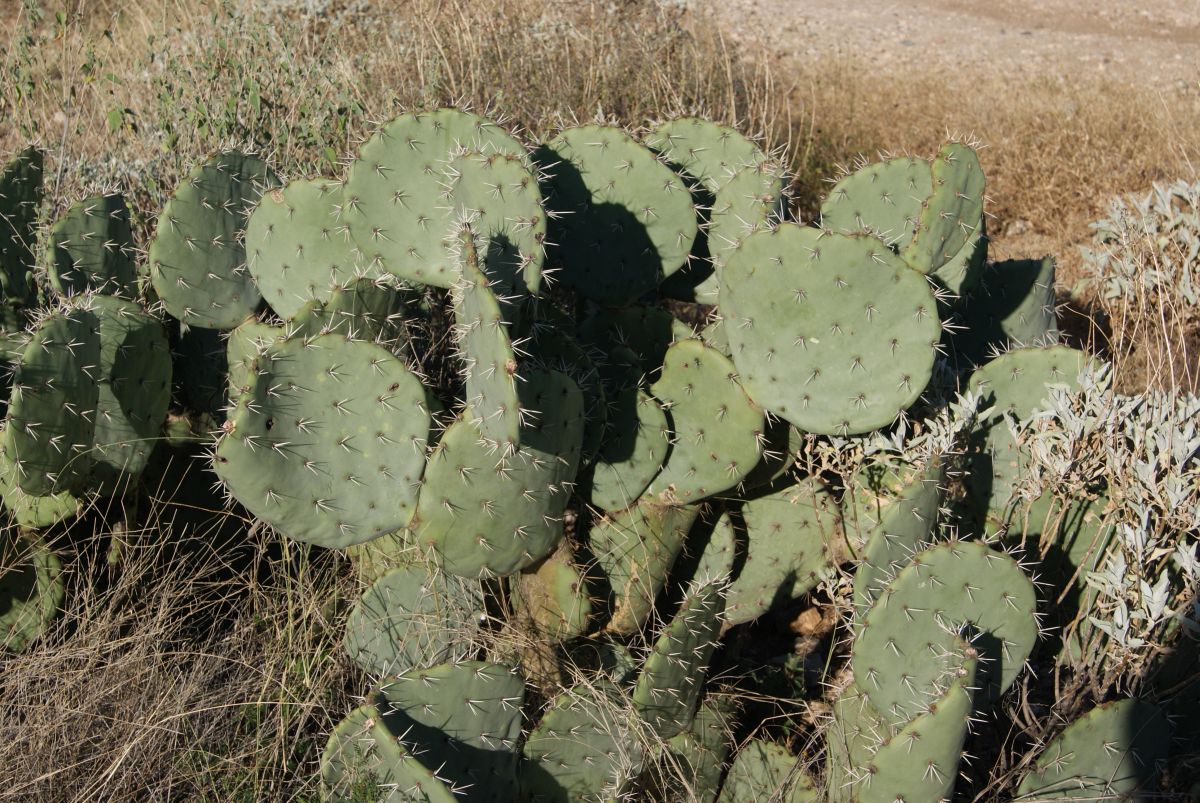
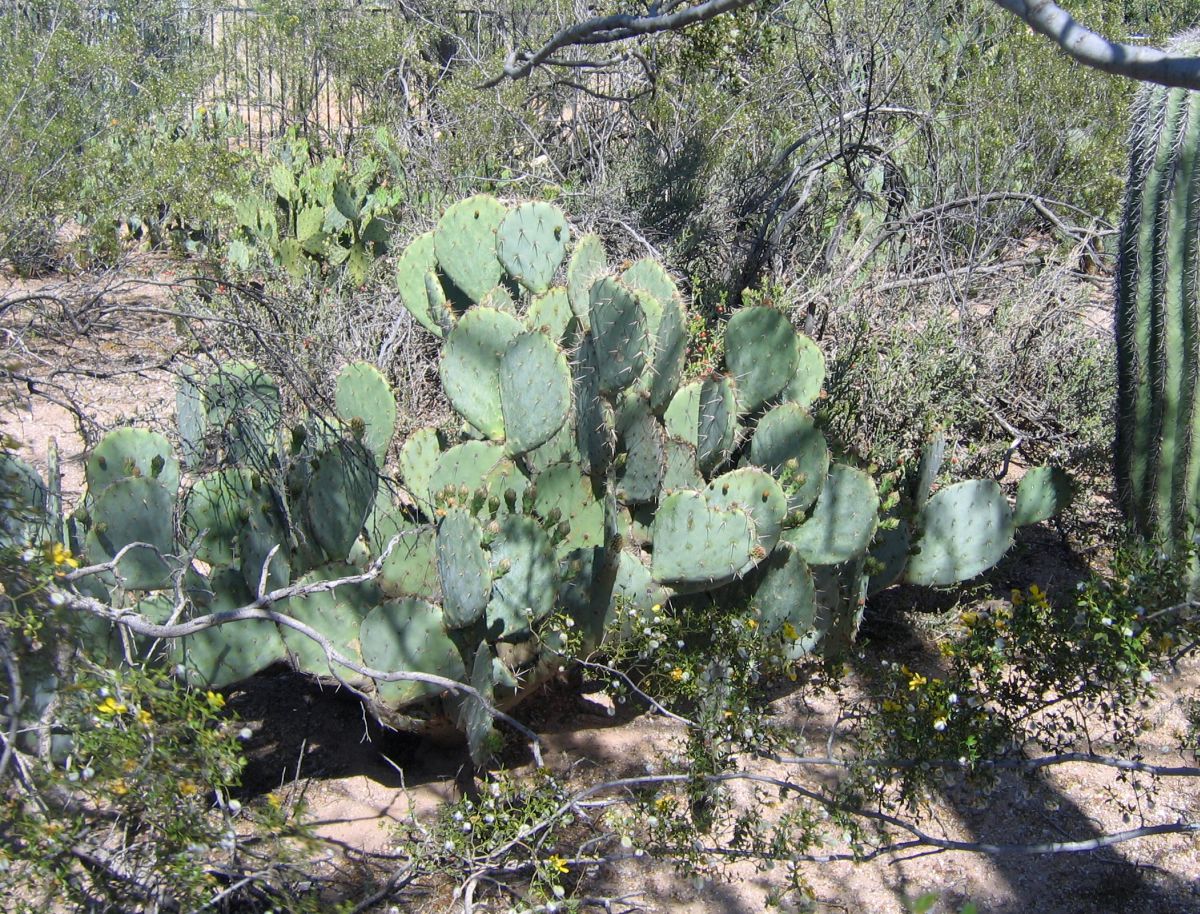
Opuntia discata is a robust, compact prickly pear, typically ascending to 1.0–1.4 m and often broader than tall, distinguished by its conspicuous white spination and showy lemon-yellow flowers.
Details
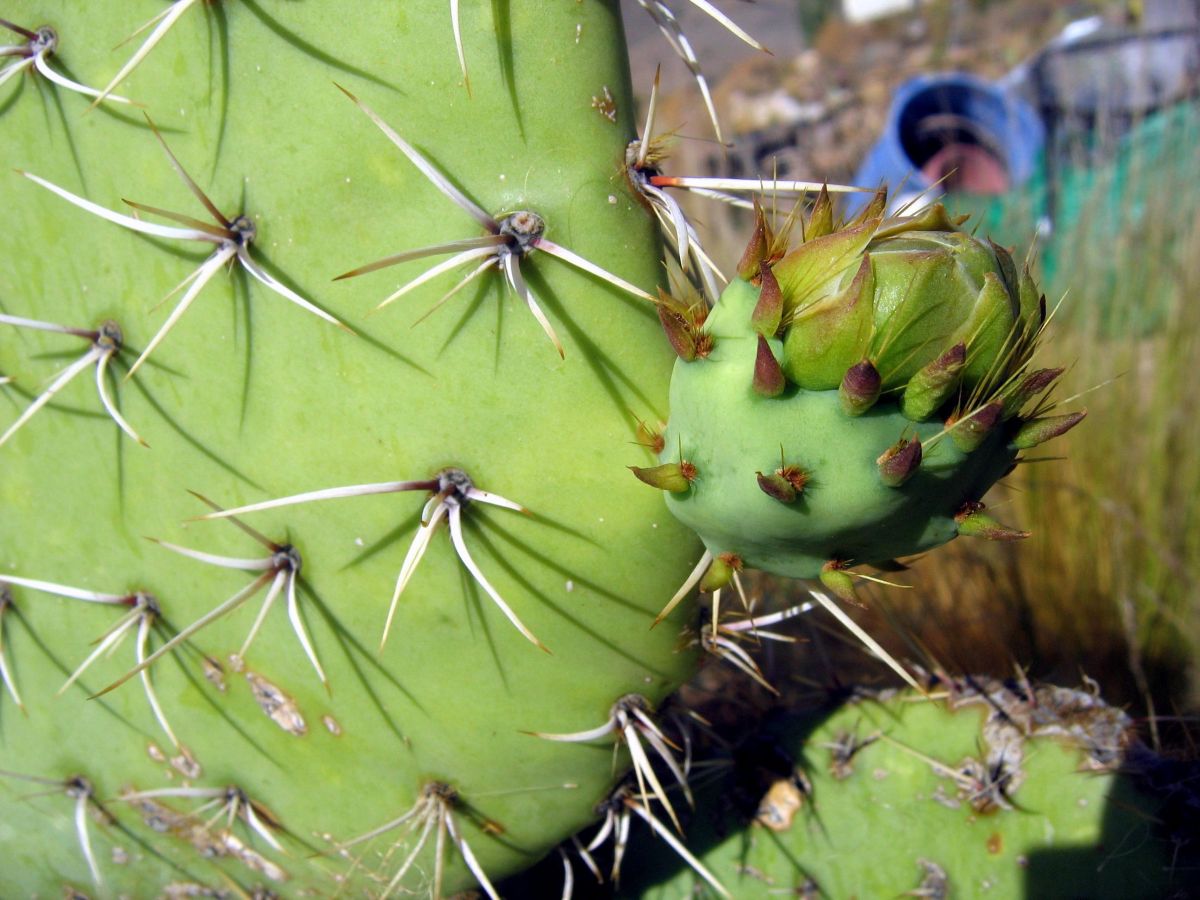
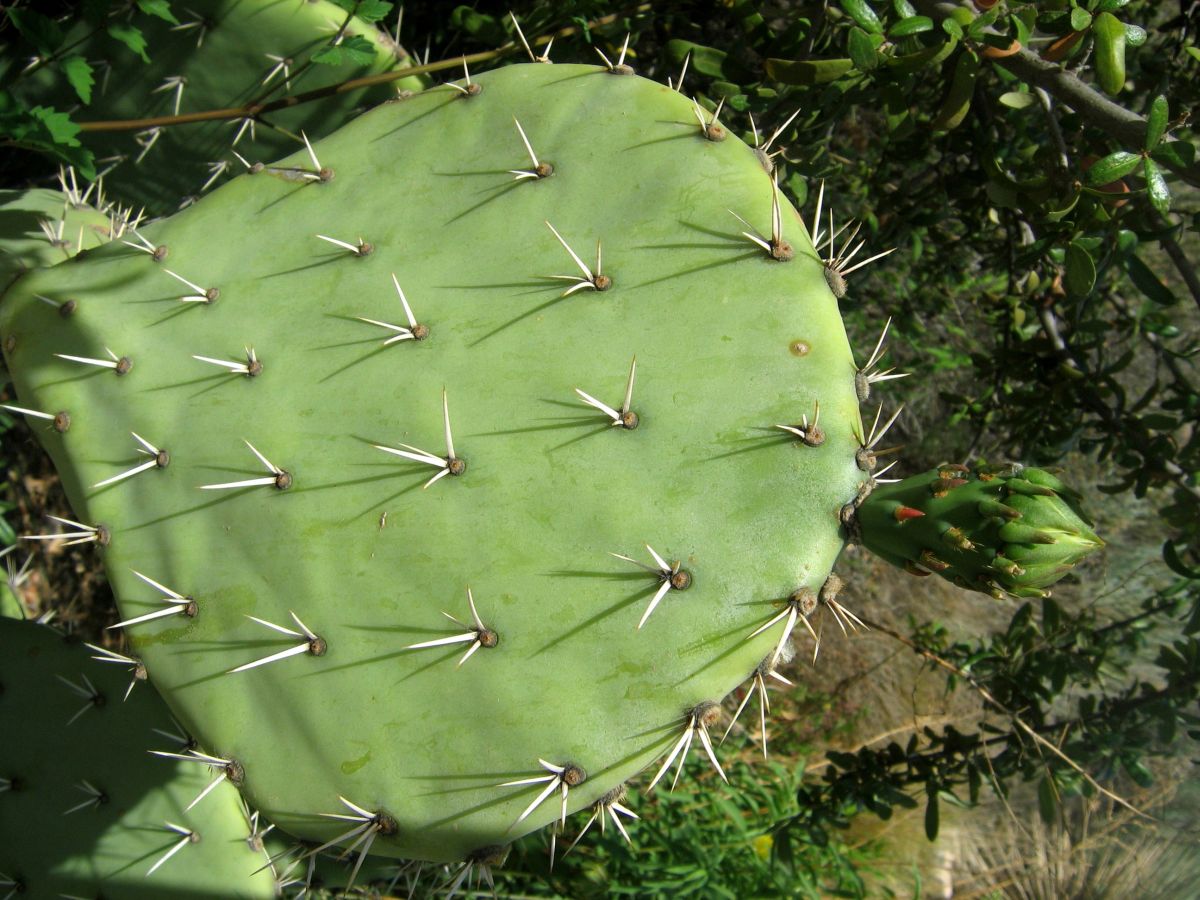
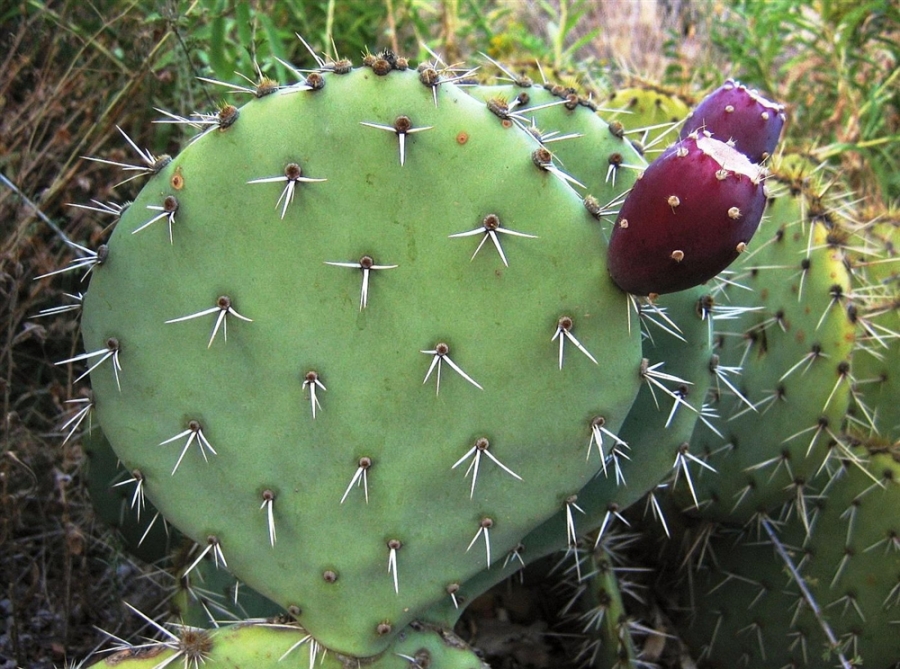
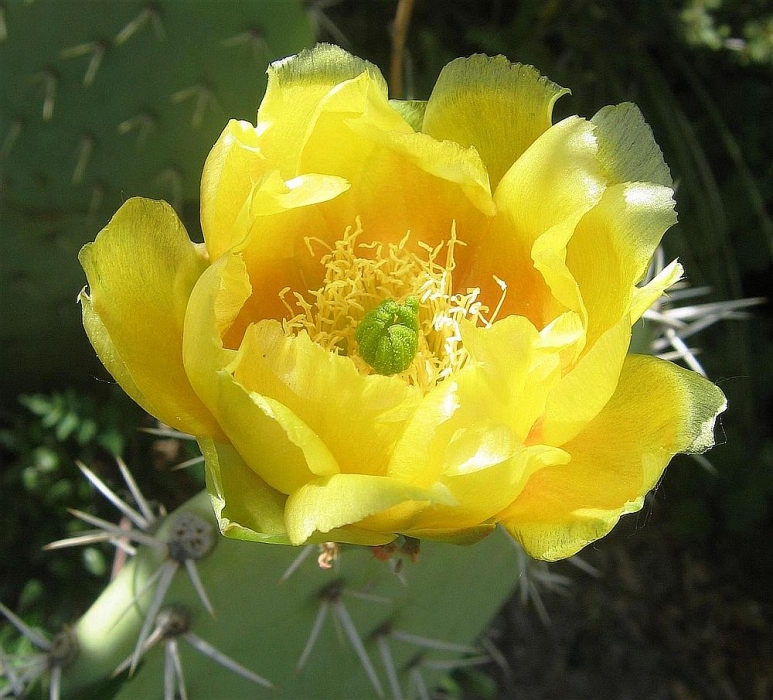
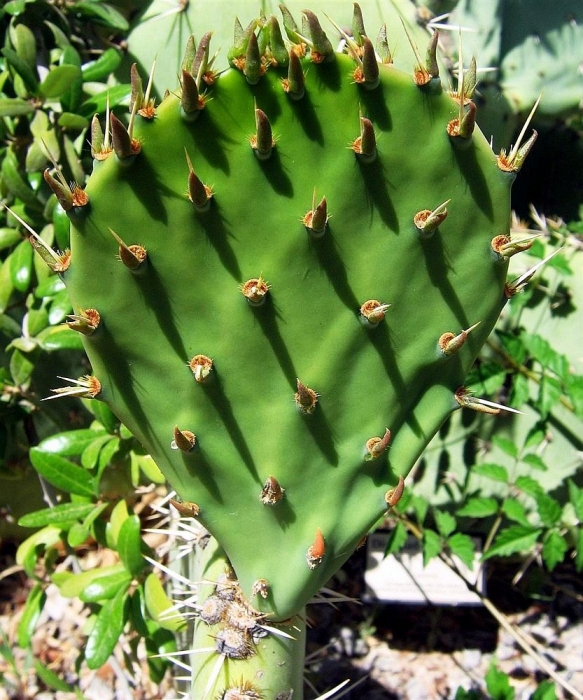
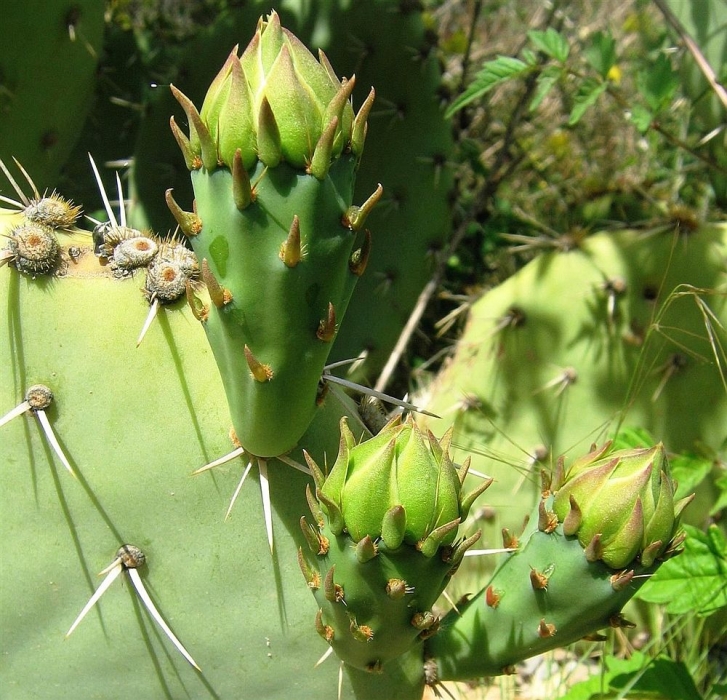
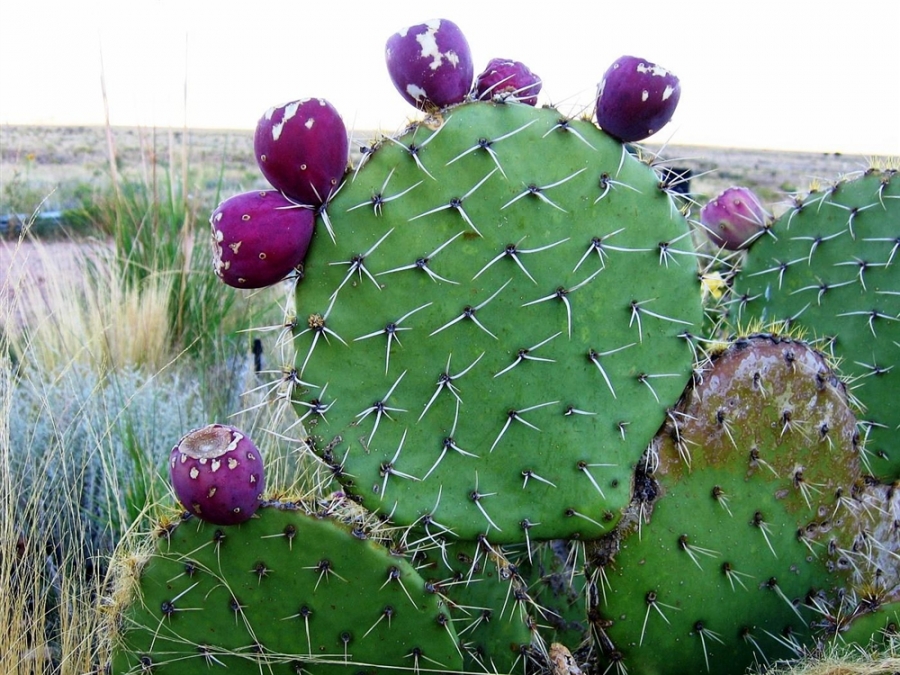
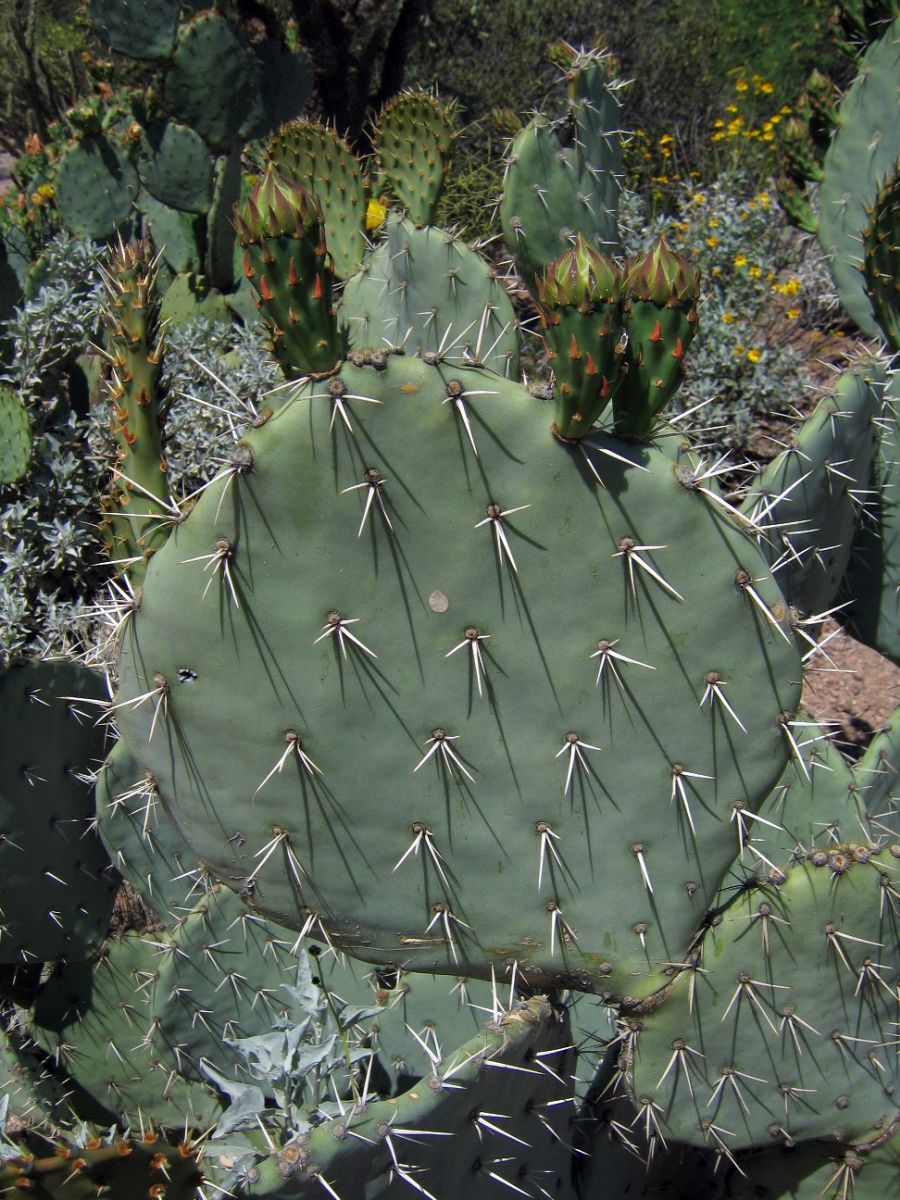
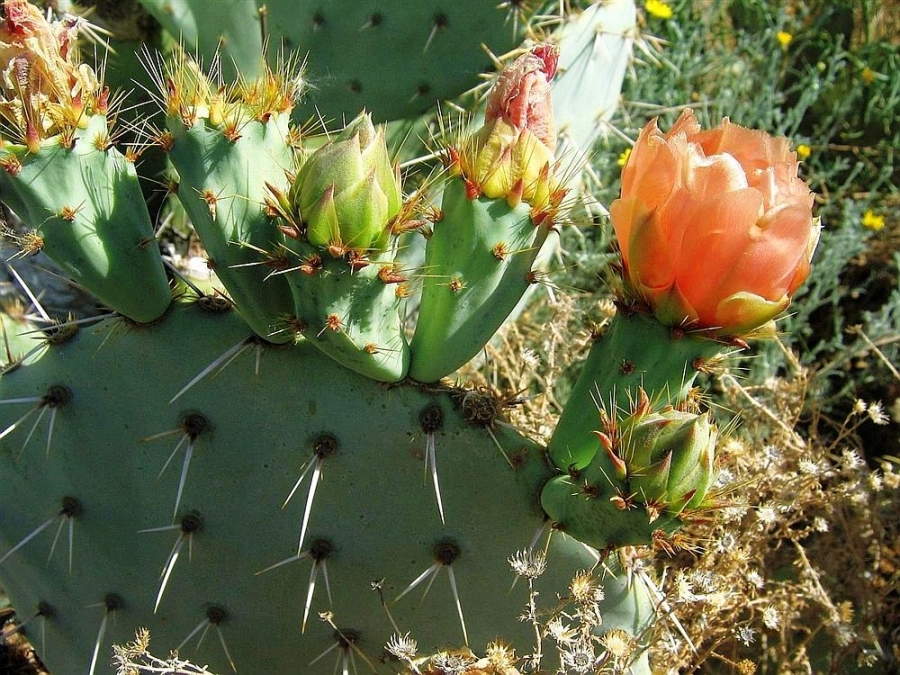
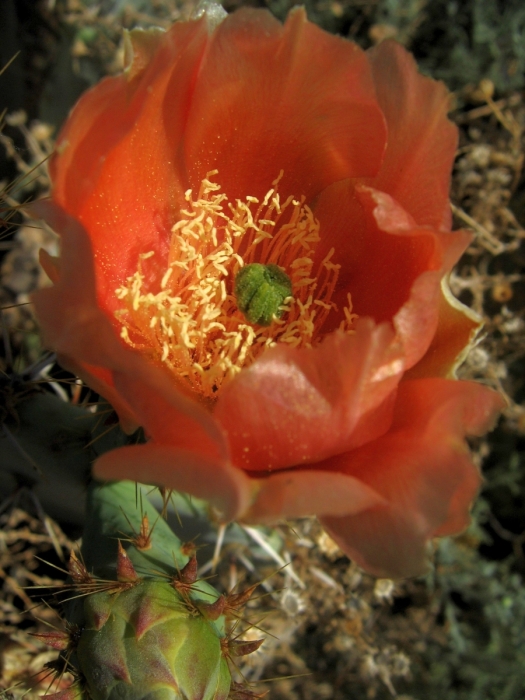
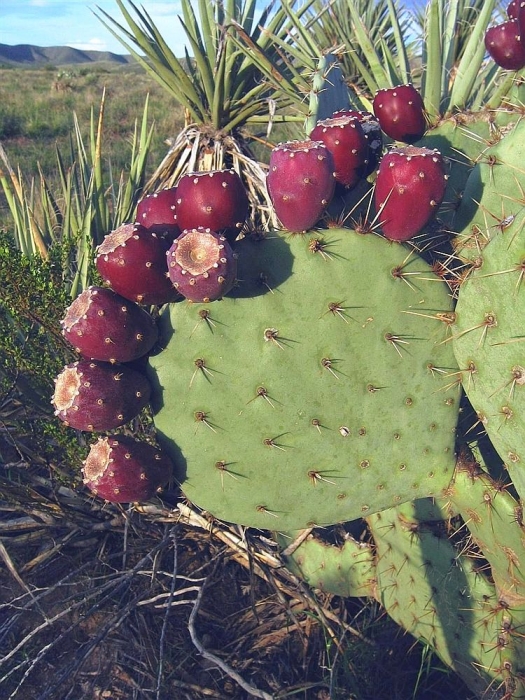
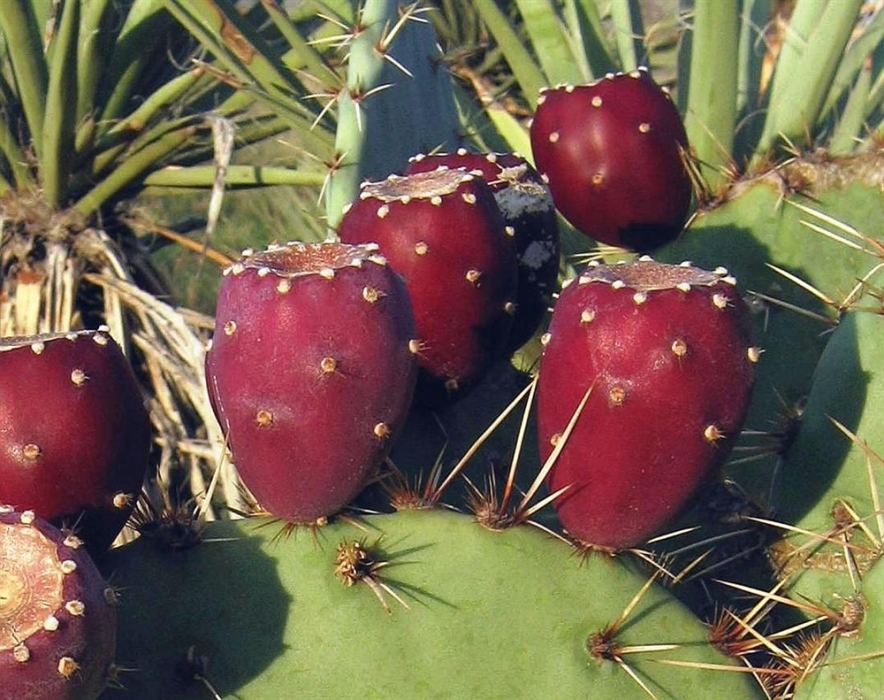
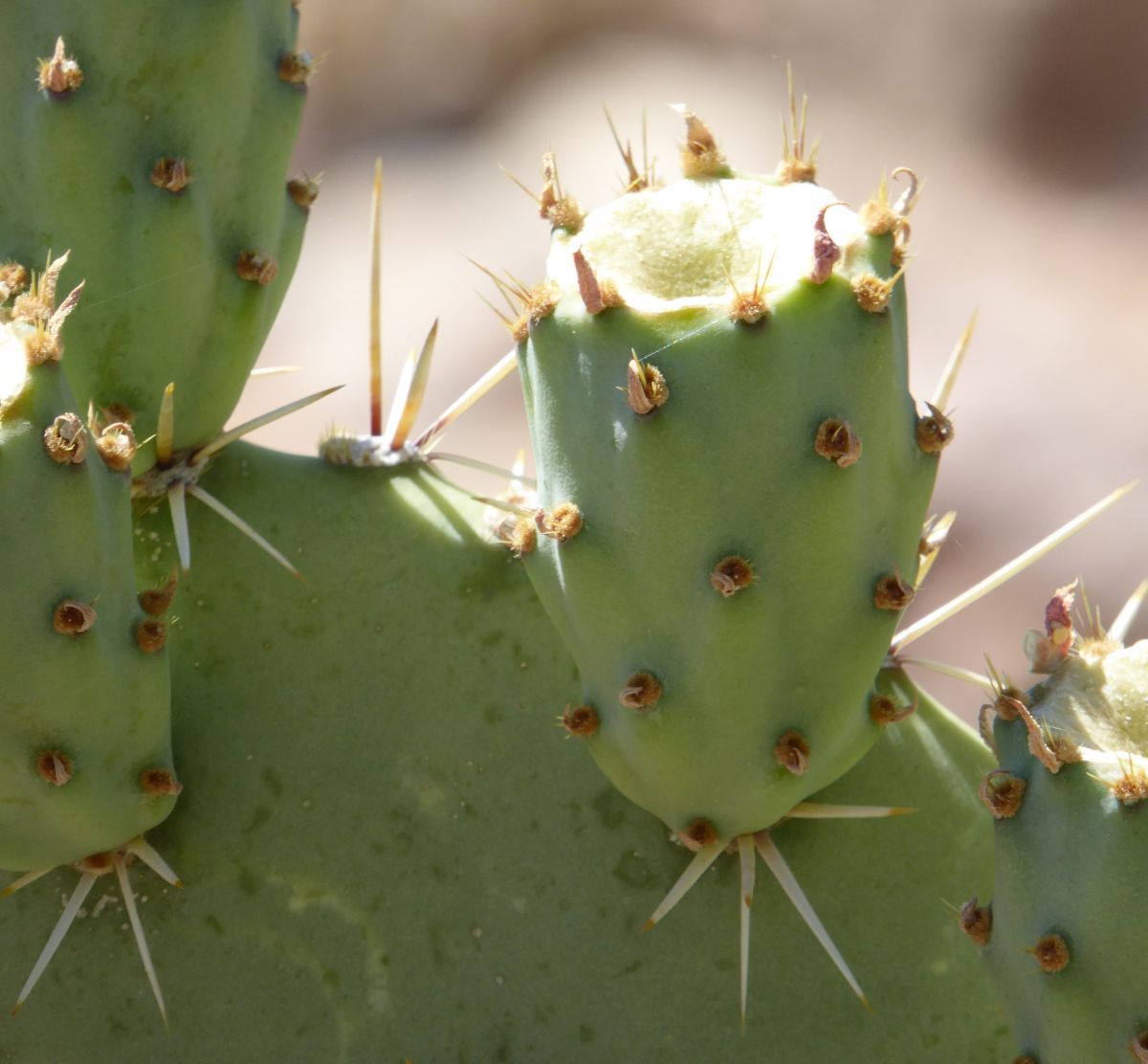
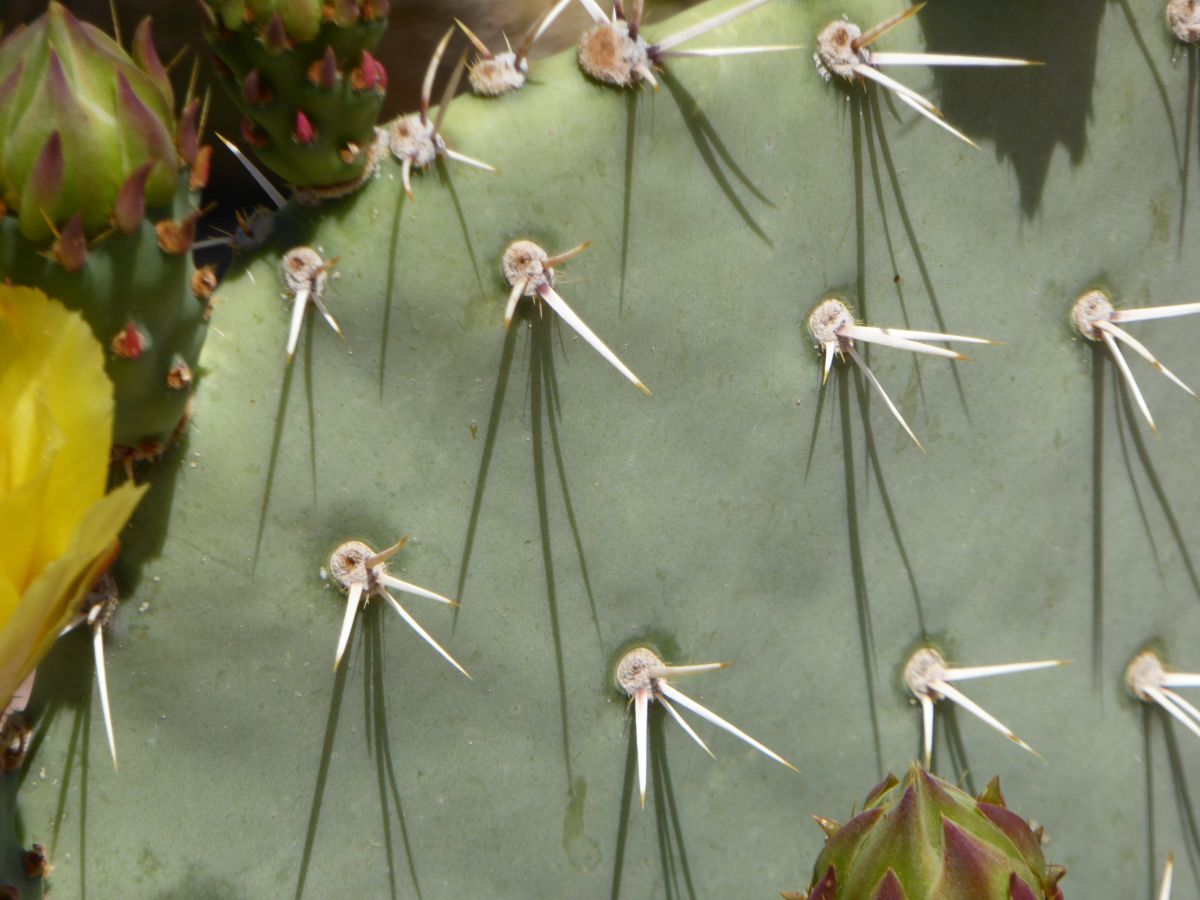
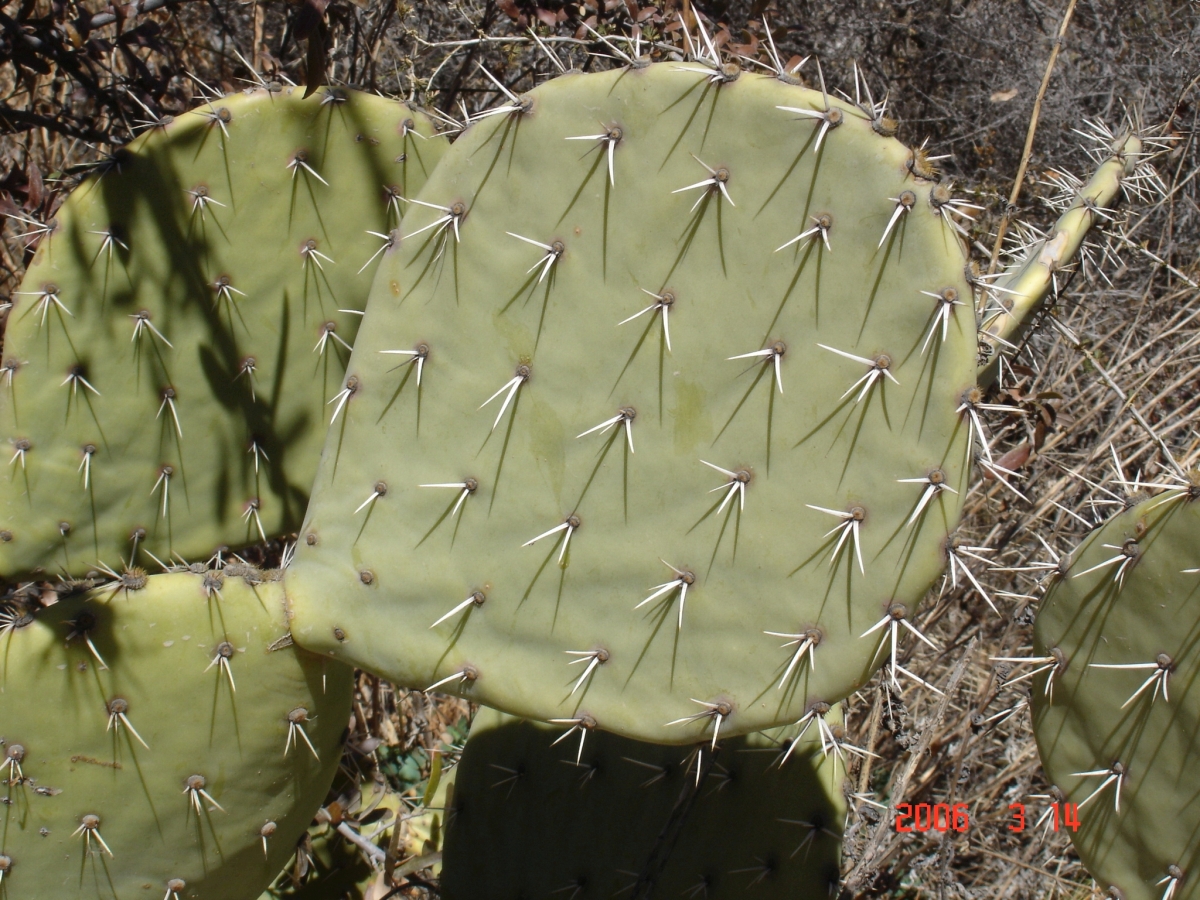
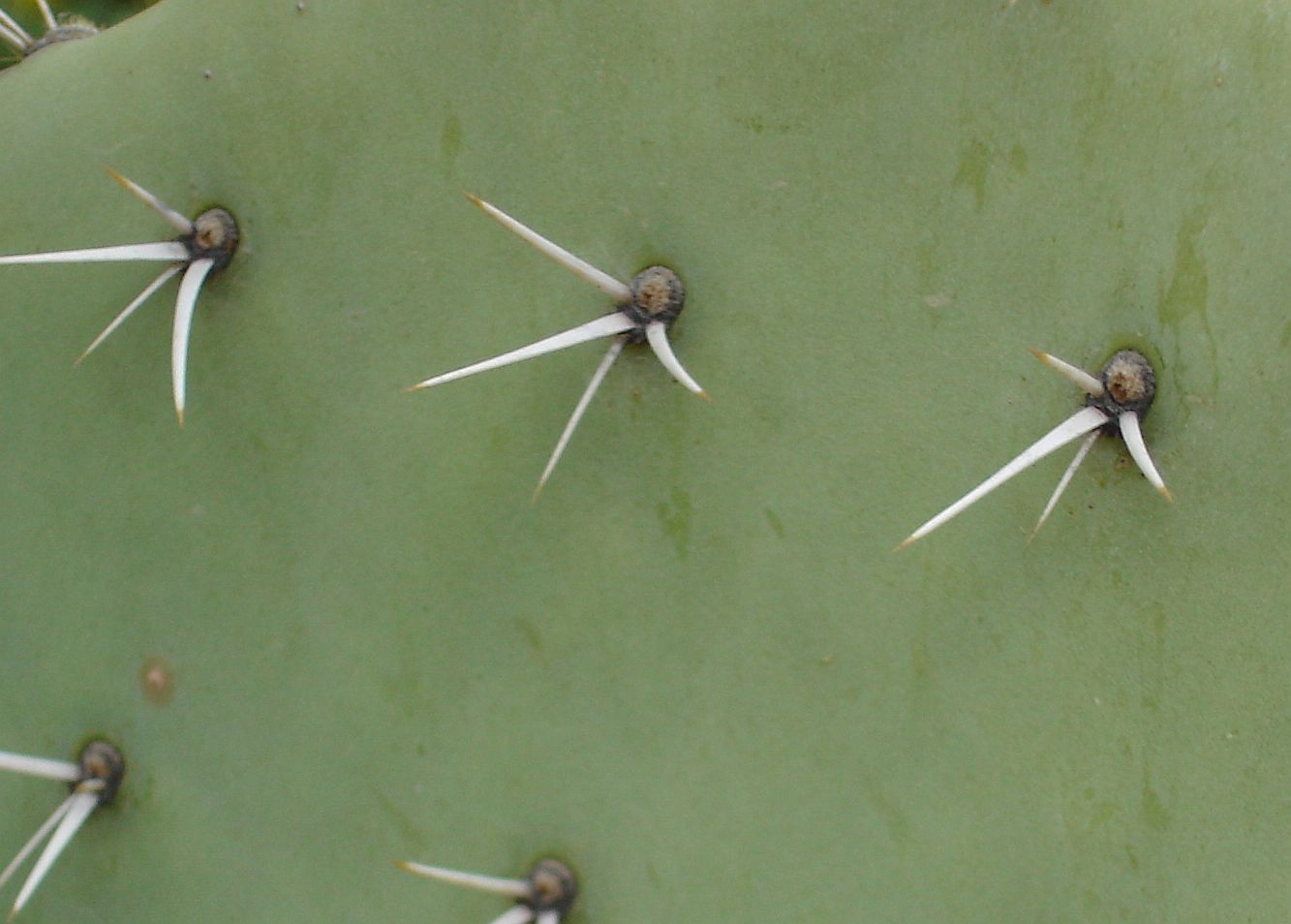
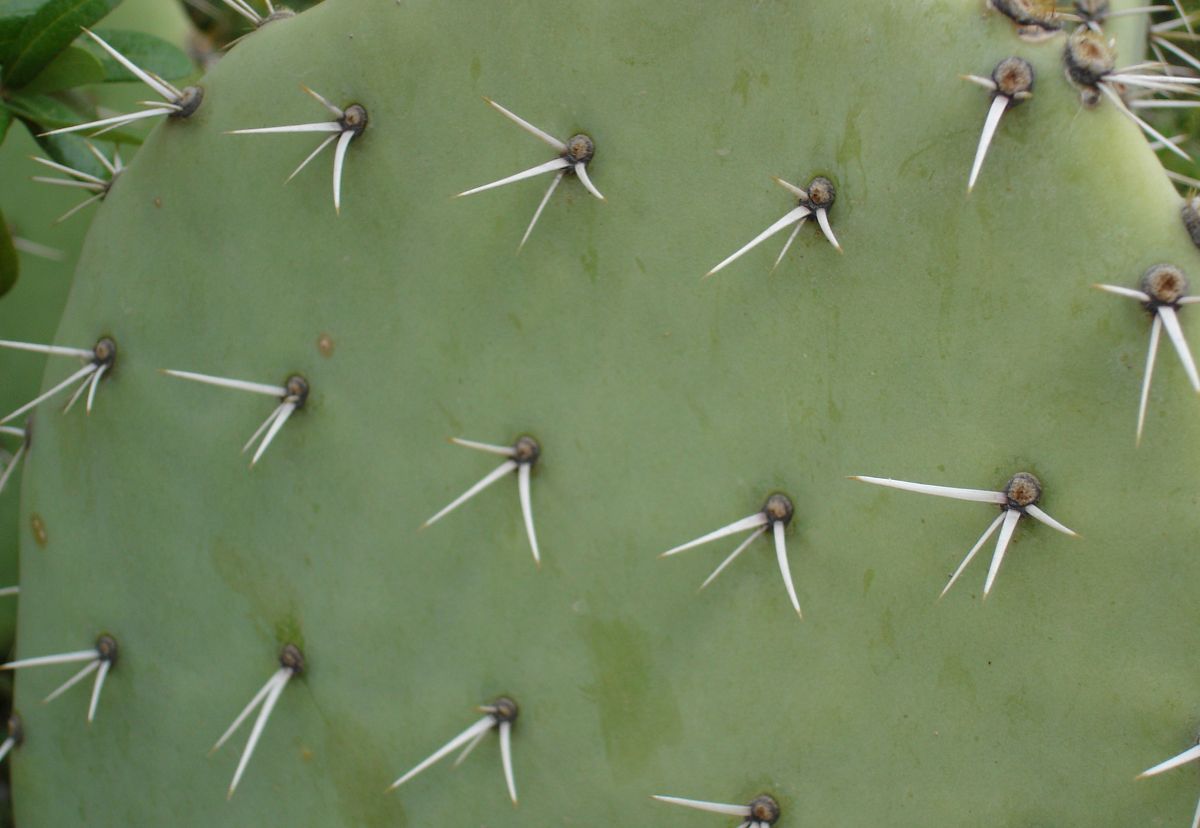
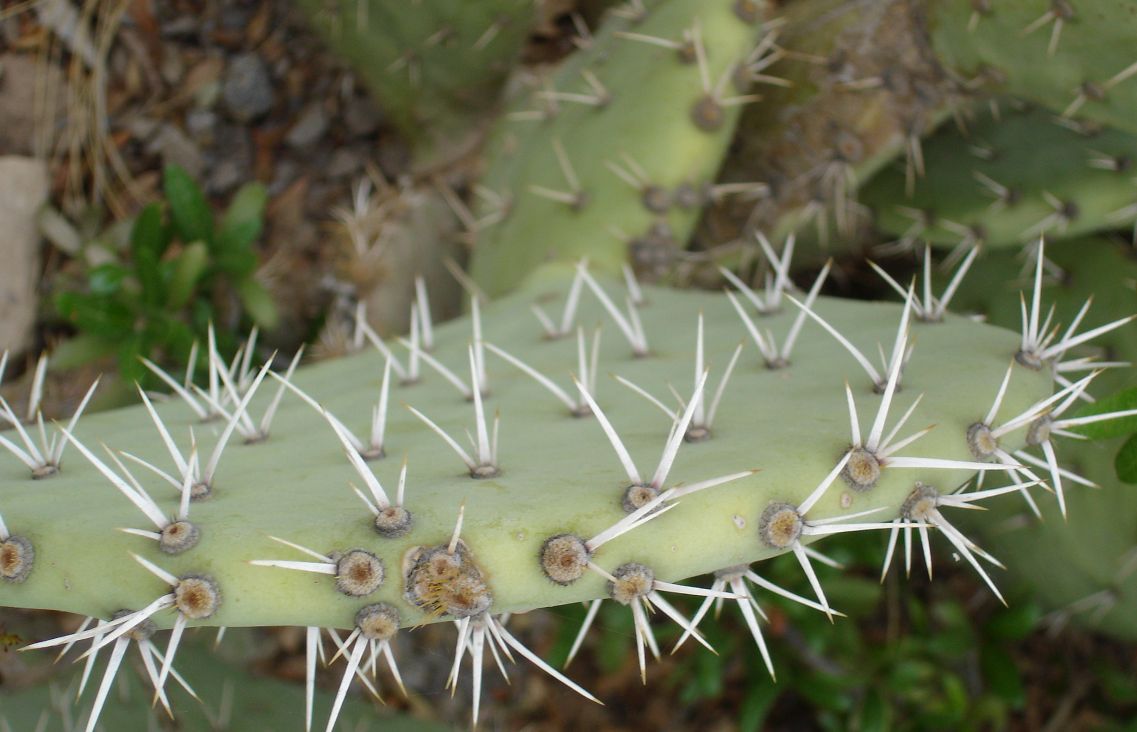
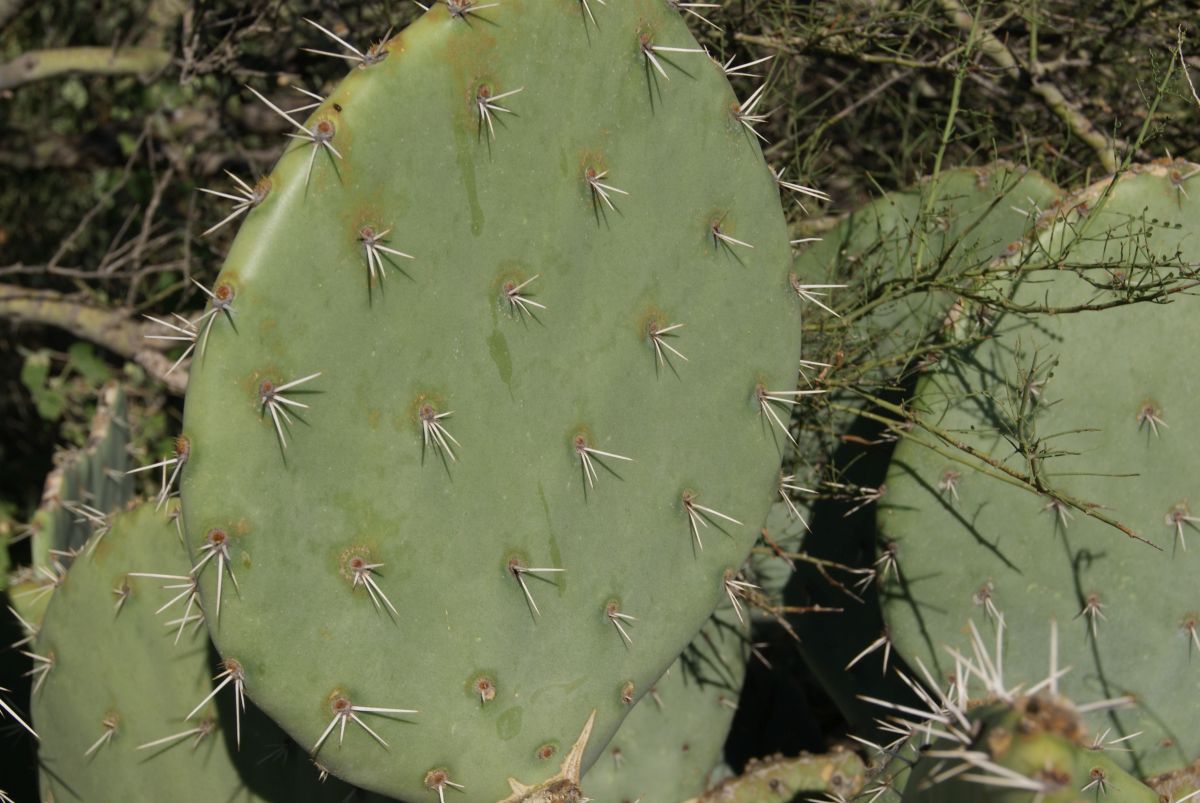
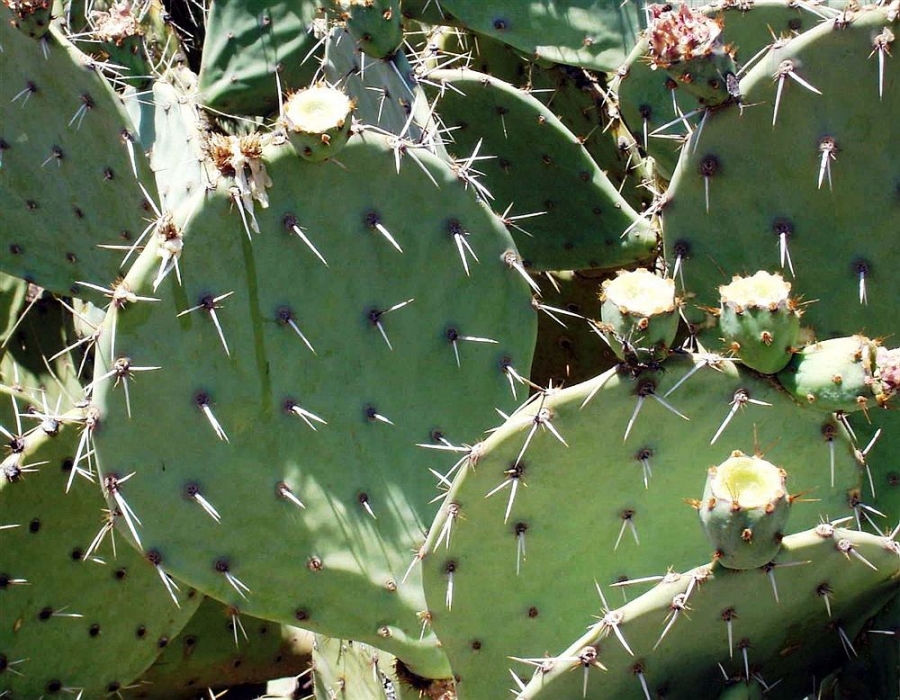
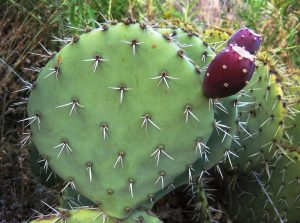
Plants branch compactly. Cladodes are commonly circular to broadly obovate (occasionally elliptical), 25–27 cm wide; they emerge dark green and mature to a waxy gray or blue-gray. Spines are chalk-white to off-white (sometimes reddish-brown at the base), typically 1–1.5 cm long (to 2.5 cm), and occur in two-thirds or more of the areoles. Upper areoles usually bear 3–5 (rarely to 7) spines; lower areoles often bear a single spine. Orientation varies—erect, laterally divergent, slightly curved, or recurved toward the cladode. Flowers are lemon-yellow, sometimes orange-tinged basally or becoming orange during anthesis; filaments greenish-white, style white, stigma dark green. Fruits are obovate to pyriform, uniformly deep red inside and out, c. 6–7 cm long. Cytology: hexaploid.
Other Notes
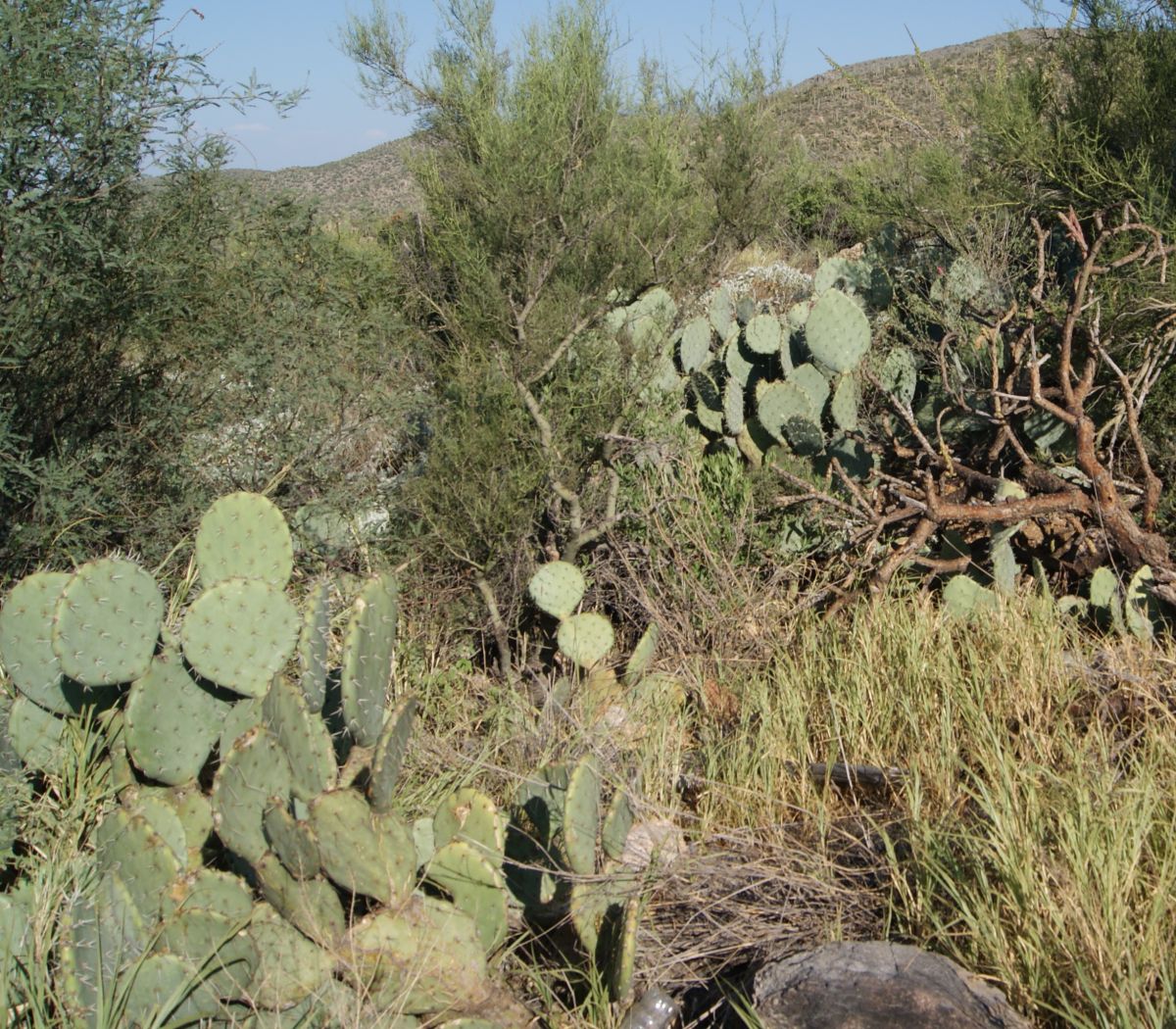
Superficially similar to O. engelmannii, O. discata is readily distinguished by its more compact habit and denser, bone-white spination; where sympatric, the two remain morphologically distinct and there is no evidence of hybridization. The species is documented from the foothills and mesas of southern Arizona and northern Sonora, Mexico. It is highly ornamental in large-scale plantings and is reported to be cold-hardy to about 0 °F (–18 °C).
For more information, see:
Green C.W. and Ferguson D.J. (2011) PricklyPears Commonly Found in the United States and Canada. First ed. Worldcat.org No. 827221200.
Shaw et al., (2019) Tucson area Opuntia, the prickly pears, XEROPHILIA • Volume VIII, No. 1 (25), August 2019 | ISSN 2285-3987